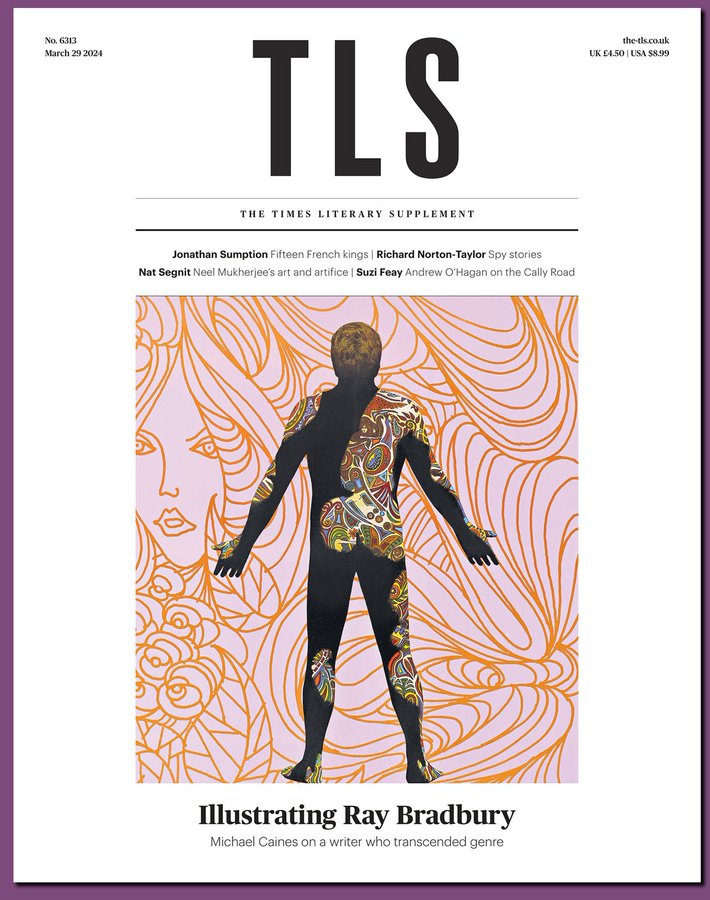
Times Literary Supplement (June 23, 2023): Twenty-two TLS writers’ choices for best Summer 2023 Books, Anna Della Subin on Mary Magdalene; Kojo Koram on global capitalism; Zachary Leader on Joyce and Léon and illustrating Victorian classics

Times Literary Supplement (June 23, 2023): Twenty-two TLS writers’ choices for best Summer 2023 Books, Anna Della Subin on Mary Magdalene; Kojo Koram on global capitalism; Zachary Leader on Joyce and Léon and illustrating Victorian classics

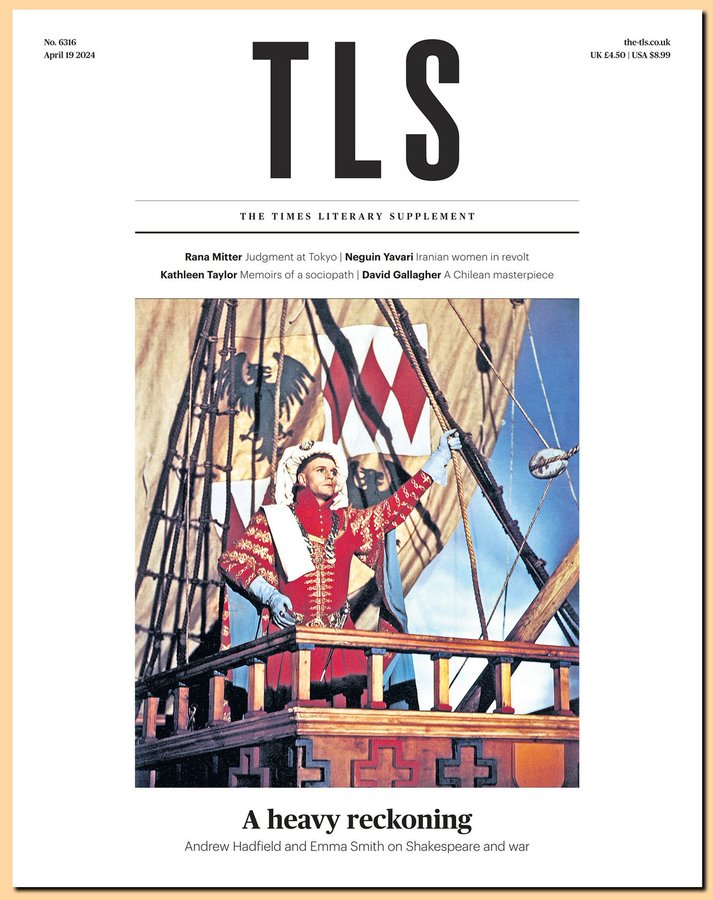
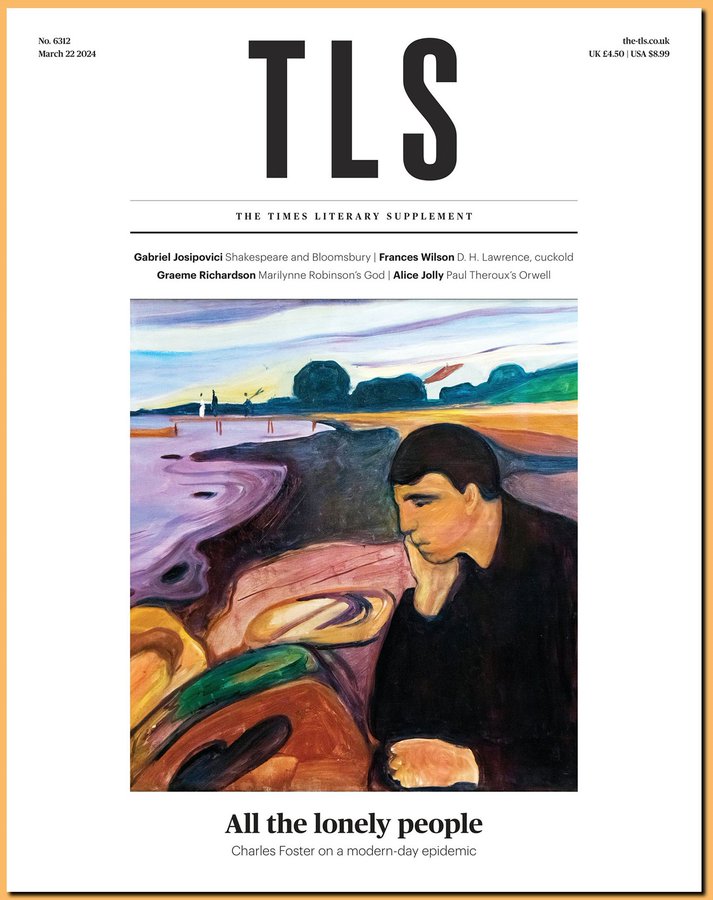
Times Literary Supplement (June 16, 2023): E.M. Forester’s last romance; Freudian foreign policy; Richard Ford runs out of gas; What it is to be human and Wars of succession…


SISYPHUS MAGAZINE (SPRING 2023) – This issue explores the theories in society that subjectify truth, the influence of social media, philosophical pragmatism, the generational representations of societal ideals, the environmental impact of governmental and private sector choices, the factions of progressive arguments, and the evolution of Sisyphus.

In modern society, it’s difficult to discern what’s real and what’s not in news media’s contemporary platforms and discussions.
Truth is difficult to define but having a correct theory or definition is not the problem. We all know many truths and untruths, without knowing what philosophers have said, and without knowing that many still disagree with each other.

Once lost, the laws might be derived again
When necessary, or so you’ve been told.
You’re half asleep in January sun.
Just out of sight, someone starts bugging you
And Steller’s jays. Green hills, blue weather, — noon
To bring out Panpipes, but it’s too damn cold.

Why the progressive movement has stalled.
I. Nominal and Material Progressivism
Both Adam Smith and Karl Marx believed in progress.
The question, therefore, is what do we mean by progress? How do we understand it? How does it operate? How does progress correspond with progressivism? These questions have become important because progressivism has encountered an internal impasse. It has become mired in internal conflict.
The Paris Review – Summer 2023 Issue: The Review take an especial pleasure, as readers, in the diary form: that peculiar mixture of performance and unwitting self-revelation, of shapelessness and obsessive (occasionally deranged) selectivity; that sense of a narrative unfolding in real time, almost without the author’s permission. And while the Review doesn’t do themes, as we were putting together our new Summer issue, no. 244, it was hard not to notice our partiality peeking through.

In the issue, Lydia Davis shares selections from her 1996 journal, and they often read like warm-up scales for her exquisitely off-kilter stories. (“For lunch—a huge potato and a glass of milk.”) You’ll also find masterful uses of the diary as a fictional device. The Brazilian writer Juliana Leite’s “My Good Friend,” translated by Zoë Perry, is an elderly widow’s apparently unremarkable Sunday-evening entry—“About the roof repair, I have nothing new to report”—that turns into a story of mostly unspoken decadeslong love. And James Lasdun’s “Helen” features excerpts from the journal of a woman who lives in what the narrator describes as a “state of incandescent, almost spiritual horror,” and whose crippling self-consciousness doesn’t protect her from humiliations the reader can see coming.
Also in issue no. 244, John Keene, in an Art of Fiction interview with Aaron Robertson, describes how blogging heralded his recovery as a writer after losing drafts of several of the stories that eventually became Counternarratives. And Sharon Olds, in an Art of Poetry interview, tells Jessica Laser about the need to keep one’s art and biography separate, especially when they are clearly not. Keeping a diary might be therapeutic, Olds explains, but “writing a poem to understand yourself better would be like making a cup with no clay, or maybe like having the clay but not making the cup.” She concludes, “If I had to choose between a poem being therapeutic and it being a better poem, I’d want it to be a better poem.”

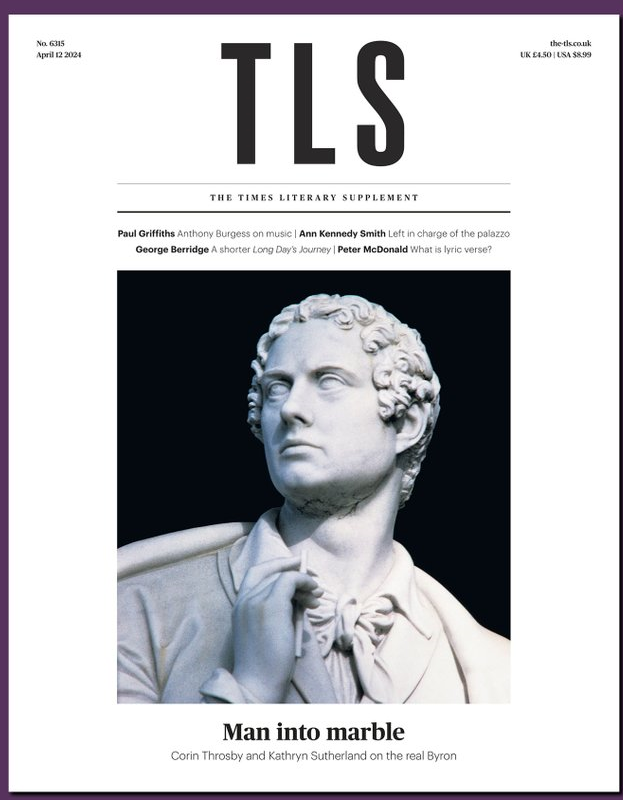
Times Literary Supplement (June 9, 2023): Requiem for a dream – Aung San Suu Kyi’s fall from grace; Vindicating Mary Wollstonecraft; France on Trial; In search of Yeats, and more…

This short biography explains why the West misunderstood the Myanmar leader. Review by Richard Lloyd Parry
In humanity’s long history of toppled heroes, shattered reputations and honour besmirched, it is difficult to think of a more extreme case than that of Aung San Suu Kyi. A decade ago, the Myanmar leader was among the most adored and respected figures in the world — winner of the Nobel peace prize, long-term political prisoner, an emblem of peaceful, uncompromising democratic struggle. Her ascension to the national leadership felt like the vindication of precious hopes and principles; today, “the Lady”, as she used to be known, is face down in the mud.

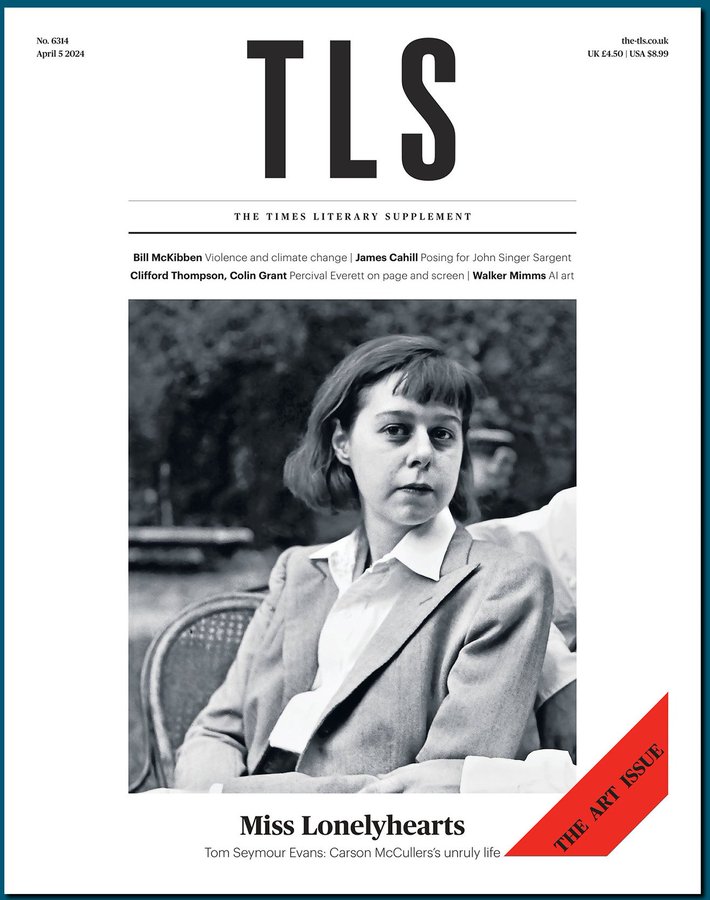
Times Literary Supplement (June 2, 2023): The Last Days of Weimar – Lesley Chamberlain on German culture before the catastrophe; Michel Houellebecq in the buff; Death by Dementia; The Art of Sex and Champagne socialist guilt.
An early Flemish painter’s claim to greatness
An abstractionist artist who was guided by the spirit world

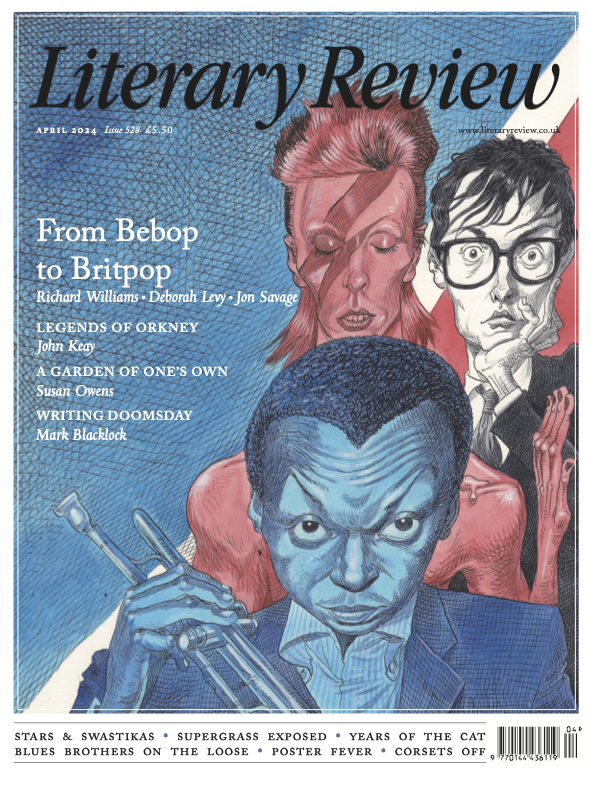
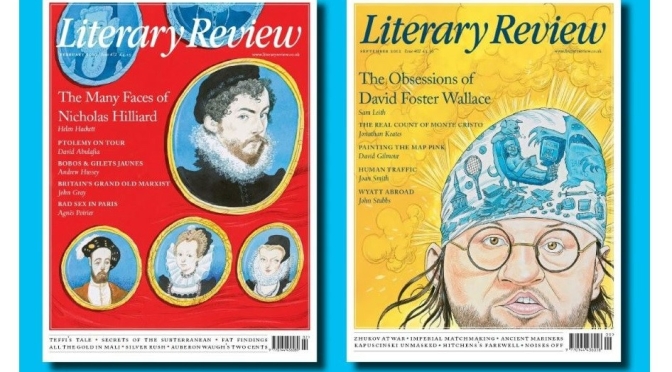
Literary Review – June 2023 issue: The issue features a
Crime Round-up. Also, Pétain In The Dock, Twilight of the Elite, Dementia’s Casualties, Man Versus Plague, and more.
By S A Cosby

S A Cosby’s troubled hero, Titus Crown, the sheriff of Charon County, Virginia, has to fight on many different fronts. Local racism makes his job difficult at the best of times, but now he is also faced with a school shooting and atrocious crimes against black children. His personal life has its own challenges and he is loaded down with guilt. Cosby’s talent makes all this misery work in a novel of great warmth, and he has a lovely turn of phrase. Titus’s loathing of hypocrisy, injustice and cruelty makes him enormously attractive.
By Mark Edwards

Mark Edwards’s great skill is to involve readers in his characters’ lives, showing step by mistaken step how they get themselves into trouble. In this case, the characters are Matthew and Helena, who had a relationship at university and meet again at a twenty-year reunion, soon after her husband has died. Rekindling their friendship, they travel to Iceland together, where an ill-judged selfie almost leads to her death. In the aftermath of this drama, she reveals a terrible secret to Matthew and their plunge into emotional and practical trauma begins. The writing is straightforward and without flourishes, but it gives the increasingly dramatic story an air of surprising normality. Edwards carries readers with him all the way and then leaves them with a wicked cliffhanger.
By Gilly Macmillan
Gilly Macmillan’s latest psychological thriller is a study in greed and vengeance, and it suggests that there is almost no human being who cannot be persuaded to commit a crime when motivated by one or the other. Nicole and Tom have won £10 million in the lottery and built a spectacular glass barn on the beautiful Lancaut Peninsula on the River Wye. Their nearest neighbours are an at first apparently benevolent but then increasingly sinister couple, Olly and Sasha, who seemingly live without means in a ravishing medieval manor house, cared for by their housekeeper, Kitty. Of course nothing is quite as it appears and when a body is found floating in a swimming pool, the police arrive and everyone’s story begins to unravel. Twisty and colourful, this is a novel to entertain all who have experienced schadenfreude.

Times Literary Supplement (May 26, 2023) – Alan Jenkins on Martin Amis, Young Russian fascists, The Rossettis at Tate Britain, Writers at the Hay Festival, Seamus Perry on ‘Byron’s Voice’.
Martin Amis, a talent for our time By Alan Jenkins

In the Foreword to The War Against Cliché: Essays and reviews 1971-2000, a career-spanning collection of his journalism (literary and other), Martin Amis recalled how, when they started out in the early 1970s, he and his friends and colleagues touchingly assumed that literary criticism was as essential to civilization as literature itself was. Furthermore, “the most fantastic thing about this cultural moment” was that, in the debate between the Two Cultures, Art vs Science, “Art seemed to be winning”.

The New Criterion – June 2023 issue:

Times Literary Supplement (May 19, 2023) – Portrait of a Marriage: The Mandelas; The Return of Inflation; Doing Justice to John Rawls; The Greatest Italian Novel and Heaney’s translations.