
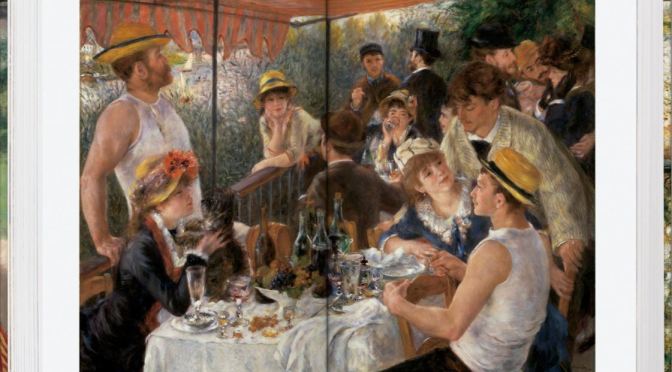
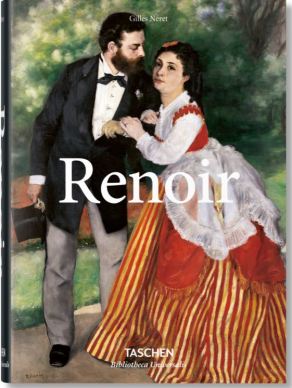
 In an incisive text tracing the artist’s career and stylistic evolution, Gilles Néret shows how Renoir reinvented the painted female form, with his everyday goddesses and their plump forms, rounded hips and breasts. Renoir’s later phase, marked by his return to the simple pleasure of the female nude in his baigneuses series, was his most innovative and stylistically influential, and would inspire such masters as Matisse and Picasso.
Pierre-Auguste Renoir’s (1841–1919) timelessly charming paintings still reflect our ideals of happiness, love, and beauty. Derived from our large-format volume, the most comprehensive retrospective of his work published to date, this compact edition examines the personal history and motivation behind the legend. Though he began by painting landscapes in the Impressionist style, Renoir found his true affinity in portraits, after which he abandoned the Impressionists altogether. Though often misunderstood, Renoir remains one of history’s most well-loved painters—undoubtedly because his works exude such warmth, tenderness, and good spirit.
The author
Gilles Néret (1933–2005) was an art historian, journalist, writer, and museum correspondent. He organized several art retrospectives in Japan and founded the SEIBU Museum and the Wildenstein Gallery in Tokyo. He directed art reviews such as L’Œil and Connaissance des Arts and received the Élie Faure Prize in 1981 for his publications. His TASCHEN titles include Salvador Dalí: The Paintings, Matisse, and Erotica Universalis.
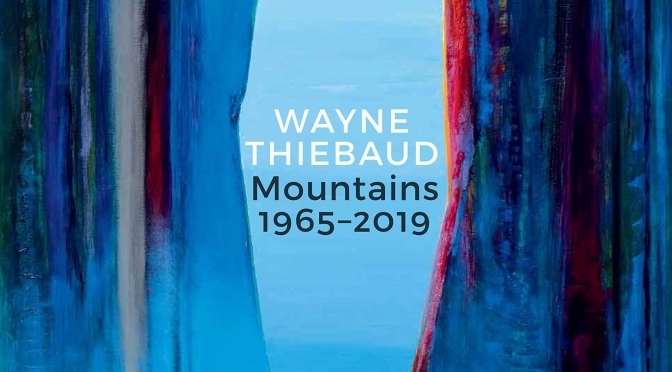
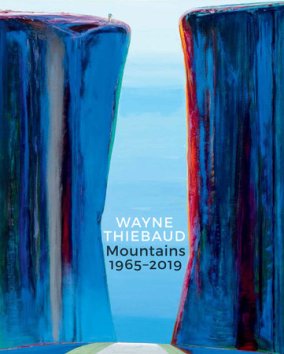 In the 2000s, California-based painter Wayne Thiebaud began focusing on a series of mountain paintings, a subject he had first addressed in the 1960s and 1970s. Rendered in his signature confectionary palette, these colorful works combine memories of mountains he had seen in childhood and observations of the summits of the Sierra Nevada Range in Yosemite. With their heroic, exaggerated proportions and unusual perspectives, these paintings seem to combine fiction and reality. Conveying a sense of the sublime and the vast magnitude of our surroundings, they draw upon the history of landscape painting of the American West.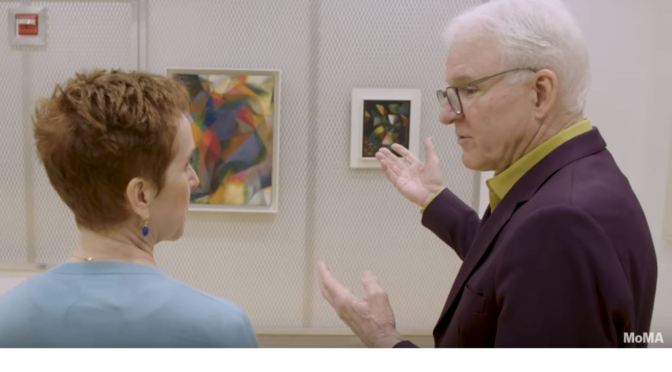
 In this episode of “The Way I See It,” actor and comedian Steve Martin looks at paintings by two early pioneers of American abstraction and takes us on a journey of seeing—shape and color transform into mountains, sky, and water. Find “The Way I See It” on BBC Sounds or wherever you get your podcasts.
 Over 200 of the world’s leading international Modern and contemporary art galleries display artworks by over 4,000 artists, including paintings, sculptures, installations, photography, film, video, and digital art. Visitors can find works ranging from editioned pieces by young artists to museum-caliber masterpieces.
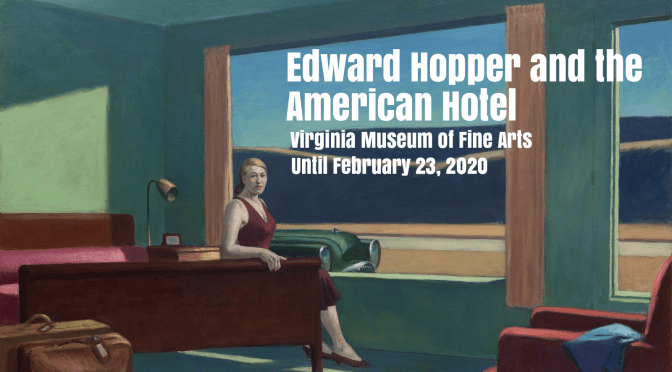
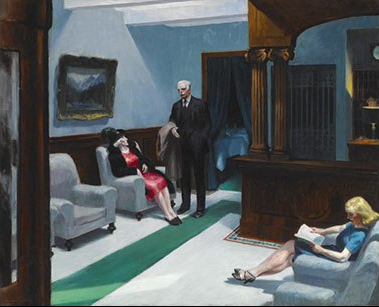 Isolation was a persistent theme in Hopper’s art and life. Was he dogged by isolation or did he pursue it? ‘Did anybody really know this silent, non-communicative man?’ asked Raphael Soyer in a 1981 interview, 14 years after Hopper’s death. His friends recollected a cynical and taciturn artist, self-doubting, introspective and distrustful of fame. But before Hopper became the painter of lonely figures in all-night diners, he was the illustrator of raucous party scenes and smiling couples waltzing together at summer fêtes.
 The artist incorporates an array of art historical scenes such as John Martin’s English-Romantic apocalypses and Edouard Manet’s Luncheon on the Grass with ubiquitous imagery sourced from the Internet. The highly rendered areas in her paintings resemble a cascade of Google image search results where cellphone photos of skylines and gardens slide past gestural marks.
  Shulamit Nazarian is pleased to present Strange Little Beast, a solo exhibition of new works by Los Angeles-based painter Annie Lapin. This will be the artist’s first solo exhibition with the gallery.


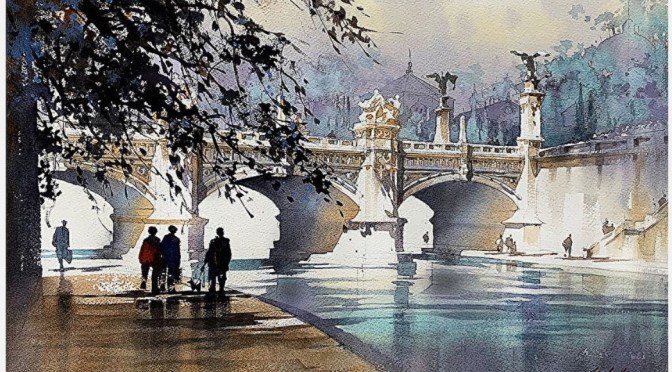
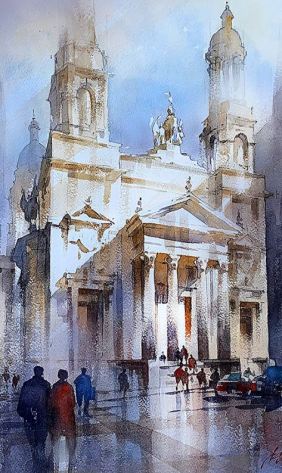 Since I work as a fine artist now, there are fewer commercial entities to please, so I’ve discovered something that should have been very obvious. If you want to engage the viewer, don’t tell them everything, encourage them to ask their own questions. An artist should not describe—he or she should interpret. If you design into your work a bit of mystery—areas where the viewer must “fill in the blanks”—you set up an unspoken dialog with your viewers and an emotional weight will begin to develop organically. This is just one example of course, but an important one.
 Boomers Daily