Autumn Rhythm (Number 30) is a 1950 abstract expressionist painting by American artist Jackson Pollock in the collection of the Metropolitan Museum of Art in New York City. The work is a distinguished example of Pollock’s 1947-52 poured-painting style, and is often considered one of his most notable works.
Tag Archives: Paintings
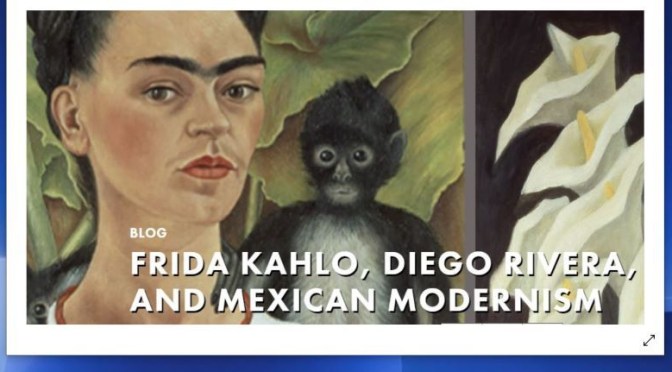
Top Art Exhibitions: ‘Frida Kahlo, Diego Rivera And Mexican Modernism’ (2020)
“Frida Kahlo, Diego Rivera, and Mexican Modernism from the Jacques and Natasha Gelman Collection” is on view at the Denver Art Museum through January 24, 2021.
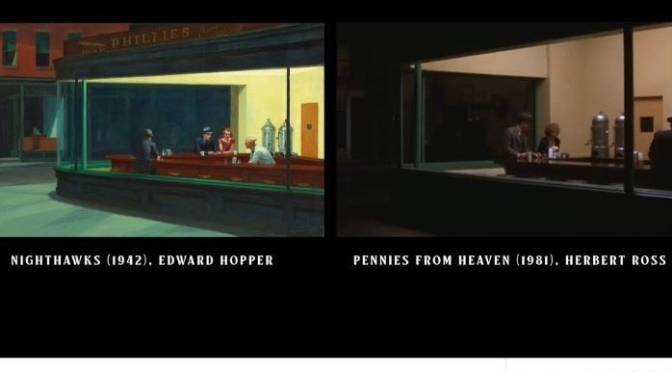
Art & The Movies: Paintings That Inspired Great Films
This video is a visual representation on how film directors create movies or movie scenes influenced by famous paintings.
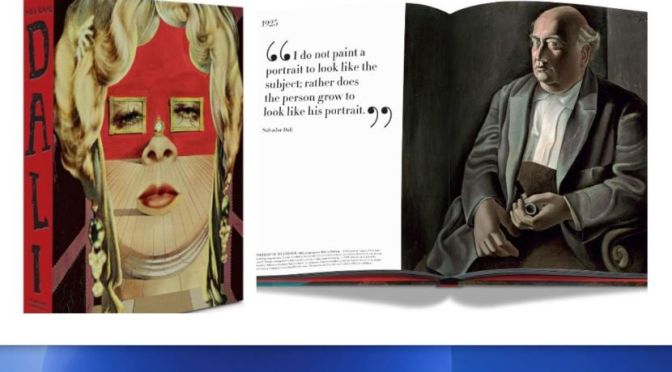
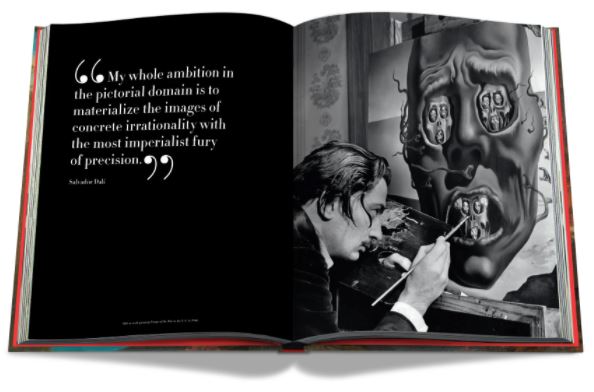
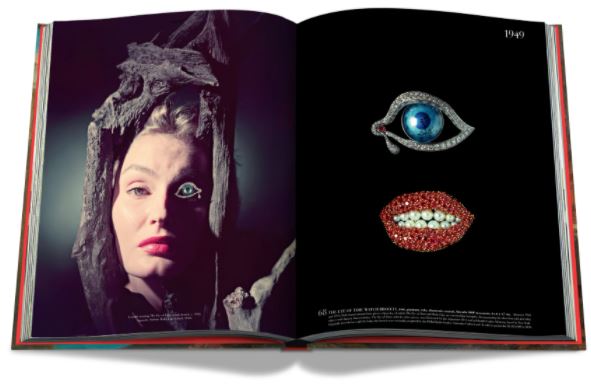
Top New Art Books: ‘Salvador Dalí : The Impossible Collection’
In the popular imagination, possibly no other artist’s work is more recognizable than that of Salvador Dalí. Indeed, for many he is the ultimate mad artist, whose singular vision remorselessly probed his own psychological depths. His nightmarish visions and bizarre landscapes express the angst and turbulence of the twentieth century.
Dalí’s creativity embraced many different modes of expression and was never constrained by any one style. Over eight decades, the prodigious range of Dalí’s activity spanned every conceivable medium, from painting and drawing to sculpture, film, furniture, books, stage design and jewelry, not to mention his highly eccentric public persona, which could be considered an art form in itself.
Selected by curator and art historian Paul Moorhouse, Assouline presents Salvador Dalí: The Impossible Collection, spotlighting 100 works by this extraordinary creative mind, exploring Dalí’s inspirations and array of influences, from Old Masters to realism, Impressionism, Fauvism and Cubism as well as experimental approaches that delved into his obsessions with religion, science and stereoscopy.
Paul Moorhouse is a London-based art historian and curator. Currently chief executive of the Anthony Caro Studio, he was senior curator and head of displays at the National Portrait Gallery, London (2005–17) and senior curator at the Tate (1985–2005), where he was closely involved with the creation of Tate Modern and Tate Britain. He has curated numerous exhibitions internationally and published extensively, with books and exhibition catalogues on major modern and contemporary artists, including Anthony Caro, Salvador Dalí, Alberto Giacometti, Howard Hodgkin, Hans Hofmann, Richard Long, Gerhard Richter, Bridget Riley, Cindy Sherman and Andy Warhol.
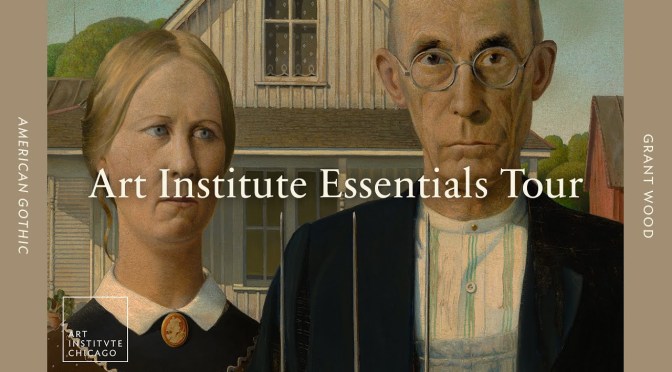
Art Video: “American Gothic” By Grant Wood (Art Institute Chicago)
On this episode of Art Institute Essentials Tour, take a closer look at American Gothic, painted by Grant Wood in 1930. One of the most famous American paintings of all time, this double portrait by Grant Wood debuted at the Art Institute in 1930, winning the artist a $300 prize and instant fame. Wood intended this Depression-era canvas to be a positive statement about rural American values during a time of disillusionment.
Grant DeVolson Wood (1891-1942) was an American painter best known for his paintings depicting the rural American Midwest, particularly American Gothic, which has become an iconic painting of the 20th century.
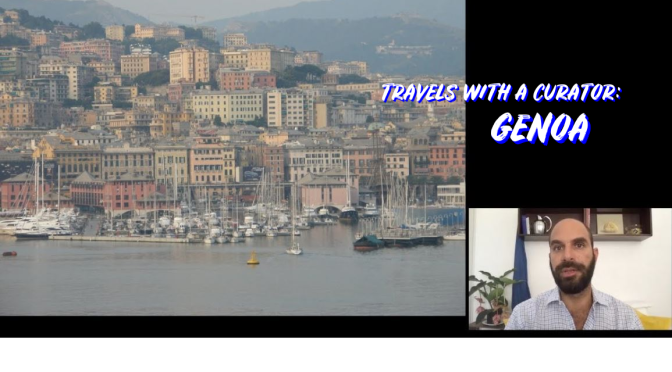
Travels With A Curator: “Genoa” (The Frick Video)
In this week’s episode of “Travels with a Curator,” join Deputy Director and Peter Jay Sharp Chief Curator Xavier F. Salomon on a journey to Genoa, one of his favorite cities in Italy. A rich maritime and financial center in the 17th century, Genoa was a natural draw for artists at the time, including the great Flemish painter Anthony van Dyck. The Frick owns three portraits painted by Van Dyck while he resided in Genoa, allowing viewers to peek into the past at a flourishing city at the height of its power and influence.
To see these paintings in detail, please visit our website: https://collections.frick.org/objects…
https://collections.frick.org/objects…
New Exhibitions: “Wilhelm Thöny – Dreaming In Times Of Crisis” (Salzburg, AT)
The motifs of Thöny’s art are informed by the pervasive unease of the interwar years, whose apprehensions he portrayed in the grotesque and nightmarishly somber drawings he created around 1920 for his unpublished Buch der Träume (Book of Dreams). Other works, however, render serene and idyllic landscapes and urban views as well as scenes from social life.
Wilhelm Thöny (1888 Graz, AT—1949 New York, US) was a restless cosmopolitan and indefatigable networker whose peripatetic career took him far beyond Austria’s borders. A cofounder of the Secession in his native Graz, he made friends along the way—he spent time in Munich and Paris, on the Côte d’Azur and in New York, among other places—but zealously guarded his creative independence, building an oeuvre that did not align with any of the major tendencies of the period.
The Museum der Moderne Salzburg’s first exhibition devoted to Thöny’s oeuvre since 2010 presents around two hundred works from the museum’s own collection. One highlight in the show are the (letter) illustrations in the artist’s Scrap Book from the 1930s. Observations from everyday life captured with lighthearted humor are interspersed between reflections on the increasingly oppressive political situation. It is the first time that this body of work, which is of outstanding value both for its artistic quality and as a document of its time, is shown in its entirety in Salzburg.
Cocktails With A Curator: “Veronese’s ‘Choice Between Virtue And Vice'”
In this week’s episode of “Cocktails with a Curator,” decipher the significance of the many fascinating elements that compose the other large allegorical painting by Paolo Veronese at the Frick, “Choice Between Virtue and Vice,” with Deputy Director and Peter Jay Sharp Chief Curator Xavier F. Salomon. The program is paired with a Negroni Sbagliato, a twist on the cocktail from last week’s episode. Leave a comment below with your favorite detail!
Top Artist Profiles: Brazilian Watercolorist Antonio Giacomin
Antonio Giacomin
was born in Serra Gaúcha, where, in 1980, he started in the universe of painting. It was to improve in the United States, Mexico and Europe. In 2007, he launched the book “Poesias em Aquarela”, an inventory of thematic images resulting from trips undertaken in various regions of Rio Grande do Sul.
In 2012, in partnership with the writer Nivaldo Pereira, he launched the book “Jeitos de Ser Brasil” , in which aspects of Brazilian culture were recorded. In 2014, in partnership with Marcos Fernando Kirst, he launched the work “Serra Gaúcha: O Passado Presente”. He won the contest to choose the design of the Queen’s crown at the 2014 Grape Festival. He lives and works in Caxias do Sul, where he maintains his studio.
Top Online Exhibitions: “At Sea” At David Zwirner – “Resonates Forcefully”

Yes! in the sea of life enisled,
With echoing straits between us thrown,
Dotting the shoreless watery wild,
We mortal millions live alone.
—Matthew Arnold, To Marguerite: Continued
Whether in the awesome forms of the legendary floods in Gilgamesh and Genesis, or via the more delightful but ultimately crueler torment of Homer’s Mediterranean, the sea is among art’s oldest subjects. For millennia humans have been fascinated and horrified in equal measure by mystery, eternity, and danger of which the sea seems to be a mirror: sometimes enigmatically placid, sometimes jagged with sudden storms.
Dating from the nineteenth century to the present, these works differ in media and approach, but together, they ask social, political, and environmental questions that resonate forcefully today.