Tag Archives: Old Age

Elderly & Coronavirus: Nursing Homes Increase Guest Symptom, Travel And Exposure Reviews

From a Harvard Gazette online article (March 10, 2020):

Harvard Gazette Elderly Coronavirus Risk Article March 10 2020There’s a symptom review, there’s a travel review, and there’s an exposure review. And if the answer to any of those questions is yes, then you’re asked to not come in. And so far people have been compliant and have left. So that is a good thing.

If you have a cough and a fever, if you’ve got respiratory symptoms and you’re short of breath, if you’ve traveled to a place of concern or if you may have been exposed to someone who did — especially if you’re symptomatic — then I would definitely ask, “Do I really need to visit my grandma today? Can I wait and can I Skype her? Can I do FaceTime?”

I know that’s hard for some of our older adults who aren’t technologically savvy, but maybe now is the time to get them hooked up. It really would be heartbreaking if, in wanting to do something positive for someone’s emotional or mental health, you ended up infecting them.

Harvard-affiliated Hebrew SeniorLife offers a continuum of care for 3,000 elderly people daily, with a range of services including residential assisted living, short-term rehabilitation, outpatient services, and long-term care for those with chronic illness. In a Q&A interview aimed at understanding the challenges involved, Harvard Medical School Assistant Professor Helen Chen, Hebrew SeniorLife’s chief medical officer, discussed steps the facility has taken to combat the virus and the outlook going forward.

Read full article

Studies: Elderly In 3rd Highest Level Of Exercise Reduce Brain Shrinkage, Aging By 4 Years (AAN)

From a March 5, 2020 American Academy of Neurology release:

American Academy of Neurology (AAN) Logo“These results are exciting, as they suggest that people may potentially prevent brain shrinking and the effects of aging on the brain simply by becoming more active,” said study author Yian Gu, Ph.D., of Columbia University in New York and a member of the American Academy of Neurology.

“Recent studies have shown that as people age, physical activity may reduce the risk of cognitive decline and dementia. Our study used brain scans to measure the brain volumes of a diverse group of people and found that those who engaged in the top third highest level of physical activity had a brain volume the equivalent of four years younger in brain aging than people who were at the bottom third activity level.”

Older people who regularly walk, garden, swim or dance may have bigger brains than their inactive peers, according to a preliminary study to be presented at the American Academy of Neurology’s 72nd Annual Meeting in Toronto, Canada, April 25 to May 1, 2020. The effect of exercise was equal to four fewer years of brain aging. The study used magnetic resonance imaging (MRI) scans to measure the brains of people with a range of activity levels, including those who were inactive to those who were very active. The scans showed less active people had smaller brain volume.

Read full article

Studies: Dementia Risk Is Up To 11 Times Greater With Declines In Both Memory And Gait (JAMA)

From a JAMA Network Open online release (February 21, 2020):

JAMA Network OpenAcross the 6 studies of 8699 participants, mean age ranged between 70 and 74 years and mean gait speed ranged between 1.05 and 1.26 m/s. Incident dementia ranged from 5 to 21 per 1000 person-years. Compared with usual agers, participants with only memory decline had 2.2 to 4.6 times higher risk for developing dementia… 

Those with only gait decline had 2.1 to 3.6 times higher risk. Those with dual decline had 5.2 to 11.7 times the risk…

Impaired mobility, such as slow gait, is associated with an increased risk of dementia, but the effect size of this association is generally modest.16 Identifying persons who experience both mobility decline and memory decline, a main symptom in the early stage of dementia, may have a greater prognostic value in assessing risk of dementia because the combination could identify a group in whom gait speed decline is at least in part caused by neurodegenerative pathologic conditions of the central nervous system rather than local musculoskeletal problems, such as sarcopenia or osteoarthritis.79 A recent study of 154 participants with mild cognitive impairment reported that those who declined in both cognition and gait speed had the highest risk of dementia.

Read full study


Elder-Care Crisis: Early Screening For Dementia, Increased Preventative Primary-Care Are Needed

From a Wall Street Journal Opinion article (Feb 10, 2020):

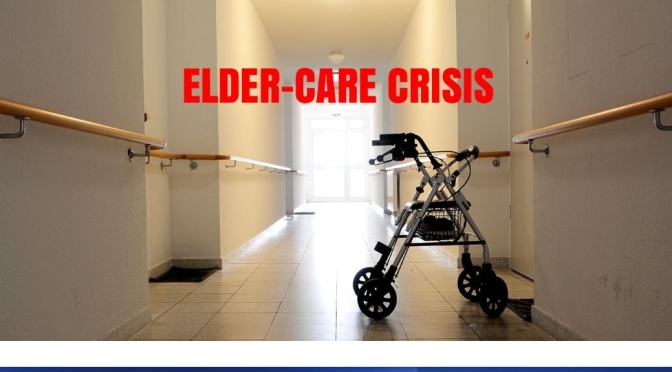
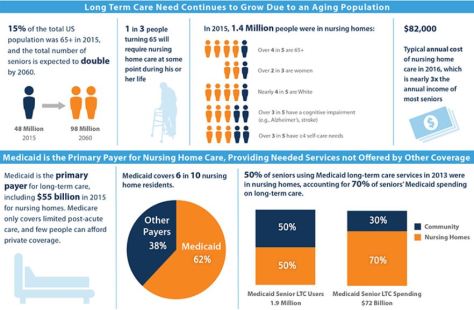
How to address the elder-care crisis? Ideally, doctors would screen older patients for dementia. An early diagnosis helps patients understand treatment options, plan for the future and receive appropriate care in the hospital. 

Costs of Long-Term Elderly Care Kaiser Infographic

Other steps include: more preventive care, changes to Medicare’s rehabilitation policies, adopting new reimbursement methods, and developing new measures of success. Primary-care offices can prevent hospital visits, but Americans seeking primary care face an average wait time of 24 days. This might not be a problem for a patient in need of an annual physical, but conditions like chest pain or infections require prompt treatment. Primary-care offices that offer same-day sick visits, home visits for bed-bound older adults, or at-home monitoring of conditions could reduce emergency department volumes.

Read full article by Elizabeth Goldberg MD

New Books On Ageing: “The Changing Mind” By Daniel Levitin (February 2020)

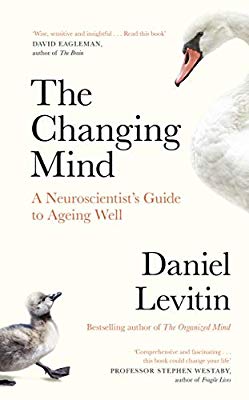
The Changing Mind A Neuroscientist's Guide To Ageing Well Daniel Levitin Feb 2020Challenging widely held assumptions about the diminishing abilities of an ageing brain, leading neuroscientist Daniel Levitin argues that we should view getting older as a beneficial experience rather than a form of cognitive entropy. Persuasively argued and consistently surprising, The Changing Mind will alter your perception of the relationship between age and intellect.

We have long been encouraged to think of old age as synonymous with deterioration. Yet, recent studies show that our decision-making skills improve as we age and our happiness levels peak in our eighties. What really happens to our brains as we get older?

More of us are living into our eighties than ever before. In The Changing Mind, neuroscientist, psychologist and internationally-bestselling author Daniel Levitin invites us to dramatically shift our understanding of growing older, demonstrating its many cognitive benefits. He draws on cutting-edge research to challenge common and flawed beliefs, including assumptions around memory loss and the focus on lifespan instead of ‘healthspan’.

Levitin reveals the evolving power of the human brain from infancy to late adulthood. Distilling the findings from over 4000 papers, he explains the importance of personality traits, lifestyle, memory and community on ageing, offering actionable tips that we can all start now, at any age.

Featuring compelling insights from individuals who have thrived far beyond the conventional age of retirement, this book offers realistic guidelines and practical cognition-enhancing tricks for everyone to follow during every decade of their life. This is a radical exploration of what we all can learn from those who age joyously.

Read more or purchase

Research: “Designing Tech For Healthy Aging In Place” (UC San Diego Video)

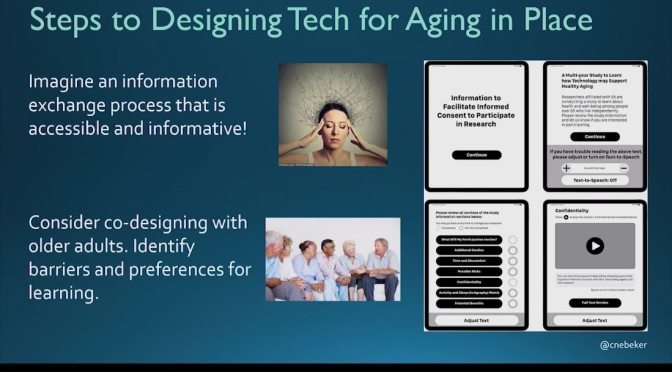
Digital tools including mobile apps, wearable sensors, and social network platforms offer unprecedented opportunities in health research and healthcare. However, this rapidly emerging sector is outpacing existing regulatory structures and challenging norms for ethical practice.

Camille Nebeker, EdD, MS, Associate Professor of Behavioral Medicine in the Department of Family Medicine & Public Health at the UC San Diego School of Medicine describes how technologies, including wearable sensors and artificial intelligence, are leveraged to capture personal health data and infer health status. Nebeker presents the ethical considerations specific to informed consent, risks of harm and potential benefits while underscoring the role that funding agencies, policy makers, researchers, ethicists, and editors have in creating the infrastructure needed to advance safe digital health research and practice.

Surgery: There Are No Low-Risk Procedures For Frail Older Patients (NYT)

From a New York Times online article:

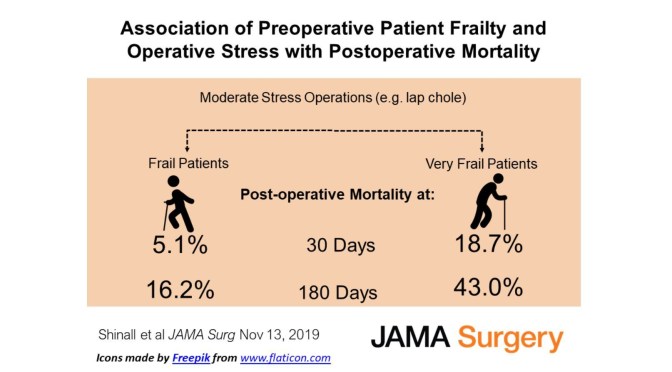
JAMA Surgery“Our data indicate that there are no low-risk procedures among patients who are frail,” Dr. Hall and his co-authors concluded in their study.

Dr. Hall’s research, recently published in JAMA Surgery, has found that frail, older adults are more likely than other patients to die after even supposedly minor procedures — and even when the surgery goes well, without complications.

After operations, frail patients find it harder than others to regain strength and mobility, and to return to independent lives. Doctors and researchers assess frailty in a variety of ways. Geriatricians often measure things like gait and grip strength, and look for unintended weight loss and exhaustion.


To read more: https://www.nytimes.com/2019/12/13/health/frail-elderly-surgery.html

Books On Aging: “Old Man Country – My Search For Meaning Among The Elders” (Thomas R. Cole)

From a NextAvenue.org online review:

Old Man Country Thomas R. Cole 2019Am I Still a Man?

Masculinity is not a natural collection of individual traits but, rather, a cultural story, a plot or a script by which men are judged and judge themselves. One problem is that this script for masculinity stops at midlife. For most old men in American society, there are no landmarks of achievement or value; no lighthouse guiding one’s moral compass; no employment office with the sign “old men wanted.” There is only the province of retirement — a barren place often marked by an absence of wealth, prestige and personal meaning.

Do I Still Matter?

At least since the institutionalization of retirement in the mid-20th century, old men have often felt marginalized, useless or invisible. Retirement is a primary source of depression for those whose identities and self-esteem have depended on being productive, earning a living and being engaged with others in the workplace. Employment and volunteer work are often less possible for men who have reached their 80s.

What Is the Meaning of My Life?

Because our society provides old people with no widely shared meanings or norms by which to live, the task of finding significance in later life falls to individuals in their relationships with family and community.

Meaning is partly a matter of love and of relevance. If I love and am loved, my life has significance. Meaning is also a moral question: Have I lived a good life by my own lights? Did I, and do I, measure up to my own expectations and to the standards of my family, religion, community and nation?

Am I Still Loved?

Love, of course, means many things. There is love of God. There is love that comes from God or a Divine Being or Beings — love that carries existential meaning. It is the kind of love Ram Dass received from his guru Neem Karoli Baba, who inspired him to live a life of loving service on the path toward merging with Brahman, the ultimate reality in Hinduism.

To read more: https://www.nextavenue.org/questions-older-men-ask-themselves/?hide_newsletter=true&utm_source=Next+Avenue+Email+Newsletter&utm_campaign=1eb08d4dfa-12.10.2019_Tuesday_Newsletter&utm_medium=email&utm_term=0_056a405b5a-1eb08d4dfa-166479103&mc_cid=1eb08d4dfa&mc_eid=6cab05fae0

Genetic Engineering: Harvard Scientist George Church Seeks To “Reverse Aging” (60 Minutes Video)

Our lives have been transformed by the information age. But what’s coming next is likely to be more profound, call it the genetic information age. We have mapped the human genome and in just the last few years we have learned to read and write DNA like software. And you’re about to see a few breakthroughs-in-waiting that would transform human health. For a preview of this revolution in evolution we met George Church, a world leading geneticist, whose own DNA harbors many eccentricities and a few genes for genius.

Website: https://www.cbsnews.com/news/harvard-geneticist-george-church-goal-to-protect-humans-from-viruses-genetic-diseases-and-aging-60-minutes-2019-12-08/


Aging: 78-Year Old Author Paul Theroux Traveled To Mexico To “Feel Young”

From a BBC Travel online article:

Paul TherouxI think of myself in the Mexican way, not as an old man but as most Mexicans regard a senior, an hombre de juicio, a man of judgment; not ruco, worn out, beneath notice, someone to be patronised, but owed the respect traditionally accorded to an elder, someone (in the Mexican euphemism) of La Tercera Edad, the Third Age, who might be called Don Pablo or tío (uncle) in deference. Mexican youths are required by custom to surrender their seat to anyone older. They know the saying: Más sabe el diablo por viejo, que por diablo – The devil is wise because he’s old, not because he’s the devil.Paul Theroux's On The Plain of Snakes A Mexican Journey

But “Stand aside, old man, and make way for the young” is the American way.

I was that old gringo. I was driving south in my own car in Mexican sunshine along the straight sloping road through the thinly populated valleys of the Sierra Madre Oriental – the whole craggy spine of Mexico is mountainous. Valleys, spacious and austere, were forested with thousands of single yucca trees, the so-called dragon yucca (Yucca filifera) that Mexicans call palma china. I pulled off the road to look closely at them and wrote in my notebook: I cannot explain why, on the empty miles of these roads, I feel young.

To read more: http://www.bbc.com/travel/story/20191203-is-travel-the-secret-to-a-long-life