

Tag Archives: Old Age
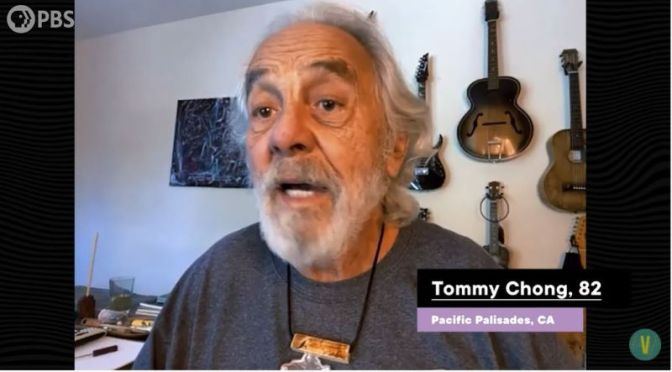
Aging: ’80-Year Olds On Happiness In 2021′ (Video)
Does your grandparent hold the secret to a happier New Year? Because Americans over 80 years old report feeling happier than any other age group, we asked them to share their wisdom as 2021 begins during a time of challenge and uncertainty. These elders include cannabis comedian Tommy Chong, a psychologist, a transgender burlesque performer, and a 90-year-old nudist who lets it all hang out. Self-Evident: A PBS American Portrait Miniseries seeks to answer the question: what does it really mean to be an American today? Join our hosts — Dr. Ali Mattu, a licensed therapist and clinical psychologist and YouTuber behind “The Psych Show,” as well as Danielle Bainbridge, Ph.D., historian and the writer/creator of PBS’s “The Origin of Everything” — as they explore the lives of real Americans, living during this unprecedented moment in time.
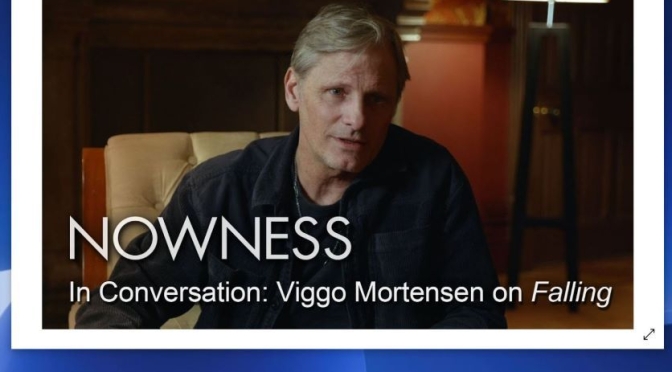
Interview: Director-Actor Viggo Mortensen On His Film “Falling” & Dementia
Viggo Mortensen adds to his résumé of actor, poet, painter, and musician, with the release of FALLING, his 2020 directorial debut about the legacy of dementia and family bonds. In this exclusive interview with NOWNESS creative director Bunny Kinney, Mortensen speaks about the personal experiences that inspired his latest film.
Still not seen FALLING? Rent it via https://www.nowness.com/story/falling…
FALLING is a powerful drama about a father and son relationship on the brink of collapse. Hollywood giant Lance Henriksen (Alien, The Terminator) plays Willis, a homophobic farmer who is forced to live with his gay son. Willis has early-stage dementia, which makes running the farm on his own increasingly difficult. So John (Viggo Mortensen) brings him to stay at his California home so that he and his sister Sarah (Laura Linney) might help him find a place closer to the family. Unfortunately, their best intentions ultimately run up against Willis’ adamant refusal to change his way of life.
Viggo Mortensen is one of the most in-demand actors of his generation. After winning hearts and minds with his valiant portrayal of Aragorn in the Lord of the Rings trilogy, he has received numerous Oscar and BAFTA nominations for his performances in Green Book, Captain Fantastic, and Eastern Promises, to name a few. Shot and edited by Antonio Rui Ribeiro Produced by Modern Films

Retirement: ‘How Social Security Works’ (Video)
Since 2010, Social Security’s cash flow has been negative, meaning that the agency does not collect enough money through taxes to cover what it is paying out. Even though there was still this vast trust fund behind Social Security, they started tapping that fund’s interest.
Starting in 2021, they will have to dip into the trust fund itself to cover those benefit payments, and even that pool of cash has an expiration date. Trustees of the fund expect that by 2035 it will not be enough to cover full benefit payments. Due to COVID-19, that date may come years sooner than expected, which has some retirees seriously worried about their future.
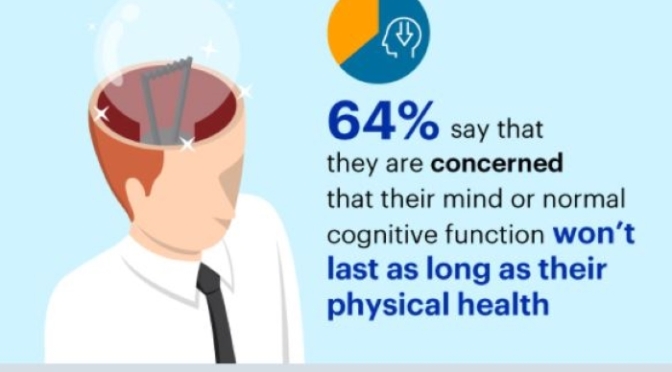
Infographic: Americans Feel ‘Old’ At 47, Fear Aging And Cognitive Decline

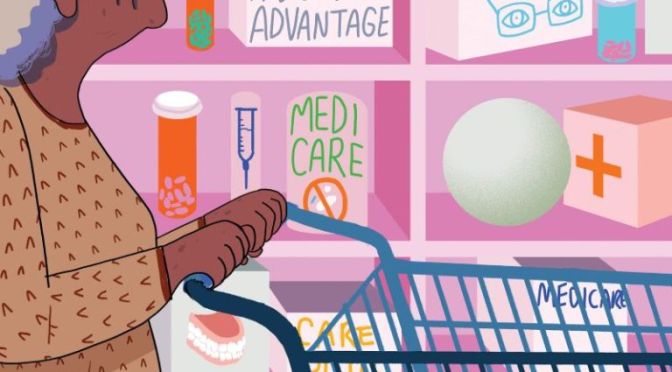
Retirement: Medicare, Medigap & Part D – Seniors Find Choices “Dizzying”

If you’re enrolled only in original Medicare with a Medigap supplemental plan, and don’t use a drug plan, there’s no need to re-evaluate your coverage, experts say. But Part D drug plans should be reviewed annually. The same applies to Advantage plans, which often wrap in prescription coverage and can make changes to their rosters of in-network health care providers.
“The amount of information that consumers need to grasp is dizzying, and it turns them off from doing a search,” Mr. Riccardi said. “They feel paralyzed about making a choice, and some just don’t think there is a more affordable plan out there for them.”
Is there another way?

When creation of the prescription drug benefit was being debated, progressive Medicare advocates fought to expand the existing program to include drug coverage, funded by a standard premium, similar to the structure of Part B. The standard Part B premium this year is $144.60; the only exceptions to that are high-income enrollees, who pay special income-related surcharges, and very low-income enrollees, who are eligible for special subsidies to help them meet Medicare costs.
“Given the enormous Medicare population that could be negotiated for, I think most drugs could be offered through a standard Medicare plan,” said Judith A. Stein, executive director of the Center for Medicare Advocacy.
“Instead, we have this very fragmented system that assumes very savvy, active consumers will somehow shop among dozens of plan options to see what drugs are available and at what cost with all the myriad co-pays and cost-sharing options,” she added.
Advocates like Ms. Stein also urged controlling program costs by allowing Medicare to negotiate drug prices with pharmaceutical companies — something the legislation that created Part D forbids.

Aging Adults: ‘Learning About “End-Of-Life Care” From Grandpa’ (NEJM)

I described another option to Grandpa: he could voluntarily stop eating and drinking. He’d never considered this possibility (which reminded me again how one’s family members and clinicians contribute to inequities in end-of-life care). The option intrigued Grandpa, and during subsequent visits he reinforced his plan to pursue it. I insisted that he first move into my home. I wanted to ensure the quality of his care, knowing that I could enroll him in my health system’s hospice program. But I also wished to test his resolve, reasoning that his mind might change once his isolation ended.

For a month after he entered our home, his spirits were brighter, his gait steadier, and his appetite heartier. He joined my wife, two daughters, and me for dinner each night, typically preceded by a vodka martini that I had stirred for him — a daily pleasure he’d allowed himself for 80 years and had missed as a facility resident. He’d tell stories of the Navy, his career, and his family history and would regularly quip, “If you keep treating me this well, I might just stick around a while longer!”
But eventually he returned to his goal of hastening death. One night, he said he was ready to stop eating and drinking the next morning, but when morning came, he asked for his usual coffee and bagel. He confided that he was scared. When I asked of what, he replied, “It’s like trying to roller skate. I’m scared of starting. Though I know that once I do, I’ll probably roll.”

Health Studies: 80% Of Married Couples Share Heart Disease Risks, Poor Health Lifestyles (JAMA)

In this cross-sectional study of 5364 couples consisting of employees and spouses (or domestic partners) undergoing an annual employer-sponsored health assessment, 79% of the couples were in the nonideal category of a CV health score. This within-couple concordance of nonideal CV health scores was associated mostly with unhealthy diet and inadequate physical activity.

The study included 10 728 participants (5364 couples): 7% were African American, 11% Hispanic, 21% Asian, and 54% White (median [interquartile range] age, 50 [41-57] years for men and 47 [39-55] for women). For most couples, both members were in the ideal category or both were in a nonideal category.
Concordance ranged from 53% (95% CI, 52%-54%) for cholesterol to 95% (95% CI, 94%-95%) for diet. For the CV health score, in 79% (95% CI, 78%-80%) of couples both members were in a nonideal category, which was associated mainly with unhealthy diet (94% [95% CI, 93%-94%] of couples) and inadequate exercise (53% [95% CI, 52%-55%] of couples). However, in most couples, both members were in the ideal category for smoking status (60% [95% CI, 59%-61%] of couples) and glucose (56% [95% CI, 55%-58%]).
Except for total cholesterol, when 1 member of a couple was in the ideal category, the other member was likely also to be in the ideal category: the adjusted odds ratios for also being in the ideal category ranged from 1.3 (95% CI, 1.1-1.5; P ≤ .001) for blood pressure to 10.6 (95% CI, 7.4-15.3; P ≤ .001) for diet. Concordance differed by ethnicity, socioeconomic status, and geographic location.
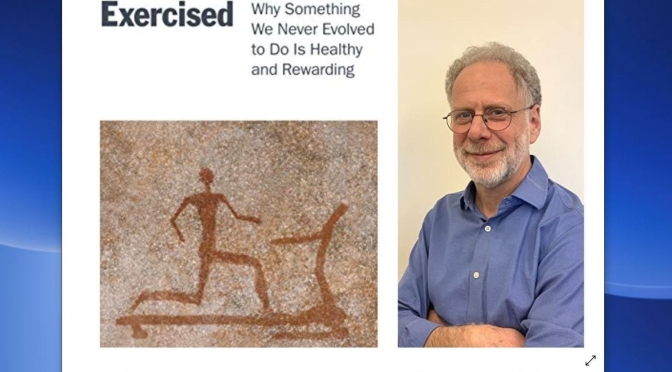
Top New Books On Aging: “Exercised” By Daniel E. Lieberman – “Extending Longevity” (Harvard)

HARVARD MAGAZINE (SEPT – OCT 2020): From the book EXERCISED: Why Something We Never Evolved to Do Is Healthy and Rewarding by Daniel E. Lieberman, to be published on September 8, 2020 by Pantheon Books:
‘….many of the mechanisms that slow aging and extend life are turned on by physical activity, especially as we get older. Human health and longevity are thus extended both by and for physical activity.’

The graph breaks total energy expenditure (TEE) into two parts: active energy expenditure, and resting metabolism. Resting metabolism remains elevated for hours even after exercise ceases, burning additional calories in a phase known as excess post-exercise oxygen consumption (EPOC).
Exercise is like scrubbing the kitchen floor so well after a spill that the whole floor ends up being cleaner. The modest stresses caused by exercise trigger a reparative response yielding a general benefit.
In order to elucidate the links between exercise and aging, I propose a corollary to the Grandmother Hypothesis, which I call the Active Grandparent Hypothesis. According to this idea, human longevity was not only selected for but was also made possible by having to work hard during old age to help as many children, grandchildren, and other younger relatives as possible survive and thrive. That is, while there may have been selection for genes (as yet unidentified) that help humans live past the age of 50, there was also selection for genes that repair and maintain our bodies when we are physically active.
Daniel E. Lieberman is a paleoanthropologist at Harvard University, where he is the Edwin M Lerner II Professor of Biological Sciences, and Professor in the Department of Human Evolutionary Biology. He is best known for his research on the evolution of the human head and the evolution of the human body.
 Boomers Daily