A key writer of the late 19th century, Joris-Karl Huysmans (1848-1907) was an art critic who is still little known or little understood by the general public. However, his contribution to the artistic press and the aesthetic debate was as decisive as the impact of his novel Against Nature.
More passionate about Hals and Rembrandt until his discovery of Degas in 1876-1879, Huysmans admitted that this was a defining moment. And yet, his art criticism immediately accepted the possibility of a double modernity. The modernity of the painters of modern life and that of the explorers of dreams were not mutually exclusive. Here, Manet coexists with Rops and Redon. The desire Huysmans showed very early on to escape from the logic of church doctrine no doubt blurred the perception of his aesthetic choices.
How is a drapery put in place? For what reasons does this motive persist until today? How to explain its power of fascination? These are the questions that this exhibition intends to pose, in order to enter the “factory” of the drapery and to get closer to the artistic gesture. By showing the stages of making a drapery, the visitor will discover the singular practices of artists from the Renaissance to the second half of the 20th century.
November 30, 2019 – March 8, 2020, Museum of Fine Arts of Lyon
Albrecht Dürer, Drapery Study, 1508, Brush and Indian Ink, heightened white on dark green paper
The Musée des Beaux-Arts in Lyon retains an exceptional drawing by Albrecht Dürer studying a piece of drapery. This meticulous study reveals how the flexibility of a fabric lends itself to an infinity of folds, underlined by shadows and lights.
The mahout (elephant keeper), the turbaned Ottoman warriors, and the crowning crescent all allude to the Eastern origins of the elephant. Within the Kunstkammer the elephant represented rulership. This automaton clock, which strikes at both the quarter hour and the hour, is driven by a movement connected to a wheel mounted on the walkway of the howdah (saddle). On the hour, the four Muslim warriors revolve around the brickwork tower. The mahout thumps his arm up and down, as though he were leading the animal, and his counterweighted eyes move back and forth as the machine travels.
Presented to Empress Maria Theresa in Vienna in 1760, this automaton was made at the height of the “century of writing.” Written communication connected scientists, dignitaries, scholars, and artists across long distances, and the act of writing was celebrated in every form. This piece is the last in a series of increasingly complicated ones that Friedrich von Knaus produced during his tenure as Austrian court machinist; he presented other examples to dignitaries such as the French king Louis XV and Duke Charles Alexander of Lorraine.
The machine writes through the hand of the small statuette seated at its top, one of the first mechanical writing figures in human form. This video shows the mechanisms inside the sphere that produce its precise movements. Up to 107 words can be preprogrammed by the arrangement of pegs on a barrel. The figure can also be set via a hand-worked control to appear to write from dictation; this technology that presaged the first typewriter.
Duke Charles Alexander of Lorraine, who bought this automaton clock in 1777, collected luxury objects made in his realm that demonstrated local technical advances. The self-moving components of this timepiece represent the height of Flemish invention in a fashionable Neoclassical style. Mechanically complex and visually impressive, this sparkling clock was a worthy addition to the duke’s collection of timepieces and scientific instruments.
This video shows the movement of the dials for hours, minutes, and seconds; days of the month; and phases of the moon, as well as that of the seven dynamic design elements. The cross-of-Lorraine pendulum swings steadily over the main dial, underneath a dancing letter M. Above the calendar dial turns a Catherine wheel, while the four dragons supporting the obelisk flap their wings and spit pearls. Another Catherine wheel spins above the moon-phase dial, and the entire obelisk is topped by a rotating planetarium. The fourth dial shows the maker’s signature.
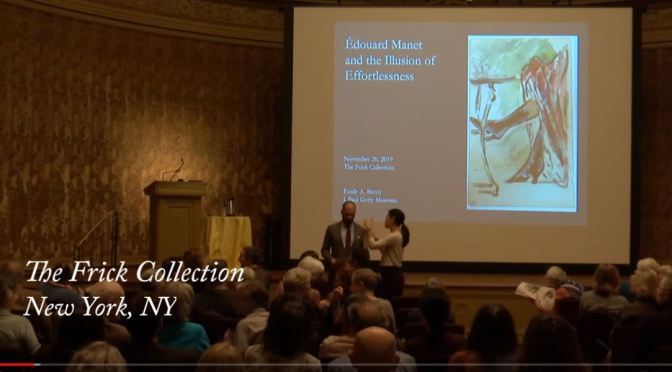
Claude Monet once remarked that Manet “always wanted his painting to look as if done at the first attempt,” but the truth was more complicated. Manet went to great lengths to perfect his work and even greater lengths to conceal the effort involved. From his earliest oil paintings to his late watercolors, this lecture contrasts Manet’s cultivation of a reputation for effortlessness with the arduous reality of his practice.
Emily A. Beeny, Associate Curator of Drawings, The J. Paul Getty Museum, Los Angeles
From Helen of Troy’s abduction to the deception of the Trojan Horse and the fall of the city, tread the line between myth and reality in this phenomenal new exhibition.
The story of the ancient city of Troy, and of the great war that was fought over it, has been told for some 3,000 years. Spread by travelling storytellers, it was cast into powerful words by the Greek poet Homer as early as the eighth to seventh century BC – and into powerful images by ancient Greek and Roman artists. Just as it enraptured audiences in the past, it still speaks to us today and it’s easy to see why. It’s a story that has it all – love and loss, courage and passion, violence and vengeance, triumph and tragedy – on a truly epic scale.
Spanning several decades, the tale is set in Greece’s mythical past. At its heart is the powerful city of Troy on the western coast of Anatolia (modern-day Turkey), besieged for 10 years by the Greeks, who sailed across the Aegean Sea to take revenge for a grave insult – the abduction of a woman. This ancient world war features a stellar cast of characters. Even the gods are involved.
For the first time in 50 years, The Huntington will join Pasadena’s world-famous Rose Parade® with a spectacular float, themed “Cultivating Curiosity,” to capture the spirit of The Huntington’s Centennial Celebration and highlight the institution’s rare research materials, inspiring art collections, and enchanting botanical gardens that have made it a beloved destination that welcomes 750,000 visitors each year.
Caravaggio & Bernini: The Discovery of Emotions features some of the artists’ greatest works, but also charts their influence on others. And that influence proved to be powerful and enduring. Caravaggistas spread across Europe like termites. And so we could call this exhibition a battle of the swaggerers, the pomp of a very eclectic brand of Viennese historicism facing off against the theatrical push and preen of two great Italians.
Bernini, “Medusa” (1638–40)
From almost the beginning, Caravaggio, that man who arrived in Rome in the 1590s, is completely outrageous. Whom did he think were his principal patrons? Churchmen, of course. Did they care that he depicted John the Baptist in an extraordinary painting, circa 1602, as a carefree, lascivious, curly-haired boy with the cheekiest of grins imaginable?
The new MoMA opens. Cherished works return to the walls of the galleries in brand new frames, while curators and artists watch the completion of the reinstallation. After being closed for four months, MoMA reopens its doors to the public.
TABLE OF CONTENTS
0:13 – Associate sculpture conservator Roger Griffith and sculpture conservation fellow Joy Bloser clean Arthur Young’s Bell-47D1 Helicopter.
0:52 – Senior curator of Painting and Sculpture Anne Umland and chief curator of Painting and Sculpture Ann Temkin oversee the hanging of Pablo Picasso’s “Les Demoiselles d’Avignon.”
1:20 – Peter Perez, frame shop foreman, discusses “The Starry Night’s” new, black frame.
2:53 – Artist Amy Sillman explains how she curated and arranged “The Shape of Shape,” part of the long-running Artist’s Choice exhibition series in which artists selects works to show from the Museum’s collection
4:17 – Photography curator Sarah Meister and conservator Lee Ann Daffner adjust the lighting on Joseph-Philibert Girault de Prangey’s “Rome. Arch of Septimus Severus and Capitoline Lion.”
5:02 – Senior deputy director of exhibitions and collections Ramona Bronkar Bannayan and director of exhibition design and production Lana Hum make a final checklist of things to accomplish before the opening.
5:32 – Artist Betye Saar sees her exhibition for the first time.
7:11 – Manager of enterprise applications Rik Vanmechelen and developer Ryan Sprott check the new ticket machines.
8:04 – Chief facilities and safety officer Tunji Adeniji welcomes the public to the new MoMA on opening day.
8:30 – Silent film accompanist Ben Model improvises a live piano soundtrack for Frank Powell’s 1915 film “A Fool There Was.”
9:12 – Security supervisor Chet Gold greets volunteer Fred Liberman. Gold returns to his favorite room in the new MoMA.
Featured cars have won many of the world’s most iconic races, including Le Mans, the Indianapolis 500, and the Italian Grand Prix, and were loaned to the Museum by internationally recognized collectors from Arizona and across the United States. Legends of Speed offers an unparalleled opportunity for Museum guests to experience and learn about some of the most successful and famous racecars of all time.
Legends of Speed is the first major exhibition of racing cars presented at Phoenix Art Museum. Opening in fall 2019 and featuring more than 20 legendary cars by Maserati, Mercedes, Alfa Romeo, Ford, and more, the landmark exhibition showcases an unprecedented collection of cars driven by some of the greatest drivers in the history of racing, including A.J. Foyt, Dan Gurney, and Stirling Moss.
The secrets of Leonardo’s masterpiece are revealed in four distinct spaces. Each space invites you to look at ‘The Virgin of the Rocks’ in a new way.
The mind of Leonardo
Start your journey in a landscape populated by the thoughts and ideas of Leonardo as he sets about painting ‘The Virgin of the Rocks’.
The studio
Discover the secrets only science and conservation can reveal in this projection-filled space which unlocks the mysteries of how ‘The Virgin of the Rocks’ was painted and reveals the lost composition hidden beneath the painted surface.
The light and shadow experiment
Take part in the room-sized experiment to discover the dramatic effects of light and shadow on Leonardo’s composition for ‘The Virgin of the Rocks’.
The imagined chapel
At the end of your journey, you will come face to face with the original masterpiece where it hangs on the walls of an imagined chapel for you to contemplate how ‘The Virgin of the Rocks’ might have appeared in its original setting as part of an elaborate altarpiece.

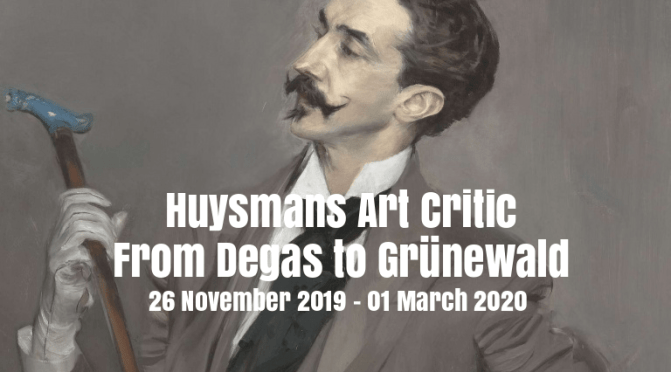
 A key writer of the late 19th century, Joris-Karl Huysmans (1848-1907) was an art critic who is still little known or little understood by the general public. However, his contribution to the artistic press and the aesthetic debate was as decisive as the impact of his novel Against Nature.
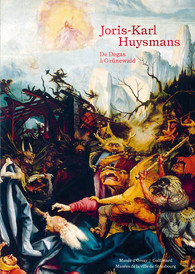 More passionate about Hals and Rembrandt until his discovery of Degas in 1876-1879, Huysmans admitted that this was a defining moment. And yet, his art criticism immediately accepted the possibility of a double modernity. The modernity of the painters of modern life and that of the explorers of dreams were not mutually exclusive. Here, Manet coexists with Rops and Redon. The desire Huysmans showed very early on to escape from the logic of church doctrine no doubt blurred the perception of his aesthetic choices.
 How is a drapery put in place? For what reasons does this motive persist until today? How to explain its power of fascination? These are the questions that this exhibition intends to pose, in order to enter the “factory” of the drapery and to get closer to the artistic gesture. By showing the stages of making a drapery, the visitor will discover the singular practices of artists from the Renaissance to the second half of the 20th century.
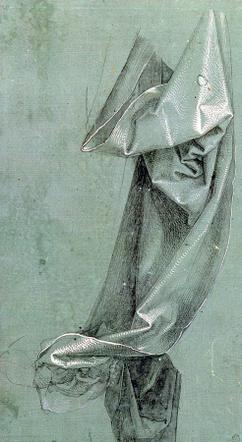 Albrecht Dürer, Drapery Study, 1508, Brush and Indian Ink, heightened white on dark green paper

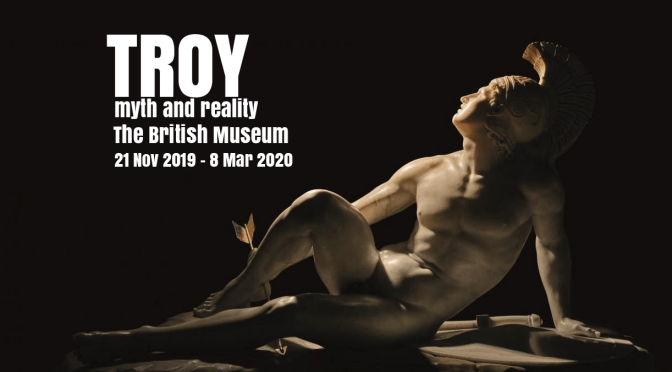
 From Helen of Troy’s abduction to the deception of the Trojan Horse and the fall of the city, tread the line between myth and reality in this phenomenal new exhibition.
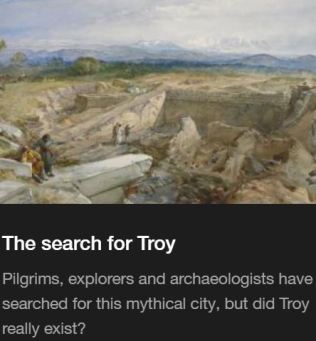 The story of the ancient city of Troy, and of the great war that was fought over it, has been told for some 3,000 years. Spread by travelling storytellers, it was cast into powerful words by the Greek poet Homer as early as the eighth to seventh century BC – and into powerful images by ancient Greek and Roman artists. Just as it enraptured audiences in the past, it still speaks to us today and it’s easy to see why. It’s a story that has it all – love and loss, courage and passion, violence and vengeance, triumph and tragedy – on a truly epic scale.



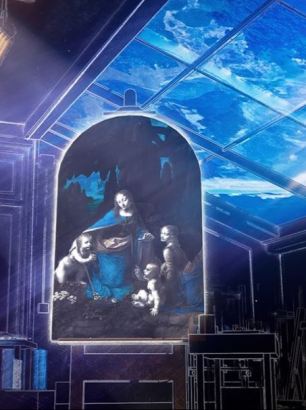 The mind of Leonardo
 Boomers Daily