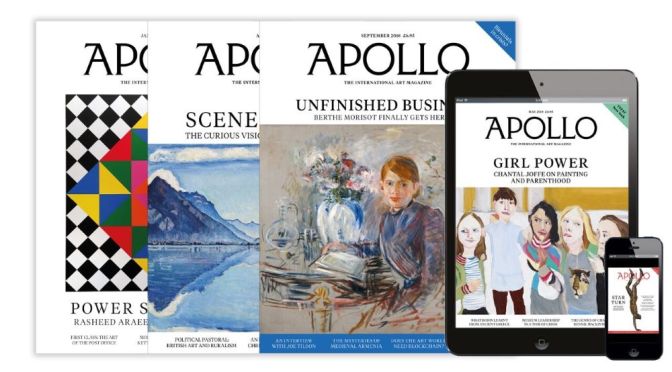
Plus: the remarkable career of Marianne Werefkin; the making of John Singer Sargent’s notorious Madame X; the occult modernism of Rudolf Steiner; and reviews of the artists who saw in stereo, a history of tomb raiding in Egypt and the memoir of Ibrahim El-Salahi
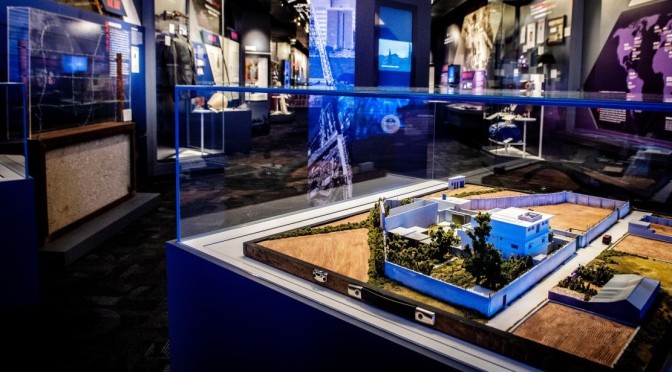
The CIA museum is perhaps the most unusual – and exclusive – in the world. Located inside the US intelligence agency’s headquarters in Langley, Virginia, the museum has just been renovated to mark the agency’s 75th anniversary. Official visitors can see the gun found with Osama bin Laden when he was killed, next to Saddam Hussein’s leather jacket. Its doors are firmly shut to the public, but a small group of journalists, including the BBC, were given exclusive access inside.
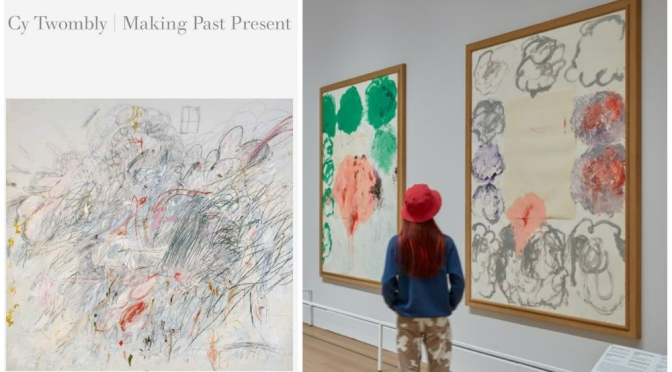
American artist Cy Twombly’s engagement with the art and poetry of ancient Greece and Rome played a central role in his creative process. This exhibition explores Twombly’s lifelong fascination with the ancient Mediterranean world through evocative groupings of his paintings, drawings, prints, and sculpture made from the mid-20th to the early 21st century, tracing an imaginative journey of encounters with and responses to ancient texts and artifacts. The presentation includes Greek and Roman antiquities from the artist’s personal collection, on public display for the first time.
Organized by the J. Paul Getty Museum, Los Angeles, and the Museum of Fine Arts, Boston Supported by an indemnity from the Federal Council on the Arts and the Humanities Major support from Jo Carole and Ronald S. Lauder Generously sponsored by
• Jil Sander refashions the English garden in Hamburg
• Annette Messager on the art of making the strange familiar
• A dazzling Medici table-top in focus
• On Jeju Island, the Hawaii of South Korea
Plus: the restored Galleria Nazionale dell’Umbria, Inigo Jones’s Banqueting House, Joseph Wright of Derby’s brush with the divine, and reviews of Cézanne in Chicago, Milton Avery in London and a history of fancy dress
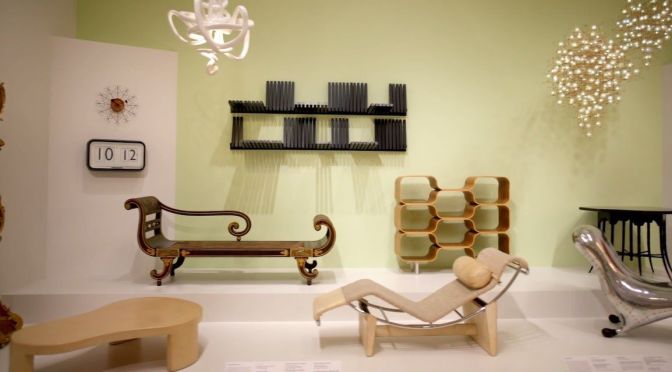
Extraordinary Ordinary Things, Carnegie Museum of Art’s latest decorative arts and design exhibition, features more than 300 objects from our expansive collection, which dates back to the founding of the museum in 1895.
In this video, the museum team takes you behind the scenes for a look at how this exhibition came to be, while sharing stories about a few of the remarkable objects in the show! Spanning some of the most significant design developments of the past three centuries, the works on view in Extraordinary Ordinary Things offer boundless inspiration and present the endless possibilities for functional design for visitors to learn about, consider, and enjoy.
Picasso & Braque: Radicals highlights significant work by the two pioneers of the Cubist art movement—Pablo Picasso and Georges Braque. Cubism, one of the most influential artistic developments of the twentieth century, challenged traditional perspectives of how we see the world. The movement is characterized by fractured viewpoints and abstracted forms and defies established notions of three-dimensionality. Cubism can be intellectually challenging but beautifully reflects the dynamism, rhythm, and innovation of the early 1900s.
Although there is debate on who developed Cubism first, Picasso and Braque are credited with establishing this new visual language that presented infinite possibilities and catalyzed future developments in the visual arts. This exhibition features work by twentieth-century artists who took inspiration from these revolutionary ideas and practices, including American artists Fannie Hillsmith and John Marin, and Texas artist Bill Reily, among others. Paintings, drawings, sculptures, and prints demonstrate how Cubism transcended time and space.
Picasso & Braque: Radicals is organized for the McNay Art Museum by Lyle W. Williams, Curator of Prints and Drawings, Curator of Modern Art; and Rafael Fernando Gutierrez Jr., the inaugural Douglass Foundation Intern in Curatorial Studies.
With nearly 1,500 artworks on display, there is a lot to see at the Royal Academy of Arts (RA) Summer Exhibition 2022. If you want a taste of what’s on show then here is a quick tour. The theme chosen by the exhibition’s coordinator, Alison Wilding RA, is Climate. It begins outside, where a large-scale immersive installation by Spanish artist Cristina Iglesias brings nature and water to the courtyard. Inside, the artworks are spread over 11 rooms, including two galleries of prints selected by Grayson Perry RA.
Archaeologists Vinzenz and Ulrike Koch Brinkmann have spent the last 40 years dedicated to the study of polychromy—or “many colors” in Greek—in ancient sculpture. Once a fringe area of study, their research combats the misconception of white purity in ancient Greece and Rome. They reflect on the marble bust of Caligula and how the reconstruction of its former color can help us better understand history.
‘Je vois red’ raged Louise Bourgeois (1911–2010) on one of the loose sheets of paper that she made notes on, most often about herself and her work and, in this case, about the painting Natural history #2 (1944; Easton Foundation, New York), which struck her as all going wrong. Slipping between two languages, Bourgeois’s fury conforms to the themes of rage, the death drive and childhood aggression that the art historian Mignon Nixon has traced in the artist’s work in reference to the ideas of the psychoanalyst Melanie Klein.
King Louis XIV famously identified himself with the sun god Apollo and this splendid gallery was the first tangible representation of that image. To create this masterpiece of architectural decoration, he summoned the greatest painters, gilders and sculptors of the day, who later worked on the Hall of Mirrors at the Château de Versailles. Today, the Galerie d’Apollon is home to the royal collection of hardstone vessels and the French Crown Jewels.
The French Crown Jewels
The royal collection also includes the Crown Jewels. The so-called ‘Côte de Bretagne’ spinel, which once belonged to Anne de Bretagne, is the oldest of the gems to have survived a tumultuous history involving theft, dispersal and sale. Three historical diamonds – the Regent, the Sancy and the Hortensia – formerly adorned royal crowns or garments. The spectacular 19th-century jewellery sets in the collection include emerald and diamond pieces that once belonged to Empress Marie Louise.
The French Crown Jewels
The 60-meter-long Apollo Gallery contains 105 extraordinary pieces, the most famous being the Crown Jewels of France. “This generic term covers not just the jewels that belonged to the kings of France but all the regalia as well: the precious stones and glyptic pieces,” says Pierre Rainero, director of style and heritage with the jeweler Cartier, which has sponsored the renovation work.
News, Views and Reviews For The Intellectually Curious