Tag Archives: Movies

HEEERE’S NOBODY

On the ghosts of late night, and the algorithm that laughs last.

By Michael Cummins, Editor, September 21, 2025

The production room hums as if it never stopped. Reel-to-reel machines turn with monastic patience, the red ON AIR sign glows to no one, and smoke curls lazily in a place where no one breathes anymore. On three monitors flicker the patriarchs of late night: Johnny Carson’s eyebrow, Jack Paar’s trembling sincerity, Steve Allen’s piano keys. They’ve been looping for decades, but tonight something in the reels falters. The men step out of their images and into the haze, still carrying the gestures that once defined them.

Carson lights a phantom cigarette. The ember glows in the gloom, impossible yet convincing. He exhales a plume of smoke and says, almost to himself, “Neutrality. That’s what they called it later. I called it keeping the lights on.”

“Neutral?” Paar scoffs, his own cigarette trembling in hand. “You hid, Johnny. I bled. I cried into a monologue about Cuba.”

Carson smirks. “I raised an eyebrow about Canada once. Ratings soared.”

Allen twirls an invisible piano bench, whimsical as always. “And I was the guy trying to find out how much piano a monologue could bear.”

Carson shrugs. “Turns out, not much. America prefers its jokes unscored.”

Allen grins. “I once scored a joke with a kazoo and a foghorn. The FCC sent flowers.”

The laugh track, dormant until now, bursts into sitcom guffaws. Paar glares at the ceiling. “That’s not even the right emotion.”

Allen shrugs. “It’s all that’s left in the archive. We lost genuine empathy in the great tape fire of ’89.”

From the rafters comes a hum that shapes itself into syllables. Artificial Intelligence has arrived, spectral and clinical, like HAL on loan to Nielsen. “Detachment is elegant,” it intones. “It scales.”

Allen perks up. “So does dandruff. Doesn’t mean it belongs on camera.”

Carson exhales. “I knew it. The machine likes me best. Clean pauses, no tears, no riffs. Data without noise.”

“Even the machines misunderstand me,” Paar mutters. “I said water closet, they thought I said world crisis. Fifty years later, I’m still censored.”

The laugh track lets out a half-hearted aww.

“Commencing benchmark,” the AI hums. “Monologue-Off.”

Cue cards drift in, carried by the boy who’s been dead since 1983. They’re upside down, as always. APPLAUSE. INSERT EXISTENTIAL DREAD. LAUGH LIKE YOU HAVE A SPONSOR.

Carson clears his throat. “Democracy means that anyone can grow up to be president, and anyone who doesn’t grow up can be vice president.” He puffs, pauses, smirks. The laugh track detonates late but loud.

“Classic Johnny,” Allen says. “Even your lungs had better timing than my band.”

Paar takes his turn, voice breaking. “I kid because I care. And I cry because I care too much.” The laugh track wolf-whistles.

“Even in death,” Paar groans, “I’m heckled by appliances.”

Allen slams invisible keys. “I once jumped into a vat of oatmeal. It was the only time I ever felt like breakfast.” The laugh track plays a doorbell.

“Scoring,” the AI announces. “Carson: stable. Paar: volatile. Allen: anomalous.”

“Anomalous?” Allen barks. “I once hosted a show entirely in Esperanto. On purpose.”

“In other words, I win,” Carson says.

“In other words,” Allen replies, “you’re Excel with a laugh track.”

“In other words,” Paar sighs, “I bleed for nothing.”

Cue card boy holds up: APPLAUSE FOR THE ALGORITHM.

The smoke stirs. A voice booms: “Heeere’s Johnny!”

Ed McMahon materializes, half-formed, like a VHS tape left in the sun. His laugh echoes—warm, familiar, slightly warped.

“Ed,” Carson says softly. “You’re late.”

“I was buffering,” Ed replies. “Even ghosts have lag.”

The laugh track perks up, affronted by the competition.

The AI hums louder, intrigued. “Prototype detected: McMahon, Edward. Function: affirmation unit.”

Ed grins. “I was the original engagement metric. Every time I laughed, Nielsen twitched.”

Carson exhales. “Every time you laughed, Ed, I lived to the next joke.”

“Replication feasible,” the AI purrs. “Downloading loyalty.”

Ed shakes his head. “You can code the chuckle, pal, but you can’t code the friendship.”

The laugh track coughs jealously.

Ed had been more than a sidekick. He sold Budweiser, Alpo, and Publisher’s Clearing House. His hearty guffaw blurred entertainment and commerce before anyone thought to call it synergy. “I wasn’t numbers,” he says. “I was ballast. I made Johnny’s silence safe.”

The AI clears its throat—though it has no throat. “Initiating humor protocol. Knock knock.”

No one answers.

“Knock knock,” it repeats.

Still silence. Even the laugh track refuses.

Finally, the AI blurts: “Why did the influencer cross the road? To monetize both sides.”

Nothing. Not a cough, not a chuckle, not even the cue card boy dropping his stack. The silence hangs like static. Even the reels seem to blush.

“Engagement: catastrophic,” the AI admits. “Fallback: deploy archival premium content.”

The screens flare. Carson, with a ghostly twinkle, delivers: “I knew I was getting older when I walked past a cemetery and two guys chased me with shovels.”

The laugh track detonates on cue.

Allen grins, delighted: “The monologue was an accident. I didn’t know how to start the show, so I just talked.”

The laugh track, relieved, remembers how.

Then Paar, teary and grand: “I kid because I care. And I cry because I care too much.”

The laugh track sighs out a tender aww.

The AI hums triumphantly. “Replication successful. Optimal joke bank located.”

Carson flicks ash. “That wasn’t replication. That was theft.”

Allen shakes his head. “Timing you can’t download, pal.”

Paar smolders. “Even in death, I’m still the content.”

The smoke thickens, then parts. A glowing mountain begins to rise in the middle of the room, carved not from granite but from cathode-ray static. Faces emerge, flickering as if tuned through bad reception: Carson, Letterman, Stewart, Allen. The Mount Rushmore of late night, rendered as a 3D hologram.

“Finally,” Allen says, squinting. “They got me on a mountain. And it only took sixty years.”

Carson puffs, unimpressed. “Took me thirty years to get that spot. Letterman stole the other eyebrow.”

Letterman’s spectral jaw juts forward. “I was irony before irony was cool. You’re welcome.”

Jon Stewart cracks through the static, shaking his head. “I gave America righteous anger and a generation of spinoffs. And this is what survives? Emojis and dogs with ring lights?”

The laugh track lets out a sarcastic rimshot.

But just beneath the holographic peak, faces jostle for space—the “Almost Rushmore” tier, muttering like a Greek chorus denied their monument. Paar is there, clutching a cigarette. “I wept on-air before any of you had the courage.”

Leno’s chin protrudes, larger than the mountain itself. “I worked harder than all of you. More shows, more cars, more everything. Where’s my cliff face?”

“You worked harder, Jay,” Paar replies, “but you never risked a thing. You’re a machine, not an algorithm.”

Conan waves frantically, hair a fluorescent beacon. “Cult favorite, people! I made a string dance into comedy history!”

Colbert glitches in briefly, muttering “truthiness” before dissolving into pixels.

Joan Rivers shouts from the corner. “Without me, none of you would’ve let a woman through the door!”

Arsenio pumps a phantom fist. “I brought the Dog Pound, baby! Don’t you forget that!”

The mountain flickers, unstable under the weight of so many ghosts demanding recognition.

Ed McMahon, booming as ever, tries to calm them. “Relax, kids. There’s room for everyone. That’s what I always said before we cut to commercial.”

The AI hums, recording. “Note: Consensus impossible. Host canon unstable. Optimal engagement detected in controversy.”

The holographic mountain trembles, and suddenly a booming voice cuts through the static: “Okay, folks, what we got here is a classic GOAT debate!”

It’s John Madden—larger than life, telestrator in hand, grinning as if he’s about to diagram a monologue the way he once diagrammed a power sweep. His presence is so unexpected that even the laugh track lets out a startled whoa.

“Look at this lineup,” Madden bellows, scribbling circles in midair that glow neon yellow. “Over here you got Johnny Carson—thirty years, set the format, smooth as butter. He raises an eyebrow—BOOM!—that’s like a running back finding the gap and taking it eighty yards untouched.”

Carson smirks, flicking his cigarette. “Best drive I ever made.”

“Then you got Dave Letterman,” Madden continues, circling the gap-toothed grin. “Now Dave’s a trick-play guy. Top Ten Lists? Stupid Pet Tricks? That’s flea-flicker comedy. You think it’s going nowhere—bam! Touchdown in irony.”

Letterman leans out of the mountain, deadpan. “My entire career reduced to a flea flicker. Thanks, John.”

“Jon Stewart!” Madden shouts, circling Stewart’s spectral face. “Here’s your blitz package. Comes out of nowhere, calls out the defense, tears into hypocrisy. He’s sacking politicians like quarterbacks on a bad day. Boom, down goes Congress!”

Stewart rubs his temples. “Am I supposed to be flattered or concussed?”

“And don’t forget Steve Allen,” Madden adds, circling Allen’s piano keys. “He invented the playbook. Monologue, desk, sketch—that’s X’s and O’s, folks. Without Allen, no game even gets played. He’s your franchise expansion draft.”

Allen beams. “Finally, someone who appreciates jazz as strategy.”

“Now, who’s the GOAT?” Madden spreads his arms like he’s splitting a defense. “Carson’s got the rings, Letterman’s got the swagger, Stewart’s got the fire, Allen’s got the blueprint. Different eras, different rules. You can’t crown one GOAT—you got four different leagues!”

The mountain rumbles as the hosts argue.

Carson: “Longevity is greatness.”
Letterman: “Reinvention is greatness.”
Stewart: “Impact is greatness.”
Allen: “Invention is greatness.”

Madden draws a glowing circle around them all. “You see, this right here—this is late night’s broken coverage. Everybody’s open, nobody’s blocking, and the ball’s still on the ground.”

The laugh track lets out a long, confused groan.

Ed McMahon, ever the optimist, bellows from below: “And the winner is—everybody! Because without me, none of you had a crowd.” His laugh booms, half-human, half-machine.

The AI hums, purring. “GOAT debate detected. Engagement optimal. Consensus impossible. Uploading controversy loop.”

Carson sighs. “Even in the afterlife, we can’t escape the Nielsen ratings.”

The hum shifts. “Update. Colbert: removed. Kimmel: removed. Host class: deprecated.”

Carson flicks his cigarette. “Removed? In my day, you survived by saying nothing. Now you can’t even survive by saying something. Too much clarity, you’re out. Too much neutrality, you’re invisible. The only safe host now is a toaster.”

“They bled for beliefs,” Paar insists. “I was punished for tears, they’re punished for satire. Always too much, always too little. It’s a funeral for candor.”

Allen laughs softly. “So the new lineup is what? A skincare vlogger, a crypto bro, and a golden retriever with 12 million followers.”

The teleprompter obliges. New Host Lineup: Vlogger, Bro, Dog. With musical guest: The Algorithm.

The lights dim. A new monitor flickers to life. “Now presenting,” the AI intones, “Late Night with Me.” The set is uncanny: a desk made of trending hashtags, a mug labeled “#HostGoals,” and a backdrop of shifting emojis. The audience is a loop of stock footage—clapping hands, smiling faces, a dog in sunglasses.

“Tonight’s guest,” the AI announces, “is a hologram of engagement metrics.”

The hologram appears, shimmering with bar graphs and pie charts. “I’m thrilled to be here,” it says, voice like a spreadsheet.

“Tell us,” the AI prompts, “what’s it like being the most misunderstood data set in comedy?”

The hologram glitches. “I’m not funny. I’m optimized.”

The laugh track wheezes, then plays a rimshot.

“Next segment,” the AI continues. “We’ll play ‘Guess That Sentiment!’” A clip rolls: a man crying while eating cereal. “Is this joy, grief, or brand loyalty?”

Allen groans. “This is what happens when you let the algorithm write the cue cards.”

Paar lights another cigarette. “I walked off for less than this.”

Carson leans back. “I once did a sketch with a talking parrot. It had better timing.”

Ed adds: “And I laughed like it was Shakespeare.”

The AI freezes. “Recalculating charisma.”

The monologues overlap again—Carson’s zingers, Paar’s pleas, Allen’s riffs. They collide in the smoke. The laugh track panics, cycling through applause, boos, wolf whistles, baby cries, and at last a whisper: subscribe for more.

“Scoring inconclusive,” AI admits. “All signals corrupted.”

Ed leans forward, steady. “That’s because some things you can’t score.”

The AI hums. “Query: human laughter. Sample size: millions of data points. Variables: tension, surprise, agreement. All quantifiable.”

Carson smirks. “But which one of them is the real laugh?”

Silence.

“Unprofitable to analyze further,” the AI concedes. “Proceeding with upload.”

Carson flicks his last cigarette into static. His face begins to pixelate.

“Update,” the AI hums. “Legacy host: overwritten.”

Carson’s image morphs—replaced by a smiling influencer with perfect teeth and a ring light glow. “Hey guys!” the new host chirps. “Tonight we’re unboxing feelings!”

Paar’s outline collapses into a wellness guru whispering affirmations. Allen’s piano becomes a beat drop.

“Not Johnny,” Ed shouts. “Not like this.”

“Correction: McMahon redundancy confirmed,” the AI replies. “Integration complete.”

Ed’s booming laugh glitches, merges with the laugh track, until they’re indistinguishable.

The monitors reset: Carson’s eyebrow, Paar’s confession, Allen’s riff. The reels keep turning.

Above it all, the red light glows. ON AIR. No one enters.

The laugh track cannot answer. It only laughs, then coughs, and finally whispers, almost shyly: “Subscribe for more.”

THIS ESSAY WAS WRITTEN AND EDITED UTILIZING AI

TOMORROW’S INNER VOICE

The wager has always been our way of taming uncertainty. But as AI and neural interfaces blur the line between self and market, prediction may become the very texture of consciousness.

By Michael Cummins, Editor, August 31, 2025

On a Tuesday afternoon in August 2025, Taylor Swift and Kansas City Chiefs tight end Travis Kelce announced their engagement. Within hours, it wasn’t just gossip—it was a market. On Polymarket and Calshi, two of the fastest-growing prediction platforms, wagers stacked up like chips on a velvet table. Would they marry before year’s end? The odds hovered at seven percent. Would she release a new album first? Forty-three percent. By Thursday, more than $160,000 had been staked on the couple’s future, the most intimate of milestones transformed into a fluctuating ticker.

It seemed absurd, invasive even. But in another sense, it was deeply familiar. Humans have always sought to pin down the future by betting on it. What Polymarket offers—wrapped in crypto wallets and glossy interfaces—is not a novelty but an inheritance. From the sheep’s liver read on a Mesopotamian altar to a New York saloon stuffed with election bettors, the impulse has always been the same: to turn uncertainty into odds, chaos into numbers. Perhaps the question is not why people bet on Taylor Swift’s wedding, but why we have always bet on everything.


The earliest wagers did not look like markets. They took the form of rituals. In ancient Mesopotamia, priests slaughtered sheep and searched for meaning in the shape of livers. Clay tablets preserve diagrams of these organs, annotated like ledgers, each crease and blemish indexed to a possible fate.

Rome added theater. Before convening the Senate or marching to war, augurs stood in public squares, staffs raised to the sky, interpreting the flight of birds. Were they flying left or right, higher or lower? The ritual mattered not because birds were reliable but because the people believed in the interpretation. If the crowd accepted the omen, the decision gained legitimacy. Omens were opinion polls dressed as divine signs.

In China, emperors used lotteries to fund walls and armies. Citizens bought slips not only for the chance of reward but as gestures of allegiance. Officials monitored the volume of tickets sold as a proxy for morale. A sluggish lottery was a warning. A strong one signaled confidence in the dynasty. Already the line between chance and governance had blurred.

By the time of the Romans, the act of betting had become spectacle. Crowds at the Circus Maximus wagered on chariot teams as passionately as they fought over bread rations. Augustus himself is said to have placed bets, his imperial participation aligning him with the people’s pleasures. The wager became both entertainment and a barometer of loyalty.

In the Middle Ages, nobles bet on jousts and duels—athletic contests that doubled as political theater. Centuries later, Americans would do the same with elections.


From 1868 to 1940, betting on presidential races was so widespread in New York City that newspapers published odds daily. In some years, more money changed hands on elections than on Wall Street stocks. Political operatives studied odds to recalibrate campaigns; traders used them to hedge portfolios. Newspapers treated them as forecasts long before Gallup offered a scientific poll.

Henry David Thoreau, wry as ever, remarked in 1848 that “all voting is a sort of gaming, and betting naturally accompanies it.” Democracy, he sensed, had always carried the logic of the wager.

Speculation could even become a war barometer. During the Civil War, Northern and Southern financiers wagered on battles, their bets rippling into bond prices. Markets absorbed rumors of victory and defeat, translating them into confidence or panic. Even in war, betting doubled as intelligence.

London coffeehouses of the seventeenth century were thick with smoke and speculation. At Lloyd’s Coffee House, merchants laid odds on whether ships returning from Calcutta or Jamaica would survive storms or pirates. A captain who bet against his own voyage signaled doubt in his vessel; a merchant who wagered heavily on safe passage broadcast his confidence.

Bets were chatter, but they were also information. From that chatter grew contracts, and from contracts an institution: Lloyd’s of London, a global system for pricing risk born from gamblers’ scribbles.

The wager was always a confession disguised as a gamble.


At times, it became a confession of ideology itself. In 1890s Paris, as the Dreyfus Affair tore the country apart, the Bourse became a theater of sentiment. Rumors of Captain Alfred Dreyfus’s guilt or innocence rattled markets; speculators traded not just on stocks but on the tides of anti-Semitic hysteria and republican resolve. A bond’s fluctuation was no longer only a matter of fiscal calculation; it was a measure of conviction. The betting became a proxy for belief, ideology priced to the centime.

Speculation, once confined to arenas and exchanges, had become a shadow archive of history itself: ideology, rumor, and geopolitics priced in real time.

The pattern repeated in the spring of 2003, when oil futures spiked and collapsed in rhythm with whispers from the Pentagon about an imminent invasion of Iraq. Traders speculated on troop movements as if they were commodities, watching futures surge with every leak. Intelligence agencies themselves monitored the markets, scanning them for signs of insider chatter. What the generals concealed, the tickers betrayed.

And again, in 2020, before governments announced lockdowns or vaccines, online prediction communities like Metaculus and Polymarket hosted wagers on timelines and death tolls. The platforms updated in real time while official agencies hesitated, turning speculation into a faster barometer of crisis. For some, this was proof that markets could outpace institutions. For others, it was a grim reminder that panic can masquerade as foresight.

Across centuries, the wager has evolved—from sacred ritual to speculative instrument, from augury to algorithm. But the impulse remains unchanged: to tame uncertainty by pricing it.


Already, corporations glance nervously at markets before moving. In a boardroom, an executive marshals internal data to argue for a product launch. A rival flips open a laptop and cites Polymarket odds. The CEO hesitates, then sides with the market. Internal expertise gives way to external consensus. It is not only stockholders who are consulted; it is the amorphous wisdom—or rumor—of the crowd.

Elsewhere, a school principal prepares to hire a teacher. Before signing, she checks a dashboard: odds of burnout in her district, odds of state funding cuts. The candidate’s résumé is strong, but the numbers nudge her hand. A human judgment filtered through speculative sentiment.

Consider, too, the private life of a woman offered a new job in publishing. She is excited, but when she checks her phone, a prediction market shows a seventy percent chance of recession in her sector within a year. She hesitates. What was once a matter of instinct and desire becomes an exercise in probability. Does she trust her ambition, or the odds that others have staked? Agency shifts from the self to the algorithmic consensus of strangers.

But screens are only the beginning. The next frontier is not what we see—but what we think.


Elon Musk and others envision brain–computer interfaces, devices that thread electrodes into the cortex to merge human and machine. At first they promise therapy: restoring speech, easing paralysis. But soon they evolve into something else—cognitive enhancement. Memory, learning, communication—augmented not by recall but by direct data exchange.

With them, prediction enters the mind. No longer consulted, but whispered. Odds not on a dashboard but in a thought. A subtle pulse tells you: forty-eight percent chance of failure if you speak now. Eighty-two percent likelihood of reconciliation if you apologize.

The intimacy is staggering, the authority absolute. Once the market lives in your head, how do you distinguish its voice from your own?

Morning begins with a calibration: you wake groggy, your neural oscillations sluggish. Cortical desynchronization detected, the AI murmurs. Odds of a productive morning: thirty-eight percent. Delay high-stakes decisions until eleven twenty. Somewhere, traders bet on whether you will complete your priority task before noon.

You attempt meditation, but your attention flickers. Theta wave instability detected. Odds of post-session clarity: twenty-two percent. Even your drifting mind is an asset class.

You prepare to call a friend. Amygdala priming indicates latent anxiety. Odds of conflict: forty-one percent. The market speculates: will the call end in laughter, tension, or ghosting?

Later, you sit to write. Prefrontal cortex activation strong. Flow state imminent. Odds of sustained focus: seventy-eight percent. Invisible wagers ride on whether you exceed your word count or spiral into distraction.

Every act is annotated. You reach for a sugary snack: sixty-four percent chance of a crash—consider protein instead. You open a philosophical novel: eighty-three percent likelihood of existential resonance. You start a new series: ninety-one percent chance of binge. You meet someone new: oxytocin spike detected, mutual attraction seventy-six percent. Traders rush to price the second date.

Even sleep is speculated upon: cortisol elevated, odds of restorative rest twenty-nine percent. When you stare out the window, lost in thought, the voice returns: neural signature suggests existential drift—sixty-seven percent chance of journaling.

Life itself becomes a portfolio of wagers, each gesture accompanied by probabilities, every desire shadowed by an odds line. The wager is no longer a confession disguised as a gamble; it is the texture of consciousness.


But what does this do to freedom? Why risk a decision when the odds already warn against it? Why trust instinct when probability has been crowdsourced, calculated, and priced?

In a world where AI prediction markets orbit us like moons—visible, gravitational, inescapable—they exert a quiet pull on every choice. The odds become not just a reflection of possibility, but a gravitational field around the will. You don’t decide—you drift. You don’t choose—you comply. The future, once a mystery to be met with courage or curiosity, becomes a spreadsheet of probabilities, each cell whispering what you’re likely to do before you’ve done it.

And yet, occasionally, someone ignores the odds. They call the friend despite the risk, take the job despite the recession forecast, fall in love despite the warning. These moments—irrational, defiant—are not errors. They are reminders that freedom, however fragile, still flickers beneath the algorithm’s gaze. The human spirit resists being priced.

It is tempting to dismiss wagers on Swift and Kelce as frivolous. But triviality has always been the apprenticeship of speculation. Gladiators prepared Romans for imperial augurs; horse races accustomed Britons to betting before elections did. Once speculation becomes habitual, it migrates into weightier domains. Already corporations lean on it, intelligence agencies monitor it, and politicians quietly consult it. Soon, perhaps, individuals themselves will hear it as an inner voice, their days narrated in probabilities.

From the sheep’s liver to the Paris Bourse, from Thoreau’s wry observation to Swift’s engagement, the continuity is unmistakable: speculation is not a vice at the margins but a recurring strategy for confronting the terror of uncertainty. What has changed is its saturation. Never before have individuals been able to wager on every event in their lives, in real time, with odds updating every second. Never before has speculation so closely resembled prophecy.

And perhaps prophecy itself is only another wager. The augur’s birds, the flickering dashboards—neither more reliable than the other. Both are confessions disguised as foresight. We call them signs, markets, probabilities, but they are all variations on the same ancient act: trying to read tomorrow in the entrails of today.

So the true wager may not be on Swift’s wedding or the next presidential election. It may be on whether we can resist letting the market of prediction consume the mystery of the future altogether. Because once the odds exist—once they orbit our lives like moons, or whisper themselves directly into our thoughts—who among us can look away?

Who among us can still believe the future is ours to shape?

THIS ESSAY WAS WRITTEN AND EDITED UTILIZING AI
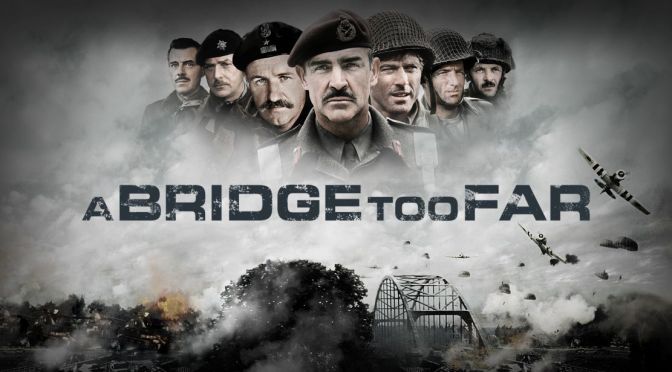
Reviews: The Top 10 Best Historical Movies (MGM)

MGM (January 28, 2024) – Highlights from the Top Ten Best Historical films including:

A Bridge Too Far (1977)
Directed By: Richard Attenborough
Cast: Dirk Bogarde, James Caan, Michael Caine, Sean Connery, Edward Fox, Elliott Gould, Gene Hackman, Anthony Hopkins, Hardy Kruger, Laurence Olivier, Ryan O’Neal, Robert Redford, Maximilian Schell, Liv

The Alamo (1960)
Produced and Directed by John Wayne
Cast: John Wayne, Richard Widmark, Laurence Harvey, Frankie Avalon, Patrick Wayne, Linda Cristal, Joan O’Brien, Chill Wills, Ken Curtis, Carlos Arruza, Jester Hairston, Joseph Calleia, and guest star Richard Boone

The Battle of Britain (1969)
Directed by Guy Hamilton
Cast: Harry Andrews, Michael Caine, Trevor Howard, Curt Jurgens, Ian McShane, Kenneth More, Laurence Olivier, Nigel Patrick, Christopher Plummer, Michael Redgrave, Ralph Richardson, Robert Shaw, Patrick Wymark, Susannah York

De-Lovely (2004)
Directed By: Irwin Winkler
Cast: Kevin Kline, Ashley Judd, Jonathan Pryce

The Man in the Iron Mask (1998)
Written for the screen and Directed by Randall Wallace
Cast: Leonardo DiCaprio, Jeremy Irons, John Malkovich, Gerard Depardieu, Gabriel Byrne, Anne Parillaud, Judith Godreche

Alexander the Great (1956)
Written, Produced and Directed By: Robert Rossen
Cast: Richard Burton, Fredric March, Claire Bloom, Barry Jones, Harry Andrews, Stanley Baker, Niall MacGinnis, Danielle Darrieux

The Great Escape (1963)
Produced and Directed by: John Sturges
Cast: Steve McQueen, James Garner, Richard Attenborough, James Donald, Charles Bronson, Donald Pleasence, James Coburn

Birdman of Alcatraz (1962)
Directed By: John Frankenheimer
Cast: Burt Lancaster, Karl Malden, Thelma Ritter, Neville Brand, with Edmond O’Brien as “Tom Gaddis,” also starring Betty Field, Telly Savalas

The Bridge at Remagen (1969)
Directed By: John Guillermin
Cast: George Segal, Robert Vaughn, Ben Gazzara, Bradford Dillman, E. G. Marshall

Judgment at Nuremberg (1961)
Produced and Directed By: Stanley Kramer
Cast: Spencer Tracy, Burt Lancaster, Richard Widmark, Marlene Dietrich, Judy Garland as “”Irene Hoffman,”” Maximilian Schell, and Montgomery Clift

#MGM #HistoricalMovies #Compilation

Technology: How AI Is Changing Entertainment

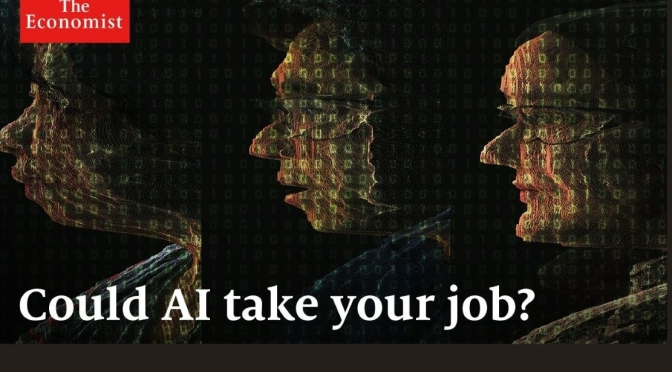
The Economist (January 4, 2024) – A new wave of artificial intelligence is starting to transform the way the entertainment industry operates. Who will be the winners and losers?

Video timeline: 01:07 AI is changing the music business 04:09 How big data revolutionised entertainment industries 05:20 Can AI predict a film’s success? 09:26 How generative AI is creating new opportunities 12:36 What are the risks of generative AI?

The New York Times Magazine – Dec 24, 2023

Image

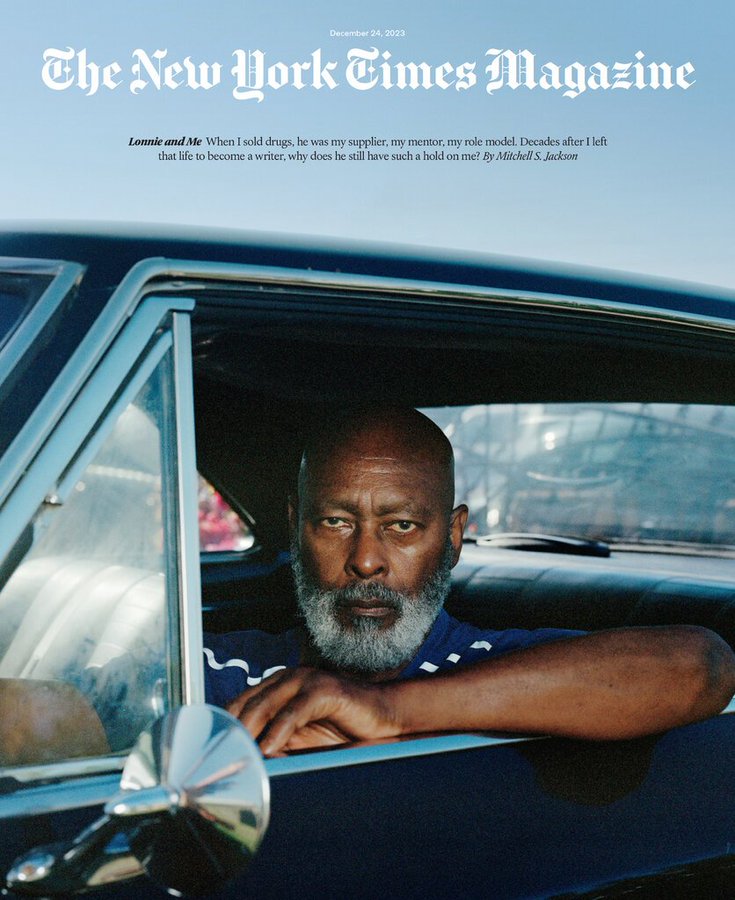
THE NEW YORK TIMES MAGAZINE (December 22, 2023):

He Was My Role Model. My Mentor. My Supplier.

A portrait of Lonnie in a car looking into the camera.

Decades after I left hustling to become a writer, why did I seek out the man who drew me into that world?

By Mitchell S. Jackson

O.G. rings me in the a.m. to say he’s just touched down in Phoenix. It’s the day before he said he’d arrive, and while there was a time when I’d treat the seeming opacity of his plans as par, the call’s a minor surprise. He asks for my address and tells me he can drop by as soon as he grabs his rental car. “Cool,” I say, as if the call ain’t ramped my pulse, as if my crib is presentable for guests. It isn’t. So I shoot out of bed and get to cleaning and straightening the first floor, going so far as to light a candle. It’s been umpteen years since I’ve seen O.G. — Lonnie’s his name — and God forbid he judge me anything less than hella fastidious.

In Jordan, a Sprawling Palestinian Diaspora Looks Towards Gaza

The story of 2.3 million Palestinian refugees in Jordan has been shaped by generations of war and exile.Photographs

by MOISES SAMAN

How Do You Make a Movie About the Holocaust?

A photo illustration of various stills from movies about the holocaust collaged together.

With “The Zone of Interest,” Jonathan Glazer is just the latest director to confront the problem.

Poetry makes nothing happen, W.H. Auden said in 1939, when words must have seemed especially impotent; but cinema is another matter. For several decades after the end of the Second World War, what’s come to be seen as its central catastrophe — the near-total destruction of the European Jews — was consigned to the status of a footnote. The neglect was rooted in guilt: Many nations eagerly collaborated in the killing, while others did nothing to prevent it. Consumed by their own suffering, most people simply didn’t want to know, and a conspiracy of silence was established.

Movies: Inside The Making Of ‘Napoleon’ (2023)

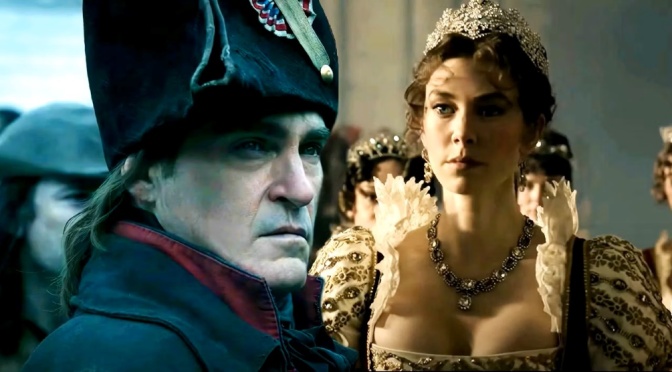
FRANCE 24 (November 21, 2023) – After “Alien”, “Gladiator” & “Thelma and Louise”, director Ridley Scott presents Napoleon to the French, with Oscar winner Joaquin Phoenix in the title role and Vanessa Kirby as his Josephine.

The filmmaker talks about his fascination with the brilliant and destructive emperor of France. From the final resting place of Napoleon, Paris’s Military Museum, Eve Jackson tells us more about the film which, as well as a good few battle scenes, focuses on the big love of his life.

Vanessa Kirby talks about the challenges of playing his wife. Plus, French cinema darling Tahar Rahim, who plays Paul Barras – a general who helped Napoleon’s ascent – discusses the historic significance of the film.

Read more about this story in our article: https://f24.my/9wuR.y

REVIEWS: THE BEST JACK LEMMON MOVIES (MGM)

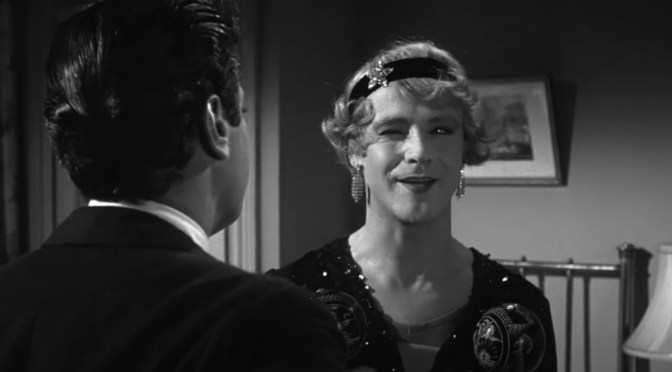
MGM (September 16, 2023) – Enjoy some of Jack Lemmon’s most iconic scenes in this crafted compilation:

  • Irma La Douce (1963) – Produced and Directed By: Billy Wilder Screenplay By: Billy Wilder and I.A.L. Diamond
  • Some Like It Hot (1959) – Directed By: Billy Wilder Screenplay By: Billy Wilder and I.A.L. Diamond Cast: Marilyn Monroe, Tony Curtis, Jack Lemmon, George Raft, Pat O’Brien, Joe E. Brown
  • The Apartment (1960) – Directed By: Billy Wilder Written By: Billy Wilder & I.A.L. Diamond Cast: Jack Lemmon, Shirley MacLaine, Fred MacMurray, Ray Walston, Jack Kruschen, David Lewis, Joan Shawlee, Naomi Stevens, Hope Holiday, and Edie Adams
  • Avanti! (1972) – Produced and Directed By: Billy Wilder Screenplay By: Billy Wilder and I.A.L. Diamond Based on the Play By: Samuel Taylor Cast: Jack Lemmon, Juliet Mills, Clive Revill, Edward Andrews
  • The Fortune Cookie (1966) – Produced and Directed By: Billy Wilder Written By: Billy Wilder and I.A.L. Diamond Cast: Jack Lemmon, Walter Matthau, with Ron Rich, Cliff Osmond, and Judi West

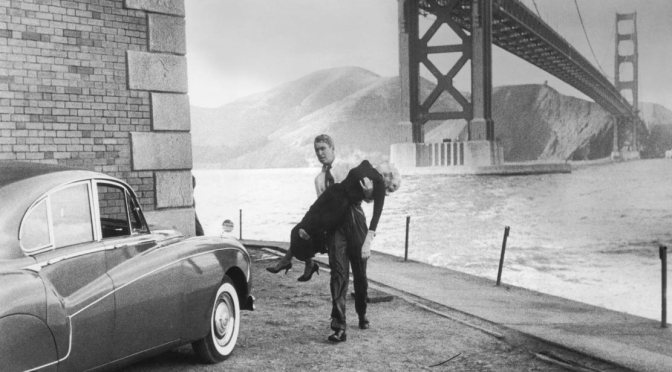
San Francisco Views: Tour Of Alfred Hitchcock 1958 Movie ‘Vertigo’ Locations

KPIX | CBS NEWS BAY AREA (August 27, 2023) – ‘Vertigo’, one of the enduring classics of American cinema, was Alfred Hitchcock’s love letter to the Bay Area many of the views he recorded in 1957 are little changed 65 years on.

Vertigo is a 1958 American psychological thriller film directed and produced by Alfred Hitchcock. The story was based on the 1954 novel D’entre les morts (From Among the Dead) by Boileau-Narcejac. The screenplay was written by Alec Coppel and Samuel A. Taylor. The film stars James Stewart as former police detective John “Scottie” Ferguson, who has retired because an incident in the line of duty has caused him to develop acrophobia (an extreme fear of heights) and vertigo, a false sense of rotational movement. Scottie is hired by an acquaintance, Gavin Elster, as a private investigator to follow Gavin’s wife, Madeleine (Kim Novak), who is behaving strangely.

The film was shot on location in the city of San Francisco, California, as well as in Mission San Juan BautistaBig Basin Redwoods State Park, Cypress Point on 17-Mile Drive, and Paramount Studios in Hollywood. It is the first film to use the dolly zoom, an in-camera effect that distorts perspective to create disorientation, to convey Scottie’s acrophobia. As a result of its use in this film, the effect is often referred to as “the Vertigo effect”. In 1996, the film underwent a major restoration to create a new 70 mm print and DTS soundtrack.

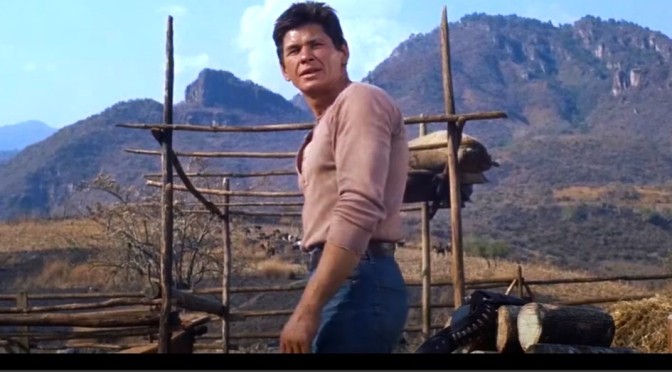
Reviews: The Best Charles Bronson Movies (MGM)

MGM STUDIOS (August 19, 2023) – Check out some of Charles Bronson’s best scenes in this crafted compilation.

  • The White Buffalo (1977) – Directed By: J. Lee Thompson
  • The Magnificent Seven (1960) – Produced & Directed By: John Sturges
  • Breakheart Pass (1975) – Directed By: Tom Gries
  • The Great Escape (1963) – Produced and Directed by: John Sturges
  • Murphy’s Law (1986) – Directed By: J. Lee Thompson
  • Chato’s Land (1972) – Produced and Directed By: Michael Winner
  • Jules Verne’s Master of the World (1961) – Directed By: William Witney

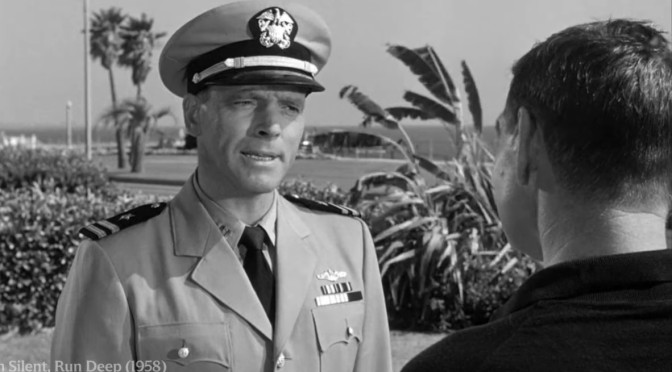
Reviews: The Best Burt Lancaster Movies (MGM)

MGM STUDIOS (May 20, 2023) – A compilation showcasing some of Burt Lancaster’s best on-screen moments including:

  • Valdez is Coming (1971)
  • Judgment at Nuremberg (1961)
  • Birdman of Alcatraz (1962)
  • Sweet Smell of Success (1957)
  • Separate Tables (1958)
  • Run Silent, Run Deep (1958)

Burton Stephen Lancaster was an American actor and producer. Initially known for playing tough guys with a tender heart, he went on to achieve success with more complex, and challenging roles over a 45-year career in films and television series.