Tag Archives: Mongolia

The New York Times Style Magazine – Nov 12, 2023

Image

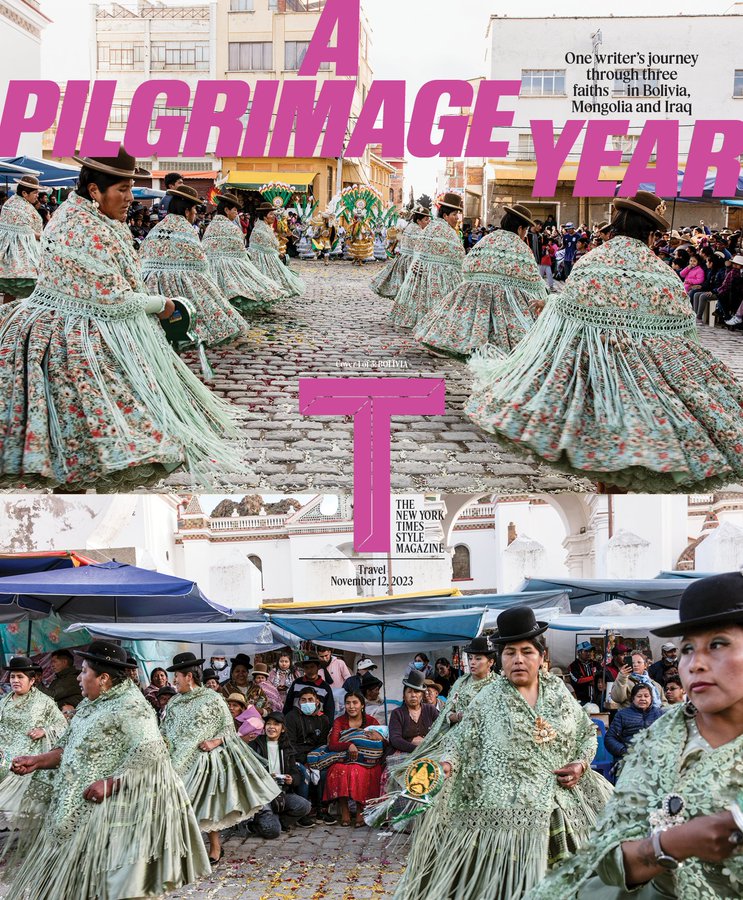
THE NEW YORK TIMES STYLE MAGAZINE (November 12, 2023) T’S TRAVEL ISSUE features the writer Aatish Taseer embarked on an epic 40,000-mile journey through Bolivia, Mongolia and Iraq. What he learned was less a life-altering revelation and more a lesson in curiosity itself.

The Enduring, Transformational Power of Pilgrimage

Rows of tents and cabins on grassy terrain, next to steep clusters of rocks.
A tourist camp about 50 miles east of Erdene Zuu monastery in Mongolia. Richard Mosse

The writer Aatish Taseer embarked on a journey through Bolivia, Mongolia and Iraq. What he learned was less a life-altering revelation and more a lesson in curiosity itself.

By Hanya Yanagihara

Travel, the movement of people from one place to another, has always existed. But long before we thought to travel for pleasure, we traveled for purpose: for commerce, and for faith.

Even the most casual student of the Silk Road, that fearsome, wondrous network of routes that people began plying in the second century B.C. (and did so for approximately the next 1,600 years) knows that the two — business and God, whoever or whatever your god was — often intermingled. Merchants and adventurers returned with new kinds of goods, but also with new kinds of ideas: of art, of architecture, of ideology, of faith. The Silk Road brought Islam to India, and Buddhism to Japan. It’s why travel has always been both thrilling and dangerous. You never know how a new land is going to change you; it never knows how you’re going to change it.

Behind the Story: How a Writer Prepared for a 40,000-Mile Trip

A few bands of terraced land, descending to a lake. The sky is blue with wide clouds.
The Island of the Sun in Bolivia’s Lake Titicaca, a pilgrimage site since before the Inca Empire.Credit…Stefan Ruiz

The dozens of books that T writer Aatish Taseer read before his journey through Bolivia, Mongolia and Iraq, and what he learned from each pilgrimage.

Eighteen months ago, when the New York-based T writer at large Aatish Taseer began planning his reporting trips for this month’s three-part feature story — an exploration of religious travel in Bolivia, Mongolia and Iraq — he was already well acquainted with the idea of pilgrimage. His first book, the 2009 memoir “Stranger to History,” opens with what is arguably the world’s best-known faith-motivated journey, the hajj to Mecca, and ends with what he describes as a personal pilgrimage to meet his estranged father in Pakistan. In Delhi, India, where Taseer grew up, quick trips for the purpose of worship were commonplace. “People would do a pilgrimage on an ordinary Sunday,” he says, “instead of going to an amusement park.”
Documentary: Rise And Fall Of Mongolia’s Empire

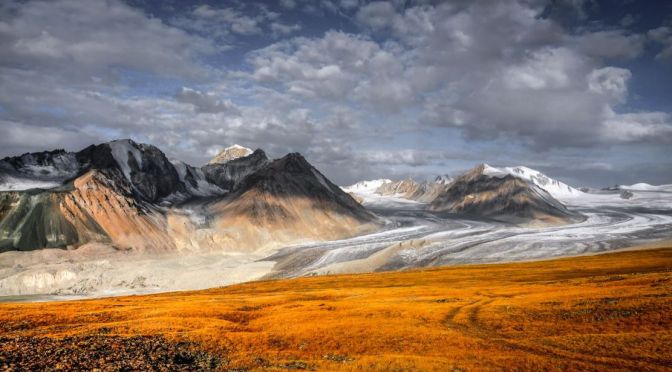
DW Documentary (September 10, 2023) – Mongolia. For most of us, a name that brings to mind the powerful empire of Genghis Khan. This film is a journey through Mongolian history and into modern Mongolian culture. It offers fascinating insights into the little-known central Asian nation. Mongolia, a country rich with forests, deserts and steppes, borders Russia to the north and China to the south.

But its chief influences today come from South Korea and the West. Director Robert H. Lieberman and filmmaker Deborah C. Hoard introduce novelists, journalists, politicians, activists, poets, painters and a comedian, all of whom shed light on the young republic – and its young population. Historians, archaeologists and local residents tell the story of the vast empire.

The eastern European and Asian territory captured by a fighting force of united Mongol tribes was the largest contiguous land empire in the history of the world. The film looks the beyond the figure of Genghis Khan, the notorious founder of the Mongol empire, and explores the multi-faceted legacy of the realm. It’s a legacy that still makes itself felt in the present day.

#documentary #dwdocumentary #mongolia

Culture: A Nomadic Life In The Gobi Desert, Mongolia

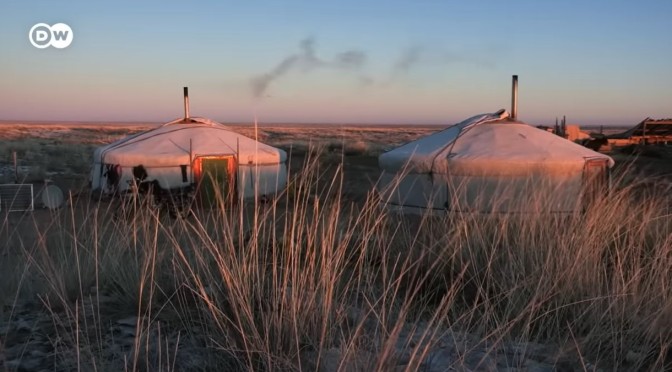
DW Documentary (February 25, 2023) – Otgo is the youngest child of a nomadic family in the Gobi desert. They make their living breeding cattle. Otgo loves their life, in harmony with nature and old traditions. Yet she dreams of becoming a dancer at the opera house in Ulan Bator.

In Mongolia, it is becoming increasingly common for the younger generation to leave traditional life behind. Otgo’s dream would take her far from her family’s yurt. She wants to become a dancer and later, a dance teacher. Her parents leave it up to her to decide how she wants to shape her life. They agree to support her, if she embarks on her great endeavor. In the meantime, Otgo has become an almost indispensable help to the family.

She gets up early in the morning to water the camels with her father, and it fills her with pride that she can help her family. The breathtaking landscape of the Gobi Desert and the strong bonds between the different nomadic families do not make it easy for Otgo to follow her dream. Otgo’s story paints a portrait of her world and of the men and women who have long passed on their culture from generation to generation, through the eyes of a child.

Wildlife: A Pallas’s Cat In The Steppes Of Mongolia

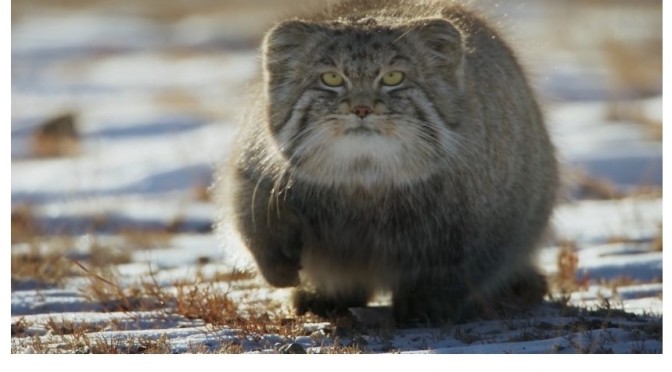
Dinnertime is a gamble for Pallas’s cats, and this one’s hangry. Relative to their body size, they have the shortest legs of any cat, which makes attacking prey in a timely fashion somewhat tricky…

The Pallas’s cat, also known as the manul, is a small wild cat with long and dense light grey fur. Its rounded ears are set low on the sides of the head. Its head-and-body length ranges from 46 to 65 cm with a 21 to 31 cm long bushy tail. 

Travel & Adventure: ’18 Days Exploring Mongolia’

Mongolia, a nation bordered by China and Russia, is known for vast, rugged expanses and nomadic culture. Its capital, Ulaanbaatar, centers around Chinggis Khaan (Genghis Khan) Square, named for the notorious founder of the 13th- and 14th-century Mongol Empire.

This year, I decided to take one of the hardest but exciting decisions I’ve ever made, exploring Mongolia for 18 days. I didn’t know what to expect, all I had with me is prior months of exploring this country through Google Earth and then transforming this exploration into real life.

The spots I was interested in exploring were so remote and very hard to reach even with the car, considering there’re no roads. 90% of the travel agencies did not approve to take me to the spots, considering how remote they are, until one of them told me, I will hire for you a very experienced driver, and you will direct him where I’m interested to go, but this expedition has to be private since no one would be willing to do that with me. I accepted the offer.

What I experienced and witnessed you will see in this film. It was one of the hardest challenge I’ve ever made but never regret doing it, I became a better person after this spirtual exploration expedition.

Bashir Abu Shakra

Mongolia Views: The 650-Mile ‘Mongol Derby 2022’

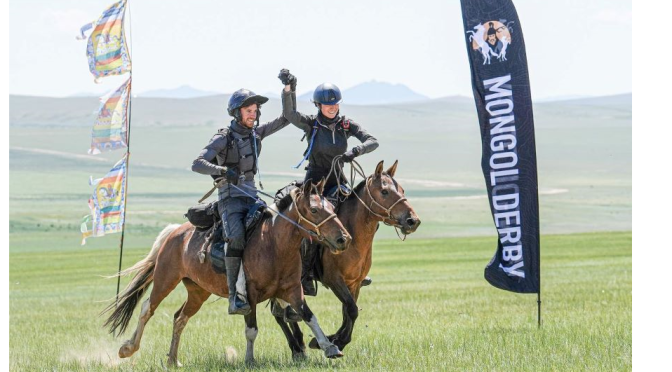
Each year in the wide open spaces of Mongolia, the Mongol Derby takes place, extending over 650 miles, is known to be the world’s longest and most difficult horse race, lasting two weeks. The course shifts slightly each year but is a recreation of the horse messenger system created hundreds of years ago by Genghis Khan.

Views: Goat Herding With Drones & Smartphones In Inner Mongolia (Video)

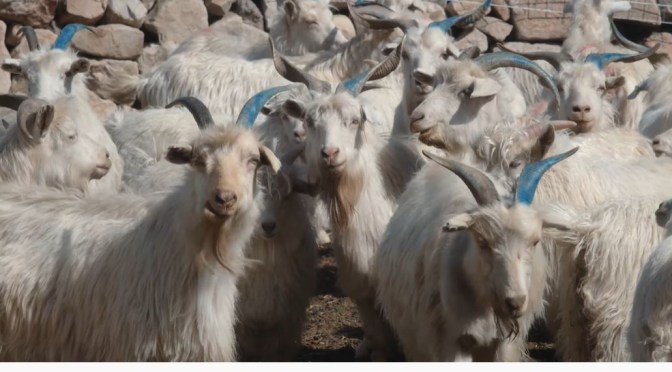
Troubled by his missing goat, Hu-Chun, a herder living in the steppes of Inner Mongolia, embarks on a journey to bring Ghalatar back into the fold. With a smartphone in hand and a motorcycle as his faithful steed, Hu-Chun traverses the mountain and desert plains herding around 500 goats. As a college-educated man who has returned from the city to continue his family’s agricultural way of life, Hu-Chun is part of a new generation of Mongolian herders embracing technology and a traditional lifestyle. He has also installed a 360-degree camera on top of a hill to monitor the precipitous terrain surrounding his home… continue reading on https://o6g7.app.link/kCWWETUZ1ib

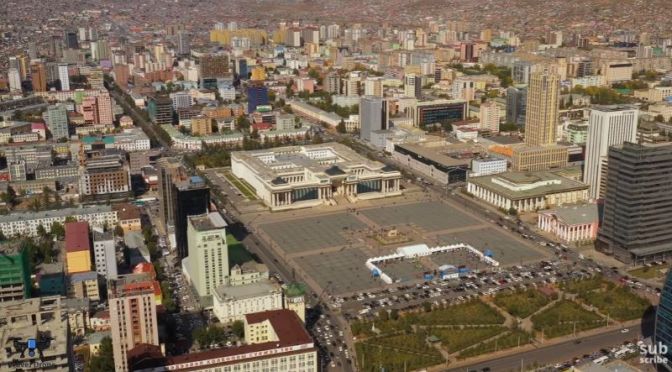
Aerial Views: Ulaanbaatar – Capital Of Mongolia (4K)

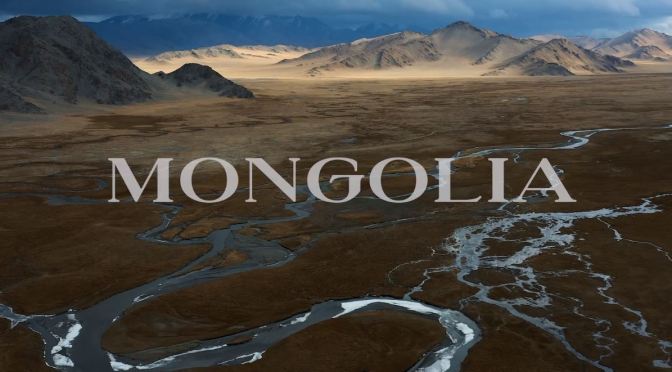
Ulaanbaatar is the capital of Mongolia. It’s in the Tuul River valley, bordering the Bogd Khan Uul National Park. Originally a nomadic Buddhist center, it became a permanent site in the 18th century. Soviet control in the 20th century led to a religious purge. Soviet-era buildings, museums within surviving monasteries, and a vibrant conjunction of traditional and 21st-century lifestyles typify the modern city. 

Aerial Views: ‘Cities And Landscapes Of Mongolia’

Mongolia, a nation bordered by China and Russia, is known for vast, rugged expanses and nomadic culture. Its capital, Ulaanbaatar, centers around Chinggis Khaan (Genghis Khan) Square, named for the notorious founder of the 13th- and 14th-century Mongol Empire. Also in Ulaanbaatar are the National Museum of Mongolia, displaying historic and ethnographic artifacts, and the restored 1830 Gandantegchinlen Monastery. 

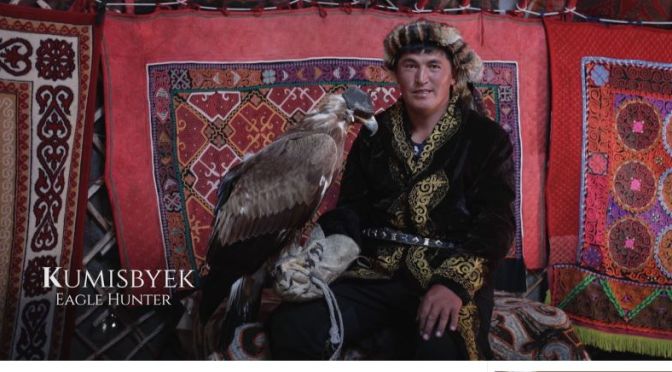
Travel & Culture Video: ‘Portrait Of Kazakh Eagle Hunter’ In Mongolia

Directed and filmed by | Matteo Poddie

Could ever exist a bond of respect and love between an eagle and a human?

The ancient art of eagle hunting is one of the many traditions and skills which have been maintained by the Kazakhs over the past decades. For more than two centuries, Mongolian Kazakh men have been hunting on their horses with golden eagles, trained following old traditions which are fading over time.

This Art needs the development of a deep bond between man and his eagle in order to accomplish a successful hunt.

An interview to one of the remained descendants of this minority, who tries to spread and preserve this ancient practice, through love and sense of belonging to his roots. The eagle hunting would otherwise be facing the risk of disappearing forever with the development of the modern world.

It is outstanding how these birds still play a paramount role for these people’s lives.
_____

Narrator | MikeJfvo
Shot on location | Mongolia, Altaj region