Tag Archives: Memory

Arts & Culture: Brandeis Magazine – Winter 2023

Read the Winter issue of Brandeis Magazine | BrandeisNOW

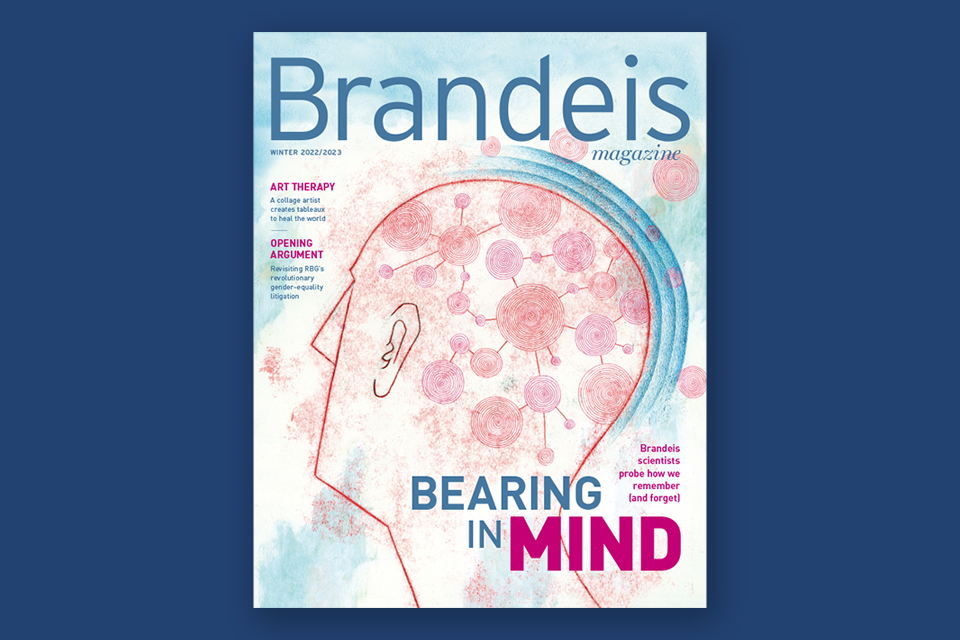
Brandeis Magazine (Winter 2022/2023):

The Amber of Our Thoughts

How are memories created and preserved? Brandeis scientists are studying the brain to find out — and, ultimately, untangle disorders like Alzheimer’s and dementia.

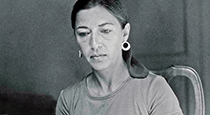
A ‘Notorious’ Champion of Women

In the 1970s, lawyer Ruth Bader Ginsburg developed an unusually successful strategy for fighting sex discrimination.

The Age of Invention

An analysis of patent data offers a window into human creativity.

Science: 890 Million-Year-Old Sponge, Caffeinated Bees, Greenland Glaciers

Researchers debate whether an ancient fossil is the oldest animal yet discovered, and a new way to eavesdrop on glaciers.

In this episode:

01:04 Early sponge

This week in Nature, a researcher claims to have found a fossil sponge from 890-million-years-ago. If confirmed, this would be more than 300-million-years older than the earliest uncontested animal fossils but not all palaeontologists are convinced.

Research Article: Turner

10:13 Research Highlights

A caffeine buzz appears to improve bees’ memory, and reconstructing an Iron Age man’s final meal.

Research Highlight: A caffeine buzz gives bees flower power

Research Highlight: The guts of a ‘bog body’ reveal sacrificed man’s final meal

12:34 Eavesdropping on a glacier’s base

We hear about one researcher’s unorthodox attempt to listen in to the seismic-whisper at the foot of a Greenland glacier – a method that might reveal more about conditions under these enormous blocks of ice.

Research Article: Podolskiy et al.

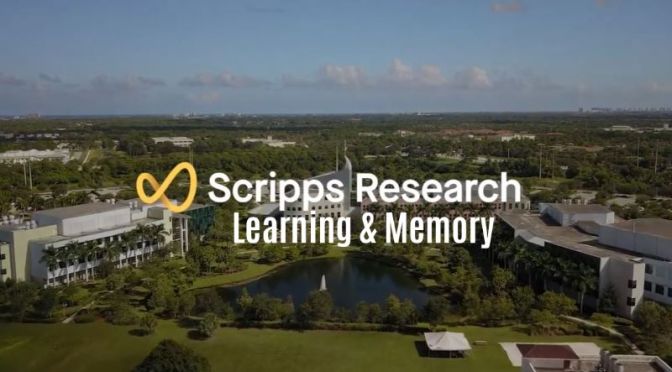
The Brain: ‘Learning & Memory’ – Neuroscience & Disease Research (Video)

Neuroscience Professor Seth Tomchik, PhD, focuses on two major research areas, the neuroscience of learning and memory, and diseases that affect learning and memory, including neurofibromatosis type one. Neuroscience is now the largest department on the Florida campus of Scripps Research.

The department’s faculty and staff, together with graduate students enrolled in the institute’s Skaggs Graduate School, push the boundaries of scientific knowledge to benefit humanity. Watch all 11 videos in this series to see their work in more detail. Scripps Research is an independent, nonprofit biomedical research institute ranked the most influential in the world for its impact on innovation. With campuses in La Jolla, California, and Jupiter, Florida, the institute advances human health through profound discoveries that address pressing medical concerns around the globe. Scripps Research also trains the next generation of leading scientists at the Skaggs Graduate School, consistently named among the top 10 U.S. programs for chemistry and biological sciences. Learn more at http://www.scripps.edu.

Top New Books: “The Idea Of The Brain” By Matthew Cobb – “A Supercomputer”

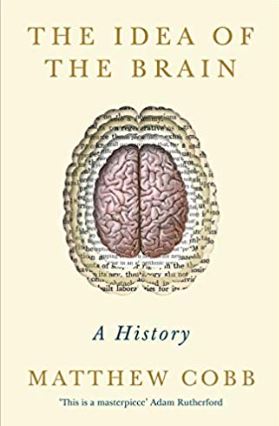
The Idea of the Brain - Matthew Cobb - April 2020Although it might seem to be a story of ever-increasing knowledge of biology, Cobb shows how our ideas about the brain have been shaped by each era’s most significant technologies. Today we might think the brain is like a supercomputer. In the past, it has been compared to a telegraph, a telephone exchange, or some kind of hydraulic system. What will we think the brain is like tomorrow, when new technology arises?

For thousands of years, thinkers and scientists have tried to understand what the brain does. Yet, despite the astonishing discoveries of science, we still have only the vaguest idea of how the brain works. In The Idea of the Brain, scientist and historian Matthew Cobb traces how our conception of the brain has evolved over the centuries.

READ EXCERPT OF FIRST 30 PAGES

The result is an essential read for anyone interested in the complex processes that drive science and the forces that have shaped our marvelous brains.

Matthew Cobb is Professor of Zoology at the University of Manchester. His previous books include Life’s Greatest Secret:The Race to Discover the Genetic Code, which was shortlisted for the the Royal Society Winton Book Prize, and the acclaimed histories The Resistance and Eleven Days in August. He is also the award-winning translator of books on the history of molecular biology, on Darwin’s ideas and on the nature of life.

Read more or purchase

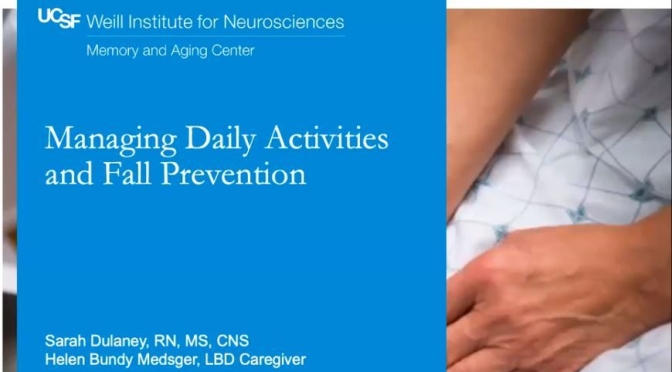
The Elderly & Dementia: “Managing Daily Activities & Fall Prevention” (UCSF)

https://www.youtube.com/watch?v=DupyoYqtxnc

Presented by Sarah Dulaney, RN, CNS, a nurse at the UCSF Memory and Aging Center, and Helen Medsger, a family caregiver and LBD support group leader, as part of the Lewy Body Dementia Caregiver Webinar Series supported by the UCSF Memory and Aging Center and the Administration for Community Living.

Top New Science Podcasts: Musical Memory, Ancient Artifacts Along Europe’s Shores (ScienceMag.org)

science-magazine-podcastsOn this week’s show, host Joel Goldberg talks with science journalist Andrew Curry about archaeological finds from thousands of years ago along the shores of Northern Europe. Curry outlines the rich history of the region that scientists, citizen scientists, and energy companies have helped dredge up.
Also this week, from a recording made at this year’s AAAS annual meeting in Seattle, host Meagan Cantwell speaks with Elizabeth Margulis, a professor at Princeton University, about musical memory. Margulis explains what research tells us about how our brains process music, and dives into her own study on how Western and non-Western audiences interpret the same song differently.

Studies: Dementia Risk Is Up To 11 Times Greater With Declines In Both Memory And Gait (JAMA)

From a JAMA Network Open online release (February 21, 2020):

JAMA Network OpenAcross the 6 studies of 8699 participants, mean age ranged between 70 and 74 years and mean gait speed ranged between 1.05 and 1.26 m/s. Incident dementia ranged from 5 to 21 per 1000 person-years. Compared with usual agers, participants with only memory decline had 2.2 to 4.6 times higher risk for developing dementia… 

Those with only gait decline had 2.1 to 3.6 times higher risk. Those with dual decline had 5.2 to 11.7 times the risk…

Impaired mobility, such as slow gait, is associated with an increased risk of dementia, but the effect size of this association is generally modest.16 Identifying persons who experience both mobility decline and memory decline, a main symptom in the early stage of dementia, may have a greater prognostic value in assessing risk of dementia because the combination could identify a group in whom gait speed decline is at least in part caused by neurodegenerative pathologic conditions of the central nervous system rather than local musculoskeletal problems, such as sarcopenia or osteoarthritis.79 A recent study of 154 participants with mild cognitive impairment reported that those who declined in both cognition and gait speed had the highest risk of dementia.

Read full study


Top New Science Podcasts: NIH Grant Diversity, Post-Traumatic Stress Memory Suppression (ScienceMag)

scimag_pc_logo_120_120 (2)On this week’s show, senior correspondent Jeffrey Mervis joins host Sarah Crespi to discuss a new National Institutes of Health (NIH) grant program that aims to encourage diversity at the level of university faculty with the long-range goal of increasing the diversity of NIH grant recipients.

Sarah also talks with Pierre Gagnepain, a cognitive neuroscientist at INSERM, the French biomedical research agency, about the role of memory suppression in post-traumatic stress disorder. Could people that are better at suppressing memories be more resilient to the aftermath of trauma?