The Cultured Traveller, December 2020-February 2021 Issue 32
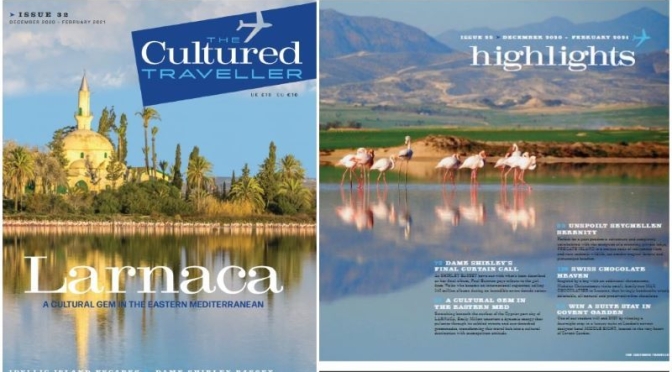
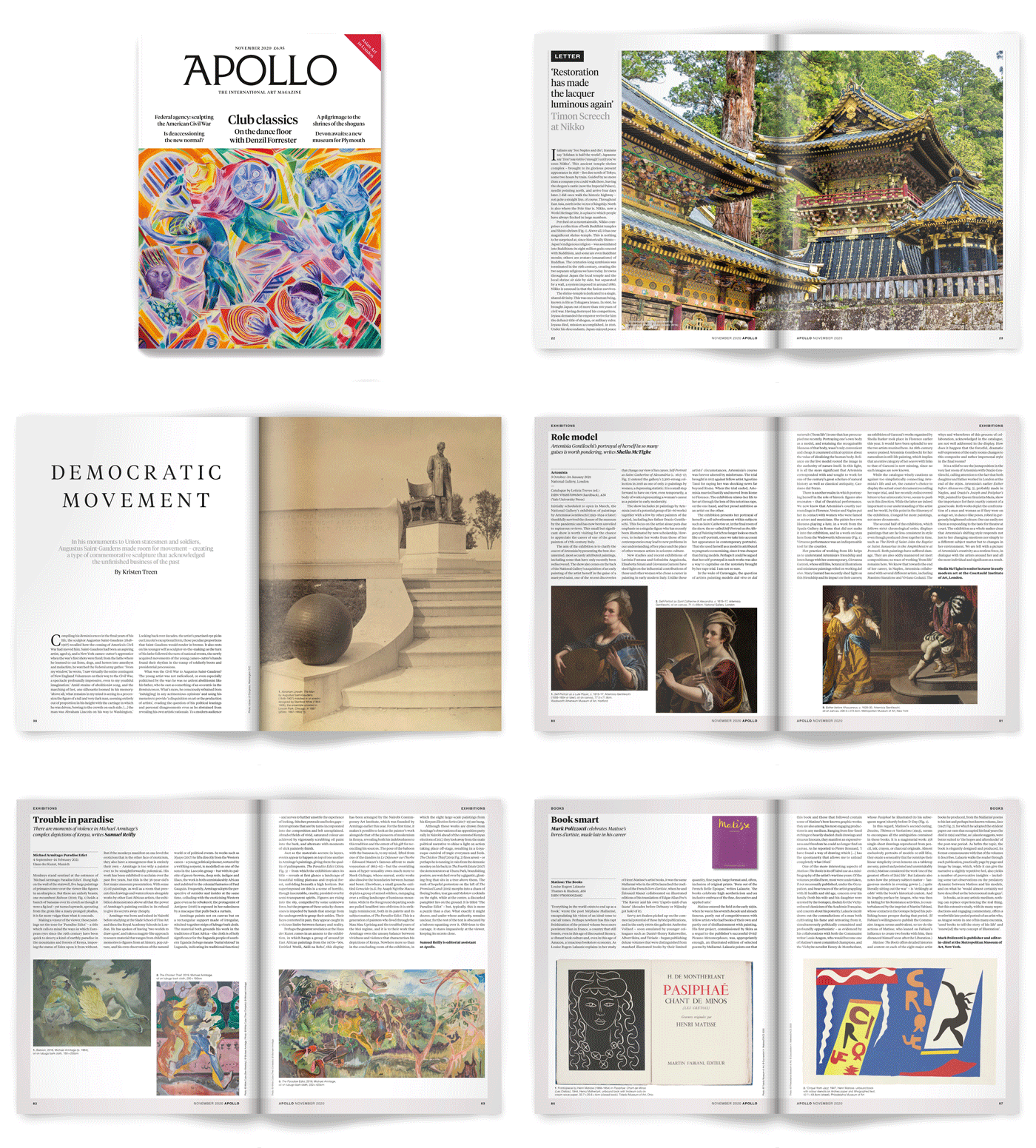
Music has always had the power to heal, lift and transport us to another place. And so, embodying a spirit of optimism, issue 32 has a decidedly musical feel, led by a special feature about the legendary SHIRLEY BASSEY, who is celebrating 70 years in the music business. The only performer to have ever had an album in the UK top 40 in seven consecutive decades, Dame Shirley speaks exclusively to The Cultured Traveller.
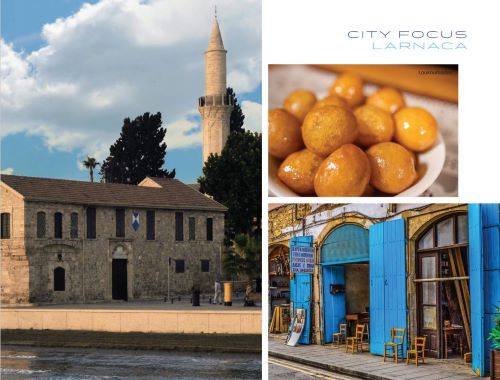
We sit down with New Orleans-born HARRY CONNICK JR., who is globally adored for his jazz, swing and big-band numbers. And sultry songstress MELODY GARDOT talks about recording her new album during lockdown. Scratching beneath the surface of the Cypriot port city of LARNACA, we uncover a dynamic energy that pulsates through the cobbled streets and sun-drenched promenades of this cultural gem in the eastern Med. And because we are all likely to be in need of a restorative trip next year, we check into a dozen IDYLLIC ISLAND RETREATS, any of which would make for the perfect post pandemic getaway.
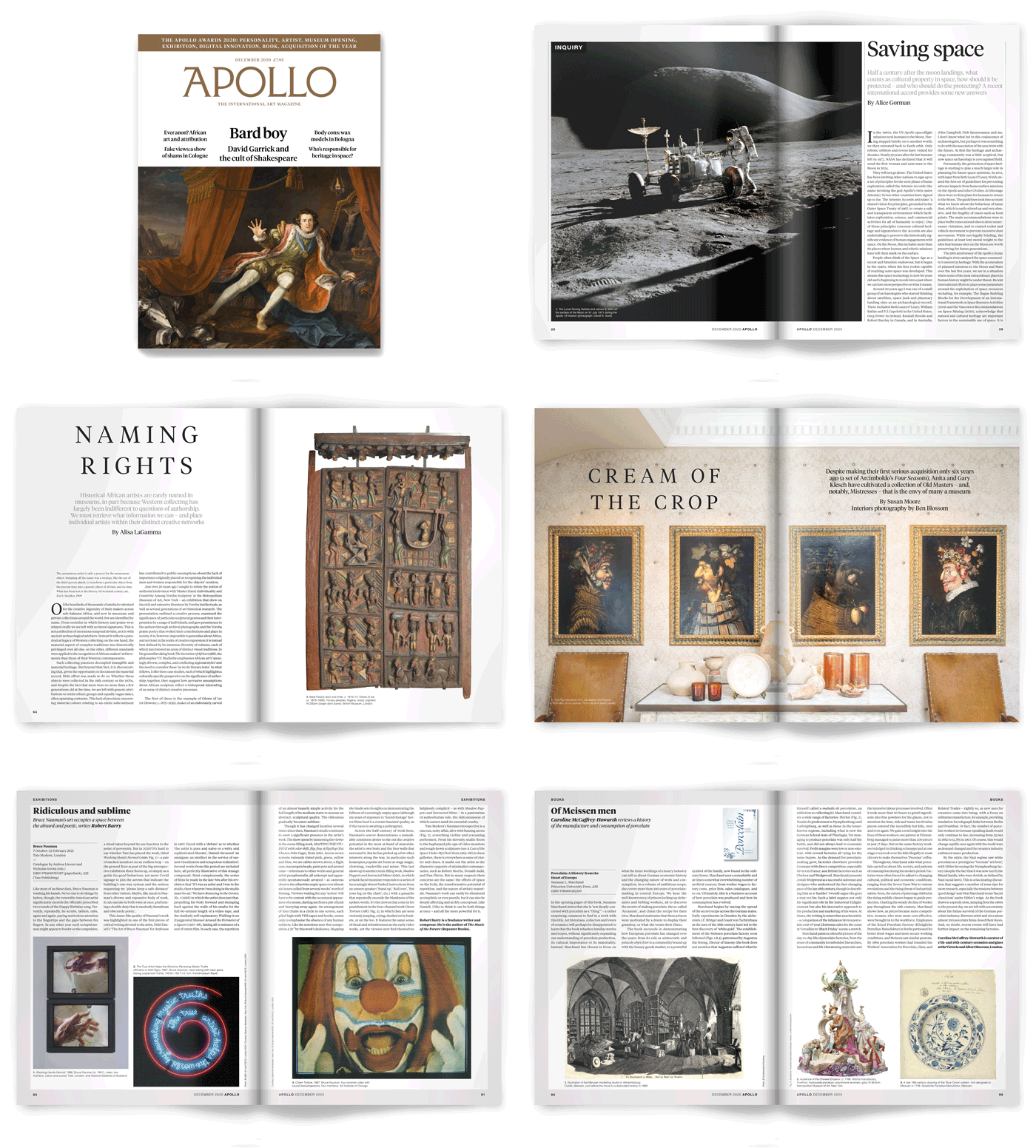
REVIEWS | Robert Barry on Bruce Nauman in London; Mark Evans on Prince Albert’s Raphael Collection in Woking; Imelda Barnard on Haegue Yang in St Ives; Caroline McCaffrey-Howarth on the history of European porcelain; Andrew Hussey on Isidore Isou; Thomas Marks on a collection of recipes by video artists
MARKET | Susan Moore previews December sales in New York and looks back at the autumn season; Emma Crichton-Miller on the enduring appeal of German limewood sculpture
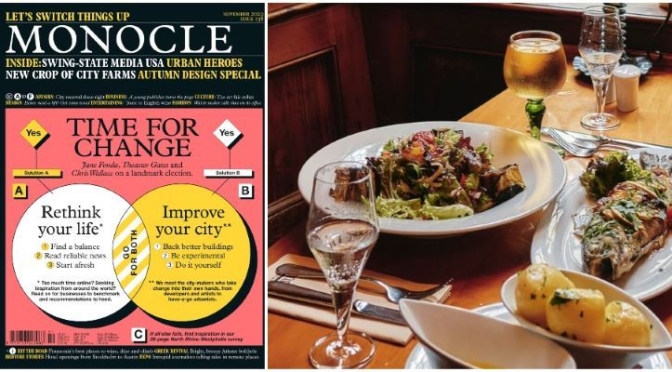
As a landmark US election approaches, Jane Fonda, Theaster Gates and Chris Wallace offer their thoughts on where the country should go next. Change elsewhere comes in the form of city farms, the latest design finds and an art fair redux. Plus: we survey North Rhine-Westphalia, a region on the up.
FEATURES | Denzil Forrester interviewed by Gabriel Coxhead; Kristen Treen on Augustus Saint-Gaudens’ monuments to the American Civil War; Emilie Bickerton visits the Musée Cernuschi in Paris; Glenn Adamson defends progressive deaccessioning; Thomas Marks visits the Box in Plymouth; mathematician John Coates shows Susan Moore his collection of early Japanese ceramics
REVIEWS | Sheila McTighe on Artemisia Gentileschi at the National Gallery; Samuel Reilly on Michael Armitage at the Haus der Kunst; Mark Polizzotti on Matisse’s artists’ books; Emily Knight on Joseph Wright of Derby; Sameer Rahim on Islamic influences in European architecture; Anthony Cutler on the Turin Shroud
MARKET | A preview of the second part of Asian Art in London; and the latest art market columns from Emma Crichton-Miller, Susan Moore and Samuel Reilly
PLUS | Timon Screech visits the shrines of the shoguns; Gillian Darley on the enduring appeal of crescents in architecture; Damian Thompson watches Yotam Ottolenghi make a feast inspired by the court of Versailles; Thomas Marks on the vital role of education in museums; Robert O’Byrne revisits the advertisements in Apollo 40 years ago
The Best Hospitals Honor Roll highlights 20 hospitals that excel across most or all types of care evaluated by U.S. News. Hospitals received points if they were nationally ranked in the 16 specialties – the more specialties and the higher their rank, the more points they got – and if they were rated high performing in any of the 10 procedures and conditions. The top point-scorers made the Honor Roll.
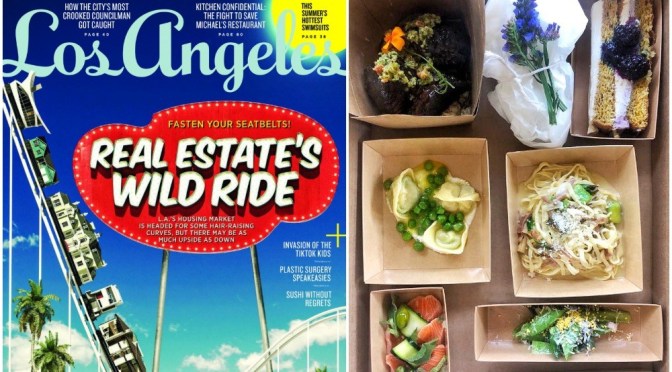
L.A. real estate in the post-pandemic era is about to undergo massive changes as millions work from home, hipster hoods falter amid retail meltdown, and the city’s newest hot spot might be monopolized by the richest man on Earth. Will massive home equity growth come to a crashing halt? Or will the residential market reset to its pre-pandemic self this summer? With millions sheltering in place, here’s what’s hitting home.
***********************
“Initially we just wanted to give people comforting things to feel safe and homey, but now that experience has to evolve,” says Dave Beran, the chef at Santa Monica’s Dialogue and Pasjoli. In May he offered an at-home take on Pasjoli’s famed pressed duck, an elaborate affair that, at the restaurant, involves a fowl carcass being crushed tableside in a turn-of-the century gadget to yield a juice that’s made into a savory sauce. The $155 take-home version for two includes seared duck breast, salad with crispy duck skin bits, duck leg confit bread pudding, rice pudding for dessert, and an instructional video and ingredients for making the sauce at home.
I WAS A COMPETITIVE BIRDER in high school. My family drove all around the countryside, so I spent a lot of time in the car, and I had to keep myself busy and project my brain somewhere. I would bring sketchbooks and field guides that I got from the library. I had started an Envirothon team at my school, to compete in the national decathlon pitting nerdy teens against each other in their knowledge of soil surveys, forestry, wildlife, and aquatic ecology.
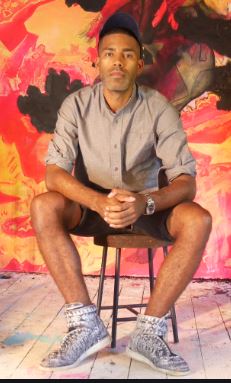
Artist Cy Gavin
I was the birding specialist. I learned more than two hundred birdsongs and birdcalls from CDs and from the field. I participated in other competitions where I would win binoculars and forty-pound bags of birdseed. I didn’t even have a bird feeder—I’d just become obsessed.
Unlike bird-watchers, birders often rely first on auditory cues to identify a species. You immediately know so much about the bird—its seasonal plumage, age, sex, if it’s making a courtship call or a warning call—from listening. The second thing you cultivate is an idea of where the call is coming from, so you can zero in on it. You develop a spatial awareness, so even with your eyes closed the woods become a vivid visual experience.
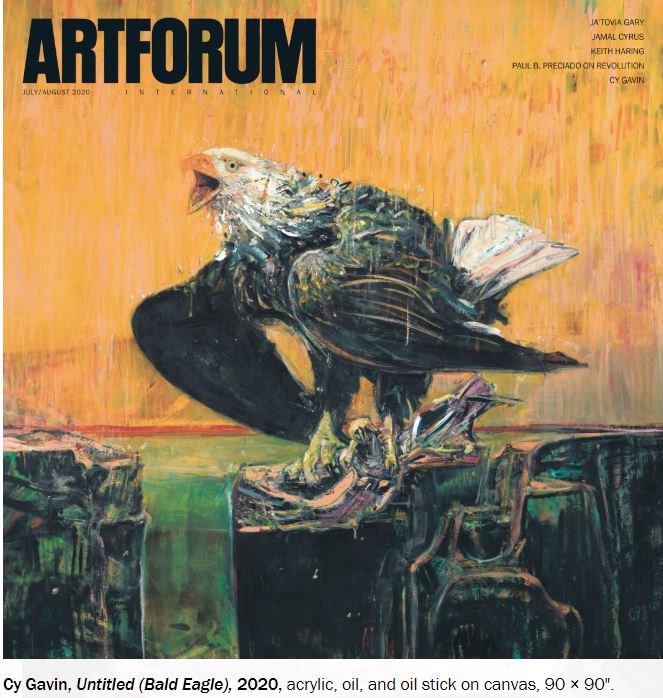
A steward of the Susquehanna River in Pennsylvania once took me out in a canoe to this extremely remote location to see a bald eagle’s ten-foot nest. Eagle populations had been devastated by the use of DDT. At the time, all nest sites had to be reported to the government and kept secret. In 2007, the bald eagle was removed from the list of threatened and endangered species, and ever since, I would catch myself looking out for them whenever I’d pass a lake or river. Where I work, in upstate New York, I see bald eagles all the time. Two years ago, I found a nesting pair in Poughkeepsie near a waste-treatment plant on the Hudson River. I just spent time watching and drawing them. It was very unglamorous. They eat garbage. They’re like pigeons. The river freezes in the winter, and I have a vivid memory of watching this wet, bedraggled eagle on a chunk of ice.
Cy Gavin is an American artist that lives and works in New York. Gavin often incorporates unusual materials in his paintings such as tattoo ink, pink sand, diamonds, staples, Bermudiana seeds, and cremains. Gavin also works in sculpture, performance and video.
News, Views and Reviews For The Intellectually Curious












 The Best Hospitals Honor Roll highlights 20 hospitals that excel across most or all types of care evaluated by U.S. News. Hospitals received points if they were nationally ranked in the 16 specialties – the more specialties and the higher their rank, the more points they got – and if they were rated high performing in any of the 10 procedures and conditions. The top point-scorers made the Honor Roll.
 “Initially we just wanted to give people comforting things to feel safe and homey, but now that experience has to evolve,” says Dave Beran, the chef at Santa Monica’s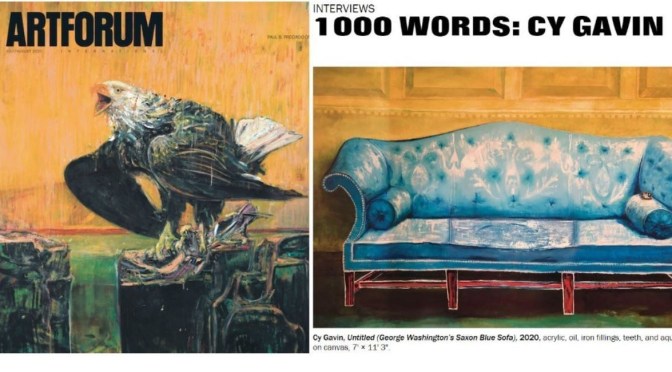
 Boomers Daily