Tag Archives: Magazines

Journalism: 2023 Whiting Literary Magazine Prizes

2023 Whiting Literary Magazine Prizes

Guernica

Guernica is a digital magazine with a global outlook, exploring connections between ideas, ideals, communities, and individual lives. It rejects binary thinking and conventional wisdom, investing instead in the power of counter-narratives, especially those driven by lived experience. Across fiction, poetry, essays, reportage, criticism, and art, Guernica is a home for established and emerging writers, in conversation with each other. Guernica is committed to global literature — highlighting work from independent presses across the Global South and translating work from every continent into English, and from English into global languages. Going into its twentieth year, Guernica remains a trusted home for incisive, urgent writing and singular perspectives on critical issues of the day.

Subscribe

Judges’ citation: 

Perennially curious, eager to reckon with the world head-on, Guernica draws readers into uncharted conversations and traces the complex ligaments connecting culture, politics, art, and ecology. Over twenty years, Guernica has built an impressive record as a place of first publication for important writers and thinkers. Guernica’s ability to deepen our sense of wonder, of responsibility, and of connection is rooted in a core conviction that we must hear from diverse voices and diverse places.

Los Angeles Review of Books

Drawing on literary tradition—and discarding it when necessary—Los Angeles Review of Books dwells in contradiction: the tension between depth and breadth, filth and glamor, destruction and creation, dream and nightmare, that L.A. lives and breathes. LARB launched in 2011 in part as a response to the disappearance of the newspaper book review supplement, and with it, the art of lively, intelligent, long-form writing on recent publications in every genre. LARB has since become a polyvocal cultural force reinventing book criticism for the internet age. It publishes new reviews, essays, and interviews online daily, as well as a print journal, LARB Quarterly, and offers events and programs that connect writers and artists to readers both in Los Angeles and across the globe.

Subscribe

Judges’ citation: 

A pillar of West Coast literary culture with national impact, Los Angeles Review of Books astounds with its scope. Its essays, reviews, and interviews are imbued with the irresistible appeal of fresh ideas and the rigor of academic inquiry. As an organization it creates and renews vital space for connection, especially through its innovative publishing workshop. New and accomplished international authors and translators cascade out of LARB, and its coverage of contemporary literature is steeped in style and substance. The commitment to history, critical thought, imagination, and to its eponymous city runs deep.

Mizna

Mizna reflects the literatures of Southwest Asian and North African (SWANA) communities and fosters the exchange and examination of ideas, allowing readers and audiences to engage with SWANA writers and artists on their own terms. It has been a critical platform for contemporary literature, film, art, and cultural production since 1999, publishing a biannual print journal of poetry, fiction, essays, comix, and visual art in addition to producing the Twin Cities Arab Film Festival, the largest and longest running Arab film fest in the Midwest. Recognizing that open cultural spaces are not a luxury but a necessity, Mizna also hosts classes, readings, and community events that offer points of connection between emerging and established SWANA artists and their local Twin Cities community and beyond.

Subscribe

Judges’ citation: 

Mizna is an absolute gem of a journal: tightly edited, gorgeously curated, and visually striking. Care and craft float off its pages of beautifully laid-out poetry and lovingly printed images. Mizna is both a grassroots community organization and an esteemed international artistic platform, furthering important intergenerational dialogue within the Southwest Asian and North African (SWANA) diaspora and showcasing thrilling new literature.

n+1

n+1 encourages writers, new and established, to take themselves as seriously as possible, to write with as much energy and daring as possible, and to connect their own deepest concerns with the broader social and political environment—that is, to write, while it happens, a history of the present day. n+1 was founded in New York City, in 2004, by six young writers and editors who wanted to make a magazine that didn’t shy away from difficult and ambitious writing and would take literature, culture, and politics as aspects of the same project. In addition to the triannual print and digital magazine, n+1 also publishes books that expand on the interests of the magazine and programs readings, panels, and events in New York City and across the US.

Subscribe

Judges’ citation: 

A distinctive, erudite editorial project overflowing with rigor and generosity, n+1 is both magnet and catapult for intellectually fearless writers. Its uniquely attentive and structural approach to editing has helped cement a reputation as a major site of discovery for new talent, and it indisputably lives on the cutting edge of literary and political discourse. n+1’s ethos is deep investment in writers and their growth. A must-read for critical engagement with pressing issues of the day.

Orion

Orion invites readers into a community of caring for the planet. Through writing and art that explore the connection between nature and culture, it inspires new thinking about how humanity might live on Earth justly, sustainably, and joyously. Founded in 1982, Orion has grown into a quarterly print magazine with in-depth features, poetry, photo essays, science reporting, profiles, book reviews, and interviews. Orion also publishes full-length books as well as original work on its website that probe humanity’s ethical obligation towards and connection to our planet and hosts workshops designed to help writers deepen their relationship with nature and place.

Subscribe

Judges’ citation: 

Orion sounds out the depth and breadth of the natural world and our human experiences in it, proving over and again how necessary a publication it is in this age of climate crisis. The magazine is the nucleus of something much larger: a network of readers and contributors bound by a desire to protect and marvel at natural beauty. Each themed issue, replete with illustrations that complement and elevate the text, is a printed object to cherish. To read Orion is to feel the planet as a living organism of which we are a part.

Oxford American

Dedicated to the complexity and vitality of the American South, Oxford American is a national magazine with a regional point of view. It began publishing in 1992 out of Oxford, Mississippi, and strives to reflect the multicultural tapestry of the region as it truly exists–to explore many Souths and trouble familiar, singular stereotypes. Oxford American publishes a wide array of literature written in diverse registers, including investigative reportage, memoir, cultural criticism, fiction, poetry, and book reviews, in addition to an iconic annual Southern music issue. Oxford American celebrates the South’s immense cultural impact on the nation–its foodways, literary innovation, fashion history, visual art, and music–and recognizes that as much as the South can be found in the world, one can find the world in the South.

Subscribe

Judges’ citation: 

Oxford American is our most adventurous and authoritative window on the South, pushing beyond headlines to deliver a textured, ever-evolving portrait of its cultural wealth. Drawn in by eye-catching art direction and dazzling editorial letters, readers stay to savor the unique weave of the journalistic with habit-forming fiction and vivid travel writing. A generous intellectual hospitality serves the magazine’s Southern neighbors and a broad national readership all at once. Oxford American is a spring of innovation, honoring tradition while forging something new.

The Paris Review

The Paris Review showcases a lively mix of exceptional poetry, fiction, and nonfiction and delights in celebrating writers at all career stages. Its “Writers at Work” series, hailed by the New York Times as “the most remarkable interviewing project we possess,” offers rich psychological portraits and a trove of practical advice for aspiring writers, and has been a hallmark of the magazine since its inception in 1953. With a quarterly print journal, a website that publishes daily, a digital archive, and a podcast featuring a blend of classic stories and poems, vintage interview recordings, and new work, The Paris Review favors daring, original writing and seeks to be the best kind of party: open, inclusive, and excitingly vibrant.

Subscribe

Judges’ citation: 

For seventy years and counting, The Paris Review has remained wonderfully distinctive and sophisticated, never short on chic art direction, impeccable curation, or international flair. The interviews make you ache to have been in the room for the conversation. Readers will find exceptional work by feted writers in every issue, but The Paris Review does not rest on its legacy: it deftly employs its footing as the standard bearer for American literary magazines to uplift talent that hasn’t yet gotten its due.

Politics: The Guardian Weekly – Sept 15, 2023

Image

The Guardian Weekly (September15, 2023) The issue features  Amy Hawkins looking under the lid of China’s economy and asks if it has peaked?

Desperate searches for survivors continued in Morocco’s Atlas mountains after last Friday’s 6.8-magnitude earthquake, which killed thousands of people. Peter Beaumont reports from remote villages devastated by the country’s deadliest quake in six decades.

A worse disaster still appeared to be unfolding further along the north African coast in Libya, where up to 10,000 people were feared missing after flooding caused by the collapse of two dams. Details were only just emerging at the time of the Weekly going to press on Tuesday, but you can find the latest updates here.

First there were the bewildering DNA test results, then the long-forgotten fertility blog. Jenny Kleeman tells the remarkable tale of a discovery that would change the lives of two American families for ever.

Also in Features is American author Elif Batuman’s entertaining account of what happened when she asked the AI chatbot ChatGPT for assistance with a quote from Proust, leading her down a digital rabbit hole she never could have foreseen.

Previews: The New Yorker Magazine – Sept 18, 2023

R. Kikuo Johnsons “Bodega Cat”

The New Yorker – September 18, 2023 issue: The new issue features R. Kikuo Johnson’s “Bodega Cat”, where the the artist discusses pivotal moments and his relationship to pets.

Ross Douthat’s Theories of Persuasion

Ross Douthat photographed by Adam Pape.

At a time of distrust and polarization, the conservative Times columnist seeks to bridge the worlds of the Christian right and the secular left.

By Isaac Chotiner

This summer, Ross Douthat, liberal America’s favorite conservative commentator, wrote a piece about liberal America’s least favorite Democrat, Robert F. Kennedy, Jr. Douthat argued in his New York Times column that an unwillingness to debate Kennedy—who has claimed that childhood vaccines cause autism, that 5G networks are part of a mass-surveillance system, and that covid was designed to spare Jewish and Chinese people—was an insufficient response to voters who are increasingly distrustful of the establishment. 

What Kate DiCamillo Understands About Children

Painting of Kate DiCamillo.

Her books for young readers have sold more than forty-four million copies. They are full of yearning, loneliness, ambivalence, and worry.

By Casey Cep

Three winters in a row, Kate DiCamillo went into the hospital, never sure if she would come home and always a little scared to do so. One of those winters, when she was four years old and the air outside was even colder than the metal frames of the oxygen tents she’d grown accustomed to having above her bed, her father came to see her. He was wearing a long black overcoat, which made him look like a magician. “I brought you a gift,” he said, pulling something from his pocket as if from a top hat.

Views: The New York Times Magazine – Sept 10, 2023

Image

THE NEW YORK TIMES MAGAZINE (September 10, 2023): The Education Issue features Americans Are Losing Faith in the Value of College. Whose Fault Is That?; Affirmative Action Is Still in Effect. For Men, and more….

Americans Are Losing Faith in the Value of College. Whose Fault Is That?

For most people, the new economics of higher ed make going to college a risky bet.

By Paul Tough

A decade or so ago, Americans were feeling pretty positive about higher education. Public-opinion polls in the early 2010s all told the same story. In one survey, 86 percent of college graduates said that college had been a good investment; in another, 74 percent of young adults said a college education was “very important”; in a third, 60 percent of Americans said that colleges and universities were having a positive impact on the country. Ninety-six percent of parents who identified as Democrats said they expected their kids to attend college — only to be outdone by Republican parents, 99 percent of whom said they expected their kids to go to college.

Affirmative Action Is Still in Effect. For Men.

The scene outside a bar that is popular among Tulane students.

Declining male enrollment has led some colleges to adopt an unofficial policy that many find objectionable: “We need to admit men, and women are going to suffer.”

By Susan Dominus

In the spring of 2021, about 2,000 students on the campus of Tulane University in New Orleans received an email they were expecting. They had filled out an elaborate survey provided by Marriage Pact, a matchmaking service popular on many campuses, and the day had come for each of them to be given the name of a fellow student who might be a long-term romantic partner. When the results came in, however, about 900 straight women who participated were surprised by what the email offered: a friend match instead of a love interest. 

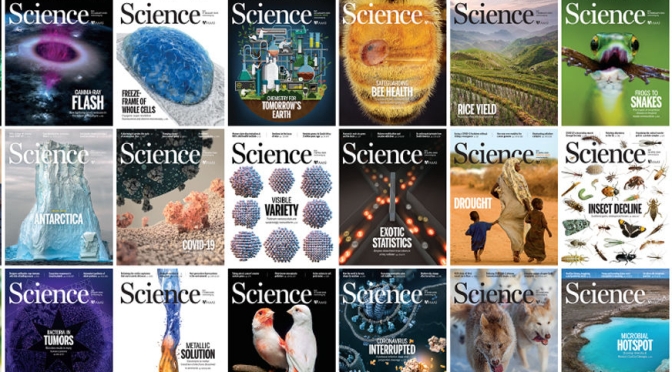
Research Preview: Science Magazine – Sept 8, 2023

Image

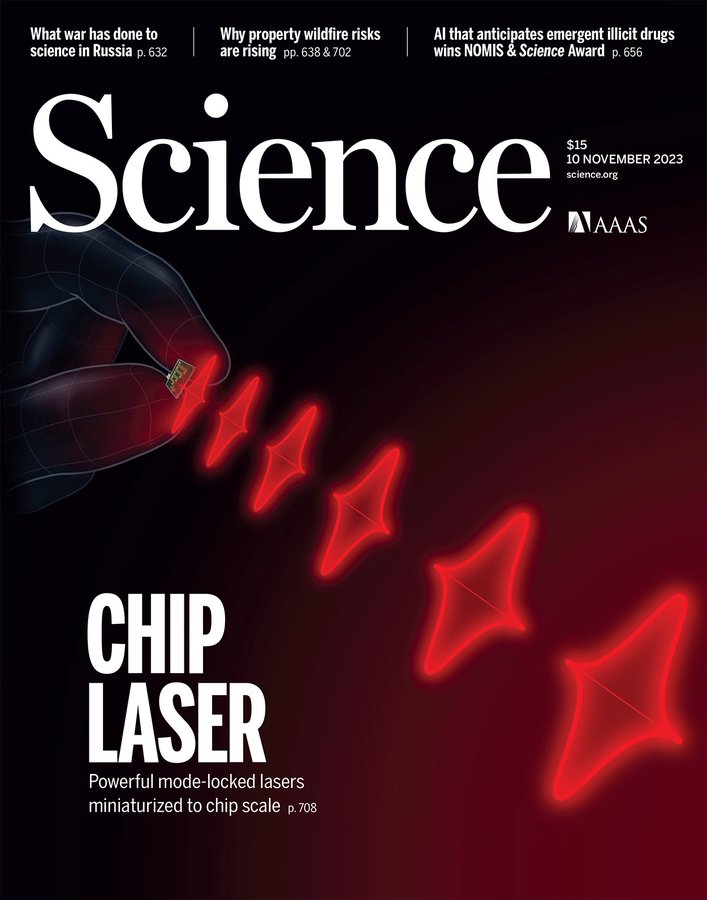
Science Magazine – September 8, 2023: Reducing single-use cutlery with green nudges: Evidence from China’s food-delivery industry; Anatomy of a volcanic eruption undersea, and more…

Anatomy of a volcanic eruption undersea

Submarine flows from the Hunga Tonga–Hunga Ha‘apai eruption decimated seafloor cables

In December 2021, an undersea volcano in the southern Pacific Ocean, the Hunga Tonga–Hunga Ha‘apai (hereafter called the Hunga volcano) began erupting. In January 2022 the eruption reached a powerful climax, triggering atmospheric waves that traveled around the globe and a tsunami that swept across the Pacific Ocean. An estimated 75% of Earth’s volcanoes are underwater, and 20% of all fatalities caused by volcanic eruptions since 1600 CE have been associated with underwater volcanism (3).

Reducing single-use cutlery with green nudges: Evidence from China’s food-delivery industry

China’s high demand for online food delivery resulted in an increase in the use of disposable, single-use cutlery. Disposable cutlery increases plastic pollution, and paper napkins and wooden chopsticks contribute to environmental degradation that endangers wildlife and marine species and compromises human health. Informed by the literature on “green nudges, ” which are prompts to promote environmentally friendly behaviors, He et al. collaborated with Alibaba to use its mobile food delivery platform, Eleme, in a longitudinal field study across China.

Previews: The Economist Magazine – Sept 9, 2023

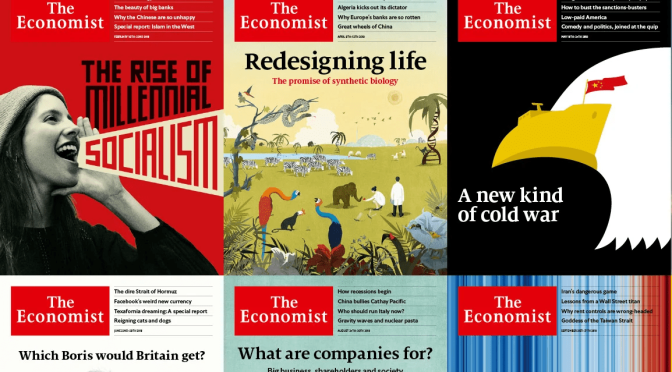
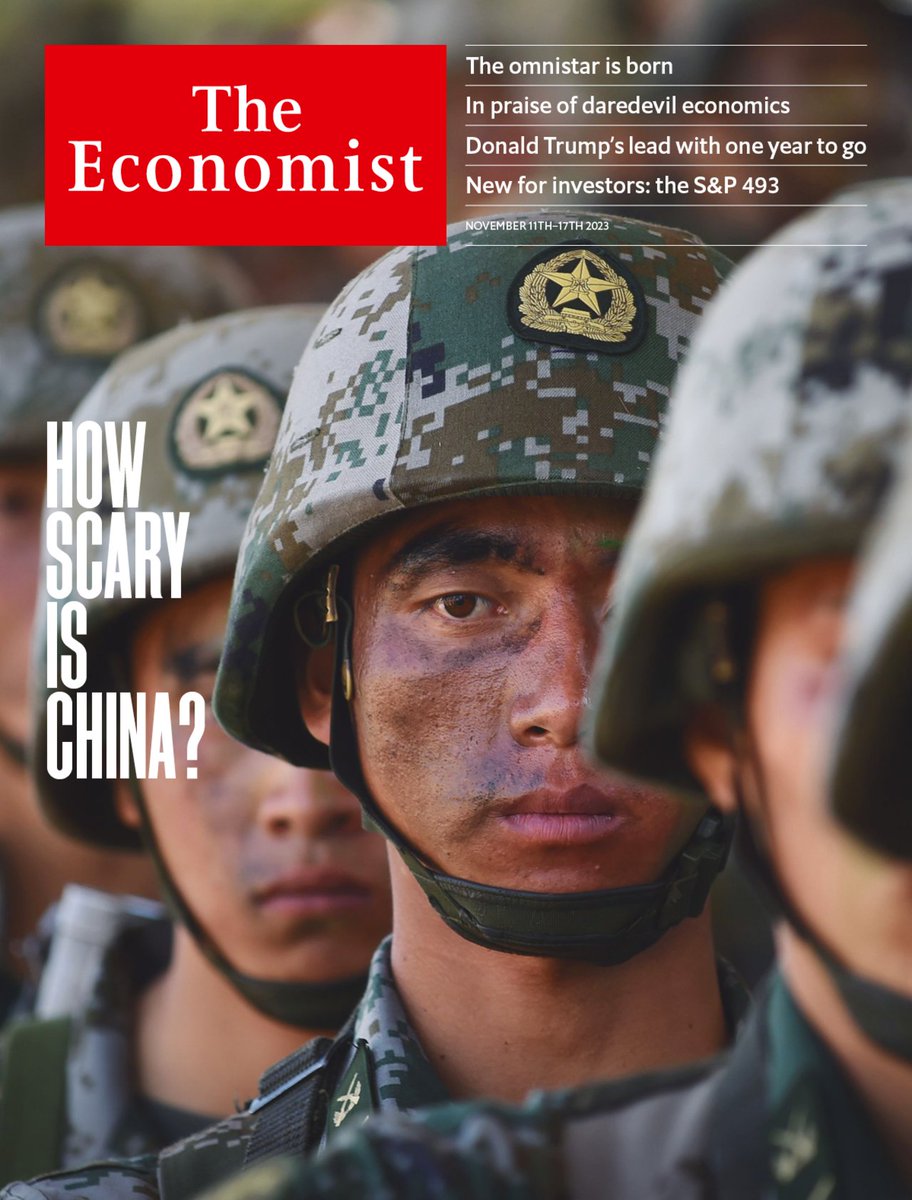
The Economist Magazine (September 9, 2023): The new Middle East has more money and less mayhem. For now…; America’s Supreme Court should adopt new ethics standards How artificial intelligence will affect the elections; Javier Milei would be a danger for democracy in Argentina….

The new Middle East has more money and less mayhem. For now

Economies are booming and wars are fading. But climate change is looming

If you thought the Middle East was stagnant, think again. The Gulf economies are among the richest and most vibrant on the planet, helped by a Brent crude oil price that rose back to over $90 per barrel this week. A $3.5trn fossil-fuel bonanza is being spent on everything from home-grown artificial intelligence models and shiny new cities in the desert, to filling the coffers of giant sovereign-wealth funds that roam the world’s capital markets looking for deals.

America’s Supreme Court should adopt new ethics standards

Three judges are struggling to hold up the roof of the Supreme Court

Lifetime tenure can easily slip into entitlement

Next term will be agonising for the Supreme Court. Some combination of voters and courts will determine whether Donald Trump becomes president again and whether he goes to prison. President Joe Biden’s son has a case before the courts. Dozens of states have changed their voting laws since 2020 and the nine justices on the Supreme Court may be asked to look at them. If the presidential election in 2024 is close, the court may have to step in and adjudicate. With so much at stake, America needs a Supreme Court that is broadly seen as legitimate and, ideally, impartial. Regrettably, trust in the court is at its lowest point since pollsters began asking about it.

Arts/Books: Times Literary Supplement – Sept 8, 2023

Image

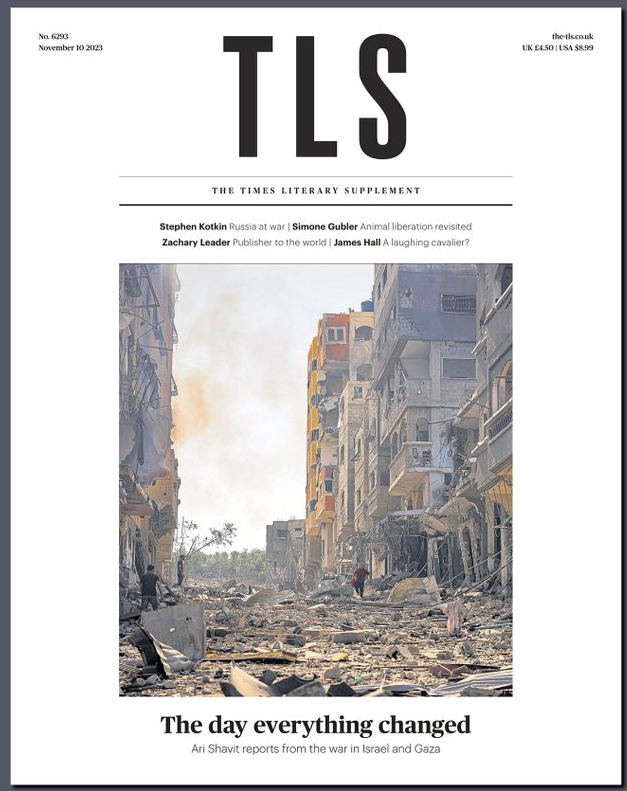
Times Literary Supplement (September 8, 2023): The new issue features Modern conspiracy theories, China’s Platonic republic, Jonathan Raban’s last days, Sebastian Faulks’s Neanderthal, the English country house, and more….

Politics: The Guardian Weekly – September 8, 2023

Image

The Guardian Weekly (September 8, 2023) The issue features Alexandria Ocasio-Cortez’s progressive vision for US politics, graduate jobs market pressured by artificial intelligence, migrants in North Africa Spanish enclave of Melilla, and more…

Alexandria Ocasio-Cortez’s explosive entrance on to the US political scene at the age of 29, as the youngest woman ever to be elected to the House of Representatives, was a beacon of hope for the progressive left during the dark days of the Trump presidency.

Five years on, AOC is established as an influential figure in the Democratic party, known for her advocacy of green policies and efforts to engage marginalised groups. In a wide-ranging interview, she talks to Washington bureau chief David Smith about the climate crisis, misogyny in US politics and the potential – one day – for a presidential run of her own.

For those with an eye farther afield, on the graduate jobs market, Hibaq Farah and Tom Ambrose consider the future careers most likely to withstand the coming onslaught of artificial intelligence.

In Features, Matthew Bremner’s investigation into the massacre of migrants in the north African Spanish enclave of Melilla is a sobering but important read. Jay Owens changes the pace somewhat with an exploration of dust, and what it reveals about the world around us.

Previews: The New Yorker Magazine – Sept 11, 2023

Office space and mall.

The New Yorker – September 11, 2023 issue: The new issue features Dana Goodyear on editing humans with crispr, Elizabeth Kolbert on decoding whale communication, James Wood on George Eliot, and more.

The Transformative, Alarming Power of Gene Editing

Hands cutting DNA with a pair of scissors. Growth of a human baby is displayed in the background.

A rogue scientist showed that crispr gives humans the ability to transform ourselves. But should we?

By Dana Goodyear

Crispr, which may be the single most transformative biological technology of the twenty-first century, is a natural phenomenon, evolved over billions of years. It was first observed in the nineteen-eighties, when researchers noticed unexplained sequences of viral DNA in E. coli. Eventually, they realized that these sequences played a role in the bacteria’s immune system: they could find and destroy other pieces of viral DNA. 

The Holy Heresies of George Eliot

Two people lying with their faces close to each other with their long hair flowing over an open book

Her greatest rebellion against Victorian moralism was to reclaim the sacred for herself.

By James Wood

Literature bores me, especially great literature,” the narrator of one of John Berryman’s “Dream Songs” says. George Eliot sometimes bores me, especially the George Eliot draped in greatness. Think of the extremities of nineteenth-century fiction: labile Lermontov; crazy, visionary Melville; nasty, world-hating Flaubert; mystic moor-bound Brontës; fanatical, trembling Dostoyevsky; explosive Hamsun. There’s enough wildness to destroy the myth of that stable Victorian portal “classic realism.” It was not classic—certainly not then—and not always particularly “real.”

Books: Literary Review Magazine – September 2023

Image

Literary Review – September 2023: The new issue features Yoga Goes To Hollywood by Dominic Green; How England Lost France; Who’s Afraid of AI?; Don’t Mention Tiananmen; Anne Boleyn’s Ascent and Tastes of China….

Dates with Destiny

Turning Points: Crisis and Change in Modern Britain, from 1945 to Truss  eBook : Limited, Steve Richards Media, Richards, Steve: Amazon.co.uk: Books

RICHARD VINEN

Turning Points: Crisis and Change in Modern Britain, from 1945 to Truss By Steve Richards

In the good old days, dates were for foreigners. France, to take the obvious example, had repeatedly been turned upside down by war, revolution and changes of regime. But the English tourist in Paris rarely bothered to find out which of these distasteful events might be commemorated by, say, the rue du Quatre Septembre. The history of England (this was less true of Scotland and not at all true of Ireland) was a smooth and mostly benign progression. Educated people could tell you what the Glorious Revolution was but might be hazy about when exactly it had happened.

Cyborgs Old & New

The Handover: How We Gave Control of Our Lives to Corporations, States and  AIs: Runciman, David: 9781631496943: Amazon.com: Books

BLAKE SMITH

The Handover: How We Gave Control of Our Lives to Corporations, States and AIs By David Runciman

Artificial intelligence, it is commonly acknowledged, will pose one of the gravest challenges to humanity in the coming years. In the minds of some, it is already the most urgent problem we face. While there are a number of possible dangers that might bring about the extinction of our species, AI confronts us with a particularly dire situation, because it may well be that we have only a brief amount of time – perhaps a generation – in which to set up norms and constraints on the development of autonomous, non-human intelligences that may otherwise escape our control.