
Filmed, Photographed and Edited by: T.Haaland Photography
In this video, I show my photography in 2020 and share my favorite highlights of the year.

Filmed, Photographed and Edited by: T.Haaland Photography
In this video, I show my photography in 2020 and share my favorite highlights of the year.
Learn how our team of engineers took the mid-engine Corvette to the next level. From the development at Nürburgring to brand new architecture and technology.
A selection of three essential articles read aloud from the latest issue of The Economist. This week: Britain’s place in the world, the future of global e-commerce (9:25), and using urine to heat homes (16:30).

NPR’s Scott Simon reflects on the legacy of F. Scott Fitzgerald’s The Great Gatsby. The literary classic’s copyright expired on the first day of 2021.
The copyright on F. Scott Fitzgerald’s The Great Gatsby expired on the first stroke of 2021 and the book entered the public domain.
The classic 1925 novel of love foiled, ambitions foisted, class and betrayal sold fewer than 25,000 copies before Fitzgerald died. It has since sold nearly 30 million. I gave our daughter the copy I had in high school when she read it last year. The Great Gatsby has been turned into stage productions, an opera, five film versions, a Taylor Swift song and inspired innumerable prequels, spinoffs and variations.
In the public domain, Gatsby may now become even more familiar. Two new editions are about to come out and who knows what kind of projects — a Gatsby rom-com? Gatsby joins The Avengers? — might now get a green light, which recalls the imperishably eloquent last passage of the book: “Gatsby believed in the green light, the orgastic future that year by year recedes before us.”
Gatsby’s Jazz Age Long Island may not look like a microcosm of contemporary America. Neither does Don Quixote, The Scarlet Letter, Macbeth or Their Eyes Were Watching God. We want young readers to be able to see themselves in stories; but literature can also show us that people we don’t think are much like us at all turn out to have some of the same heart, blood and dreams. That can be the power of empathy in art.
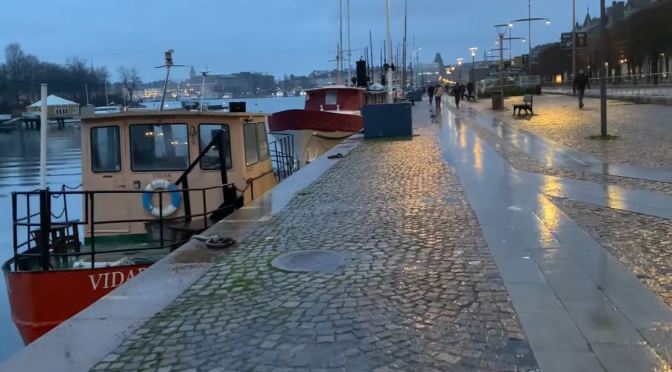
A bit after 3 pm and already dark. A light rain. First day of 2021 in Stockholm.
Strandvägen is a boulevard on Östermalm in central Stockholm, Sweden. Completed just in … Styrmansgatan, Grev Magnigatan, Torstenssonsgatan, Banérgatan, Narvavägen, Djurgårdsbron, Storgatan, Ulrikagatan, and Oxenstiernsgatan.
Vienna, Austria’s capital, lies in the country’s east on the Danube River. Its artistic and intellectual legacy was shaped by residents including Mozart, Beethoven and Sigmund Freud. The city is also known for its Imperial palaces, including Schönbrunn, the Habsburgs’ summer residence. In the MuseumsQuartier district, historic and contemporary buildings display works by Egon Schiele, Gustav Klimt and other artists.
Video recorded: January 1, 2021, Air temperature: 0 °F / 32 °F
Georgina Godwin and guests set the tone for the weekend. News includes veto override of U.S. Defense Bill, China states Covid-19 started in many parts of the world, and other top headlines.
Ordering plants by post mostly from Italy, Germany, North Africa, and even the Cape of Good Hope, the Nuremberg merchant Volkamer was a devotee of the fragrant and exotic citrus at a time when such fruits were still largely unknown north of the Alps.
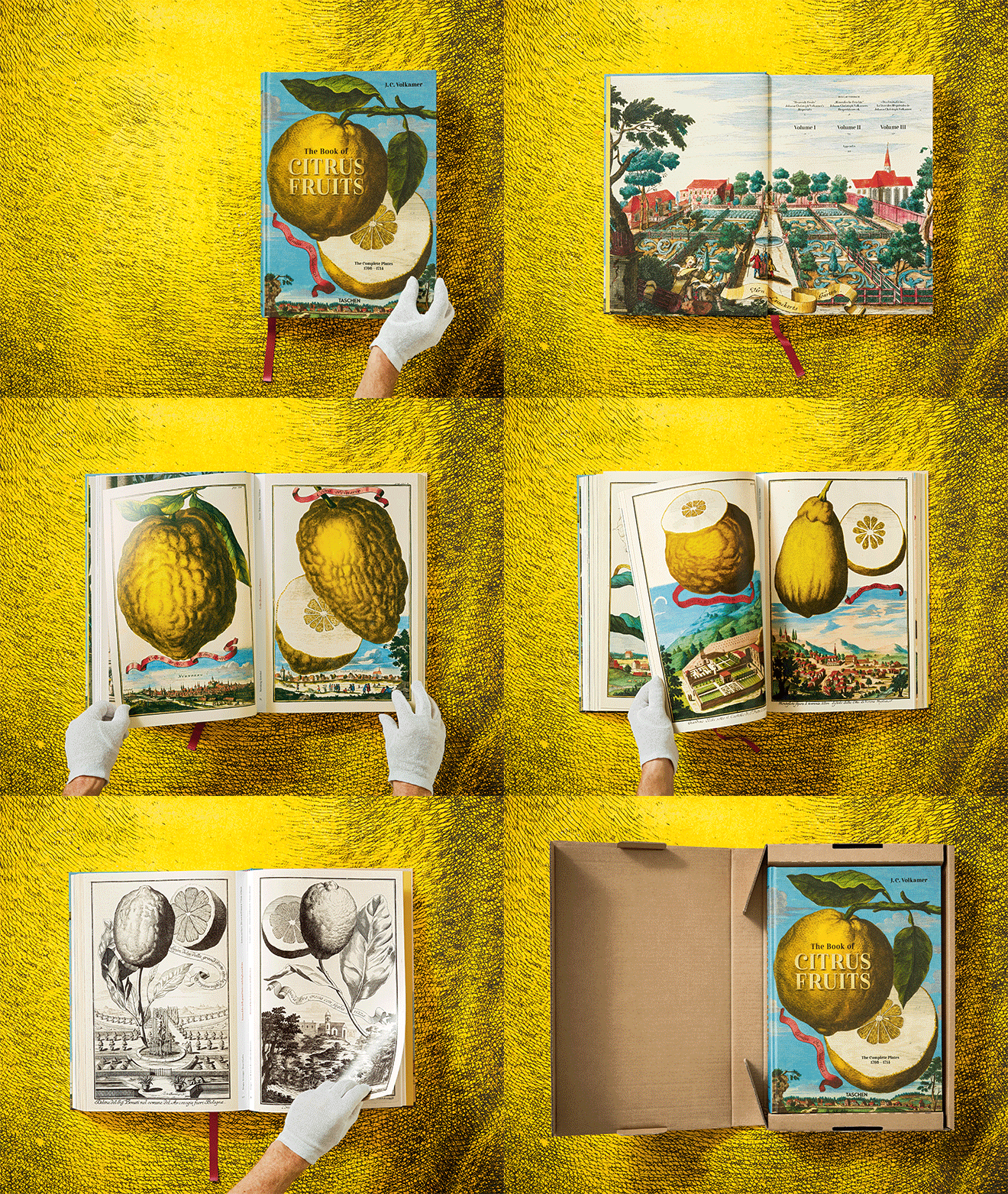
Famous First Edition: First printing of 5,000 numbered copies
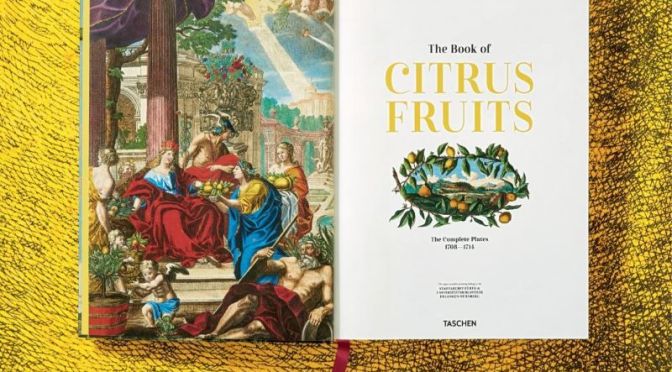
Have you ever thought of citrus fruits as celestial bodies, angelically suspended in the sky? Perhaps not, but J. C. Volkamer (1644–1720) did—commissioning an extravagant and breathtaking series of large-sized copperplates representing citrons, lemons, and bitter oranges in surreal scenes of majesty and wonder.
His garden came to contain a wide variety of specimens, and he became so obsessed with the fruits that he commissioned a team of copperplate engravers to create 256 plates of 170 varieties of citrus fruits, many depicted life size, published in a two-volume work.
In both volumes, Volkamer draws on years of hands-on experience to present a far-reaching account of citrus fruits and how to tend them—from a meticulous walk-through of how to construct temporary orangeries, glasshouses, and hothouses for growing pineapples to commentary on each fruit variety, including its size, shape, color, scent, tree or shrub, leaves, and country of origin.
In each plate, Volkamer pays tribute to the verdant landscapes of Northern Italy, his native Nuremberg, and other sites that captured his imagination. From Genovese sea views to the Schönbrunn Palace, each locale is depicted in the same exceptionaldetail as the fruit that overhangs it. We witness branches heavy with grapefruits arching across a sun-bathed yard in Bologna and marvel at a huge pineapple plant sprouting from a South American town. The result is at once a fantastical line-up of botanical beauty and a highly poetic tour through the lush gardens and places where these fruits grew.
Few colored sets of Volkamer’s work are still in existence today. This publication draws on the two recently discovered hand-colored volumes in the city of Fürth’s municipal archive in Schloss Burgfarrnbach. The reprint also includes 56 newly discovered illustrations that Volkamer intended to present in a third volume.
Iris Lauterbach studied art history and romance languages and literature in Mainz, Pavia and Paris and obtained her doctorate in 1985. Since 1991 she has been a member of the research department of the Central Institute for Art History in Munich and teaches the history of garden architecture at the Technical University in Munich. Her main areas of research include France during the 18th century and the history of European garden art from the 16th to the 20th century, while she has also carried out extensive research about the restitution of artworks that were looted during the Second World War.





 Boomers Daily