Concrete, curtain creepers and light wells define this beautiful villa that is designed to house three generations.
We were set to design a house for a three-generation family with different lifestyles between the family members. While the grandparents are used to the traditional Vietnamese lifestyle, the married couple and their children are familiar with the modern way of living in foreign countries. The elders in this family have been living in this area for a long time and have a strong connection with the neighbors and interact with their acquaintances daily while their children and grandchildren only travel to Vietnam a few times per year so big spaces to accommodate a large family gathering as well as multiple social events is a must.
Fresh numbers from the fall of 2021 suggest that rents will increase at a rapid pace in the coming years. That’s a problem for Americans; many spend 30% or more of their income on rent. A decade-long slowdown in house building is coming to a close, which could help renters.
But the new developments in construction are generally for high-end and luxury apartment units. Experts say the market conditions are pushing people further away from their jobs and weighing on the economy writ large. Market indicators suggest that rent hikes are coming in 2022.
Average rents for a one-bedroom apartment in the booming suburbs of Phoenix, Arizona, have more than doubled year over year, according to data from Apartment Guide. Meanwhile, rents in Manhattan have reached fresh records as life returns to the cities, according to Zumper.
The problems aren’t confined to the usual suspects, however. Rents for single-family homes across the country jumped more than 9% on average in August 2021 from the prior year, according to a report from the analytics firm CoreLogic.
Rents are moving fastest in the buzzy enclaves across the South and West. For Maria Arredondo, a teacher based in Austin, Texas, a sudden rent hike of nearly $400 forced her to make a move. “If I had signed the lease … it would be taking a lot of my savings. And so I decided to move to a new building, losing about 150 square feet,” she told CNBC. Mark Zandi of Moody’s Analytics said the strains on the housing construction market were building well before the pandemic took hold in the states.
“There’s a lot of evidence that the lack of housing closer to where the demand is and urban cores is having a meaningful negative consequence on long-term economic growth.“ Generous monetary and fiscal policies have juiced demand for goods and services coming out of the pandemic. All that extra money sloshing around the economy is bubbling up into the rent. The fresh demand is giving investors a reason to jump into the market.
Experts say that’s boosting desperately needed supply. But there’s a catch: The homes being built are priced into the high end of the market. As a result, the evidence suggests that renters will be paying more for shelter this decade.
Hong Kong will develop a new metropolis in its northern part to accommodate 2.5 million people and better integrate itself into the overall development of the country, according to the annual policy address delivered Wednesday by Chief Executive of China’s Hong Kong Special Administrative Region Carrie Lam.
Hong Kong, officially the Hong Kong Special Administrative Region of the People’s Republic of China, is a city and special administrative region of China on the eastern Pearl River Delta in South China.
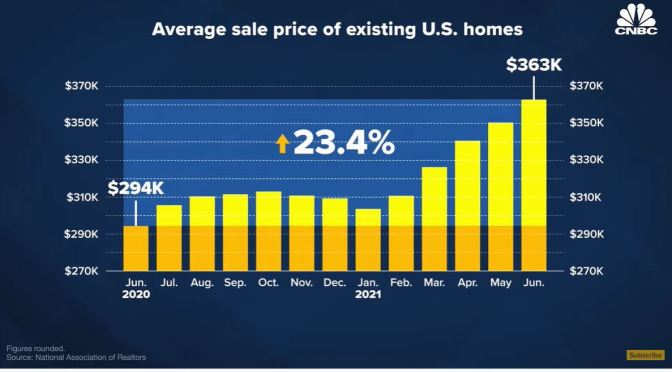
Home prices in the U.S. have climbed at a record pace during the pandemic. The median home price reached over $363,000 in June 2021, a 23.4% increase from 2020. Many of the houses are being sold above their asking price, often entirely in cash with bidding wars becoming the new norm to weed out the competition. So is America currently in another housing bubble and what are the signs that can help investors predict an oncoming crash?
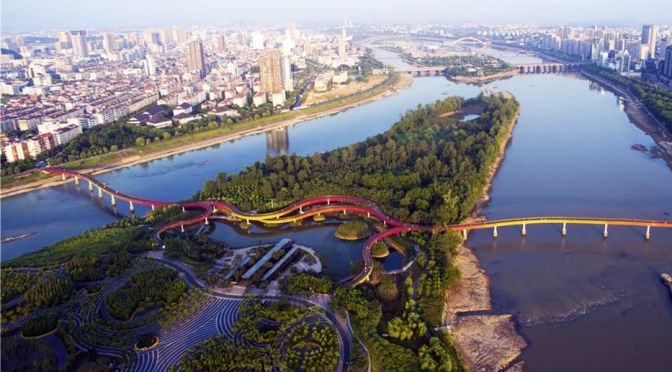
More than 60 percent of China’s population of 1.4 billion currently lives in cities. Within a decade, the share of urban dwellers is expected to increase to 75 percent. Construction is booming and competition for residential land is fierce.
But the right to live in a city in China is conditional. Authorities want their modern cities to be peopled with well-educated, highly-qualified or politically well-connected residents. As a result, certain standards have to be met to be eligible for a modern, urban home. Only members of China’s political classes and the financially successful have a hope of qualifying. Yet more than half of the people who live in cities are so-called “migrant workers.” They come from rural communities and have no official rights to settle in cities. They are there to work. With no proper rights, they are merely tolerated while they serve as merchants, servants, waitstaff, cleaners, construction workers and tradespeople.
But while they are indispensible to daily life in the cities, they are unable to afford their exorbitant rents. This documentary looks at how and where these workers live, and asks whether middle and working class Chinese even figure in the official vision of shiny, high-tech cities. The filmmakers also look at what happens to those who oppose official plans, or stand in the way of the building boom.
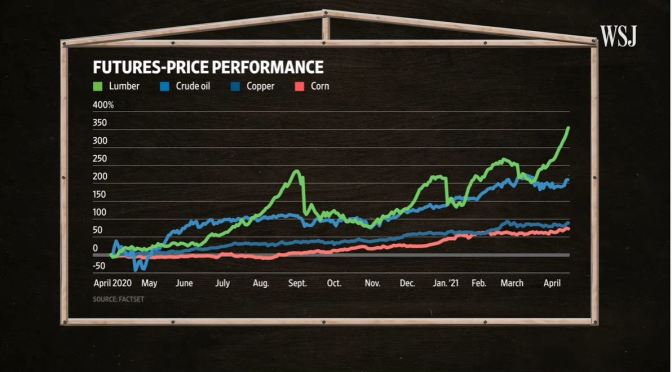
Demand for lumber has skyrocketed during the pandemic, sending prices to all-time highs. This video explains what’s driving the lumber boom, who’s profiting, and why those growing the trees aren’t reaping the benefits. Illustration: Liz Ornitz/WSJ
A.M. Edition for April 15. WSJ’s Konrad Putzier discusses global investment in the U.S. housing market. WSJ’s Anna Hirtenstein on the growth of luxury goods.
The Biden administration is set to punish Russia. Efforts to make band practice safe in the pandemic. Marc Stewart hosts.
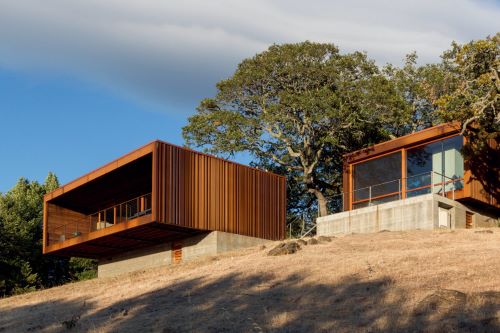
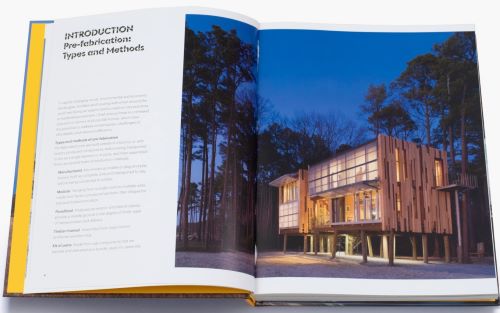
From net-zero houses to plug-and-play dwellings and converted shipping containers, each chapter explores the varied and exciting ways that architects and designers are using pre-fabricated technology to address today’s living and world challenges.
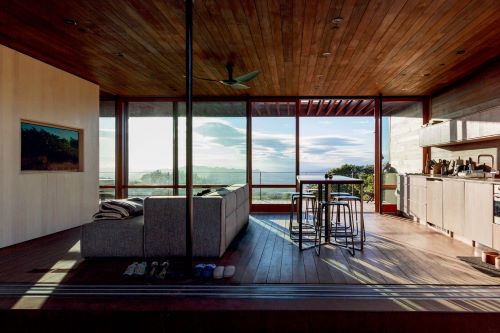
This survey of the world’s most innovative and successful examples of pre-fabricated homes explores the full range of possibilities, open to anyone seeking to find clever and up-to-date solutions for building their own home.
A reference section includes in-depth essays, which explore the latest manufacturing methods, trends and technologies, presenting a wide range of possibilities to suit every need, taste and desire.
Richly illustrated with photography and drawings, with projects selected by a long-time expert in pre-fab architecture, this fresh take on new solutions presents the factory-made house in a new light. Whether designing on a tight budget, crafting something self-sustaining or simply looking for new spatial ideas, this is an essential and future source of inspiration for architects, designers and home-builders.
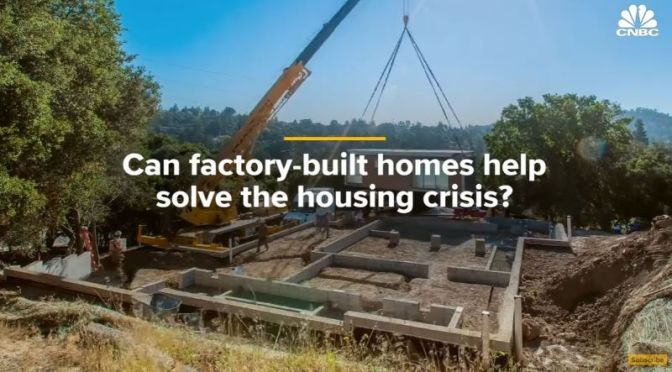
The affordable housing crisis in the United States continues to be a problem and it’s only getting worse. And in places like San Francisco, where construction costs are some of the highest in the world, overcoming the housing shortage seems impossible. However, one solution is gaining traction that could dramatically reduce the cost and time to build new housing – factory-built apartments.






 Boomers Daily