Take flight on a journey that showcases South Carolina. From Fort Sumter, where the first shots of The War Between the States rang out, to Sullivan Island, the Ellis Island of Slaves, to the cypress swamp where freedom fighter Francis Marion helped turn the tide of the Revolutionary War.
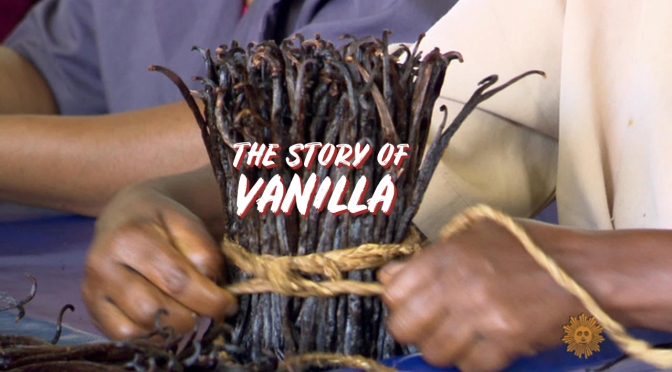
With so many of us staying at home these days and spending more time in the kitchen, vanilla sales, of all things, are booming. Correspondent Seth Doane travels to the island of Madagascar – which supplies 80% of the world’s vanilla – to learn more about the extraordinarily colorful (and sometimes unsavory) story of a familiar spice, and why this valuable cash crop can be worth more by weight than silver.
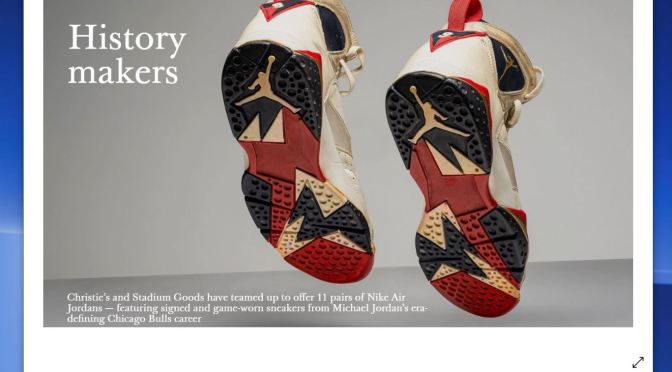
‘Michael Jordan’s tremendous impact on basketball and sneakers is universally acknowledged, and it can be easy to think there aren’t any new stories to add to the legend,’ says John McPheters, co-founder and CEO of Stadium Goods. ‘But as we’ve seen with The Last Dance and now with our Original Air auction at Christie’s, there are still lesser-known narratives in the legacy that create great interest.’
‘The shoes span art, pop culture and sports history,’
This slideshow requires JavaScript.
Michael Jordan ended his first season as a professional basketball player with the Chicago Bulls by being crowned Rookie of the Year. It was the summer of 1985 and Jordan was soon to become one of the most recognised people on the planet.
The New York Times described his debut performance as ‘phenomenal’, and Sports Illustrated declared ‘A Star Is Born’ when he made the front cover.
In this week’s episode of “Travels with a Curator,” join Curator Aimee Ng as she explores the Honolulu Museum of Art, which lent a portrait of Lady Meux by James McNeill Whistler to the Frick for its 2003 exhibition, “Whistler, Women, and Fashion.” Founded by Anna Rice Cooke, the daughter of a prominent missionary family in Hawaii, the Honolulu Museum of Art was meant to ensure that the children of the islands would have a place to learn not only about their own background and culture but about those of the diverse populations around them.
When Ferdinand Alexander Porsche entered the family business in 1958, he filled an unknown vacuum. An experimental visionary who wanted to challenge tradition, he elevated the design legacy of this famous German brand. From working in the engineering office to craftily creating an icon amongst sportscars, writer Ulf Porschardt reveals how Ferdinand Alexander’s sketches evolved to become a cultural symbol.
Count Goertz designed a prestigious, muscular sports car for the Zuffenhausen-based company that was more reminiscent of a Ferrari or a Maserati…
The Goertzian design was in love with the grand gesture. The same year Roland Barthes declared the car to be the equivalent of the great Gothic cathedrals, and in his popular and shamelessly cited work Mythologies, considered it a major creation of the epoch, passionately conceived by numerous nameless artists. In the style of pop art, Barthes enacted an intellectual and cultural upgrading of the automobile, without the hyper-modern pathos of the futurists.
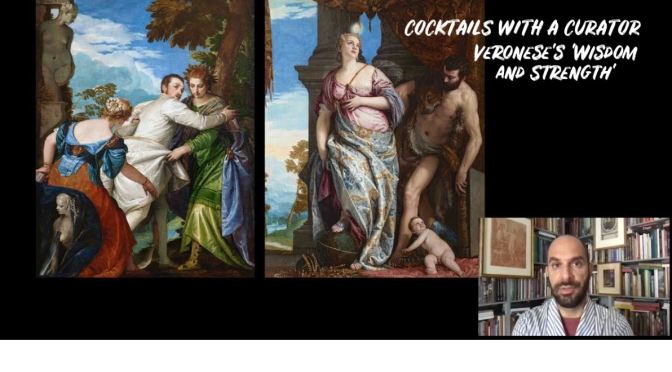
In this week’s episode of “Cocktails with a Curator,” enjoy a traditional Negroni with Deputy Director and Peter Jay Sharp Chief Curator Xavier F. Salomon as he discusses “Wisdom and Strength,” one of two large allegorical paintings by Paolo Veronese that hang in the West Gallery at the Frick. Discover the hidden message behind the two principal figures in this picture: a bearded brute clad in a lion skin and a woman of noble bearing with a miniature sun above her forehead. Tune in next week for a discussion of the painting’s companion work, “Choice Between Virtue and Vice.”
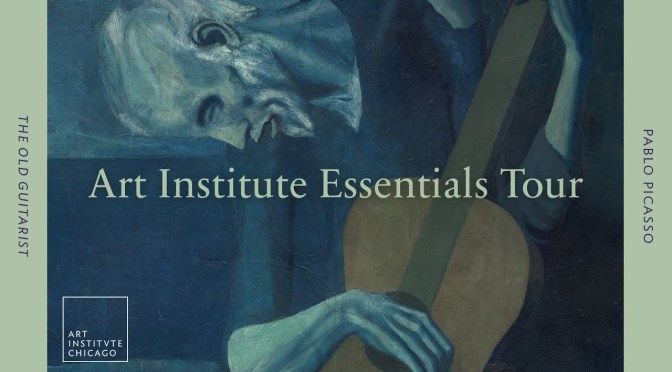
On this episode of Art Institute Essentials Tour, take a closer look at The Old Guitarist, painted by Pablo Picasso between late 1903 and early 1904. In the paintings of Picasso’s Blue Period (1901-04), the artist restricted himself to a cold, monochromatic blue palette, flattened forms, and emotional, psychological themes of human misery and alienation. This painting reflects the then twenty-two-year-old Picasso’s personal struggle and sympathy for the plight of the downtrodden.
This film documents the story of furniture designer and builder Hugh Miller and the journey he embarked on, ending with his piece being inducted in to iconic Red House in Bexley Heath. Steeped in artistic history Red House was the only house designed and lived in by champion of the arts and craft movement William Morris. Today it stands as an example of the preservation of craft skills in the face of autonomy and is a lasting testament to celebrating art in it’s many forms. This documentary hopes to highlight how some of the lessons taught by Morris and his friends can be implemented in to the world of art and design today.
This film was made with the support of The Crafts Council and The National Trust.
Sotheby’s upcoming cross-category Evening Auction ‘Rembrandt to Richter’ (28 July | London), features many of the key British avant-garde movers and shakers of their day.
In this video, discover titans of British Modernism such as Ben Nicholson and Barbara Hepworth; artists such as Christopher Wood and Marlow Moss who found their inspiration amongst the belle monde of Paris; Stanley Spencer and Cedric Morris whose inspiration remained resolutely closer to home; and a bold new generation of artists including Frank Auerbach who forged their careers in London in the aftermath of the Second World War.
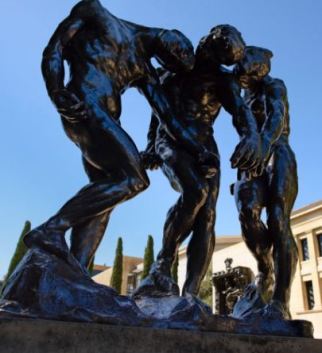
The Three Shades is among the works in the Rodin Sculpture Garden, adjacent to the Cantor Arts Center. The sculpture uses three separate casts of the same figure that has been rotated into different positions. (Image credit: L.A. Cicero)
The enduring appeal of Rodin, the modernity of his work, has to do with the way in which he makes visible an aesthetic of process – how, in other words, he takes traditional sculpture apart and puts it back together again in new and daring ways. Strategies of multiplication, scalability, fragmentation and recombinatory modes of assembly and display constitute some of the hallmarks of Rodin’s artistic practice.
Works by Rodin on view at the Cantor are often utilized by students and scholars from a range of disciplines, including medicine. In this moment, with outbreak of disease across the globe, what can Rodin’s works teach us about the relationship between art and nature?
It’s interesting that Rodin attracts so much attention from medical experts, especially here at Stanford, who have used his hands for diagnostic purposes. It’s true that Rodin was intensely interested in exploring pathologies of the body, especially now-discredited understandings of female hysteria. But there is also the irony that Rodin became furious after a critic accused him of making his first life-size figure through life casting, rather than modeling it himself. It should go without saying, but Rodin’s hands are not hands – not real ones, anyway – and their expressive forms don’t align neatly with the anatomical reality of hands in flesh and blood or even their more naturalistic counterparts. But the very fact that they elicit such responses demonstrates the power of art to provoke challenging questions that drive innovative paths of research that cut across disciplines, particularly in a university setting.



 ‘Michael Jordan’s tremendous impact on basketball and sneakers is universally acknowledged, and it can be easy to think there aren’t any new stories to add to the legend,’ says John McPheters, co-founder and CEO of Stadium Goods. ‘But as we’ve seen with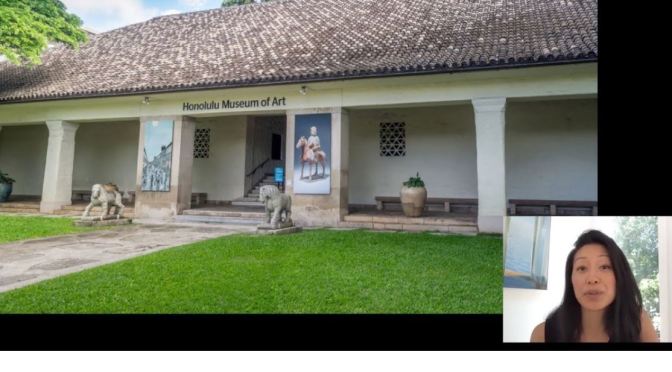
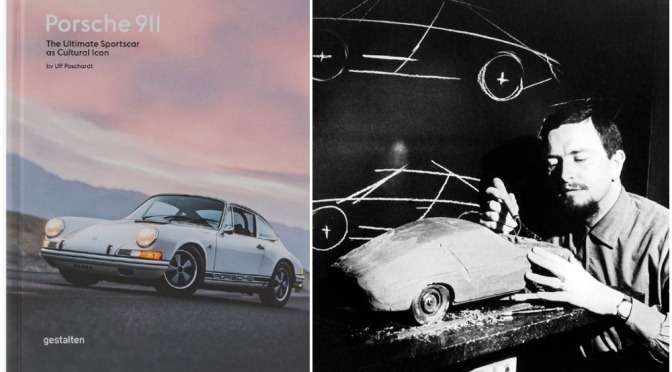
 When Ferdinand Alexander Porsche entered the family business in 1958, he filled an unknown vacuum. An experimental visionary who wanted to challenge tradition, he elevated the design legacy of this famous German brand. From working in the engineering office to craftily creating an icon amongst sportscars, writer Ulf Porschardt reveals how Ferdinand Alexander’s sketches evolved to become a cultural symbol.


 Sotheby’s upcoming cross-category Evening Auction ‘Rembrandt to Richter’ (28 July | London), features many of the key British avant-garde movers and shakers of their day.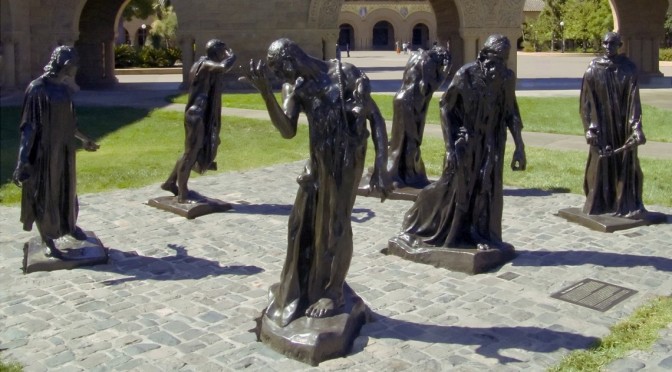
 It’s interesting that Rodin attracts so much attention from medical experts, especially here at Stanford, who have used his hands for diagnostic purposes. It’s true that Rodin was intensely interested in exploring pathologies of the body, especially now-discredited understandings of female hysteria. But there is also the irony that Rodin became furious after a critic accused him of making his first life-size figure through life casting, rather than modeling it himself. It should go without saying, but Rodin’s hands are not hands – not real ones, anyway – and their expressive forms don’t align neatly with the anatomical reality of hands in flesh and blood or even their more naturalistic counterparts. But the very fact that they elicit such responses demonstrates the power of art to provoke challenging questions that drive innovative paths of research that cut across disciplines, particularly in a university setting.
 Boomers Daily