

I am truly astonished by the amount of yachts that Benetti build and also by their prolific design department that consistently creates winning new models. The latest model is called the “Motopanfilo”. It is an unusual name, so I went to Benetti to find out all about it.
Tag Archives: History
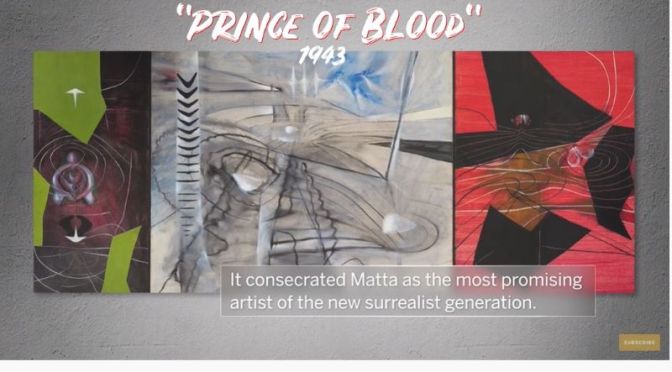
Art: Chilean Abstract Impressionist Roberto Matta – ‘Prince Of Blood’
Roberto Matta’s Prince of Blood (triptych) was not only the painter’s first contribution to Surrealism, it was also the first artistic attempt to visualize Einstein’s theory of space-time. In this episode of Anatomy of an Artwork, discover how Matta was inspired by Marcel Duchamp to create a work that gives visual form to a world in flux and contradictions.
Roberto Sebastián Antonio Matta Echaurren, better known as Roberto Matta, was one of Chile’s best-known painters and a seminal figure in 20th century abstract expressionist and surrealist art.

Reviews: ‘Can Subaru Hold On To Its Recent Success?’
Subaru started as a small scrappy Japanese brand, brought to the states by a couple of American businessmen in the 1960s, and was quickly met with ridicule. But it persisted, and over the decades has gone from being a small niche player to one of the most successful brands in America.
Subaru has weathered economic recessions far better than much larger competitors, and it is positioned near the top of consumer satisfaction surveys. But the ever-changing auto market presents some challenges for them, and they need to adapt to keep up.
When Subaru entered the United States in the 1960s it was panned by critics, and actually advertised its own cheap ugliness. Over the next several decades it would become a highly successful brand through a combination of offbeat but practical cars and a relentless focus on understanding its own customers.
The scrappy brand enjoyed a 93-month sales increase streak that ended in 2019, and it has found ways to survive during the coronavirus pandemic. But it is not without challenges. The intense demand for its vehicles has at times brought growing pains — quality issues and recalls gave led to an unusual quarterly loss in 2018.
There is also pressure on the company, like all automakers, to develop some kind of electrification strategy. Subaru does have a partnership with the much larger Japanese automaker Toyota, which is expected to soon produce an electric vehicle jointly made by the two companies.

Architectural History: ‘Frank Lloyd Wright – The Imperial Hotel’ (Video)
Frank Lloyd Wright: The Lost Works explores some of Wright’s most important demolished and unrealized structures. The project brings these lost buildings to life through immersive digital animations reconstructed from Wright’s original plans and drawings, along with archival photographs.
Two years in the making and based on a Japanese publication of original plans and historical photos, Frank Lloyd Wright: The Lost Works – The Imperial Hotel is a comprehensive digitally-animated recreation of the exterior (Part I) and interior (Part II) of this masterpiece.
Learn more about the Frank Lloyd Wright Trust: https://flwright.org
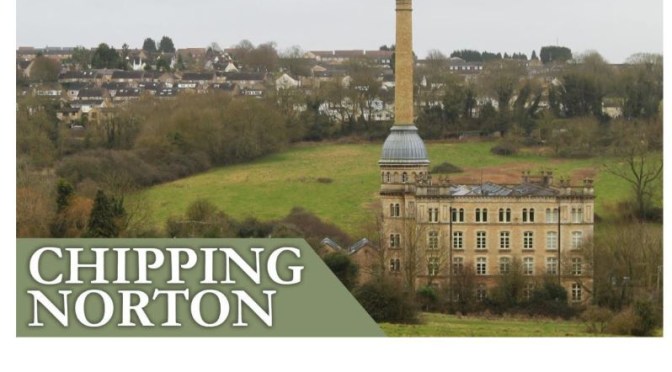
The Cotswolds: History Of Chipping Norton
Chipping Norton is another classic market town in the east of the Cotswolds. Another settlement regarded as a gateway to the AONB, it is often renowned for the Bliss Tweed Mill. The town centre is unusually steep, with one row of houses much higher than the opposite side. This is well worth a visit as a classic English town.
Africa Views: ‘A History Of Mozambique’ (Video)
Mozambique is a southern African nation whose long Indian Ocean coastline is dotted with popular beaches like Tofo, as well as offshore marine parks. In the Quirimbas Archipelago, a 250km stretch of coral islands, mangrove-covered Ibo Island has colonial-era ruins surviving from a period of Portuguese rule. The Bazaruto Archipelago farther south has reefs which protect rare marine life including dugongs.
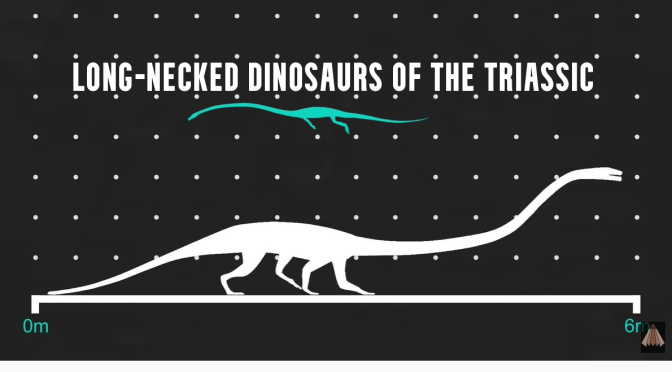
Dinosaurs: ‘The Long-Necks Of The Triassic’
The Triassic was full of many bizarre creatures and no animal showed this more then Tanystropheus that had a neck that measured the same length as the rest of its body. So where did Tanystropheus come from and why did it have such a long neck?

Documentary: ‘Fukushima – The Age Of Radioactivity’
The USS Ronald Reagan cruised into a radioactive cloud from the Fukushima nuclear power plant in March 2011. Sailors on the aircraft carrier were exposed to radiation. This documentary looks at the event and what came before it. The discovery of the atom and radioactivity are among the most important advances in 20th Century science. This film provides a comprehensive, historical examination of a century of radioactivity. At the same time it remembers the victims – from the Curies to Fukushima.
The film-makers visit Japanese families who sued Tepco, the operator of the Fukushima reactor, after their children developed thyroid cancer following the tsunami and subsequent nuclear disaster. Sent to help tsunami victims, sailors from the USS Ronald Reagan give detailed accounts of what happened on board the carrier. Radiation victims on both sides of the Pacific recount their difficulties in getting information. The film also introduces others harmed by industrial and military secrecy over the issue. Among them are fishermen and veterans exposed to radiation during the nuclear bomb tests on Bikini Atoll, Hiroshima survivors and young women who worked with radium in US factories in the 1920s. Radioactivity is invisible and odorless, yet very harmful to life. A Japanese doctor tells viewers how radioactivity affects the human body, why it causes cancer, and what can be done to shield people against it.
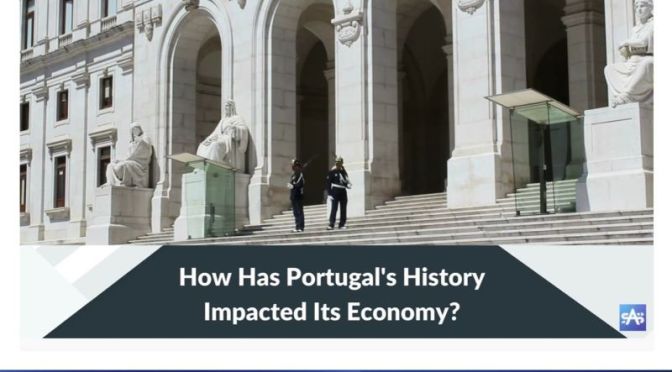
Europe: An Economic History Of Portugal
In the lead up to the Eurozone Crisis, Portugal’s Economy was an outlier. Whilst many economies went on an incredible run, the Portuguese Economy did not have such a good time. Not only underperforming the average eurozone growth rate, but unemployment actually rose from 3.8% to 7.5% between the millennium and 2008. Compare this against the likes of Greece, Spain and Italy, all of which had seen significant declines in unemployment. Raising the question of why? Why had Portugal’s Economy stagnated in what were supposed to be the good times? What was the impact of its long history as a colonial power? And to what extent did a 19th Century letter from Pope Leo the 13th influence its wider economic approach?
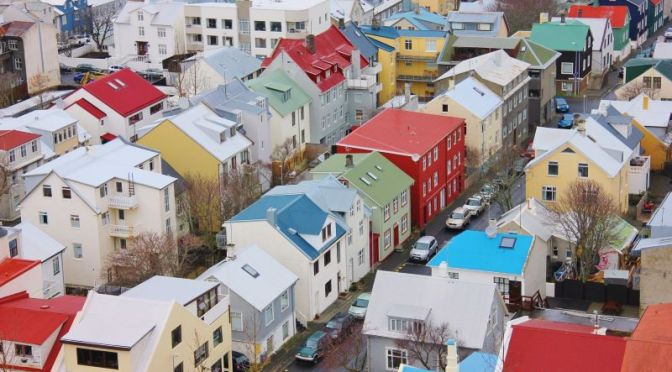
Buildings: The ‘Ironclads’ Of Reykjavik, Iceland
What form do the buildings in the world’s northernmost capital take? And what is behind their distinctive look?
 Boomers Daily