Tag Archives: Henri Matisse

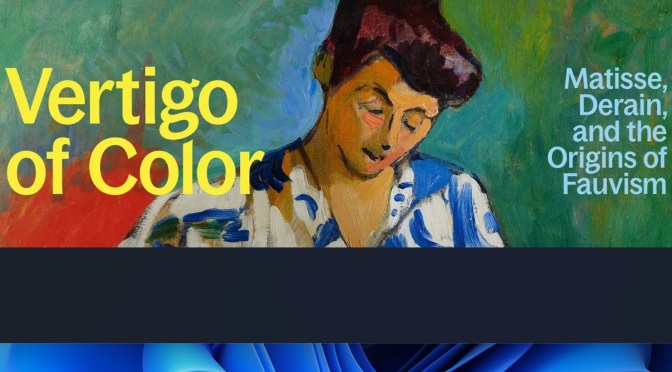
Exhibitions: Vertigo Of Color – Matisse, Derain, & The Origins Of Fauvism

Study for "Luxe, calme et volupté" (Etude pour “Luxe, calme et volupté”), Henri Matisse  French, Oil on canvas
Study for “Luxe, calme et volupté” – Henri Matisse – 1904

Vertigo of Color: Matisse, Derain, and the Origins of Fauvism

October 13, 2023–January 21, 2024

The Metropolitan Museum of Art (October 18, 2023) – Over an intense nine weeks in the summer of 1905 in the modest fishing village of Collioure on the French Mediterranean, Henri Matisse and Andre Derain embarked on a partnership that led to a wholly new, radical artistic language later known as Fauvism.

The Port of Collioure (Le port de Collioure), André Derain  French, Oil on canvas
The Port of Collioure – André Derain – 1905

Their daring, energetic experiments with color, form, structure, and perspective changed the course of French painting; it marked an introduction to early modernism and introduced Matisse’s first important body of work in his long career.

View of Collioure (Vue de Collioure), Henri Matisse  French, Oil on paper mounted on board
View of Collioure – Henri Matisse – 1905

This exhibition, which is co-organized by The Metropolitan Museum of Art and the Museum of Fine Arts, Houston, emphasizes as never before the legacy of that summer and examines the paintings, drawings, and watercolors of Matisse and Derain through sixty-five works on loan from national and international museums, including Musée National d’Art Moderne, Centre Pompidou; National Galleries of Scotland; National Gallery of Art, Washington, D.C.; San Francisco Museum of Modern Art; and the Museum of Modern Art, New York; as well as private collections.

Fishing Boats, Collioure (Bateaux, pêcheurs, Collioure), André Derain  French, Oil on canvas
Fishing Boats – André Derain – 1905

Exhibitions: “Outstanding! THE RELIEF FROM RODIN TO PICASSO” At Städel Museum

Städel Museum Frankfurt (May 23, 2023) – Rodin, Matisse, Gauguin, Picasso, Jean Arp, Yves Klein… They all created outstanding art in the truest sense of the word—reliefs. This summer, the Städel Museum is presenting a major exhibition on the relief from 1800 to the 1960s.

OUTSTANDING!

THE RELIEF FROM RODIN TO PICASSO


5/24–9/17/2023

“This summer, our visitors will have the opportunity to encounter an exciting artistic medium—the relief: an art form between painting and sculpture that literally breaks through the confines of the frame and bursts the boundaries of our sense of sight! We are devoting a major exhibition to this sometimes underacknowledged medium.”

Is it painting or sculpture, surface or space? Hardly any artistic medium challenges our sense of sight like the relief. And that is what has always made it so appealing for the most famous artists. From 24 May to 17 September 2023, the exhibition will present prominent works spanning some 160 years by Bertel Thorvaldsen, Jules Dalou, Auguste Rodin, Medardo Rosso, Paul Gauguin, Henri Matisse, Pablo Picasso, Alexander Archipenko, Jean Arp, Kurt Schwitters, Sophie Taeuber-Arp, Yves Klein, Louise Nevelson, Lee Bontecou and others.

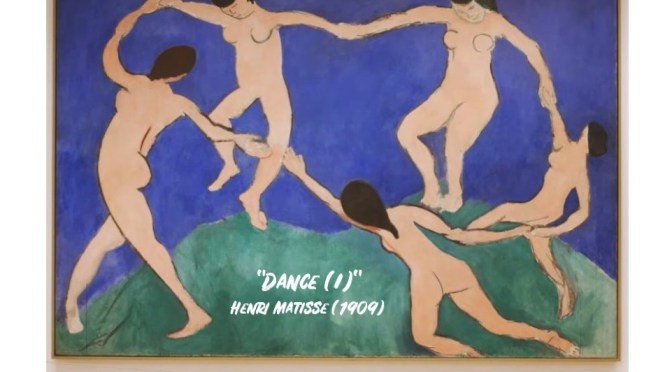
Art History: The ‘Dance (I)’ By Henri Matisse (1909)

The Museum of Modern Art (March 17, 2023) – In our latest ArtSpeaks episode, Eana Kim, Vilcek Fellow in Paintings and Sculpture chose Henri Matisse’s “Dance (I)” because his work led her life in an unexpected direction.

“What really struck me was Matisse’s journey from mastering all the academic skills to unlearning everything to create his own art,” Kim says. “He really tried to dig into and explore the fundamental elements, like forms and colors. He was looking into something more essential to create something pure. I needed to follow that path.”

In the online edition of MoMA’s ArtSpeaks program, we invite staff members, artists, and special guests to share personal impressions of an artwork in the galleries. Here, curator Eana Kim examines Matisse’s iconic expression of pleasure and joy.

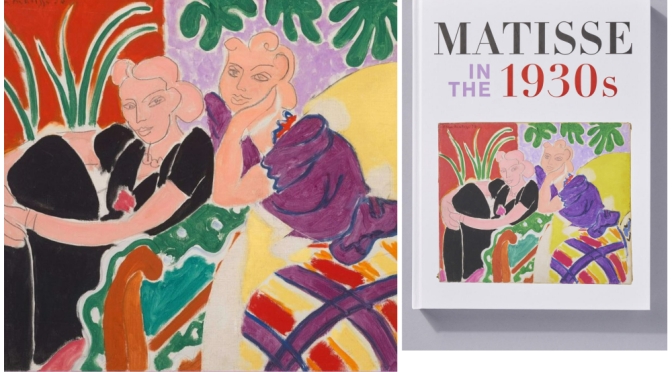
Top Art Exhibition Tours: ‘Matisse In The 1930s’ (2023)

Philadelphia Museum of Art – Curator Matthew Affron and the artists walked through “Matisse in the 1930s,” discussing which works would inspire their murals.

Matisse in the 1930s features a collection of the legendary artist’s work during a decade of artistic exploration—from experimentation, to failure, to renewal—with Philadelphia as a backdrop.

By 1930, Henri Matisse had achieved significant international renown, yet he found himself in a deep creative slump. The turning point came with a commission to decorate the main gallery of the Barnes Foundation in Philadelphia. The resulting monumental mural, The Dance (1930–33), turned Matisse’s artistic practice around.

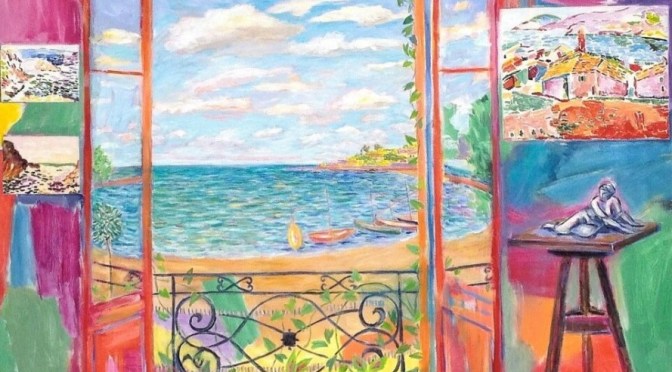
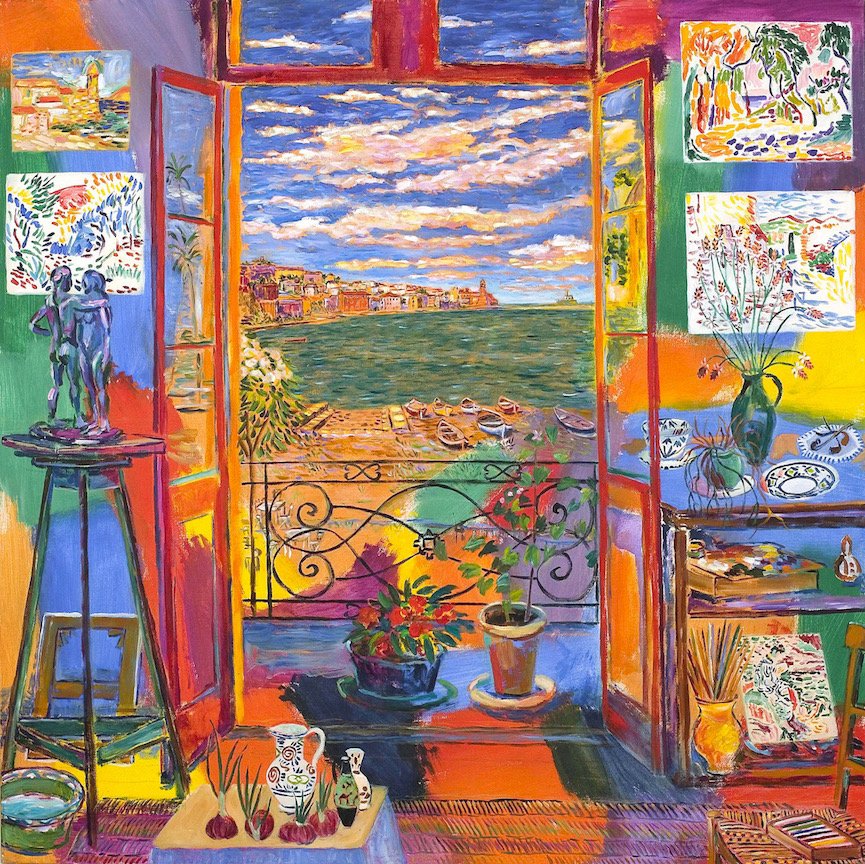
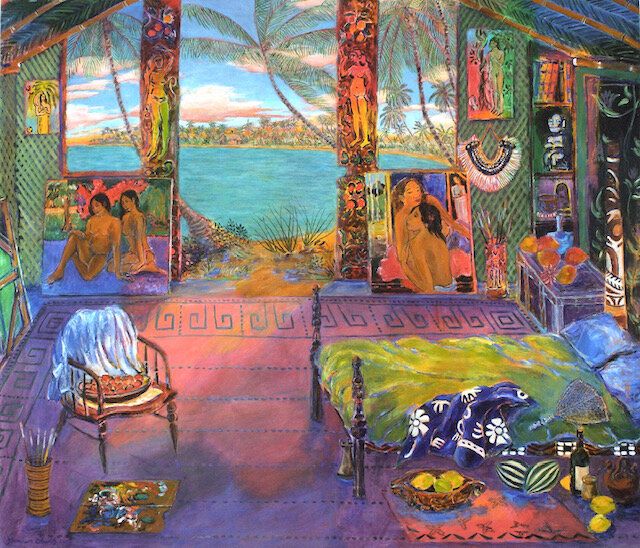
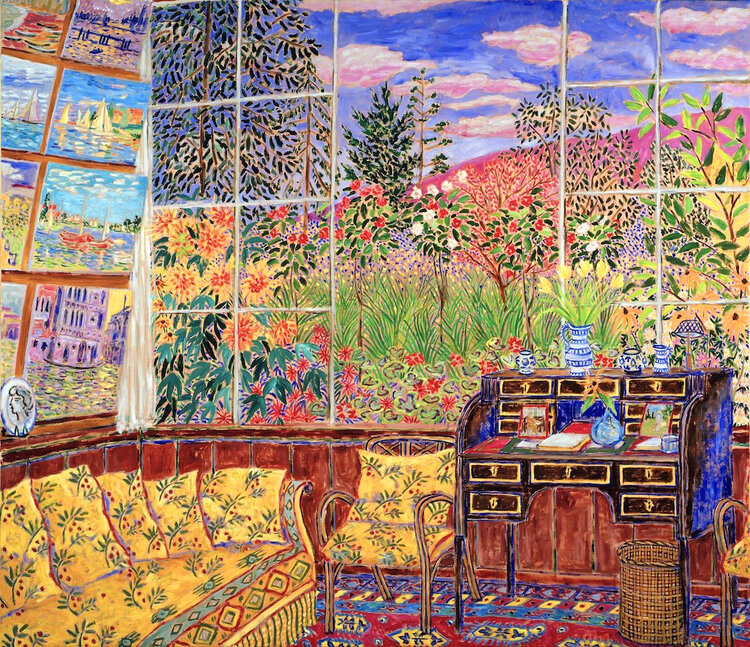
Art: The ‘Dazzling’ Artist Studios Of Damian Elwes

Matisse’s Studio in Collioure

8D5B0AB2-03AB-4B17-8CF0-E90D8B986E55

Gauguin’s Studio in Marquesas Islands

8AFA16AA-EB16-4837-90D6-51B042A4ACB5

Monet’s Studio in Giverny

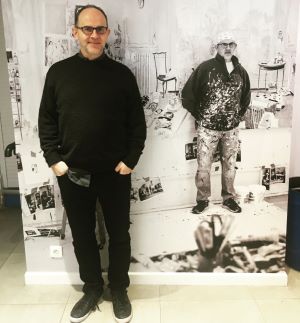
DAMIAN ELWES is a British/American artist with studios in Santa Monica and Colombia.

Elwes chooses a moment in time when an artist is at their most inventive and then examines what was going on in their studios.

Website

Art Exhibits: ‘The Red Studio’ By Henri Matisse

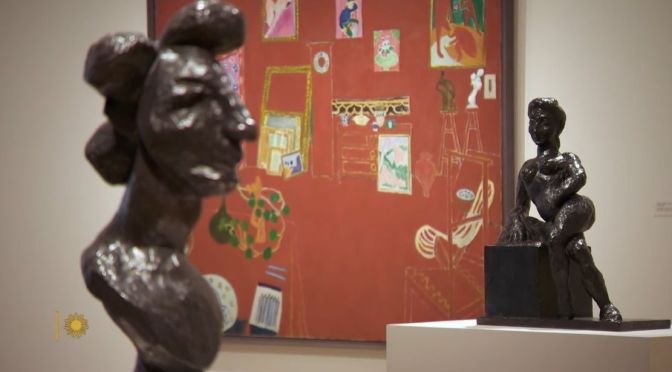
Henri Matisse’s landmark painting “The Red Studio” documented the artworks displayed in his workspace just outside Paris as it existed in 1911. For the first time since then, almost all the individual pieces depicted in his painting have been reunited for an installation at New York’s Museum of Modern Art. Correspondent Rita Braver reports.

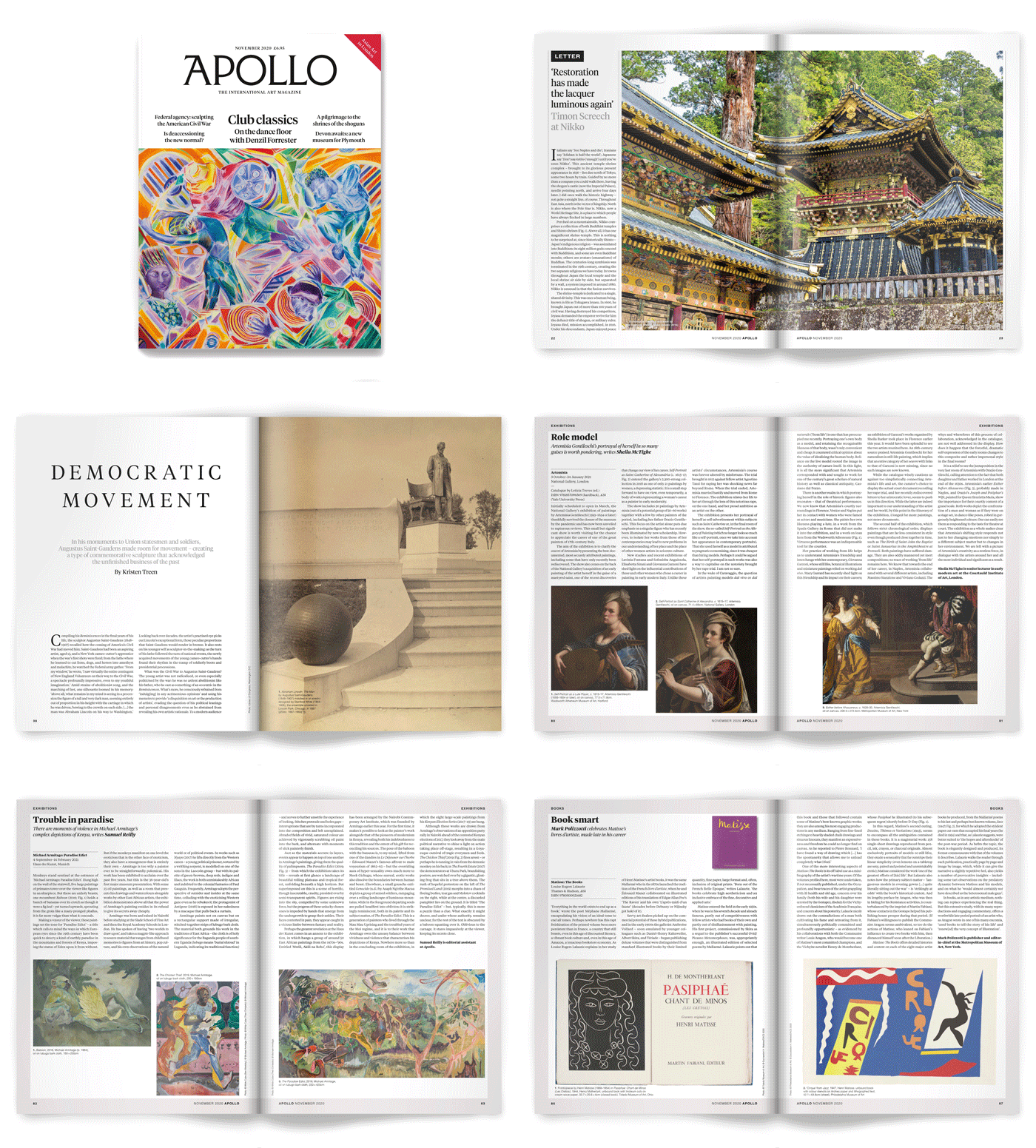
ARTS & LITERATURE: “APOLLO MAGAZINE November 2020”

INSIDE THE ISSUE
 
FEATURES | Denzil Forrester interviewed by Gabriel CoxheadKristen Treen on Augustus Saint-Gaudens’ monuments to the American Civil War; Emilie Bickerton visits the Musée Cernuschi in Paris; Glenn Adamson defends progressive deaccessioningThomas Marks visits the Box in Plymouth; mathematician John Coates shows Susan Moore his collection of early Japanese ceramics
 
REVIEWS | Sheila McTighe on Artemisia Gentileschi at the National GallerySamuel Reilly on Michael Armitage at the Haus der Kunst; Mark Polizzotti on Matisse’s artists’ books; Emily Knight on Joseph Wright of Derby; Sameer Rahim on Islamic influences in European architecture; Anthony Cutler on the Turin Shroud
 
MARKET | A preview of the second part of Asian Art in London; and the latest art market columns from Emma Crichton-MillerSusan Moore and Samuel Reilly
 
PLUS | Timon Screech visits the shrines of the shoguns; Gillian Darley on the enduring appeal of crescents in architecture; Damian Thompson watches Yotam Ottolenghi make a feast inspired by the court of Versailles; Thomas Marks on the vital role of education in museumsRobert O’Byrne revisits the advertisements in Apollo 40 years ago
 

Artwork Tours: “Bathers By A River” – Henri Matisse (Art Institute Chicago)

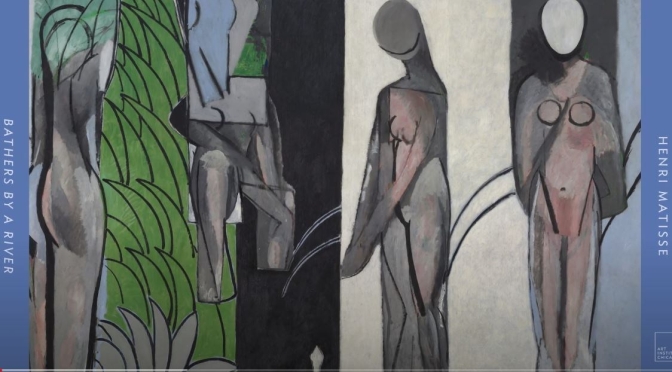
On this episode of Art Institute Essentials Tour, take a closer look at Bathers by a River, started by Henri Matisse in 1909 and completed in 1917. Henri Matisse originally painted this work as a pastoral scene, but over the next decade he transformed it into the cubist-inflected composition seen today. When the painting was acquired by the Art Institute in 1953, Matisse told the museum’s director that he viewed the painting as one of his five most pivotal works.

Website

Henri Émile Benoît Matisse (1869 -1954) was a French artist, known for both his use of colour and his fluid and original draughtsmanship. He was a draughtsman, printmaker, and sculptor, but is known primarily as a painter.

Artist Profile: Henri Matisse And His ‘Divine Dancer’ (Sotheby’s Video)

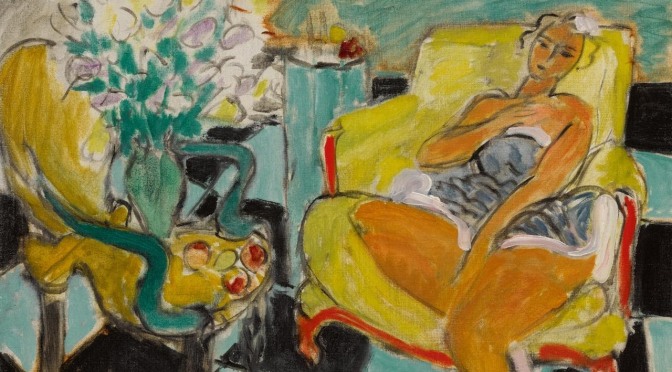
Sotheby's logoUnseen since 1949 and set to appear at auction for the first time, this beautiful work is a quintessential example of Henri Matisse’s sensuous odalisques. The elegant model is Italian countess Carla Avogadro, reclining on an extravagant Venetian Rococo armchair that Matisse bought on a whim and, in his own words, became “obsessed” with. ‘Danseuse dans un intérieur, carrelage vert et noir’

Henri Émile Benoît Matisse was a French artist, known for both his use of colour and his fluid and original draughtsmanship. He was a draughtsman, printmaker, and sculptor, but is known primarily as a painter.