
65-year old former college swimmer and swim coach Trip Hedrick swims 5 days a week, while lifting and doing cardio on two other days.

65-year old former college swimmer and swim coach Trip Hedrick swims 5 days a week, while lifting and doing cardio on two other days.
Journal of the American Heart Association study (Feb 17, 2020):
 The association between poor overall sleep quality and greater consumption of added sugars observed in the current study aligns with previous findings that intakes of confectionary and sugar‐sweetened beverages were higher in middle‐aged Japanese women reporting poor, compared with good, sleep quality.
Background – Poor sleep increases cardiovascular disease risk, and diet likely contributes to this relationship. However, there are limited epidemiological data on the relationship between measures of sleep quality and habitual dietary patterns. This study examined these associations in a diverse sample of women.
Both short sleep duration and poor sleep quality are associated with the development of obesity, type 2 diabetes mellitus, and cardiovascular disease (CVD), and it is likely that the relationship between sleep and cardiometabolic disease risk is partially mediated by diet.5 Indeed, experimental studies demonstrate that restricting sleep duration leads to increases in energy intake, confirming associations of short sleep with higher energy intakes in observational population‐based studies.
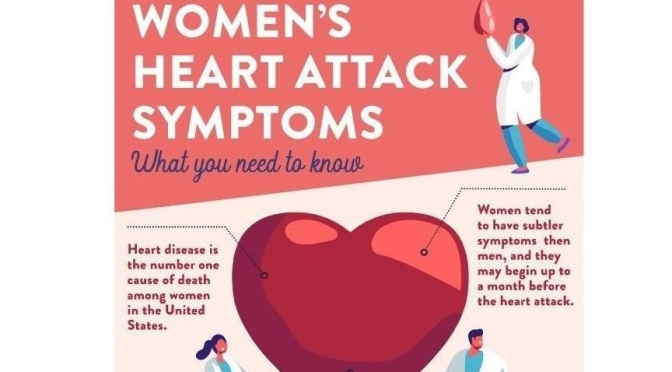
Heart disease is the number one cause of death among women in the United States. It takes the lives of nearly twice as many women as all forms of cancer combined, yet many women know very little about their heart health.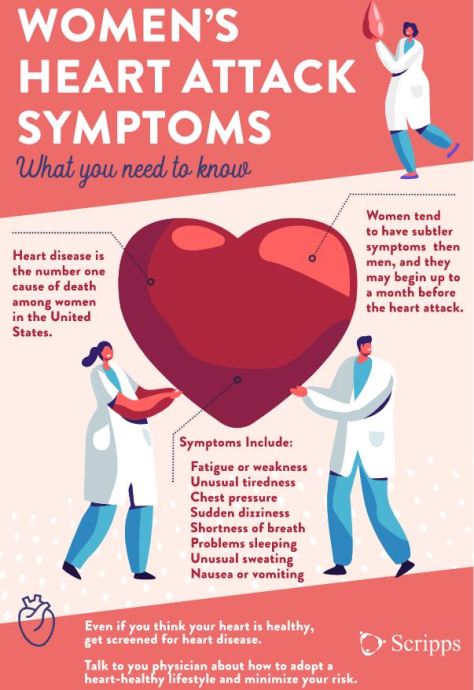 Heart attack symptoms in women
Women tend to have subtler symptoms, and they may begin up to a month before the heart attack. Symptoms include:
Because many of these symptoms can be associated with common illnesses such as the flu, women are more likely to brush them off or assume something less serious is going on — and that can be a serious or even fatal mistake. If you experience these symptoms, don’t ignore them. Play it safe and call 911. The sooner you get treatment, the greater the chances of recovery.
From the New England Journal of Medicine (February 13, 2020):
 In our opinion, the current recommendation to greatly increase consumption of dairy foods to 3 or more servings per day does not appear to be justified…When consumption of milk is low, the two nutrients of primary concern, calcium and vitamin D (which is of particular concern at higher latitudes), be obtained from other foods or supplements without the potential negative consequences of dairy foods.
For calcium, alternative dietary sources include kale, broccoli, tofu, nuts, beans, and fortified orange juice for vitamin D, supplements can provide adequate intake at far lower cost than fortified milk. Pending additional research, guidelines for milk and equivalent dairy foods ideally should designate an acceptable intake (such as 0 to 2 servings per day for adults), deemphasize reduced-fat milk as preferable to whole milk, and discourage consumption of sugar-sweetened dairy foods in populations with high rates of overweight and obesity.
For adults, the overall evidence does not support high dairy consumption for reduction of fractures, which has been a primary justification for current U.S. recommendations. Moreover, total dairy consumption has not been clearly related to weight control or to risks of diabetes and cardiovascular disease. High consumption of dairy foods is likely to increase the risks of prostate cancer and possibly endometrial cancer but reduce the risk of colorectal cancer.
Tough to beat! Head #InsideTheOR with S. Christopher Malaisrie, MD, and witness open heart surgery by one of the best cardiology and heart surgery programs in the nation as ranked by US News and World Report.
From a British Medical Journal (BMJ) Open Heart online article:
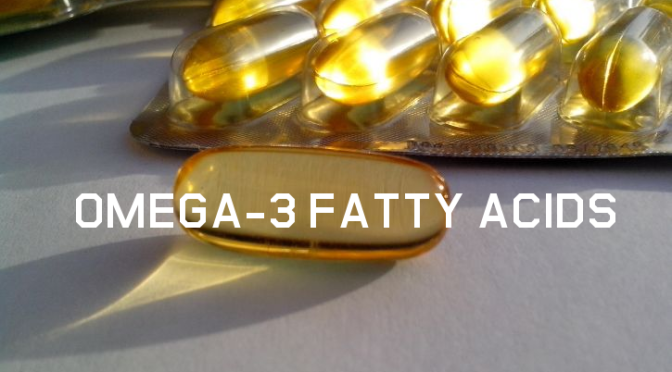
 The intake of marine omega-3s has consistently been found to have antiarrhythmic effects. When marine omega-3s are consumed, there is an increase in cellular membrane fluidity, inhibition of L-type calcium channels and a reduction in the chance of arrhythmic events during susceptible times. Prospective data suggest that maintaining an omega-3 index of about 8%, which requires consuming seafood rich in omega-3 up to five times per week or consuming over 3 g of EPA and DHA per day, may provide the greatest protection against arrhythmic events.
Omega-3s have been theorised to increase membrane fluidity by reducing compression of the acyl chains of membrane phospholipid fatty acids, which can lead to a reduction in the ‘spring-like’ tension on membrane ion channels. This spring-like tension can reduce the ability of ions to freely move in and out of the ion channel and hence reduce its conductance. This is known as the ‘Andersen membrane spring-like tension hypothesis’ and is just one way marine omega-3s may prevent arrhythmias.
Dietary omega-3s are mainly consumed as triglycerides, which are absorbed as free fatty acids and monoglycerides. These fats then get rapidly resynthesised in the intestine and liver back to triglycerides with subsequent integration into chylomicrons, very low-density lipoprotein and low-density lipoprotein (LDL) (LDL can actually deliver omega-3s to tissues via LDL receptors).
We’ve come a long way since the first heartbeat was heard. This American Heart Month, we take a look at the history of cardiac care — and celebrate the leading-edge innovations that make a better future possible.
From a Journal of Epidemiology & Community Health online release:
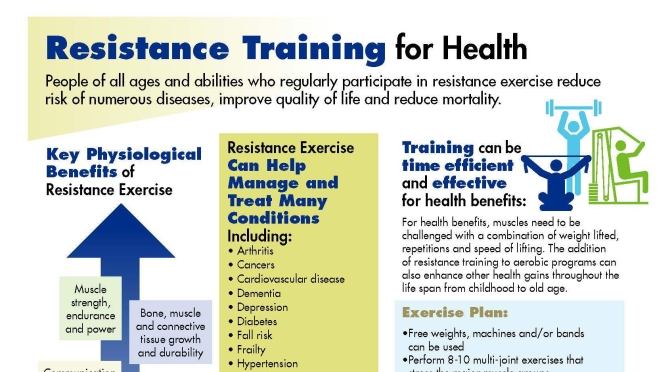
 The 10 year CVD (cardiovascular disease) incidence increased significantly across the baseline SMI (skeletal muscle mass index) tertiles (p<0.001). Baseline SMM (Skeletal muscle mass) showed a significant inverse association with the 10 year CVD incidence (HR 0.06, 95% CI 0.005 to 0.78), even after adjusting for various confounders. Additionally, participants in the highest SMM tertile had 81% (95% CI 0.04 to 0.85) lower risk for a CVD event as compared with those in the lowest SMM tertile.
Background Skeletal muscle mass (SMM) is inversely associated with cardiometabolic health and the ageing process. The aim of the present work was to evaluate the relation between SMM and 10 year cardiovascular disease (CVD) incidence, among CVD-free adults 45+ years old.
Methods ATTICA is a prospective, population-based study that recruited 3042 adults without pre-existing CVD from the Greek general population (Caucasians; age ≥18 years; 1514 men). The 10 year study follow-up (2011–2012) captured the fatal/non-fatal CVD incidence in 2020 participants (50% men). The working sample consisted of 1019 participants, 45+ years old (men: n=534; women: n=485). A skeletal muscle mass index (SMI) was created to reflect SMM, using appendicular skeletal muscle mass (ASM) standardised by body mass index (BMI). ASM and SMI were calculated with specific indirect population formulas.
The global population is ageing at an unprecedented speed, especially in Europe. As a concept, ageing is considered a continuous process starting from birth and is accompanied by various physiological changes and a number of comorbidities1 2 that affect health and quality of life.3 4 Skeletal muscle mass (SMM)4 alterations are among these physiological changes.
SMM tissue decline, as a part of these physiological changes, starts in middle age (or even earlier, in the 30s) and progresses in more advanced age.5 It has been shown that SMM declines with a rate of more than 3% per decade starting from the age of 30+.6 Half of the human body’s mass is actually SMM and it has an active role in numerous metabolic pathways.5 7 SMM decline is related, among others, to various disability patterns, poor mental health and increased mortality.5 7 8 In addition, well documented studies have shown that SMM alterations are related to cardiovascular health,9 10 even different muscle morphology.11 Recently, Srikanthan et al 12 reported the importance of muscle tissue in relation to cardiovascular disease (CVD) and total mortality in stable CVD patients.
From a Journal of the American College of Cardiology:
Observational data suggest associations between marijuana and a broad range of adverse cardiovascular risks. Marijuana is becoming increasingly potent, and smoking marijuana carries many of the same cardiovascular health hazards as smoking tobacco. Synthetic cannabinoids have been linked to more sustained and deleterious pharmacodynamic effects.
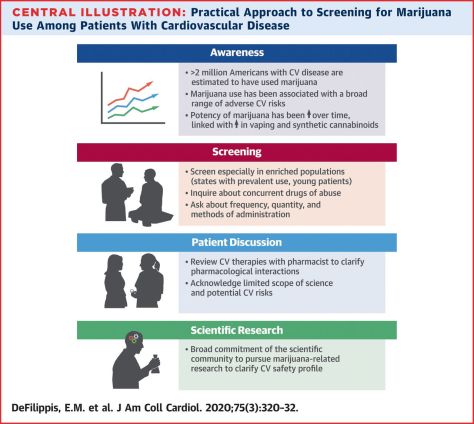
Marijuana use is increasing as more states are legalizing cannabis for both medicinal and recreational purposes. National survey data estimate that >2 million Americans with established cardiovascular diseases currently use or have used marijuana in its variety of forms, including inhalation and vaping. Cannabinoid receptors are distributed in multiple tissue beds and cells, including platelets, adipose tissue, and myocytes.
• We estimate that >2 million U.S. adults who have reported ever using marijuana have cardiovascular disease.
• Observational studies have suggested an association between marijuana use and a range of cardiovascular risks.
• Marijuana is becoming increasingly potent, and smoking marijuana carries many of the same cardiovascular health hazards as smoking tobacco.
• Few randomized clinical trials have been conducted or are planned to explore the effects of marijuana on cardiovascular risk.
• Screening and testing for use of marijuana are encouraged in clinical settings, especially in the care of young patients presenting with cardiovascular disease.
 Though a law requiring clinical trial results reporting has been on the books for decades, many researchers have been slow to comply. Now, 2 years after the law was sharpened with higher penalties for noncompliance, investigative correspondent Charles Piller took a look at the results. He talks with host Sarah Crespi about the investigation and a surprising lack of compliance and enforcement.
Also this week, Sarah talks with Brett Finlay, a microbiologist at the University Of British Columbia, Vancouver, about an Insight in this week’s issue that aims to connect the dots between noncommunicable diseases like heart disease, diabetes, and cancer and the microbes that live in our guts. Could these diseases actually spread through our microbiomes?



 Boomers Daily