
Tag Archives: Health

Travel & Wellness Books: “Be Well” By Kari Molvar
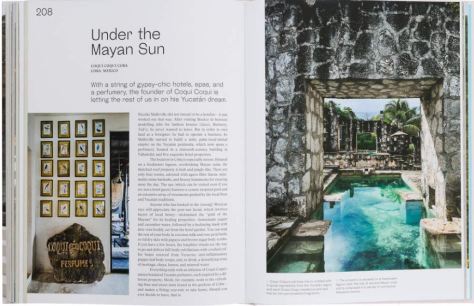
 Be Well delves into one of life’s greatest pleasures; a day spent rejuvenating the body and nourishing the spirit. Humans have practiced self-care for centuries—in the sweat lodges of the American Southwest, Roman baths, the hammams of the Ottoman Empire, Japanese onsens, and Finnish saunas. Today, a new interest in self-care is redefining how we accomplish wellness, and there have never been more options.
In our increasingly switched-on lives, a growing industry of highly choreographed experiences is geared to help us switch off. Be Well is a journey around the world’s most extraordinary spaces for achieving this, looking at the innovative practices they offer and how to carry them into everyday life.
Kari Molvar is a writer and editor focusing on wellness as seen through the lens of design, culture, and style. She is an online contributor to T: The New York Times Style Magazine and the founder of Rutine Matters. Her work appears in Vogue and The Wall Street Journal, among other titles.
Health: “The Effect Of Hearing Loss On Cognitive Decline” (JAMA Podcast)
 Even limited hearing loss might be associated with cognitive decline. If true, early intervention with hearing aids might help people have better cognitive performance.
Michael Johns III, MD, online editor for JAMA Otolaryngology, speaks with Justin Golub, MD, MS, assistant professor of otolaryngology at Columbia University, whose research has shown that very mild hearing loss can be associated with cognitive disability.
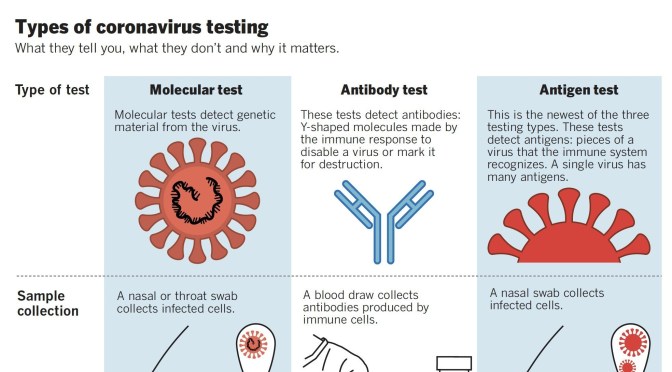
New Infographic: “Types Of Coronavirus Testing”
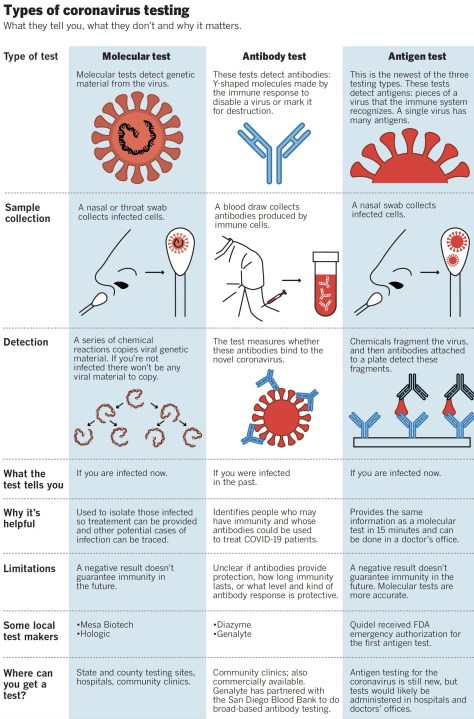
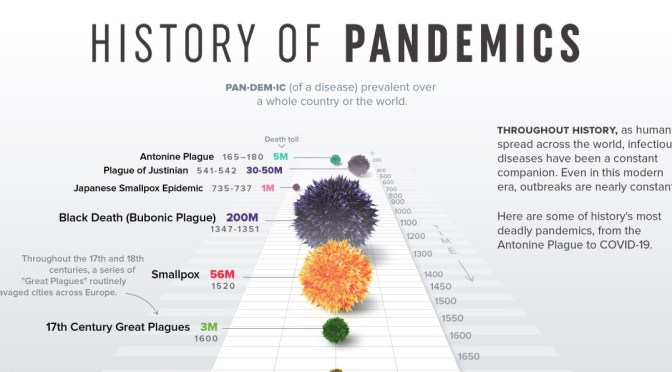
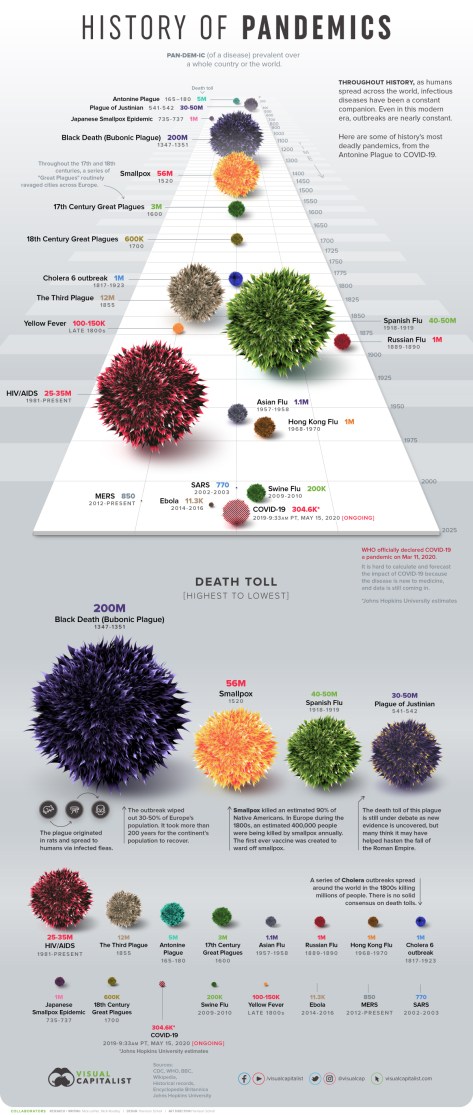
Infographic: A Look At The “History Of Pandemics”
Top Health Podcasts: Dubious Coronavirus Content, Funding Fears
 With questionable coronavirus content flooding airwaves and online channels, what’s being done to limit its impact?
In this episode:
00:57 The epidemiology of misinformation
As the pandemic spreads, so does a tidal wave of misinformation and conspiracy theories. We discuss how researchers’ are tracking the spread of questionable content, and ways to limit its impact.
News: Anti-vaccine movement could undermine efforts to end coronavirus pandemic, researchers warn
Nature Video: Infodemic: Coronavirus and the fake news pandemic
17:55 One good thing
Our hosts pick out things that have made them smile in the last week, including walks in new places, an update on the Isolation Choir, and a very long music playlist.
Video: The Isolation Choir sing What a Wonderful World
Spotify: Beastie Boys Book Complete Songs
22:30 Funding fears for researchers
Scientists around the world are concerned about the impacts that the pandemic will have on their funding and research projects. We hear from two who face uncertainty, and get an update on the plans put in place by funding organisations to support their researchers.
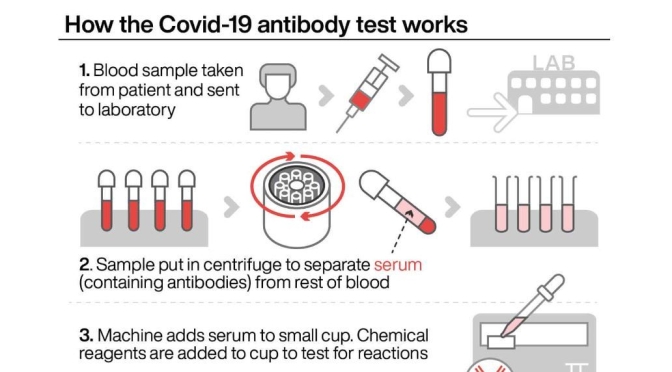
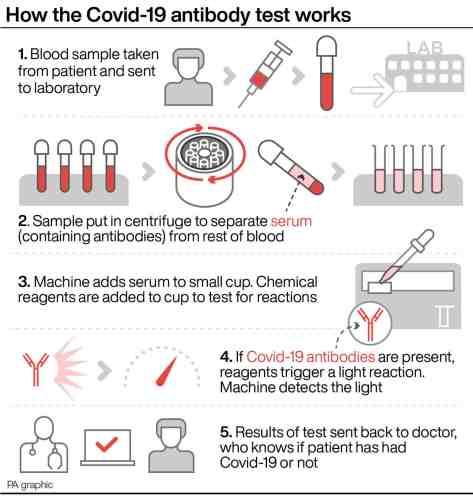
Health: “How The Covid-19 Antibody Test Works”
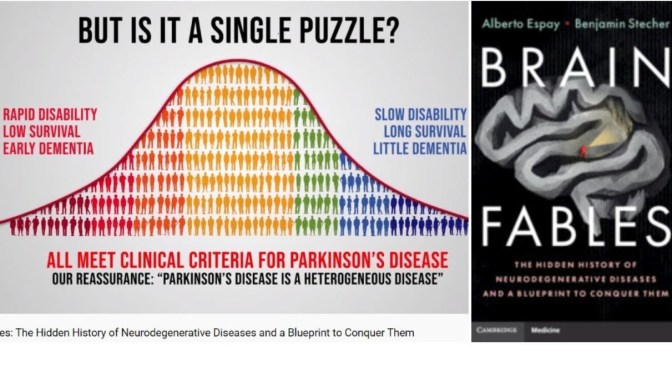
New Books: “Brain Fables – The Hidden History of Neurodegenerative Diseases” (Cambridge, 2020)
An estimated 80 million people live with a neurodegenerative disease, with this number expected to double by 2050. Despite decades of research and billions in funding, there are no medications that can slow, much less stop, the progress of these diseases. The time to rethink degenerative brain disorders has come. With no biological boundaries between neurodegenerative diseases, illnesses such as Parkinson’s and Alzheimer’s result from a large spectrum of biological abnormalities, hampering effective treatment.
Acclaimed neurologist Dr Alberto Espay and Parkinson’s advocate Benjamin Stecher present compelling evidence that these diseases should be targeted according to genetic and molecular signatures rather than clinical diagnoses. There is no Parkinson’s or Alzheimer’s, simply people with Parkinson’s or Alzheimer’s. An incredibly important story never before told, Brain Fables is a wakeup call to the scientific community and society, explaining why we have no effective disease-modifying treatments, and how we can get back on track.
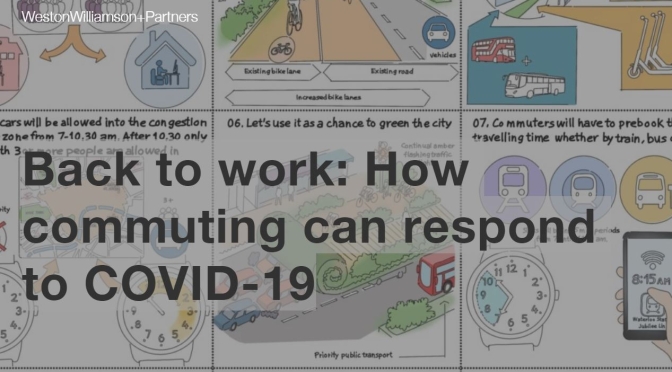
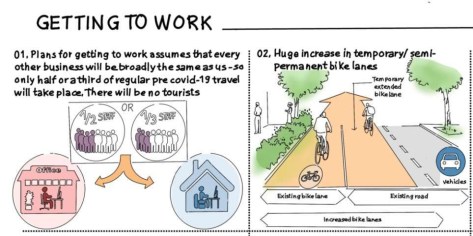
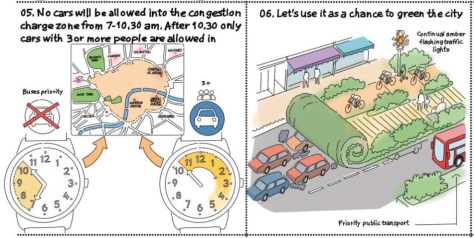
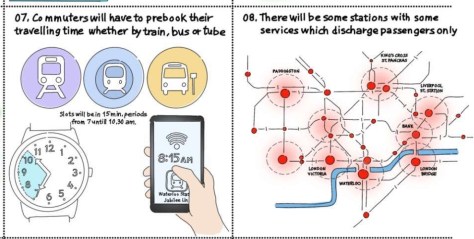
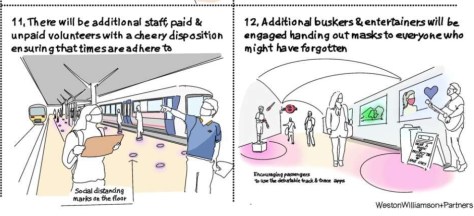
Reopening Cities: How Commuters Can Respond To Covid-19 In 2020



Health: “How the Body Clears Covid-19” (Video)
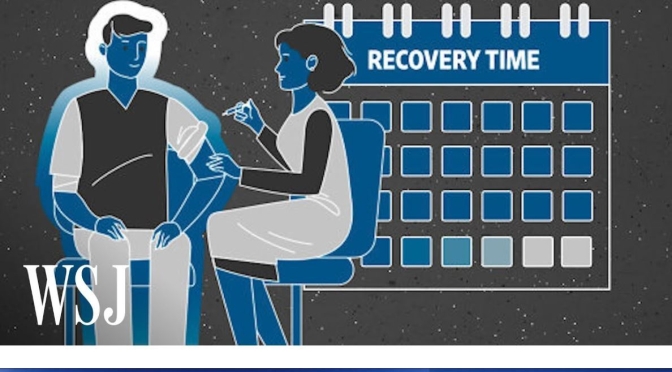
Understanding how the body clears the new coronavirus is becoming more important as the U.S. begins to reopen. WSJ’s Daniela Hernandez explains how the body fights infection and why feeling better doesn’t equal being virus-free.
Photo illustration: Laura Kammermann
 Boomers Daily