Tag Archives: Fungi

Preview: New York Times Magazine – June 11, 2023

Image

THE NEW YORK TIMES MAGAZINE (June 09, 2023) – Inside the $4-billion credit repair industry. Plus, the mycologist who wants us to learn about the magic of mushrooms and the cringe comedian perfect for this moment.

The High Cost of Bad Credit

Taqwanna Clark standing in an office in a blue suit. "Credit Life Inc" is on the wall behind Clark.
Taqwanna Clark, a credit-repair agent in Houston and the founder of Credit Lift Inc.Credit…Eli Durst for The New York Times

Desperate to improve their ratings, Americans now spend billions on “credit repair” — but the industry often can’t deliver on its promises.

By Mya Frazier

When Taqwanna Clark went to buy a video camera at Fry’s Electronics in Houston, she asked if they had a layaway plan. The cashier instead handed her an application for a store credit card. She applied. “Instantly, it came back declined — like, No!” she says. “Denied, denied — you know, your credit is not good enough.” Clark was 30 and working as a security guard at the Port of Houston. On weekends, she performed as a rapper in the local club scene, under the name T-Baby. She wanted the camera to shoot music videos, to promote her music career. “If I can’t afford a $200 camera,” she recalls thinking, “then I’m in a bad way with this credit thing.”

The Man Who Turned the World on to the Genius of Fungi

A close-up photograph of Merlin Sheldrake.
Merlin Sheldrake, author of the best-selling book “Entangled Life.” 

A vast fungal web braids together life on Earth. Merlin Sheldrake wants to help us see it.

By Jennifer Kahn

One evening last winter, Merlin Sheldrake, the mycologist and author of the best-selling book “Entangled Life,” was headlining an event in London’s Soho. The night was billed as a “salon,” and the crowd, which included the novelist Edward St. Aubyn, was elegant and arty, with lots of leggy women in black tights and men in perfectly draped camel’s-hair coats. “Entangled Life” is a scientific study of all things fungal that reads like a fairy tale, and since the book’s publication in 2020, Sheldrake has become a coveted speaker.

Tim Robinson and the Golden Age of Cringe Comedy

A photo illustration of Tim Robinson’s face stretched lengthwise in a collage.
Credit…Photo illustration by Lola Dupre

His sketch show, “I Think You Should Leave,” zeroes in on the panic-inducing feelings of living in a society where we can’t agree on the rules.

By Sam Anderson

Tim Robinson loves spicy food.

This minor fact is one of the major things I learned at my very awkward dinner interview with Robinson and Zach Kanin, creators of the cult Netflix comedy series “I Think You Should Leave.” Robinson ordered drunken spaghetti with tofu — spicy — and, almost immediately, the spaghetti started to make his voice hoarse. He insisted, however, that this had nothing to do with the spice — in fact, he said, his food wasn’t spicy enough. I asked our server if she could go spicier. She brought out a whole dish of special chiles. Robinson spooned them enthusiastically over his noodles.

Public Health: The Rise Of The Deadly Fungi (WSJ)

Daniela Hernandez | WSJ (March 24, 2023): HBO’s The Last of Us previews what a fungal apocalypse might look like. While scientists aren’t worried about the Cordyceps fungus taking us out IRL, deaths due to severe fungal infections are going up and raising alerts from public-health agencies.

Video timeline: 0:00 Fungal infections kill an average of 1.6 million people per year 0:30 How climate change has aided in fungi production 2:11 Infectious fungi are more dangerous for compromised immune systems 2:42 Why there are limited treatment options for fungal infections 3:29 How worried should you be about fungi?

I explain three big reasons why the next big health threat might come from a fungus.

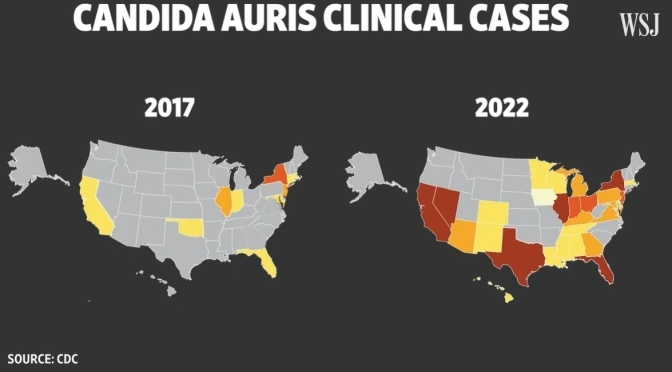
Candida auris is an emerging fungus that presents a serious global health threat. CDC is concerned about C. auris for three main reasons:

  1. It is often multidrug-resistant, meaning that it is resistant to multiple antifungal drugs commonly used to treat Candida infections. Some strains are resistant to all three available classes of antifungals.
  2. It is difficult to identify with standard laboratory methods, and it can be misidentified in labs without specific technology. Misidentification may lead to inappropriate management.
  3. It has caused outbreaks in healthcare settings. For this reason, it is important to quickly identify C. auris in a hospitalized patient so that healthcare facilities can take special precautions to stop its spread.

The World In Timelapse: ‘Pink Oyster Mushrooms’

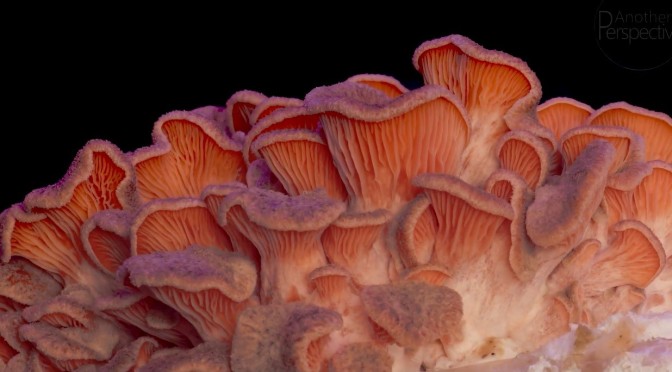
Time Lapse in Macro | Growing Pink Oyster Mushrooms with Laowa 60mm 2X Macro Lens.

Pleurotus djamor, commonly known as the pink oyster mushroom, is a species of fungus in the family Pleurotaceae. It was originally named Agaricus djamor by the German-born botanist Georg Eberhard Rumphius and sanctioned under that name by Elias Magnus Fries in 1821. 

Ecology: Importance Of Peatlands In CO2 Capture

As more of the world’s forests are destroyed, it makes you wonder: what’s going to absorb CO2 in their place?! In an ironic twist of fate, one of Earth’s “deadest” habitats might be our best hope for an ongoing supply of breathable air.

Called peatlands, these wetland environments are named for their tendency to accumulate decayed plant matter. Unlike most other ecosystems, like forests, where branches and leaves typically decompose in a matter of months… in peatlands, that plant material can stay intact for millenia. You see, peatlands mostly exist in high altitude places where temps are low and there’s not much water flow. This results in their having extremely low oxygen and high acidity levels.

These harsh conditions aren’t very hospitable to microbes and fungi, which are instrumental to the whole decomposition process. So without them around, the plant material sort of… just sits. Over time, that it globs together to form peat, a thick, spongy material that can soak up 20x its weight in water. Peat also soaks up loads of carbon. Through a process known as the Calvin cycle, living plants absorb CO2 from the air and convert it into organic molecules that they can then use as energy to grow.

Through decomposition, the carbon that’s “fixed” in a plant’s structure gets released but since peat doesn’t decompose, that carbon can stay put! It’s estimated that peatlands contain 550 gigatonnes of organic carbon, which is twice as much organic carbon as all the world’s forests combined. That’s absolutely wild, considering that forests cover about 30% of the world’s land area… and peatlands only account for 3%! Like most of the world’s habitats, peatlands aren’t immune to the threats of human development and exploitation.

Peat is also are a very in-demand resource. Its incredible water holding capacity makes it a favorite amongst horticulturists; If you’ve ever picked up a bag of soil amendment, chances are it’s full of the stuff. Since peat is also a fossil fuel with a long burn, it’s used in some parts of the world. Peatlands are also often drained to accommodate other land use activities, like agriculture.

Timelapse Views: ‘Oyster Mushrooms’ In Denmark

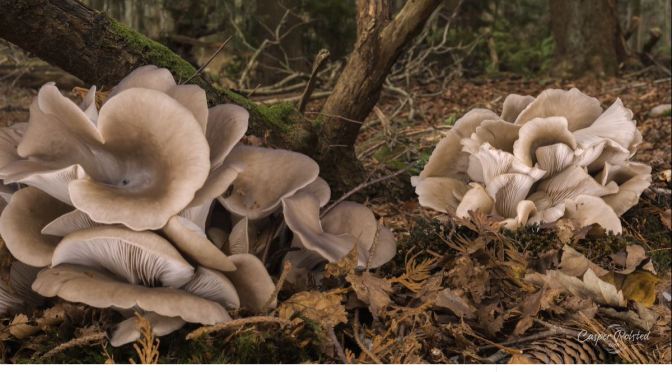
Filmed and Edited by: Casper Rolsted

Immerse yourself in the exciting world of mushrooms. Shot in the most beautiful forests in Denmark. See and listen to this timelapse film in a quiet place where you will not be disturbed. Headphones are highly recommended.

Only in silence can we hear the song of nature.

FUNGI
Fungi are living organisms that are made up of larger cells with a cell nucleus which contains all the genetic material. Fungi are thus what we call eukaryotic organisms, which is one of the three domains of biology: animals (Animalia), plants (Plantae) and fungi (Fungi). The rest of the eukaryotic organisms, which do not fit into these three kingdoms, are called protists.

Fungi is a kingdom with about 144,000 known and described species of organisms. But it is estimated that there may be between 2.2 million and 3.8 million total species. They can be single celled or very complex multicellular organisms. The fungi kingdom includes yeasts, rusts, smuts, mildews, molds, and mushrooms. Fungi are among the most widely distributed organisms on Earth and they are of very big environmental and medical importance.

MUSHROOMS
Mushrooms are the fruiting bodies that some fungi produce – typically above ground on the soil or on decaying wood or other food sources. Mushroom varies in size, shape, color, and longevity. Some mushrooms are microscopic and completely invisible to the unaided eye while others are gigantic structures.
The fine threads under-ground that makes up the main body of the fungi is called mycelium. The mycelium stretches out beneath the mushroom in search of water and food.
Unlike a plant, a fungus can’t make its own food by using energy from the sun. Instead, the fungus produces enzymes which are released by the mycelium and break down dead plants and animals. This organic matter is then absorbed through the mycelium and used by the fungus for growth.
The mushrooms, because of their size, are easily seen in fields and forests and consequently were the only fungi known before the invention of the microscope.

OYSTER MUSHROOMS
Oyster mushrooms is the common name for the species Pleurotus ostreatus. The funghi normally grow naturally on and near trees in temperate and subtropic forests. They are found around the world including in the UK and Ireland, most of mainland Europe, Asia, and parts of North America. Unlike many fungi, these mushrooms are not seasonal and can be found all year round.
Oyster mushrooms are one of the most widely consumed mushrooms in the world and are grown commercially in many countries. They aren’t just tasty; they can be really healthy to eat. They contain antioxidants and are high in several vitamins and minerals. They even have the potential to lower cholesterol levels, slow the spread of cancer and decrease inflammation in the body.
Oyster mushrooms get their name from their oyster or shell shaped cap that grow in tiers or clusters. They have a very short or non-existent stem. The color is typically light grey or greyish-brown. Oyster mushrooms are medium to large in size with caps averaging from 5 to 25 centimeters in diameter.
Oyster mushrooms use powerful enzymes to break down and eat hardwood. Oyster mushrooms are one of the few carnivorous mushrooms. The mycelia of oyster mushrooms secrete a powerful toxin to stuns passing microscopic nematode, which are small roundworms. The fungi use their sprawling fibers to seek out and enter the mouths of these microscopic nematodes and suck out their guts. This gives the fungi nitrogen for growth.

FOLLOW MY WORK
YouTube.com/CasperRolsted?sub_confirmation=1
Instagram.com/CasperRolsted
Facebook.com/CasperRolsted

Photographer, Editor and Sound Designer: Casper Rolsted
Terralapse.com
Timelapsefilm.dk
Naturalsilence.org
CasperRolsted.com

Science Podcast: New 2021 Research, Wildland Fire Smoke, Bacteria & Fungi

We kick off our first episode of 2021 by looking at future trends in policy and research with host Meagan Cantwell and several Science news writers. Ann Gibbons talks about upcoming studies that elucidate social ties among ancient humans, Jeffrey Mervis discusses relations between the United States and China, and Paul Voosen gives a rundown of two Mars rover landings.

In research news, Meagan Cantwell talks with Leda Kobziar, an associate professor of wildland fire science at the University of Idaho, Moscow, about the living component of wildfire smoke—microbes. The bacteria and fungi that hitch a ride on smoke can impact both human health and ecosystems—but Kobziar says much more research is needed. 

Fermentation: What To Know About ‘Yeast’ (Video)

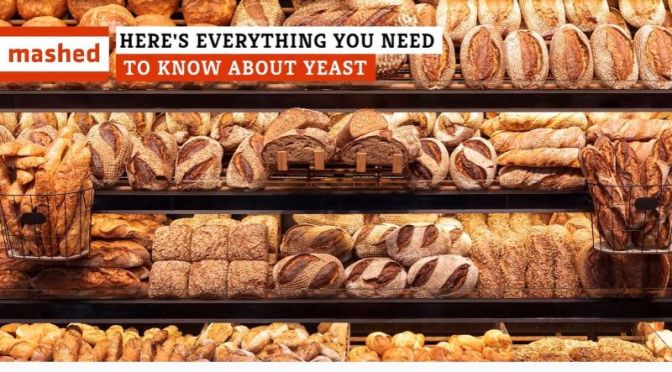
Whether you’re making a recipe for cinnamon rolls or French bread, yeast factors into the equation. Yeast is a required ingredient for almost all bread recipes. While we typically just buy yeast at the grocery store and toss it in our mixing bowl, yeast has quite an interesting backstory.

Yeast are fungi, living organisms found all around us, floating in the air. According to producer Red Star Yeast, yeast is made up of egg-shaped cells, only visible through a microscope. They’re fungi just like the molds found on blue cheese, mushrooms, or even in antibiotics such as penicillin. However, yeast grows in a different form than other fungi, which are typically composed of tubular chains of cells called hyphae. Yeast is found in small clusters of cells, or as an individual cell. And since it’s alive, yeast can also die.

According to Red Star Yeast, their yeast is stamped with a best by date of two years from when the yeast is packaged. Keeping it in a cool, dry place such as your pantry or refrigerator will ensure it’ll live up to that date. If you’re not sure if your yeast is alive, pour it over warm water with a teaspoon of sugar. If it bubbles, it’s still kicking, The Spruce Eats advises.

Also? Yeast has been around for longer than pretty much any of us. In researching the ancient tomb of the Egyptian ruler Scorpion from around 3100 B.C., archaeologists found 700 jars of resinated wine. According to Scientific American, the resin was used to slow the wine’s natural progression into vinegar. Researchers found evidence of the same species as modern-day brewer’s yeast in the jars. While that isn’t solid evidence the ancient Egyptians knew that the addition of yeast could turn their juice into alcohol, it certainly does show that yeast has been prevalent for a very, very long time.

Timeline: It’s alive, and ancient | 0:00 Hundreds of varieties | 1:52 Commercial production | 2:38 Adult beverages | 3:24 Ooh, that smell | 4:36 The amount makes a difference | 5:30 Yeast-free bread | 6:17 Sourdough starter is DIY yeast | 7:01 2020’s yeast shortage | 7:45

Culinary Travel: ‘Truffle Hunting In Croatia’ (Video)

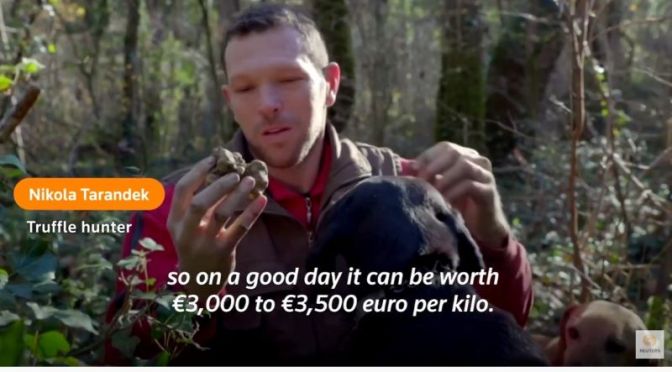
Truffle hunters and their dogs are combing Croatia’s northwest as the winter hunting season for the delicacy gets under way.

A truffle is the fruiting body of a subterranean ascomycete fungus, predominantly one of the many species of the genus Tuber. In addition to Tuber, many other genera of fungi are classified as truffles including Geopora, Peziza, Choiromyces, Leucangium, and over a hundred others.

Truffles — the non-chocolate kind, sorry — are edible fungi, like mushrooms. … Though multiple species are found worldwide, prestige truffles come from specific areas, much like wine from celebrated regions of Europe and California. Black truffles from France and white truffles from Italy are the two most highly valued.