
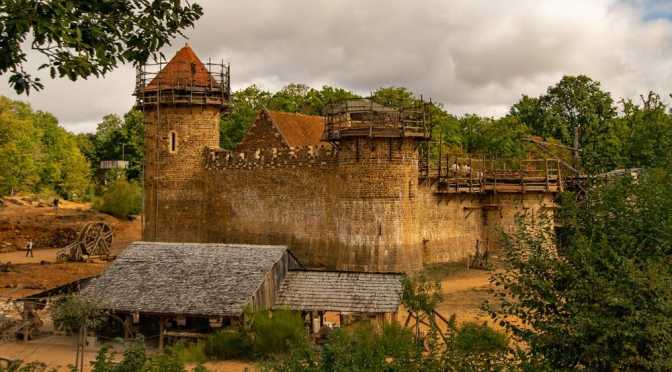
More than 20 years ago, a community of men and women in the French region of Burgundy set themselves a massive challenge: to build a castle using the techniques of the Middle Ages. The site in the town of Guédelon is open to visitors, offering them an immersion into the 13th century. Today, nearly 40 people work every day on this medieval construction site. Stone quarrying is the first step in building a castle. And to transport the stones to the site, modern machines are banned: everything is done like in the 13th century, with horsepower.
Tag Archives: France
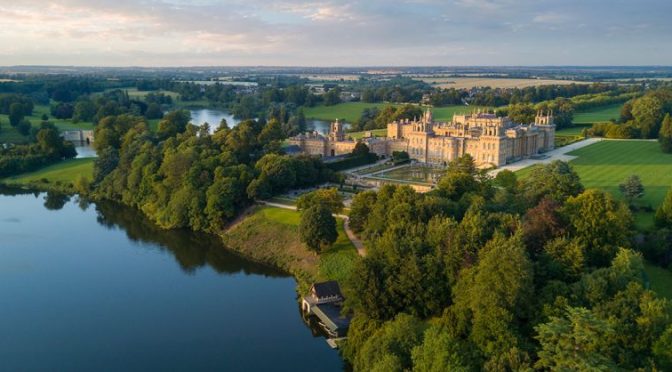
Blenheim Palace: Britain’s Answer To Versailles
Blenheim Palace, Oxfordshire — the seat of the Duke of Marlborough — is one of the outstanding palaces of Baroque Europe, and was planned as both a residence and national monument.
Towards the end of the day on August 13, 1704, John Churchill, Duke of Marlborough, exhausted by an intense day of fighting near Blindheim, a village on the Danube, famously scrawled a note to his wife on the back of a tavern bill: ‘I have not time to say more but to beg you will give my duty to the Queen and let her know her army has had a glorious victory.’ The battle of Blenheim — as the name has been anglicised — was, in fact, a confrontation between a Franco-Bavarian army and the forces of a grand alliance of European powers, including the Dutch republic, Austria and Britain, over control of Spain and its empire. It was the first major defeat inflicted on a French army in the field for 50 years and was crowned by the capture of Louis XIV’s commander-in-chief, Marshal Talleyrand, who waited in the Duke’s coach as he scribbled his hasty message.
Although the plans of the building changed considerably over time, something close to the final design was published in the first part of Colen Campbell’s Vitruvius Britannicus (1715). As described by Campbell, ‘the manner is grand, the parts noble, and the air majestick of this palace, adapted to the martial genius of the patron…’ This latter quality was celebrated both in the ornament of the building with military trophies and its original title, ‘Blenheim Castle’.

Fig 5: The Saloon is overlooked by figures representing the four Continents and the marble doorcase is ornamented with an imperial eagle. Blenheim Palace, Woodstock, Oxfordshire, photographed for Country Life Magazine by Will Pryce. ©Country Life
Both Vanbrugh and Hawksmoor were well versed in medieval castle architecture and their knowledge of it shines through the spectacular outline of this building, its great angle towers and the rugged articulation of the masonry. Yet this is really a Classical castle suitable for a general of Britain in its newly assumed character as an Imperial power and second Rome. Borrowing Hawksmoor’s description of Castle Howard, as ‘the seat of one of the chief nobles of Britain, it is both a castle and palace conjoined’.

COVERS: FRANCE-AMÉRIQUE MAGAZINE – JUNE 2022 ISSUE
French Lands Adrift in the Ocean
Some 3 million people live in French overseas territories – islands like Guadeloupe, Martinique, Polynesia, New Caledonia, Réunion, and Saint Pierre and Miquelon, remnants of France’s colonial empire. We explore these distant lands that are regularly pushing for independence. Also in this issue, meet the French community of Hawaii, read about Alma de Bretteville Spreckels – the “great-grandmother of San Francisco” and a friend of Rodin – and discover our interview with U.S. historian Stephen Bourque on the “the Allied war against France” during the Normandy landings. Lastly, we bring you the story of Disneyland Paris, which revived fears of Americanization in France when it opened 30 years ago.
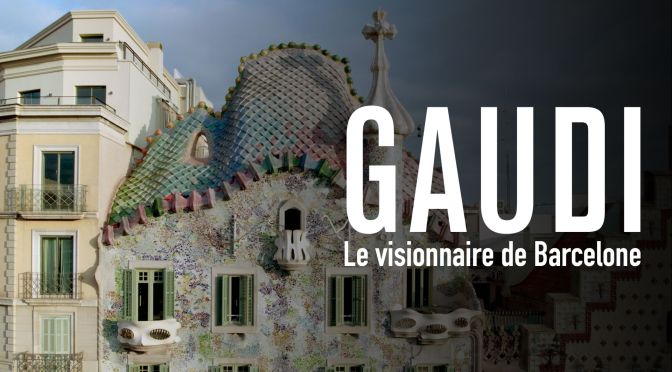
Exhibits: ‘Antoni Gaudí’ At The Musée d’Orsay In Paris
The Musée d’Orsay is hosting the first major exhibition devoted to Antoni Gaudí organized in France in Paris in fifty years. In an immersive museographic experience, it will show the spectacular creations of this unique artist, in particular, presenting sets of furniture never before exhibited in France. It will offer a new vision of the artist as a unique and singular figure, a non-isolated genius who practiced in a Catalonia in the midst of social, political and urbanistic upheaval.
Until July 17th, 2022
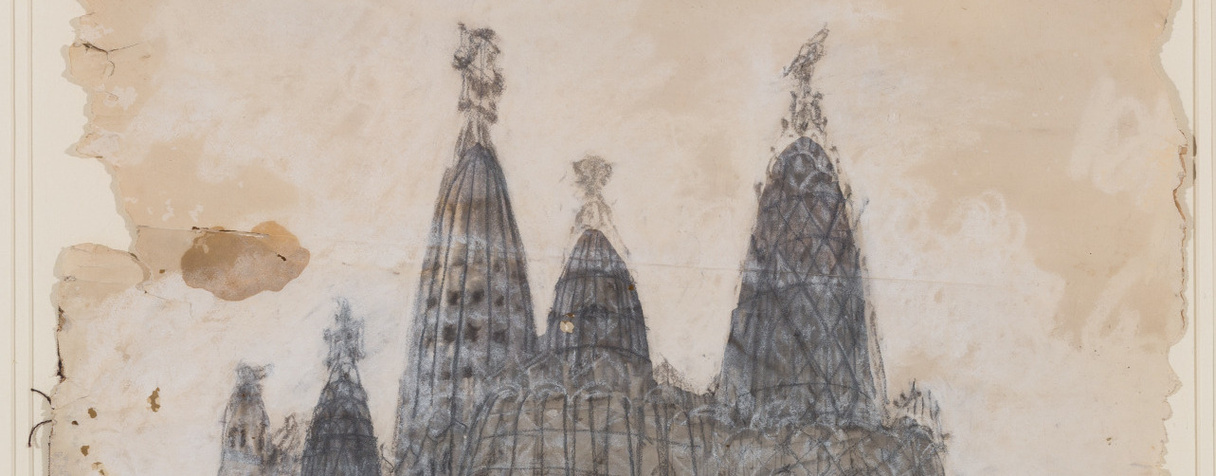
©Museu Nacional d’Art de Catalunya, Barcelona / Marc Vidal i Aparicio
The exhibition will focus on showing the architect’s creative process at a time of an exceptional local artistic profusion linked to “Modernism” or the Art Nouveau movement in Spain, supported by distinguished patrons, anxious to distinguish Catalonia, a land of Mediterranean identity. Gaudí’s workshop, his many collaborators, and his sophisticated working techniques will be the guiding line of the exhibition to make the public understand the extraordinary inventive capacity of the architect who defied all the creation of the moment.
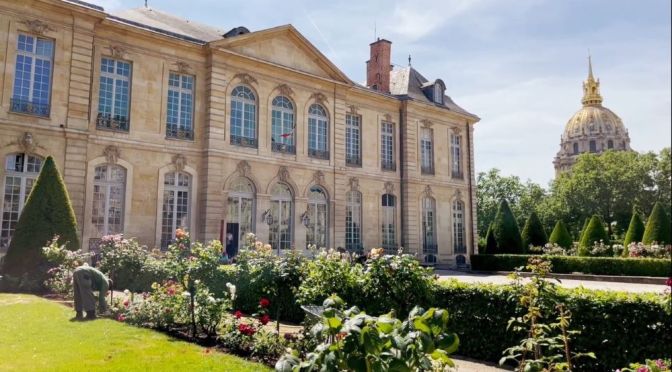
Walking Tours: Musée Rodin In Paris, France
The Musée Rodin in Paris, France, is a museum that was opened in 1919, primarily dedicated to the works of the French sculptor Auguste Rodin. It has two sites: the Hôtel Biron and surrounding grounds in central Paris, as well as just outside Paris at Rodin’s old home, the Villa des Brillants at Meudon, Hauts-de-Seine.

Preview: 75th Cannes Film Festival Opens May 17
After two years of Covid disruption, the Cannes Film Festival returns to its traditional May slot for a 75th anniversary edition packed full with Hollywood stars and celebrated auteurs.
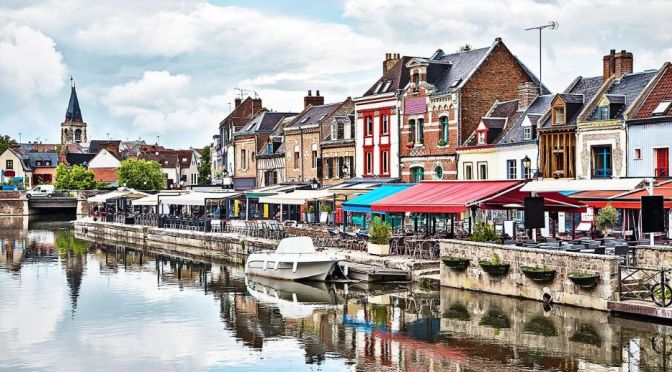
Walking Tours: Amiens In Northern France (4K)
Amiens is a city in northern France, divided by the Somme river. It’s known for the Gothic Amiens Cathedral and nearby medieval belfry. Shops and cafes line the Quartier St.-Leu’s narrow streets. Floating market gardens (“hortillonnages”) dot the city’s canals. The Musée de Picardie shows art and antiquities spanning centuries. Nearby, the Maison de Jules Verne is a museum where the science fiction author once lived.
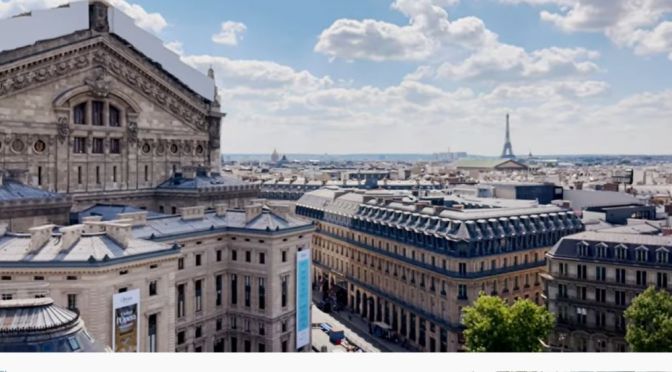
Rooftop Views: Galeries Lafayette In Paris (4K)
A spectacular view over Paris from the 8th floor of Galeries Lafayette Paris Haussmann. You may be lucky enough to marvel over a splendid sunset along with a number of photographers and influencers.
Opéra Garnier, the Eiffel Tower, Sacré Cœur, Notre Dame: all these monuments can be seen from the rooftop of our main store, the immense glass skylight behind you is no other than the store’s revered dome.
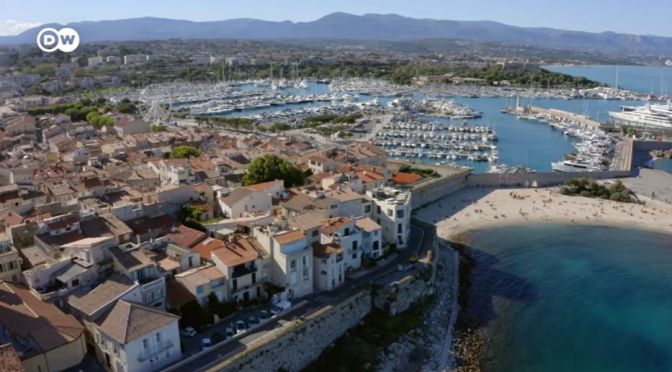
Celebrity Culture: History Of The Côte d’Azur, France
The Côte d’Azur stands for glamour and luxury, for film festivals and stars, for yachts and villas. The most famous personalities of the last century met here. The Côte owes its unique mythos to their loves and passions.
The Côte d’Azur boasts a breathtakingly gorgeous landscape. But its mythos is more than the sum of it beautiful parts. The whole world associates the narrow coastal strip on the French Mediterranean coast with sun, stars and scandals. In Saint Tropez, a former fishing town, a new and newly sensual art of living was popularized thanks to the young Brigitte Bardot.
On the eastern part of the coast, Oscar winner Grace Kelly conquered the principality of Monaco with her marriage to Prince Rainier. The matchmaker? The Greek shipowner Aristotle Onassis, who wanted to burnish the dwarf state’s image. One of the most glamorous film festivals in the world was established in Cannes. After that, it seemed everyone came to the Côte. At the Hôtel du Cap-Eden-Roc in Antibes, the paths of the famous crossed again and again.
For 150 years the hotel has been home to artists, queens and kings, divas and stars. Since 1969, the hotel has been owned by the German industrialist family Oetker. Maja Oetker describes her personal memories of the past 50 years. To this day, the Côte d’Azur has lost none of its appeal. It is more than just a place: it is an entire mythos.

Political Review: Russia’s ‘Rotten Army’, Macron’s Challenge, Culture Wars
A selection of three essential articles read aloud from the latest issue of The Economist. This week, how rotten is Russia’s army? France’s re-elected president prepares for a tough second term (10:30) and a struggle over artistic freedom suggests a better way out of the culture wars (15:25).
 Boomers Daily