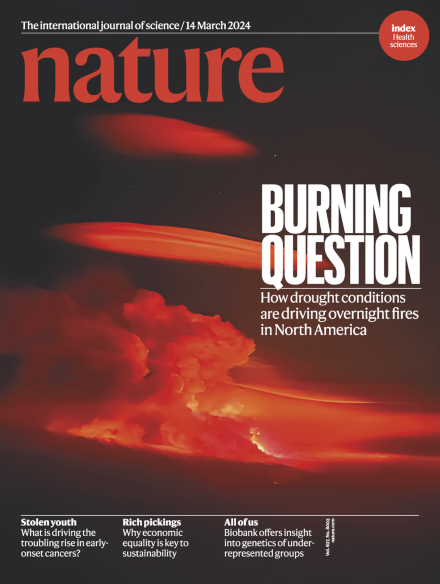
Nature Magazine – March 13, 2024: The latest issue cover features ‘Burning Question’ – How drought conditions are driving overnight fires in North America…
The de-extinction company Colossal is the first to convert elephant cells to an embryonic state, but using them to make mammoths won’t be easy, say researchers.
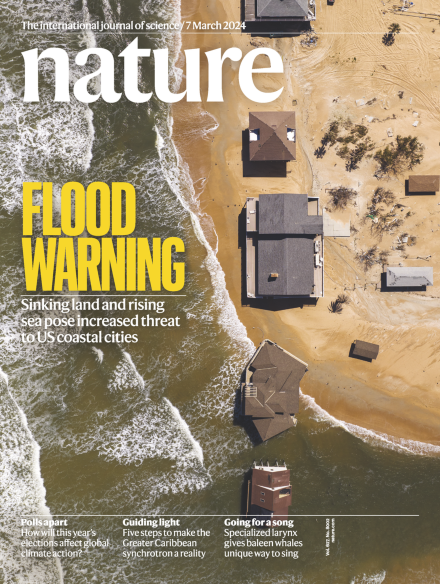
Nature Magazine – March 6, 2024: The latest issue cover features ‘Flood Warning’ – Sinking land and rising sea pose increased threat to US coastal cities.…
CNBC (May 30, 2023) – From floods to droughts, CNBC Marathon explores the water crisis in the U.S. Today, one out of three people don’t have access to safe drinking water. And that’s the result of many things, but one of them is that 96.5% of that water is found in our oceans. It’s saturated with salt, and undrinkable.
Chapters:00:00 — Introduction 00:30 — Can Sea Water Desalination Save The World? (Published October 2019) 14:00 — U.S. Farms Waste A Lot Of Water — But This Tech Could Help (Published September 2022) 29:56 — How The West Coast Drought Could Cause More ‘Water Wars’ (Published July 2021) 40:07 — Why Flood Insurance Is Failing The U.S. (Published November 2020)
Most of the freshwater is locked away in glaciers or deep underground. Less than one percent of it is available to us. So why can’t we just take all that seawater, filter out the salt, and have a nearly unlimited supply of clean, drinkable water? The western U.S. is experience a megadrought so severe, it is the driest two decades in at least 1,200 years. And no sector has felt the impact more than agriculture, which takes up about 70% of the world’s freshwater.
With water resources becoming more scarce, several companies are working to improve irrigation efficiency and help sustain food production in a future where extreme climate may be more common. Water is a cornerstone of economic activity, and when it runs low, communities face tough choices. The extreme drought conditions in the U.S. West are straining water resources and providing a fertile ground for wildfires. How will the West Coast face this climate challenge? And 2020 was the busiest hurricane season on record. Flooding is one of a storm’s most devastating consequences.
FEMA estimates one inch of flood water can cause up to $25,000 in damage. The U.S. began offering national flood insurance in 1968 but the program, called the NFIP, is now over $20 billion in debt. Private companies are starting to offer flood insurance as well. However, flood insurance is more complicated than it may appear. Watch the video to better understand how flood insurance works, and doesn’t work, in the U.S.
Hurricane Ian roared ashore in Southwest Florida bringing historic flooding and winds more than 140mph. Some European leaders are blaming Russia for explosions that damaged two gas pipelines in the Baltic sea. And the Bank of England steps in to prevent economic turmoil in the UK.
The World Economic Forum ‘Stories of the Week include:
0:18 Pakistan’s Flooding – Due to flash floods triggered by a ‘monster monsoon’, more than 1,100 people have died in Pakistan 01:30 First smartphone made in the Ivory Coast – The Open G smartphone went on sale in July 2022 in the Ivory Coast and has sold several thousand units 02:41 Brazil is building the world’s biggest urban garden – The garden is a collaboration between the City of Rio de Janeiro and the favelas – or informal settlements – that surround it 04:09 Drinking Black Tea could help you live longer – People who drink 2 or more cups of black tea a day are 9-13% less likely to die from any cause, according to a study by the US National Institutes of Health.
A.M. Edition for Sep. 7. Abnormally heavy monsoon rains have left 10% of Pakistan underwater and millions displaced.
Wall Street Journal reporter Saeed Shah explains how Pakistan wants the international community to help with the response. Plus, a top banker in Europe warns of recession in Germany. Luke Vargas hosts.
As the sea level rises on the shores of Copenhagen—likely by at least a foot and a half by the end of the century—the city will become more vulnerable to flooding during storms. So the government is now making plans to take a drastic step as part of its plan for protection: Over the coming decades, it will build an artificial island to hold the rising water back, while doubling as room for new housing.
Bangladesh is struggling just to stay afloat. Literally: By 2050, it’s estimated that climate issues will displace one in seven of the country’s inhabitants.
This film takes the viewer on a journey through Bangladesh, exploring why overflowing rivers flood three-quarters of the country every year. We see how flooding threatens the country’s food security, how soil erosion thrusts thousands into homelessness, and how climate refugees are forced to flee their homes in a desperate act of survival.
Along the way, we meet communities adapting to rising sea climate change by growing food on water. This is a strategy which could prove very useful in the near future, as rising sea levels threaten to inundate 11% of the country’s land in the next 30 years.
This documentary brings us to the front lines of the battle against catastrophic climate change in Bangladesh. It also tells the stories of activists who are bringing the dangers posed by man-made threats to light.
News, Views and Reviews For The Intellectually Curious






 Boomers Daily