Tag Archives: Exhibits

Exhibits: Printed In 1085 – A Thousand Years Of Books At The Huntington Library

The Huntington (August 25, 2023) – The history of printing has many missing pages. Li Wei Yang, Curator of Pacific Rim Collections, searched the library for the first documented connections between the great printing cultures of China and Europe.

Printed in 1085: The Chinese Buddhist Canon from the Song Dynasty

April 29–Dec. 4, 2023

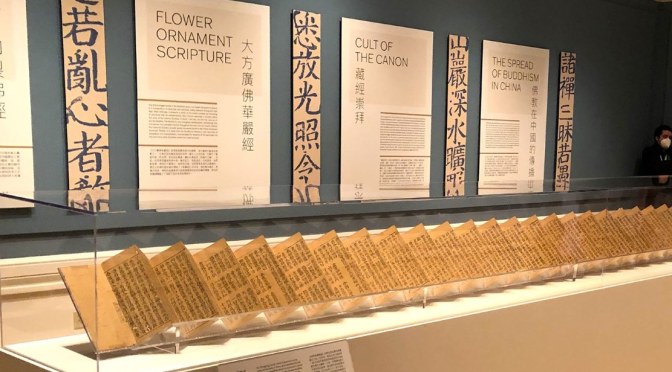
The oldest printed book in The Huntington’s collection, the Scripture of the Great Flower Ornament of the Buddha, is on display in “Printed in 1085: The Chinese Buddhist Canon from the Song Dynasty” in the Library West Hall.

The exhibition delves into the circumstances of the book’s creation and its religious significance while broadening visitors’ understanding of Chinese textual tradition. Additional materials related to the text are on display to provide historical context.

The book is in a specially designed display case that allows Huntington visitors to have a unique experience when viewing the sacred text. Though the book was meant to be read by flipping from one page to the next, in the exhibition it is expanded in a custom case designed for maximum visibility, offering a rare opportunity to view the miraculously preserved relic and observe its unique bibliographic characteristics and exquisiteness.

More than 900 years old, the book is part of the 5,850-volume Great Canon of the Eternal Longevity of the Chongning Reign Period. Produced during the Song dynasty (960–1279) between 1080 and 1112, the accordion-style book fully unfolds to a length of 31 feet. It is one of the longest sutras, or collections of aphorisms, in the Buddhist canon and is a compendium of doctrines and ritual practices widely followed throughout East Asia.

The text presents a vision of the entire universe as consisting of elements that all interpenetrate (like mirrors reflecting in mirrors) within the body of the Cosmic Buddha. According to Li Wei Yang, curator of Pacific Rim Collections at The Huntington, it reflects the notion that “I am you, you are me; we all are Buddha.” It is not known whether the Buddha himself actually spoke the words found in the Scripture of the Great Flower Ornament.

Rather, it is likely that his followers, over centuries of adaptation and interpretation, incorporated the essence of his teachings into this and many other Buddhist works that have survived.
Museum Reviews: Cézanne And Van Gogh’s Influence On The Rise Of Modern Art

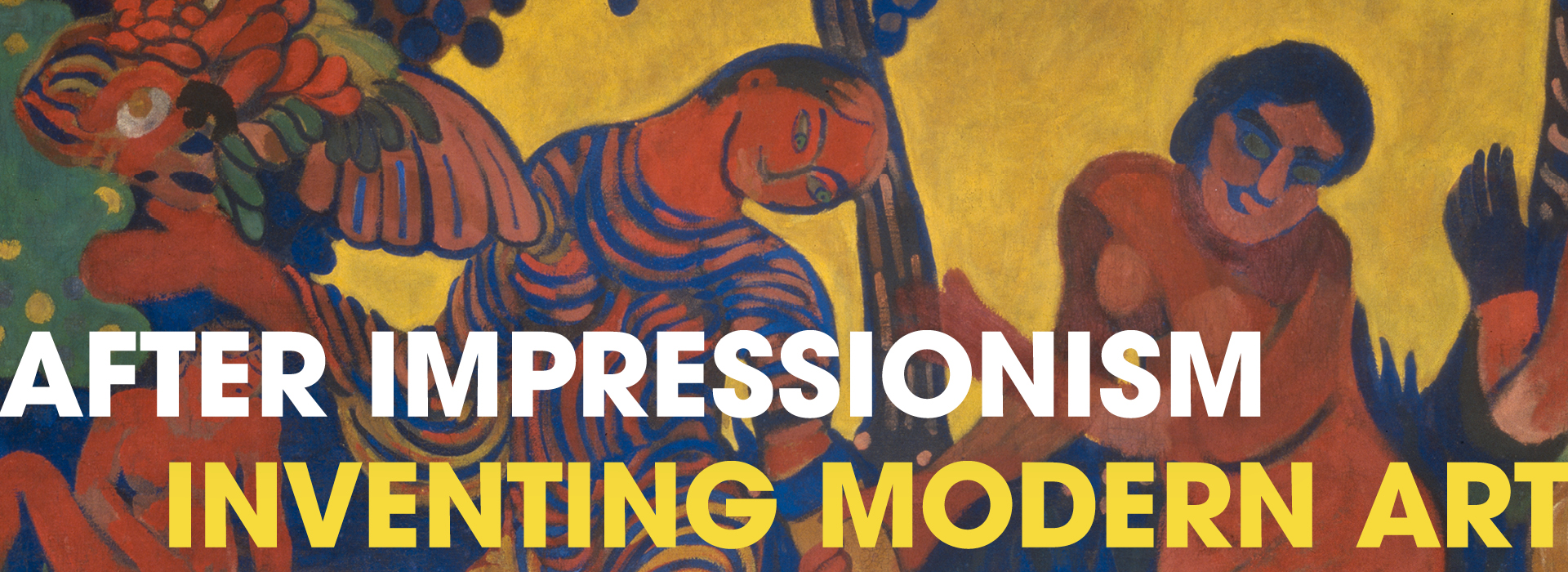
The National Gallery (July 6, 2023) – The exhibition, ‘After Impressionism: Inventing Modern Art’, celebrates the achievements of three giants of the era: Paul Cézanne, Vincent van Gogh and Paul Gauguin and follows the influences they had on younger generations of French artists, on their peers and on wider circles of artists across Europe in Barcelona, Berlin, Brussels and Vienna.

Explore a period of great upheaval when artists broke with established tradition and laid the foundations for the art of the 20th and the 21st centuries.

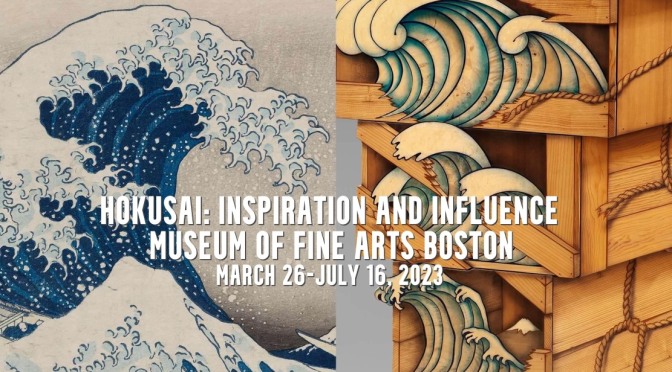
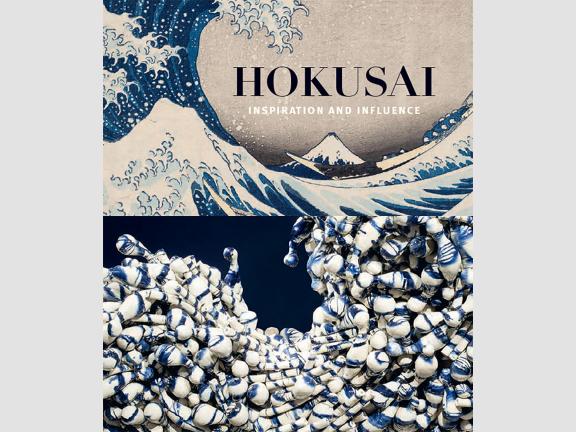
Top New Museum Exhibits: ‘Hokusai: Inspiration and Influence’ At MFA Boston

Museum of Fine Arts, Boston – Thanks to the popularity of works like the instantly recognizable Great Wave—cited everywhere from book covers and Lego sets to anime and emoji—Katsushika Hokusai (1760–1849) has become one of the most famous and influential artists of all time.

Hokusai: Inspiration and Influence

March 26–July 16, 2023

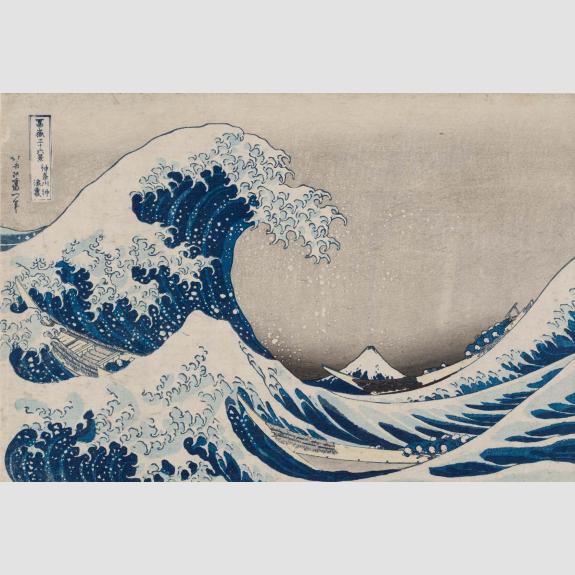
A bright blue tidal wave crests on choppy waters with a mountainscape in the distance.
Katsushika Hokusai, Under the Wave off Kanagawa (Kanagawa-oki nami-ura), also known as the Great Wave, from the series Thirty-six Views of Mount Fuji (Fugaku sanjūrokkei) (detail), about 1830–31
Woodblock print (nishiki-e); ink and color on paper. William Sturgis Bigelow Collection.

Taking a new approach to this endlessly inventive and versatile Japanese artist, “Hokusai: Inspiration and Influence” explores his impact both during his lifetime and beyond. More than 100 woodblock prints, paintings, and illustrated books by Hokusai are on view alongside about 200 works by his teachers, students, rivals, and admirers, creating juxtapositions that demonstrate his influence through time and space.

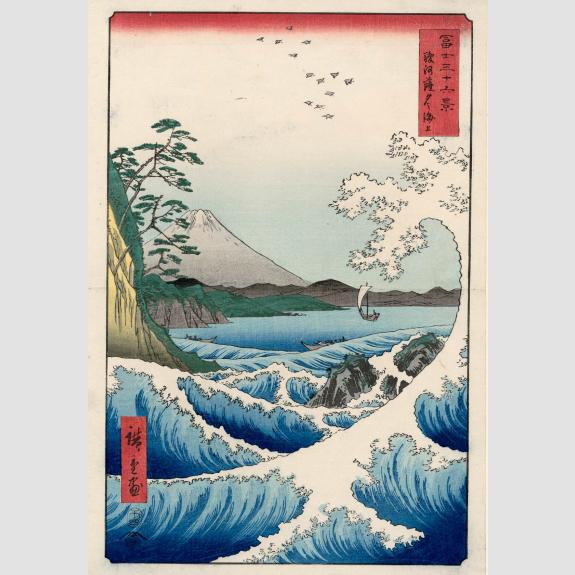
A woodblock print of three boats navigating rough waters with a mountain in the background.
Utagawa Hiroshige, The Sea off Satta in Suruga Province (Suruga Satta kaijō), from the series Thirty-six Views of Mount Fuji (Fuji sanjūrokkei), 1858
Woodblock print (nishiki-e); ink and color on paper. William Sturgis Bigelow Collection.
Book cover for Hokusai: Inspiration and Influence›

The great painter, book illustrator, and print designer Katsushika Hokusai (1760–1849) has become the best known of all Japanese artists and one of…

Members are invited to a special exhibition preview March 22–25 before it opens to the public, and can enjoy members-only hours on Sunday mornings during the run of the show. Join today!

Science & Technology: A Tour Of New ‘MIT Museum’

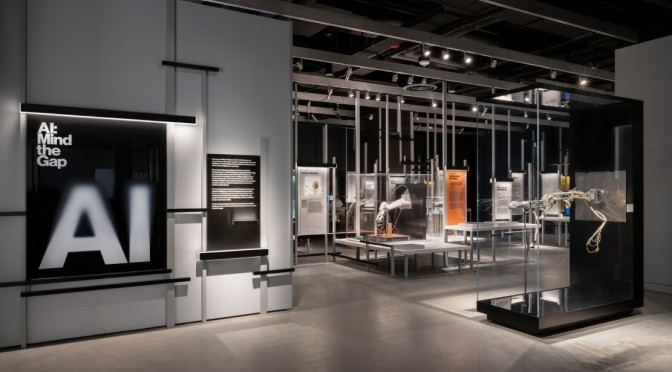
PBS NewsHour – Artificial intelligence, robotics and gene sequencing are the stuff of headlines, science fiction and sometimes even our worst fears. It’s all on view at the new MIT Museum. A place where the latest scientific advancements fill galleries, but only really work with your input. Special correspondent Jared Bowen of GBH Boston looks at this artistic frontier for our arts and culture series, “CANVAS.”

From AI in the home to robots in the workplace, the presence of AI all around us compels us to question its potential and recognize the risks. What has become clear is that the more we advance AI technology and consider machine ability versus human ability, the more we need to mind the gap.

Exhibits: Peter Alexander ‘Echoes Of Perception’ At Museum Of California Art

Langson IMCA in Irvine, CA – September 24, 2022 – January 14, 2023

In 2019, artist Peter Alexander was invited by Langson IMCA Museum Director Kim Kanatani to curate an exhibition of California Impressionism from the Museum’s collections.

Prior to his untimely death in 2020, Alexander had begun identifying works that he felt exemplified the California Impressionists’ profound connection to the light, space, and natural phenomena of California and the similar influence they had on his own work.

In honor of Alexander’s commitment to the project, a team of curators consisting of Kevin Appel, Julianne Gavino, Kim Kanatani, Curt Klebaum, Claudia Parducci, and Bruce Richards expanded the exhibition into a dialogue between the early modernist painters and Alexander’s own work, forming a fluid exchange between generations equally influenced by the atmospheric light of the Golden State.

The passages in this exhibition follow phenomena experienced over the course of a day from dawn, to dusk, to the depths of night. From mountain peaks to the ocean floor, Alexander and these California Impressionist painters echo one another in their pursuit of capturing the ineffable sensibility of place and space.

With works spanning from 1896 to 2020, Echoes of Perception: Peter Alexander and California Impressionism includes 14 Impressionist works from Langson IMCA’s collection along with 11 of Alexander’s resin sculptures, canvases, works on paper, and a painting on velvet that offer an alternative way to engage with California Impressionism through the eyes of this pioneering contemporary artist.

Exhibits: ‘Extraordinary Ordinary Things’ (CMOA)

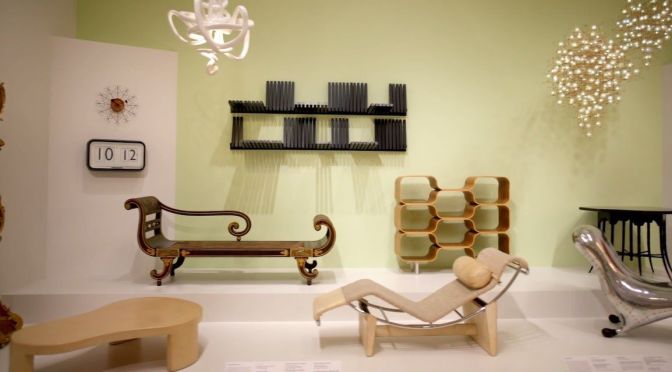
Extraordinary Ordinary Things, Carnegie Museum of Art’s latest decorative arts and design exhibition, features more than 300 objects from our expansive collection, which dates back to the founding of the museum in 1895.

In this video, the museum team takes you behind the scenes for a look at how this exhibition came to be, while sharing stories about a few of the remarkable objects in the show! Spanning some of the most significant design developments of the past three centuries, the works on view in Extraordinary Ordinary Things offer boundless inspiration and present the endless possibilities for functional design for visitors to learn about, consider, and enjoy.

Want to learn more about decorative arts and design at Carnegie Museum of Art? Visit us online: https://cmoa.org/exhibition/extra-ord…

Exhibits: ‘Antoni Gaudí’ At The Musée d’Orsay In Paris

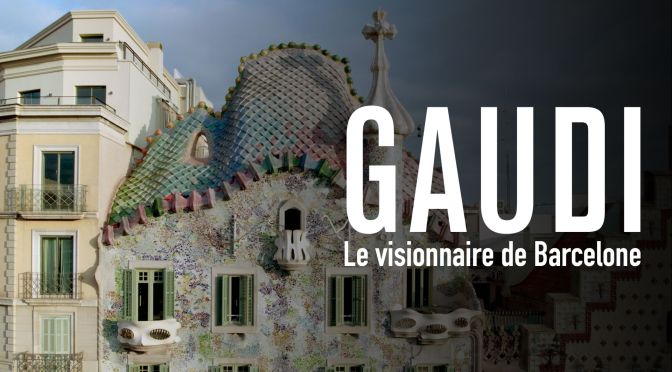
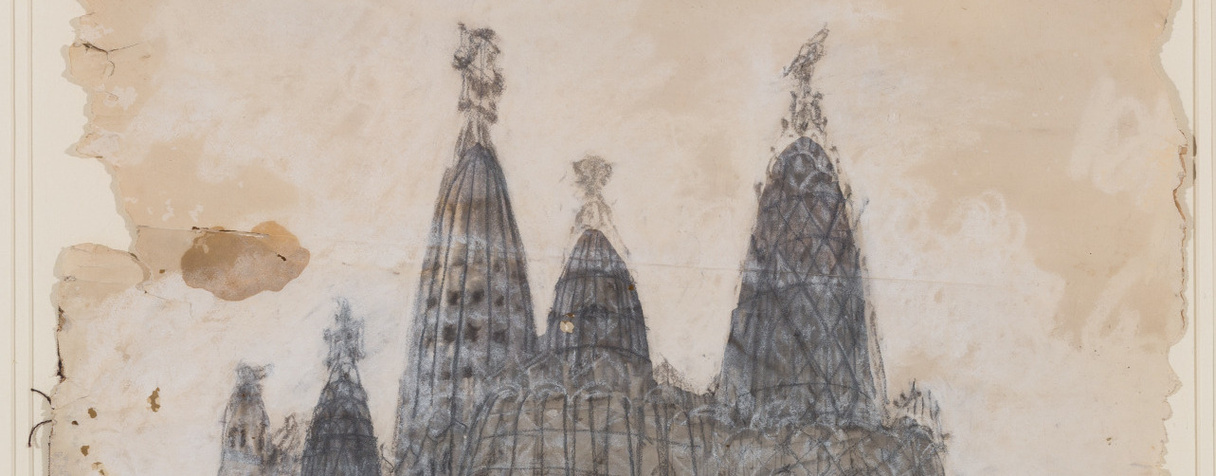
The Musée d’Orsay is hosting the first major exhibition devoted to Antoni Gaudí organized in France in Paris in fifty years. In an immersive museographic experience, it will show the spectacular creations of this unique artist, in particular, presenting sets of furniture never before exhibited in France. It will offer a new vision of the artist as a unique and singular figure, a non-isolated genius who practiced in a Catalonia in the midst of social, political and urbanistic upheaval.

Until July 17th, 2022

Projet pour l’église de la Colònia Güell, Antoni Gaudí
Antoni Gaudí, Projet pour l’église de la Colònia Güell
©Museu Nacional d’Art de Catalunya, Barcelona / Marc Vidal i Aparicio

The exhibition will focus on showing the architect’s creative process at a time of an exceptional local artistic profusion linked to “Modernism” or the Art Nouveau movement in Spain, supported by distinguished patrons, anxious to distinguish Catalonia, a land of Mediterranean identity. Gaudí’s workshop, his many collaborators, and his sophisticated working techniques will be the guiding line of the exhibition to make the public understand the extraordinary inventive capacity of the architect who defied all the creation of the moment.

Louvre Exhibits: ‘Pharaoh Of The Two Lands, African Kings of Napata’ In Paris

PHARAOH OF THE TWO LANDS – The African Story of the Kings of Napata

28 April – 25 July 2022

OVERVIEW

In the 8th century BC, a kingdom grew up around the Nubian capital, Napata. In about 730 BC, the Nubian king Piankhy conquered Egypt and founded the 25th Dynasty of Kushite kings, who ruled for more than fifty years over a kingdom stretching from the Nile Delta to the confluence of the White and Blue Niles. The most famous of those kings is the pharaoh Taharqa.

The exhibition highlights the importance of this vast kingdom, located in what is now northern Sudan. It is organised in connection with the Louvre’s archaeological campaign in Sudan, which focused for ten years on the site of Muweis before moving some 30 kilometres northwards to El-Hassa, not far from the pyramids of Meroe.

Tours: ‘The Art Of Ramen’ – Japan House, Los Angeles

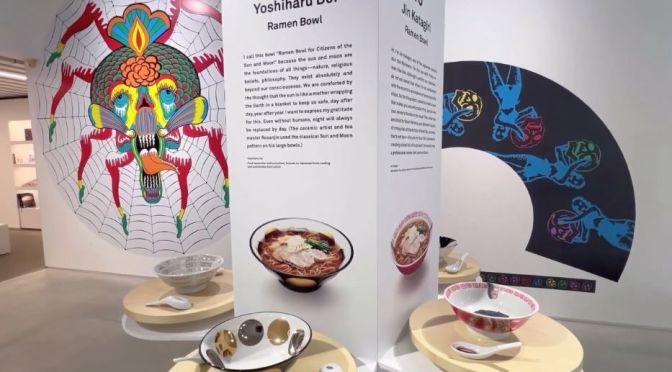
This exhibition touches on the history and culture of ramen, but its primary goal is to spotlight the donburi itself. To examine donburi more closely, these bowls are “dissected” and observed in detail, like a specimen. Then, in the hands of thirty artists, the bowls serve as blank canvases on which the fun, the deliciousness and the many possibilities of ramen are uniquely expressed. In addition, the exhibition introduces the region of Mino – Japan’s largest producer of porcelain ramen bowls – and its long and important history of ceramic production, from tea bowls to house wares to donburi.

Ramen – wheat noodles served in soup with toppings – were introduced to Japan in the late 19th century, grew popular over the following decades and became deeply connected with the culture of postwar Japan. A fast food served in a single bowl, the hot noodle soup can satisfy hunger for a reasonable price. Originally Chinese, this everyday dish has evolved differently in each region of Japan, featuring diverse ingredients and seasonings. 

Art: ‘True To Nature-Open Air Painting’ (Fitzwilliam)

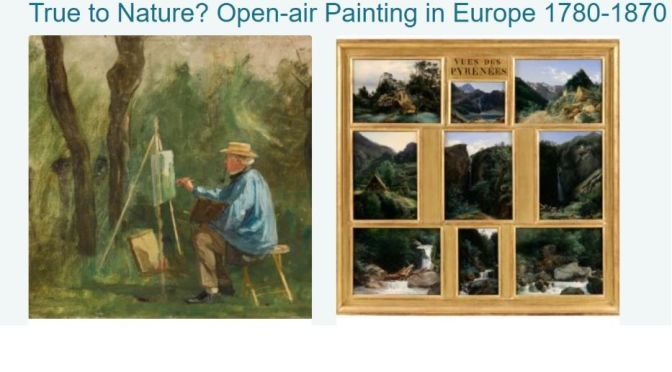
True to Nature: Open-air Painting in Europe 1780-1870 Explore the inventive ways artists in the 18th and 19th centuries recorded fleeting moments in nature, capturing the effects of light, drama, and atmosphere first-hand in the open air.