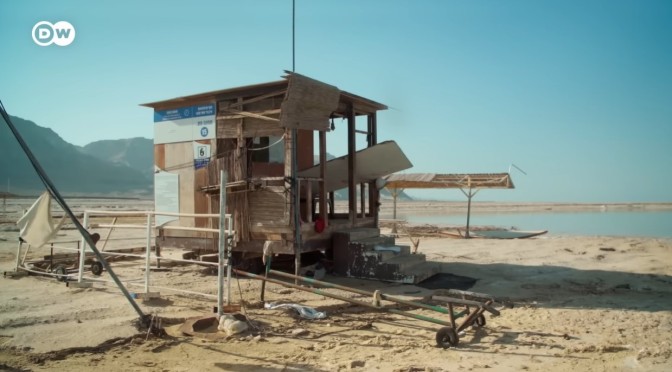
DW Documentary (May 1, 2023) – The Dead Sea, shared by Israelis, Jordanians and Palestinians, is drying up. The salt lake, famous for its exceptional geographical location and its healing properties, is the deepest of its kind on earth.
The drying up of the Dead Sea is causing widespread damage, from huge sinkholes to abandoned beaches and collapsed roads. This is not an act of nature. It is the result of overconsumption and poor water management. If something is not done soon, very little of the Dead Sea will remain. In a region marked by ongoing conflict, natural resources are being depleted. To save the Dead Sea, surrounding countries must work together.
Three individuals — a Jordanian, an Israeli and a Palestinian — feel they can’t just sit idly by. They decide to draw the world’s attention to the problem with a heroic act. In an unprecedented and extremely dangerous undertaking, the three decide to swim across the Dead Sea, from Jordan to Israel, to highlight the plight of the dying waters.
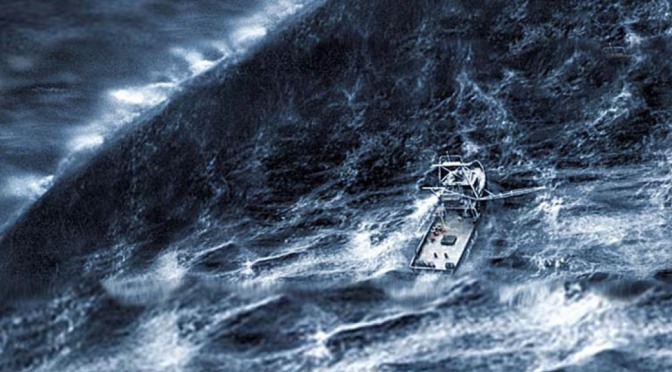
DW Documentary (April 30, 2023) – Statistically, a large ship is lost in the world’s oceans almost once every seven days. One reason for this: monster waves that appear to come from nowhere. Unlike tsunamis, they are completely unpredictable. That means there’s no way to issue any kind of warning.
Scientists still know astonishingly little about these freak waves. For centuries, many people dismissed them as the stuff of legend. The first scientific proof of their existence didn’t come until 1995. A laser on the Draupner oil rig in the North Sea measured a wave almost 26 meters high. Wave models in use at the time deemed this to be an impossibility.
But the data, captured by chance, changed the course of research forever. Scientists have focused on three theories in their bid to explain the emergence of freak waves. The first is the current model: currents flowing in opposite directions reduce the length of the waves, pushing them together to create a monster surge. But freak waves are also a phenomenon in regions where currents aren’t particularly strong.
That’s why researchers came up with a second theory: superposition. In this linear process, faster, longer waves catch up with short, slower waves. They overlap and form monster waves. But in some places, freak waves occur with a frequency that can’t be explained by this linear theory, either.
For several years now, scientists have been considering a third possibility: when non-linear wave trains are unstable, they can develop into monster waves through a highly complex energy “theft”. Research is divided over whether it’s the linear or non-linear effects that form freak waves out at sea – a question that’s crucial for shipping!
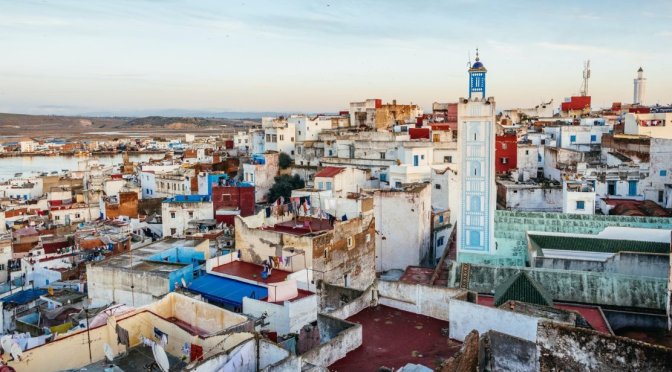
Lucas T. Jahn Films (April 29, 2023) – From sweeping sand dunes to desolate highways of emptiness, bustling cities, and snow-covered peaks, we explored Morocco from north to south and east to west. Driving more than 10,000 km in eight weeks, our roadtrip included many unforgettable adventures.
Watch as we explore remote landscapes, climb high peaks, battle breath-taking dust-topias (double pun, yeah!), and navigate the hectic bustle of Morocco’s major cities.
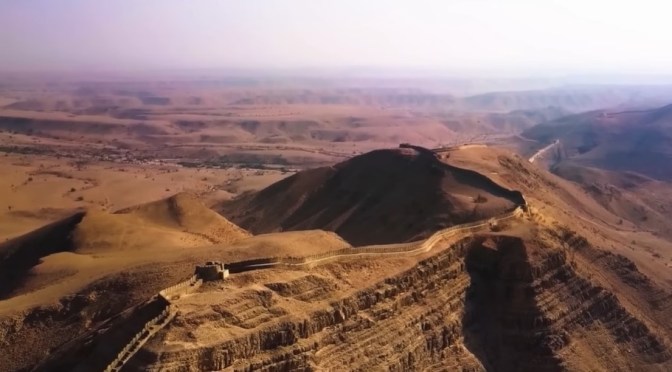
DW Documentary (April 28, 2023) – Pakistan’s Sindh region is one of the cradles of human civilization. It’s seen as the homeland of the Indus Valley Civilization, an advanced Bronze Age civilization. But the events of 1947 brought drastic change to the cultural landscape of the Sindh.
The 1947 partition of the Indian subcontinent into India and Pakistan was devastating for those living in the Sindh region. Most were Hindus and fled to India, as the area was completely assigned to Pakistan. Many Muslims from India then resettled in Sindh and changed the face of this region, whose cultural heritage had been formed over centuries.
Suddenly, the Hindus who remained found themselves in the minority. Many members of the Sindhi community are now scattered across the globe. They’re making every effort to preserve the old stories and traditions and are proud of their legacy as descendants of one of the oldest human civilizations.
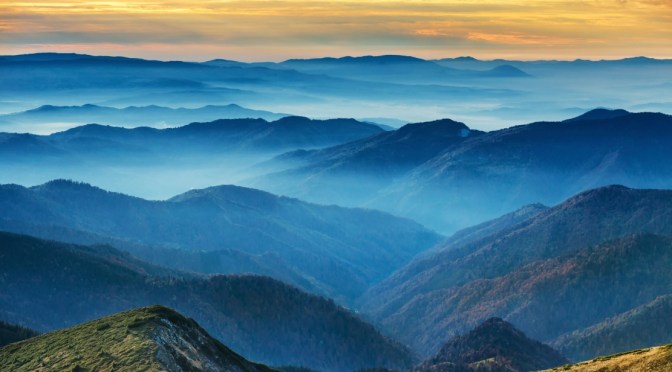
Into the Wild Films (April 11, 2023) – Just 50km west of Sydney Australia, is the spectacular natural wonderland of the Greater Blue Mountains. Known best for the Three Sisters, Echo Point, Scenic World and Wentworth Falls, this documentary explores the natural wonders hidden beyond these grand panoramas.
From the incredible display of the Superb Lyrebird to the underwater world of the Sydney Spiny Crayfish. Descend into its deep dark slot canyons before flying like a bird over the Blue Gum Forest. Discover its rare and ancient Wollemi Pines and explore its mysterious sandstone pagoda landscapes. Witness temperature inversions creating seas of clouds before marveling at the carnivorous plants that inhabit the sheer cliff faces. This is the Blue Mountains as you’ve never seen it before.
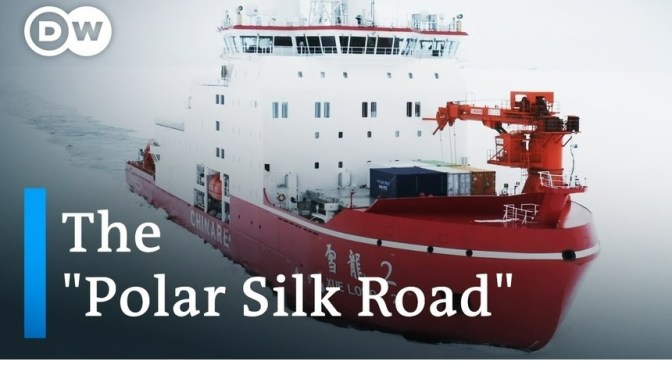
DW Documentary (April 1, 2023) – Following the rise of China’s power in Africa, are we on the verge of seeing a Chinese Arctic? Certainly, the country is seeking to expand its influence in this geopolitically important area. The US is worried, while Russia smells business.
But what are China’s plans for the region? In 2013, the “Yong Sheng” made history: It was the first Chinese cargo ship to reach Europe via the Arctic. This promising route, which Beijing soon dubbed the “Polar Silk Road,” made the “Yong Sheng” a symbol of Chinese ambitions in the far north. Increasingly self-confident, China is now expanding its sphere of influence bit by bit in the Arctic – a place of high geopolitical significance.
The country’s influence is spreading, with projects that include investments in gas resources in the Russian Arctic on the Yamal Peninsula. In January 2018, China initiated the “Polar Silk Road” project. Now, the country is pursuing a rapprochement with Iceland and Norway through businessmen. China maintains a research station on Spitsbergen and has even started to define itself publicly as a country “close to the Arctic” – a status from which China hopes to derive new rights.
The Arctic seems a long way from Beijing. But Chinese president Xi Jinping has understood how important this region is. China’s need for resources is driving Xi Jinping to negotiate with the major Arctic powers, who largely view him with suspicion. The new geopolitics of the Arctic are playing out not only in world capitals and in the media, but also on the ground: Emissaries, entrepreneurs, and mediators are traveling to the strategic region.
This group includes Chinese nationals as well as Norwegians, Icelanders, Swedes and Americans. China is expanding. After “Chinafrica,” will we now also speak of “Chinarctica”? China, it is said, has time on its side. And in the meantime it is openly dreaming of superpower status. The Americans are worried, the Europeans are hesitant and the Russians are eager for investments. But what are China’s real goals?
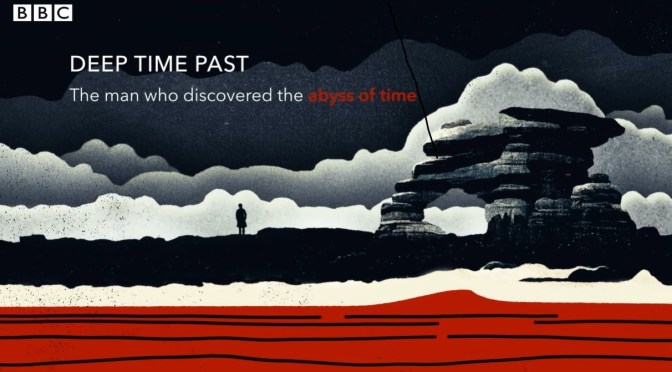
BBC News (March 26, 2023) – In the 1700s, geologist James Hutton discovered a rock formation in Scotland that transformed how we think about time. Through studying the rocky headland of Siccar Point, Hutton identified the existence of ‘deep time’ – proving that Earth is millions, not thousands, of years old.
James Hutton (1726–1797), a Scottish farmer and naturalist, is known as the founder of modern geology. He was a great observer of the world around him. More importantly, he made carefully reasoned geological arguments. Hutton came to believe that the Earth was perpetually being formed; for example, molten material is forced up into mountains, eroded, and then eroded sediments are washed away.
He recognized that the history of the Earth could be determined by understanding how processes such as erosion and sedimentation work in the present day. His ideas and approach to studying the Earth established geology as a proper science.
ABC News In-depth (March 9, 2023) – On Australia’s northern doorstep lies one of the most extraordinary places on earth – some environmentalists call it the second Amazon. The Sepik River Basin in Papua New Guinea is a natural wonder and home to rich and ancient cultures.
It’s a place few outsiders ever get to see. For some time, PNG correspondent Natalie Whiting has been hearing rumours about what’s going on in the remote areas upriver – claims of a logging land grab, police brutality, even killings. She undertakes the journey far up the Sepik River to see for herself what’s happening. In the rainforest of the Upper Sepik a community is divided.
Logging operations and a proposed massive mine site bring hope of economic prosperity for some. But others fear development of the land by international companies means environmental destruction with little benefit. PNG is the world’s largest exporter of tropical round logs but out of sight in the Sepik region some landowners say the logging is happening without proper consent and there are consequences for those who stand in the way.
With a long history of mistrust of big corporations and the promises they make, many of the locals are angry and ready to do whatever it takes to preserve some of the most unspoilt rainforests and waterways on the planet. Read more here: https://ab.co/3Jr8kWE
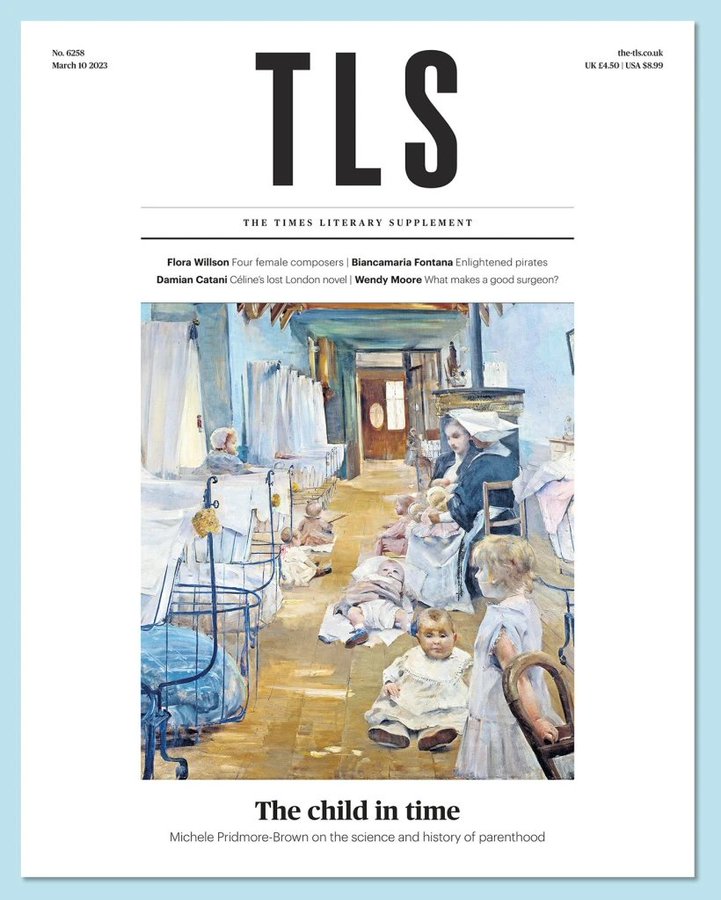
This week’s @TheTLS, features Michele Pridmore-Brown on parenthood; @noosarowiwa on paradise; @TobyLichtig on documentaries; Carlos Fonseca on Pilar Quintana; @wendymoore99 on surgery; new poems by Karen Solie, @RomalynAnte and Steve Ely – and more.
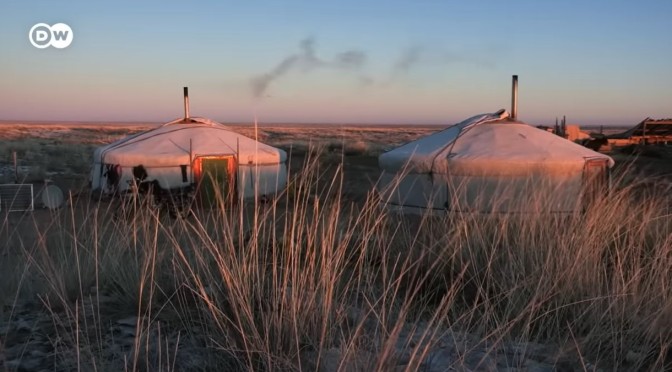
DW Documentary (February 25, 2023) – Otgo is the youngest child of a nomadic family in the Gobi desert. They make their living breeding cattle. Otgo loves their life, in harmony with nature and old traditions. Yet she dreams of becoming a dancer at the opera house in Ulan Bator.
In Mongolia, it is becoming increasingly common for the younger generation to leave traditional life behind. Otgo’s dream would take her far from her family’s yurt. She wants to become a dancer and later, a dance teacher. Her parents leave it up to her to decide how she wants to shape her life. They agree to support her, if she embarks on her great endeavor. In the meantime, Otgo has become an almost indispensable help to the family.
She gets up early in the morning to water the camels with her father, and it fills her with pride that she can help her family. The breathtaking landscape of the Gobi Desert and the strong bonds between the different nomadic families do not make it easy for Otgo to follow her dream. Otgo’s story paints a portrait of her world and of the men and women who have long passed on their culture from generation to generation, through the eyes of a child.
News, Views and Reviews For The Intellectually Curious









 Boomers Daily