Tag Archives: Design

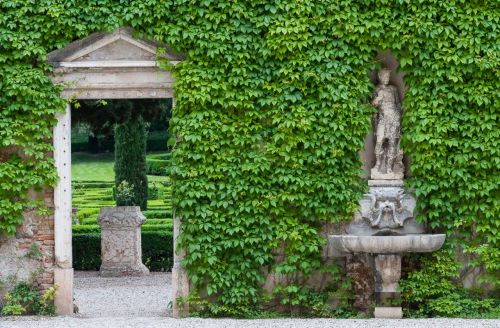
Italian Gardens: ‘Giardino Giusti in Verona’ and ‘Villa Fracanzan Piovene’ near Vicenza – “Shakespearean”

Giardino Giusti in Verona and Villa Fracanzan Piovene: The centuries-old Italian gardens that evoke the romance of Romeo and Juliet.
November 7, 2020

The name Giusti has been synonymous with one of Italy’s most celebrated Renaissance gardens since the late 16th century. Originally wool-dyers from Prato in Tuscany, the Giusti family had moved its business north in the previous century, settling in an unglamorous industrial suburb of Verona. Within a few generations, its members were rich and had also acquired the requisite antiquarian and artistic tastes of true Renaissance gentlefolk.

The garden created by Agostino Giusti between 1565 and 1580 was intended to fulfil various functions. It had to showcase his collection of Roman inscriptions and to serve as a setting for the lavish theatrical and musical productions—the predecessors of opera—then in vogue. To this day, the garden retains the surprise element of a stage set, presenting a magnificent and entertaining spectacle that totally confounds one’s expectations of a city garden.
Read more

English Country Homes: ‘Great Baynden – Kent’

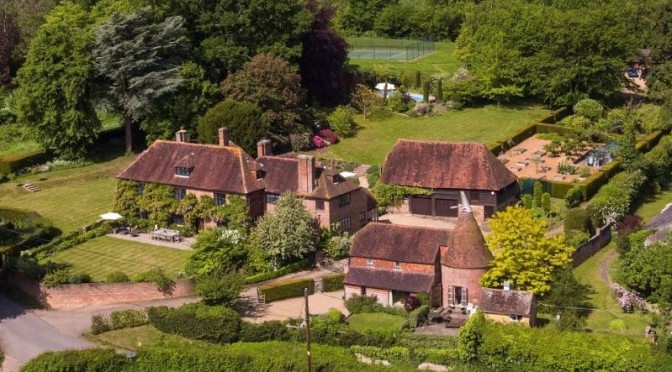
From the 16th century onwards, hop-growing was a major source of income in the Weald of Kent, especially around the village of Horsmonden, eight miles east of Tun-bridge Wells, where an enthusiastic American visitor described how ‘the oast-house towers of Horsmonden seem almost to plough the rich soil of their Kentish hopfield like graceful yachts on a gently rolling sea’.

Great Baynden is a superb Kent house that’s full of the sort of touches you’d hope to see when moving to a period home in the country, as Penny Churchill explains.

Such is the backdrop to handsome, Grade II-listed Great Baynden in School House Lane, Horsmonden, which stands on high ground two miles north-east of the village, with panoramic views over the Weald to the North Downs. 

Read and see more

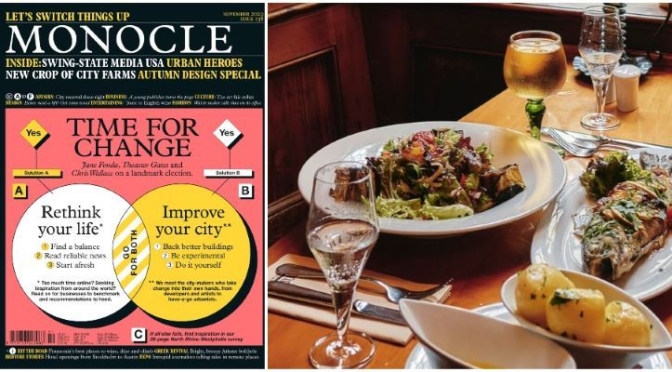
Preview Video: ‘Monocle Magazine’- November 2020

As a landmark US election approaches, Jane Fonda, Theaster Gates and Chris Wallace offer their thoughts on where the country should go next. Change elsewhere comes in the form of city farms, the latest design finds and an art fair redux. Plus: we survey North Rhine-Westphalia, a region on the up.

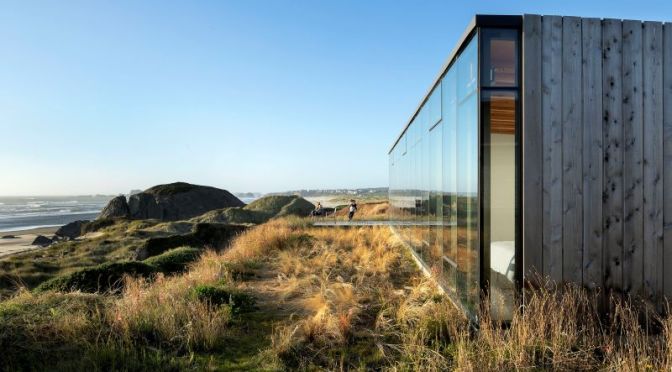
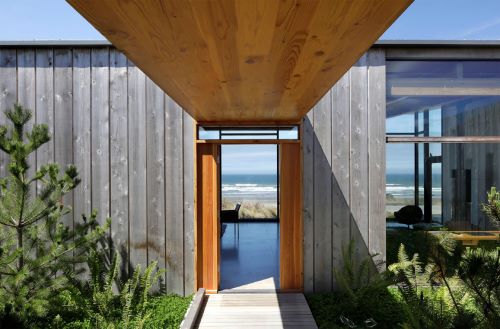
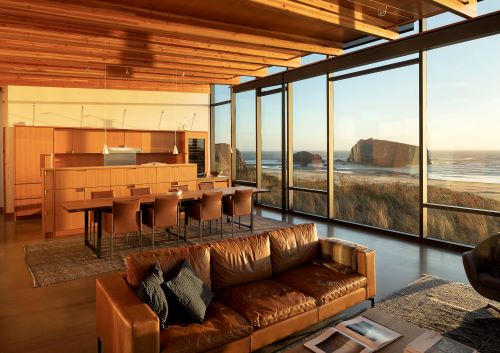
Design: ‘Oregon Coast Beach House’ By Cutler Anderson Architects

Beach house designed to withstand the forces of Pacific Ocean winds while still providing magnificent views of the sea and privacy from the neighbors. Completed in 2020

Since its founding in 1977, Cutler Anderson Architects has evolved to understand that the ultimate objective of any architectural design is to reveal what is true about all of the circumstances of a project. From place to program, from materials to shape, all components need to be understood and designed into a harmonious whole that reveals each component’s nature. This genuinely rigorous task has been both the focus and the intellectual stimulant of our practice and, it is hoped, will continue to be our passion in the future. This single-minded attitude has led to successful and award winning projects on three continents. The firms staff of fourteen is currently engaged in both residential and commercial projects throughout ten states, plus Poland and the Czech Republic. Our ultimate goal on every project is to produce projects that are not only beautiful but also emotionally enlightening.

Website

Future Of Ecotourism: ‘Cocoon Hotel & Resort’ – Tulum, Mexico (Video)

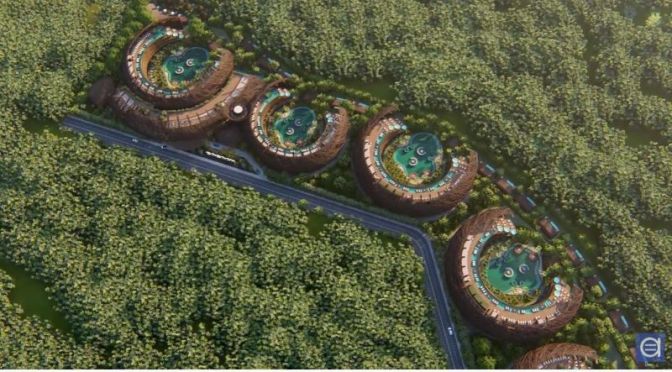
The “Cocoon Hotel & resort”, Tulum, Mexico– a new concept of eco-tourism, and a great opportunity of connection with Nature, Community, Ourselves, inspired by the sea and the exotic forest. The project consists of 46.181 m2 offering 3 residential and 2 hotel buildings “COCOON” with 204 apartments and 167 rooms as well as 16 private villas.Every feature serves to give a unique experience and create a magical place for the guest, at the same time making him identify what is Mexico.

The complex offers luxury community spaces integrated into nature such as jungle gardens, magical outdoor living spaces-villas, multipurpose pavilion, indoor community spaces, leisure areas, restaurant, and a panoramic Nest with unrestricted and breath-taking views. All to achieve a wide vocabulary of visual elements to mutate into designing language, in materials and shapes, for a bio-mimicry architecture.

The idea was to create “Cenotes”- natural freshwater ponds, to which the Mayans gave a sacred use, thus allowing to experience the real Mayan´s rituals. The project makes an emphasis on sustainability concept respecting ecosystem and biodiversity, contributing to the usage of natural materials that minimizes the impact of building and generation of waste. The water collection concept is also respected and represents a recovery of rainwater for sewage treatment. The solar panels are implemented to achieve sustainable electricity.

Finally, the “dry” construction system is used, meaning no wet binders, shorter execution time, and increased safety and sustainability. Source by dna Barcelona.

A As Architecture – Discover Architecture http://aasarchitecture.com/

Future Of Homes: ‘Ashen Cabin’ – 3D Printed, Waste Wood Building Material

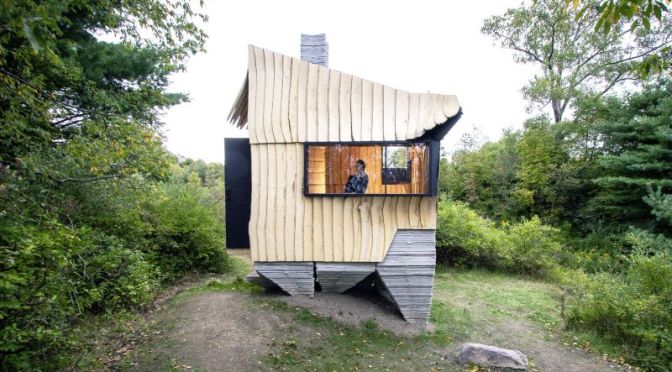
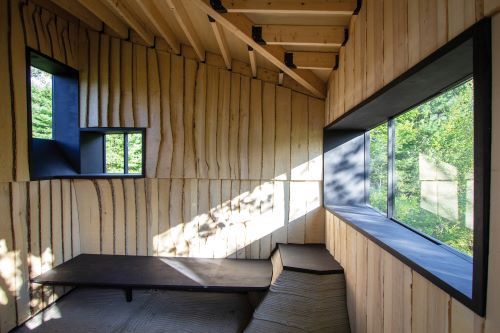
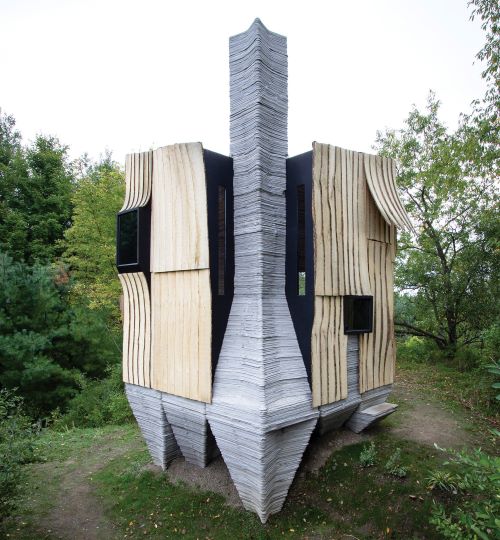
By implementing high precision 3D scanning and robotic based fabrication technology, HANNAH transforms Emerald-Ash-Borer-infested “waste wood” into an abundantly available, affordable, and sustainable building material.

From the ground up, digital design and fabrication technologies are intrinsic to the making of this architectural prototype, facilitating fundamentally new material methods, tectonic articulations, and forms of construction.

Project realized with scientific support from the Cornell Robotic Construction Laboratory (RCL) / Sponsors: AAP College of Architecture, Art, and Planning; AAP Department of Architecture; HY-Flex Corporation; Cornell Atkinson Center for a Sustainable Future, Cornell Arnot Teaching and Research Forest.

Read and see more

Dynamic Architecture: ‘Sylvan Rock’ – Designed By Aston Martin & S3Arc

The namesake rock ledge upon which the residence is sited reveals itself upon approach to the residence, the architectural form of the residence responding to the dramatic lines of the rock.

As you move around the residence, the form appears to fold down into the landscape – as if the architecture is born of and catapults from the natural landscape. A distinctly modern yet natural form, the residence is clad in blackened cedar and curtain walls of glazing.

SPECIFICATIONS

Residence | 5,983 SF
4 bedrooms, 4 bathrooms, 2 half baths
3 car garage
Pool and deck
Pool House | 873 SF
Three Guest House “Pods” | 1,574 SF
Treehouse – Architect designed
Food Garden and Trails
Total finished spaces in compound: 8,430 SF

As the residence comes into, the first glimpse offers a visual gasp with the distinctly modern architecture in counterpoint to the unspoiled natural beauty. Upon entering the dramatic garage carved from the earth, experience a subterranean lair and custom designed wine cellar.

After the journey, retreat to private quarters in the residence or beyond in the guest pods. Join other guests for dining and lively conversation at the communal table, enjoying fresh produce from the on-property Food Garden.

Interiors designed by Aston Martin — wood, leather and metals integrate into the architecture and furnishings for a seamless and luxurious experience.

Read and see more

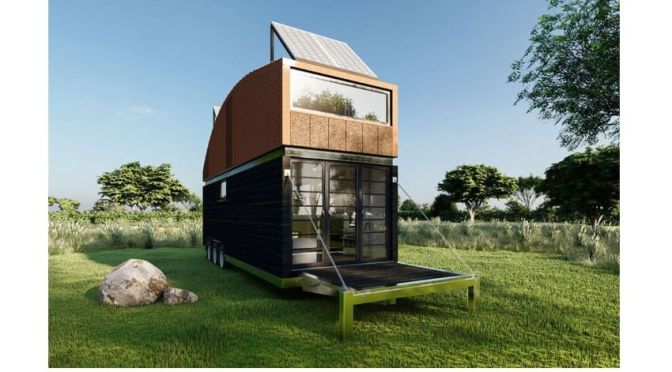
Best New Tiny Homes: ‘The Natura’ – Tiny Housing Co.

The Natura features wood paneling on the exterior, a thick corkboard layer on the front to add a defining feature that doubles as a breathable, fire-retardant area by the bedroom.

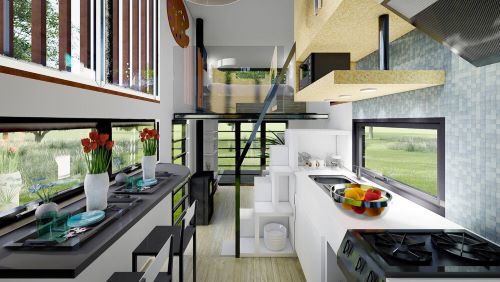
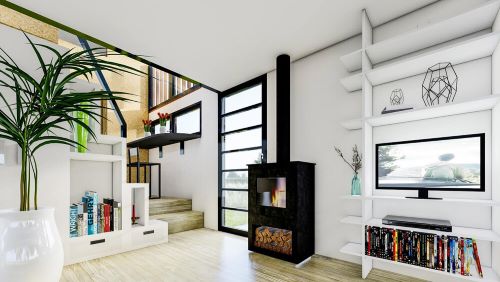
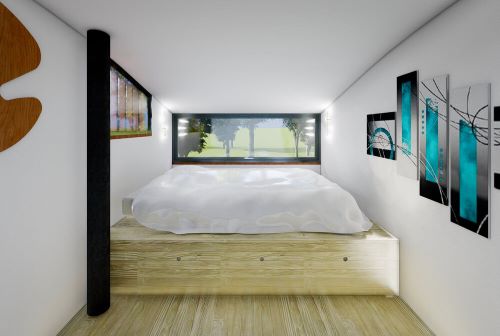
Inside, we’ve paired the natural aesthetics of the exterior, with luxury fixtures and fittings – tonnes of light floods the rooms to ensure you feel like you’re practically outside. Our architects have applied a whole host of space-saving features, from tucked away hidden storage under the stairs, between walls and under the bed.

The Key Features

  • 1-bed tiny home
  • 7m long X 2.4m wide x 3.95m high (23.25m2 total floorspace)
  • 1 loft bedroom fitted with a multi-functional kingsize bed (storage under the bed)
  • Thick insulation in the walls, floor and roof, to increase the U-value of your home to near-passive house standards using, EPS, XPS boards and corkboard.
  • Fully-fitted kitchen with A++ energy-efficient appliances ( 2-hob induction cooker, fridge freezer, electric oven, extractor fan, under-sink water filter).
  • Fully-fitted bathroom with large shower, toilet, cabinets and vanity.
  • 1000w solar panels pre-installed with inverter and li-ion 24v or 48v battery bank.
  • Energy Recovery Ventilator (ERV) – This helps to remove excess humidity, filters the air and removes stale air whilst keeping your home warm.
  • Optional extras: 3000w solar panels, wood-burning stove connected to underfloor heating.

Website

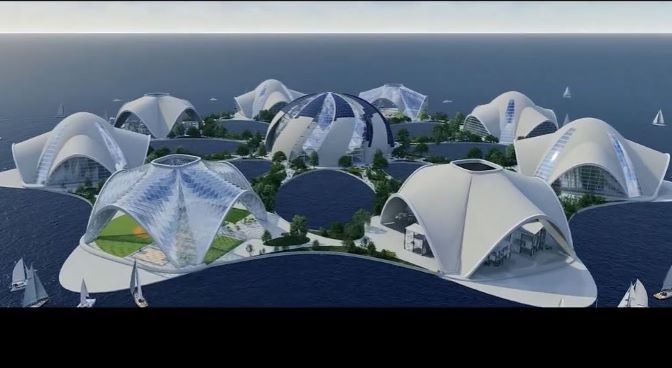
Future Of Ocean Living: ‘Lillyana’ – A Hydrophytic Model For Urban Design

LILLYANA : Architecture & Innovation for the Sea

Author : Arthur Seibert and Clemens Lindner
Nationality : German
Year : 2019
Location : Shanghaï, China

In the context of a rapidly increasing global population growth and the associated shortage of living space, alternative urban concepts in a marine environment are gaining importance under ecological and sustainable aspects. The concept- guideline “renaturation instead of soil sealing” is an effort to react on the challenges of current megatrends in the context of the sea. The underwater city structure is designed for up to 15,000 inhabitants in the vicinity of a large coastal city. “Lillyana” represents an ideal system that can be applied to various geographical and climatic conditions and their specific demands. The form is inspired by hydrophytes – plants that grow above and below the water and benefit from their environment. Through their biometric and biological mechanisms, the shape has been improved for energy efficiency, buoyancy and stability. Thus, the wind-, water- and solar energy production is directly embedded in the design language. The main challenge of this project was to develop a self-sufficient system that could also allow different forms of social life at the same time. To achieve this, we have tried to understand the factors that make an attractive city: “Living”, “working”, “mobility”, “supply” and “recreation” These fields of action provide the framework for our design: Therefore, a superior supply organ will be placed in the centre, from which radially arranged bridge systems will form connections to floating platforms. These are anchored beneath the seabed and represent the quarter centres. From the platforms, supply pipelines, on which various spheres are suspended, lead into the depths. They shift private, professional and social life below the water surface. High attractiveness, beneath as well as above the sea level, is achieved by providing well-located and spatially qualitative living and working areas with a recreation and leisure area, as well as an intelligent infrastructure via a pipeline network.

Descriptive of Author : Splendour of life beneath the surface: “Lillyana” – A hydrophytic model for urban design