Urban life is humankind’s biggest experiment to date, our cities are constantly evolving and adapting to climate and economy. The cities we have today are not necessarily the ones we need, but big and small innovation is rethinking visions of urbanization.
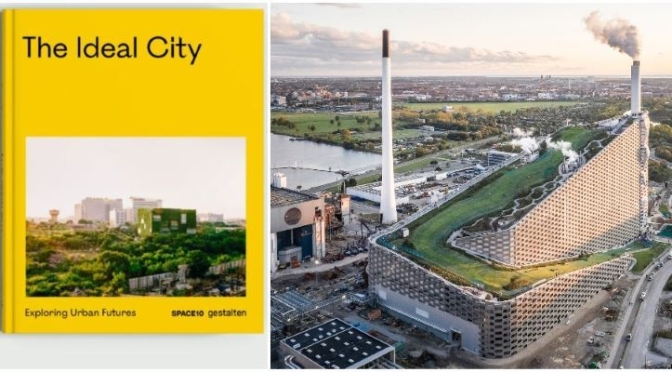
Together with pioneering research and design agency SPACE10, we present future-orientated design which enhances quality of life and makes our urban spaces more vibrant.
As technology and urban life edge ever closer, The Ideal City explores the ambitious actions and initiatives being brought to life across the globe to meet tomorrow’s demand in clever, forwarding-thinking ways. From pedestrian infrastructure to housing, the book uncovers what is being discussed at the forefront of urbanism through expert essays and profiles.
SPACE10 is a Copenhagen-based research and design agency that is on a mission to enable a better everyday life for people and the planet. They specialize in innovation and future-living, often presenting models both for urban spaces or food that could lead to me a more sustainable future.
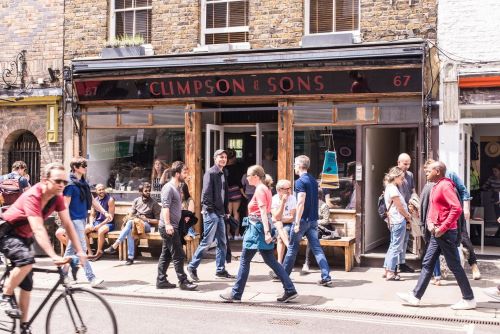
Walking down Mare Street, vibrant even in these days of restrictions, it’s hard to reconcile today’s Hackney with pictures from the past. Shop-lined roads were once babbling streams, pubs were market gardens and this bastion of hip, edgy, urban creativity was a remote village where people retreated for a taste of idyllic countryside. But then, few places have changed more over time than this corner of East London.
According to local lore, the small settlement that sprung up along the Roman roads to Lincoln and Colchester owes its name to a Danish chief called Hacon, whose eye — islet—this was. No trace remains of this early history, but some medieval records indicate that the Knights Templars owned about 110 acres in the Hackney Marshes and built some mills on the River Lea — hence today’s Temple Mills. The village’s first parish church, St Augustine, was named after the Templars’ patron saint.
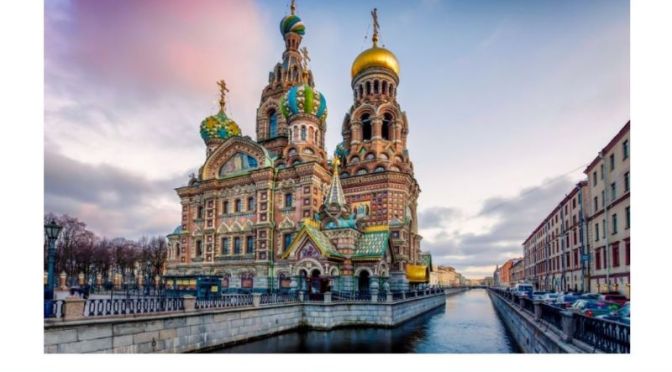
St. Petersburg is a Russian port city on the Baltic Sea. It was the imperial capital for 2 centuries, having been founded in 1703 by Peter the Great, subject of the city’s iconic “Bronze Horseman” statue. It remains Russia’s cultural center, with venues such as the Mariinsky Theatre hosting opera and ballet, and the State Russian Museum showcasing Russian art, from Orthodox icon paintings to Kandinsky works.
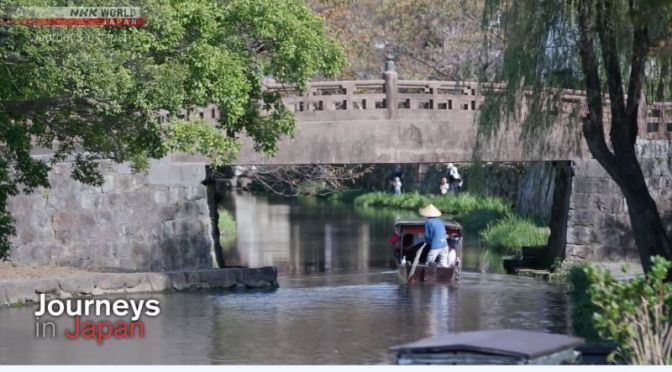
Sail through the network of canals winding their way through Omi-hachiman, a once bustling castle town overlooking Lake Biwa. Retrace the steps of the past surrounded by a unique amalgamation of European and feudal Japanese architecture combined with carefully-preserved historic townscapes.
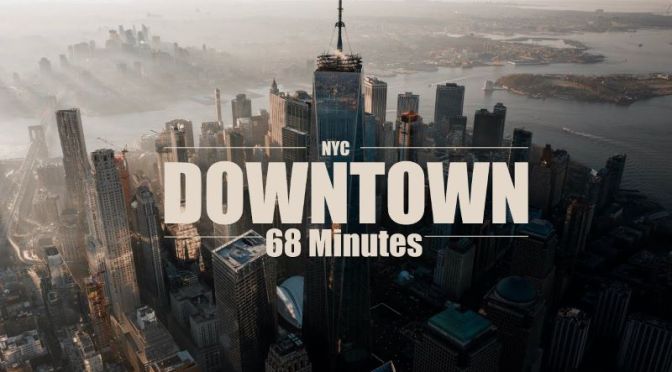
The city had itself originated at the southern tip of Manhattan Island in 1624,[1] at a point that now constitutes the present-day Financial District. The population of the Financial District alone has grown to an estimated 61,000 residents as of 2018,[2] up from 43,000 as of 2014, which in turn was nearly double the 23,000 recorded at the 2000 Census.[3]
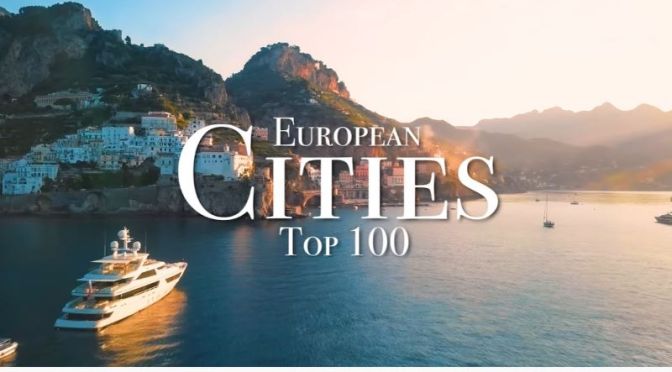
The cities of Europe remain unmatched to the rest of the world! From the canals of Venice, to the Ancient ruins of Athens, it’s impossible to beat the history and architecture of Europe’s cities. I’ve spent the last few years traveling Europe and I want to show you my favorite cities! This video was months in the making and i’m so excited to finally share it with you! I tried to include cities from all parts of Europe.
Timestamps: 0:34 – London, UK 1:17 – Edinburgh, UK 1:43 – Lisbon, Portugal 2:23 – Valletta, Malta 3:05 – Tallinn, Estonia 3:50 – Milan & Venice, Italy 5:01 – Bologna & Rome Italy 6:48 – Vatican City, Vatican 7:27 – Naples & Positano, Italy 8:34 – Palermo & Catania, Italy 9:08 – Zurich & Lucerne, Switzerland 10:28 – Grindelwald & Zermatt, Switzerland 11:33 – Prague & Cesky Krumlov, Czechia 12:53 – Barcelona, Spain 13:32 – Toledo & Cordoba, Spain 14:22 – Ronda & Granada, Spain 15:07 – Obidos & Porto, Portugal 16:11 – Cologne & Rothenburg, Germany 17:35 – Munich & Berchtesgaden, Germany 18:19 – Salzburg & Hallstatt, Austria 19:04 – Innsbruck & Vienna, Switzerland 19:36 – Bratislava, Slovakia 20:53 – Paris & Etretat, France 22:00 – Colmar & Lyon, France 22:34 – Carcassonne, France 23:08 – Monte Carlo, Monaco 23:52 – Kyiv & Odessa, Ukraine 25:25 – Lviv, Ukraine 25:47 – Luxembourg City 26:45 – Brussels & Bruges, Belgium 28:20 – Amsterdam, Netherlands 29:04 – Rotterdam & The Hague, Netherlands 29:40 – Copenhagen, Denmark 30:21 – Malmö & Gothenburg, Sweden 31:20 – Stockholm, Sweden 31:52 – Helsinki & Rovaniemi, Finland 32:40 – Oslo & Bergen, Norway 33:36 – Alesund & Tromso, Norway 34:30 – Reykjavik, Iceland 35:18 – Dublin, Ireland 35:43 – Warsaw & Gdansk, Poland 36:54 – Wroclaw & Krakow, Poland 37:40 – St. Petersburg & Moscow, Russia 38:58 – Vernazza & Verona, Italy 39:34 – San Marino 40:24 – Ljubljana, Slovenia 40:58 – Dubrovnik & Rovinj, Croatia 42:15 – Zagreb, Croatia 42:59 – Riga, Latvia 43:28 – Vilnius, Lithuania 43:49 – Minsk, Belarus 44:25 – Budapest, Hungary 45:02 – Bucharest & Brasov, Romania 45:53 – Kotor, Montenegro 46:20 – Sarajevo & Mostar, Bosnia & Herzegovina 47:50 – Belgrade, Serbia 48:16 – Athens, Greece 48:47 – Istanbul, Turkey 49:55 – Tbilisi, Georgia 50:33 – Berlin & Hamburg, Germany 51:52 – Frankfurt, Germany 52:18 – Palma de Mallorca, Spain 52:47 – Valencia & Seville, Spain 53:52 – Madrid, Spain 54:19 – Bern & Geneva, Switzerland 55:29 – San Gimignano & Siena, Italy 55:54 – Pisa & Florence, Italy
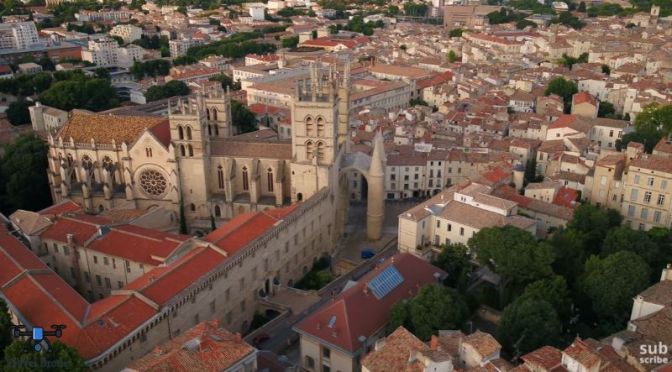
Montpellier is a city in southern France, 10km inland from the coast of the Mediterranean Sea. The town’s stately Gothic Cathédrale Saint-Pierre, distinguished by conical towers, dates to 1364. The city’s Antigone district is a chic, modern development inspired by neoclassical motifs. Paintings from French and European Old Masters hang at the Musée Fabre.
Fareed Zakaria of CNN’s “Fareed Zakaria GPS” discussed his latest book “Ten Lessons for a Post-Pandemic World.” The discussion covered the consequences of the pandemic and how COVID-19 could reshape the nation and the world, globalization and the digital age.
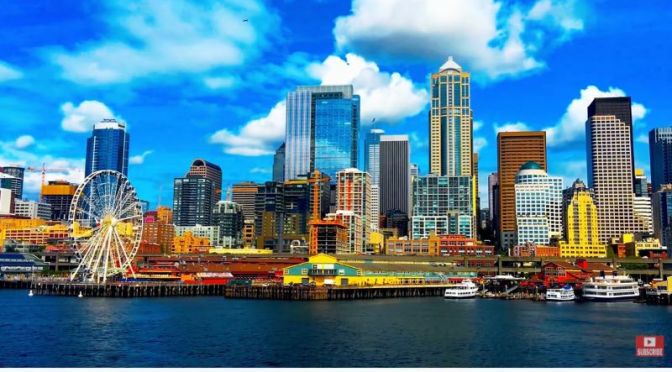
Seattle, a city on Puget Sound in the Pacific Northwest, is surrounded by water, mountains and evergreen forests, and contains thousands of acres of parkland. Washington State’s largest city, it’s home to a large tech industry, with Microsoft and Amazon headquartered in its metropolitan area. The futuristic Space Needle, a 1962 World’s Fair legacy, is its most iconic landmark.
Seville is the capital of southern Spain’s Andalusia region. It’s famous for flamenco dancing, particularly in its Triana neighborhood. Major landmarks include the ornate Alcázar castle complex, built during the Moorish Almohad dynasty, and the 18th-century Plaza de Toros de la Maestranza bullring. The Gothic Seville Cathedral is the site of Christopher Columbus’s tomb and a minaret turned bell tower, the Giralda.
Video Timeline Links: 00:00 – Seville, Spain Walking Tour Intro 03:38 – Spain Square 19:34 – San Sebastian Park 25:10 – University of Seville 28:40 – Jarez Gate Square 32:34 – Archive of the Indies 35:11 – Triumph Square 35:44 – Lion Gate of Alcazar Palace 38:52 – Seville Cathedral 40:40 – The Giralda 41:29 – The Archbishop’s Palace 48:00 – San Francisco Square 48:25 – Seville City Hall 50:24 – New Square 55:58 – Divine Saviour Church 58:57 – Chapel of San José 1:00:27 – Sierpes Street 1:04:57 – Lebrija Palace 1:08:41 – Metropol Parasol
Recorded in July 2020.
News, Views and Reviews For The Intellectually Curious









 Boomers Daily