
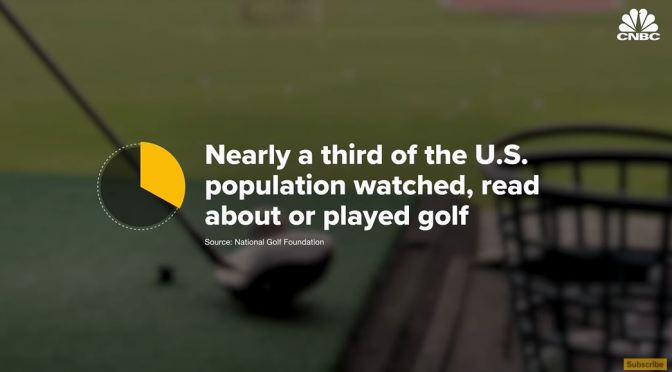
In 2020, golf saw a surge in new players following the Covid-19 pandemic and social distancing measures. Callaway, the maker of golf balls, clubs, bags and apparel, has been thriving. But with movie theaters, travel and concerts expected to rebound, will golf club makers like Callaway and its rival Acushnet be able to maintain their momentum?
Tag Archives: Business

Analysis: How Will Fossil Watches Survive? (Video)
The global watchmaking industry has changed since the introduction of the smartphone and as demand for fitness trackers and smartwatches grow. Legacy watchmakers, like Fossil, have had to adapt and give customers new reasons to keep timepieces on their wrists. The company has been planning for the future by bringing its own smartwatches to market, initiating a multi-year turnaround plan and focusing on growing markets in China and India. But will that be enough?
Finance: The $1 Trillion Market For ‘Green Bonds’
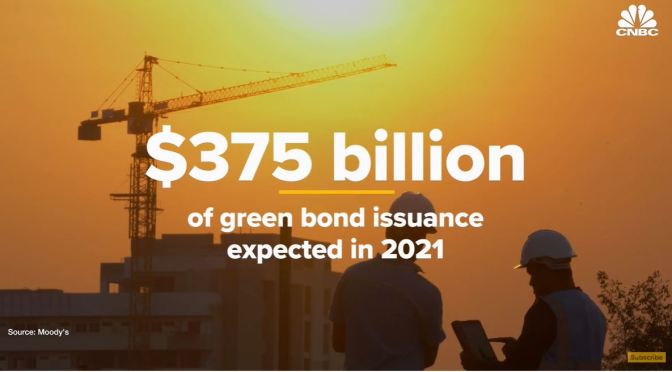
So-called green bonds have become more popular in recent years, and this fast-growing segment of the $128.3 trillion global bond market could grow even more. When an issuer sells a green bond, they’re making a nonbinding commitment to earmark the sale’s proceeds for environmentally friendly projects. That could include renewable energy projects, constructing energy efficient buildings or making investments in clean water or transportation. Green bonds fall under the wider umbrella of sustainable bonds, which include fixed-income instruments whose proceeds are set aside for social or sustainability projects. Big household names such as Apple and PepsiCo are diving into this space. A handful of massive banks and governments around the world are also issuing sustainable bonds, including China, Russia and the European Union. This may be contributing to the space’s rapid growth. A report from Moody’s said new sustainable bond issuance may top $650 billion in 2021. That would represent a 32% jump from 2020.

Sports: How Big Money Changed Soccer (Video)
Soccer has its roots in the working class. So how did working class entertainment known as the ‘people’s game’ become a coveted business that remade fans into customers with billion-dollar deals?

Remote Work: How It Is Changing Cities & Offices
From commuting to office time, automation to virtual reality – here’s how we’ll be working in 2030
Analysis: How Coca-Cola Leads Beverage Market
With more than 1.9 billion drinks served every day Coca-Cola is one of the world’s largest beverage companies. From its humble beginnings selling a single product at a drugstore for 5 cents a glass, the company now has a roster of 200 brands that includes Coke, Fanta, and Sprite. But with health and wellness trends on the rise, the company has been forced to pivot. So after 135-years in business, can the soft drink giant stay on top? And what will the secular decline of sugar-sweetened beverages in the U.S. mean for the future of Coca-Cola?
Business: Why Arizona is Now A Technology Hub
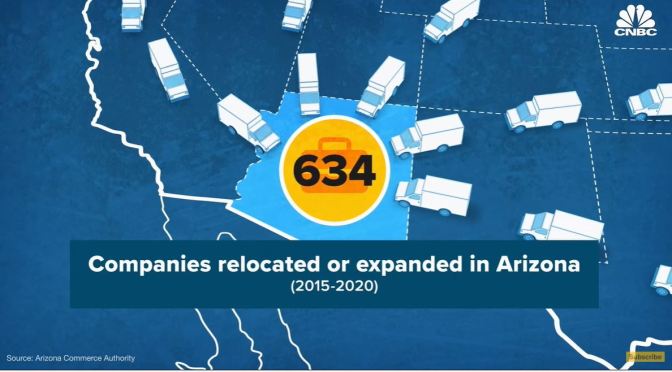
Arizona has rapidly become an epicenter for electric vehicle and self-driving tech, and it’s now the site of three big new semiconductor factories as the U.S. struggles to increase production during the global chip shortage. In 2020, Phoenix attracted more residents than any other U.S. city for the fourth year in a row, as highly skilled workers flocked to the lower cost of living and wide open spaces of the Grand Canyon State. From Lucid Motors to ElectraMeccanica, Intel to Taiwan Semiconductor Manufacturing Co, 634 companies relocated or expanded in Arizona between 2015 and 2020. CNBC asked the governor, big companies, and Arizonans about why the tech boom is happening and how it’s changing the state.
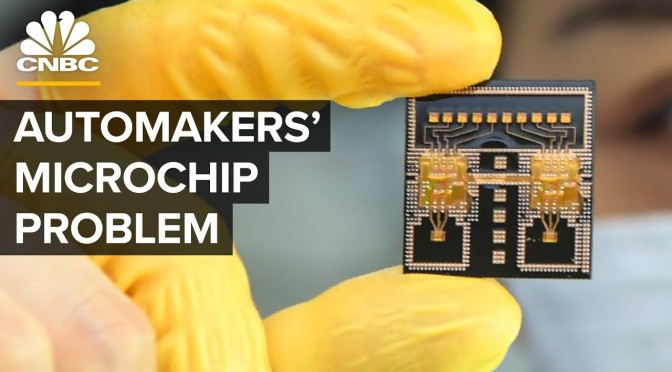
Analysis: The Microchip Shortage Limiting Autos
While the automotive industry was ravaged early on in the pandemic thanks to lockdown measures and a dramatic decrease in travel, it more recently has begun facing a new problem: a shortage of microchips.
Microchips are vital to much of a vehicle’s key functions, such as engine control, transmission, infotainment systems, and more. In the last half of 2020 and now in 2021, vehicle sales recovered fairly quickly, faster than automakers anticipated.
Suddenly, they were struggling to meet demand. At the same time, chipmakers were experiencing supply shortages and increased demand from other sectors, such as personal electronics. With the resulting lack of microchip supply, automakers have been forced to slow production, even on their most popular models. For several automakers, the shortage is expected to cost them $1 billion or more — and even still, the alternatives are worryingly few.
Analysis: The Politics Of Germany’s Auto Industry
The German automotive industry has long played a key role in the country’s prosperity. It employs hundreds of thousands and enjoys cozy relationships with politicians.
But the COVID-19 crisis threw a wrench in the works. What’s next? The prosperous German auto industry has long been lagging when it comes to innovating new automotive technologies. Then came the COVID-19 pandemic. Now, the industry is turning to decision-makers for help. But just how far will policymakers go to help the car companies?
Arguing that the COVID-19 pandemic has hit them hard, the auto industry is demanding the postponement of stricter CO2 limits and a purchase premium for new vehicles. They maintain that nothing less than the prosperity of the whole country is at stake. But is Germany’s success really dependent on the auto industry? And how much blame does industrial policy bear for the failures of the automotive companies?
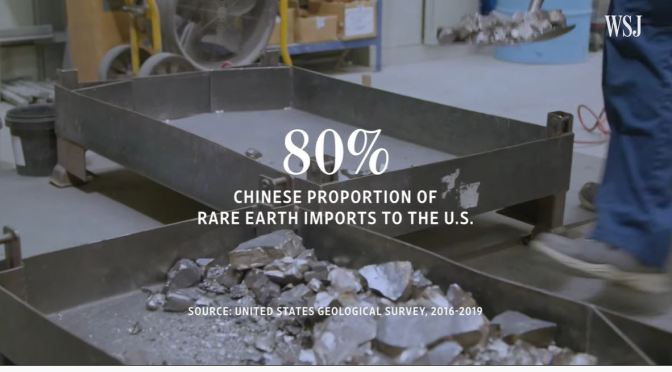
Analysis: How China Came To Dominate Rare Earth Minerals (WSJ Video)
Neodymium is critical to making the wheels of a Tesla spin or creating sound in Apple’s Airpods, and China dominates the mining and processing of this rare-earth mineral. So the U.S. and its allies are building their own supply chain. Photo illustration: Clément Bürge/WSJ
 Boomers Daily