
Times Literary Supplement (November 17, 2023): The new issue #TheTLS features Revenge of the grown-ups – The downfall of Sam Bankman-Fried; 2023 Books of the Year; the elusive Shakespeare; Simone Weil; Philosophers and public affairs – and more…

Times Literary Supplement (November 17, 2023): The new issue #TheTLS features Revenge of the grown-ups – The downfall of Sam Bankman-Fried; 2023 Books of the Year; the elusive Shakespeare; Simone Weil; Philosophers and public affairs – and more…

Financial Times (November 12, 2023) – The Best books of 2023 — Travel. Tom Robbins selects his must-read titles

by Michiel Panhuysen (Bloomsbury)
In the mad, masochistic world of ultra-marathons, one bizarre event stands above all others. The Barkley Marathons in Frozen Head State Park, Tennessee, was established in 1986 but to date only 17 people have successfully finished the 100-mile course. Peculiarities include the fact that, rather than using a starting pistol, the race begins when its director lights a cigarette. Participants must collect a page from a book at each checkpoint, and the application process includes writing an essay about why they should be allowed to take part. Panhuysen, who has competed several times (always unsuccessfully) gives an entertaining portrait of a cult competition.
by Sara Wheeler (Abacus)

This entertaining memoir recounts Wheeler’s career as a travel writer, swimming against the tide of her largely upper-class male contemporaries. Despite the dangers and misogyny endured on journeys from Antarctica to Zanzibar, she admits her main fear is the mundane: “The John Lewis curtain department terrifies me most.”
by González Macías (Picador)
For Spanish writer, graphic designer and committed landlubber Macías, remote lighthouses seem to have the appeal of endangered animals. “There is something beautiful and wild in these impossible architectures,” he writes. “Perhaps because we sense these creatures are dying. Their lights are going out, their bodies crumbling . . . ships no longer need to be under their romantic guardianship.” His fascination propels this survey of 34 lighthouses from Cornwall to China, an exploration of the buildings’ histories and particularities and a study of human solitude and survival in the loneliest surroundings.
by Noo Saro-Wiwa (Canongate)
For a follow-up to the award-winning Looking for Transwonderland, the Anglo-Nigerian journalist travels to China and sets out to explore through the eyes of immigrant Africans who can travel and trade easily in the country, unlike in many European and western countries. It’s an impressionistic but revealing account of a journey through “a separate and nebulous universe”.
by Tim Hannigan (Head of Zeus/Apollo)
Cornwall is among England’s most popular tourist destinations and yet remains mysterious, mythologised and misunderstood. It is, according to historian Bernard Deacon, “a kind of halfway house between English county and Celtic nation”. Hannigan attempts to untangle the region’s history, identity and culture — from King Arthur to Poldark — as he hikes from the River Tamar in the east to his family home near Land’s End.

Assouline Publishing (November 2023) – Experience the Dolce Vita lifestyle – a blend of beauty, style, and charm, inspired by Federico Fellini’s iconic 1960 film. This Italian way of life transcends time and still graces Italy today. Immerse yourself in its irresistible allure, captured by renowned photographers Ferdinando Scianna and Bruno Barbey, from Emilia-Romagna to Sicily.

Meet unforgettable figures like Maria Callas, Sophia Loren, and Marcello Mastroianni. With an enchanting introduction by Cesare Cunaccia and a curated collection of images, this book takes you on a journey through Italy, unveiling the origins of Dolce Vita.

THE NEW YORK TIMES BOOK REVIEW (November 12, 2023): This week’s issue features ‘Fear of Flying’ turns 50 – With its feminist take on sexual pleasure, Erica Jong’s novel caused a sensation in 1973; The 2023 New York Times/New York Public Library Best Illustrated Children’s Books, and more…

With its feminist take on sexual pleasure, Erica Jong’s novel caused a sensation in 1973. But the revolution Jong promoted never came to pass.
By Jane Kamensky
Fifty years ago last month, Erica Jong published a debut novel that went on to sell more than 20 million copies. “Fear of Flying,” a book so sexually frank that you may have found it hidden in your mother’s underwear drawer, broke new ground in the explicitness of writing by and for women. Jong’s heroine, Isadora Wing, was a live wire. She was also a dead end, certainly for Jong, and maybe for feminism, too.

Recommended reading from the Book Review, including titles by John Edgar Wideman, Yasunari Kawabata, Allegra Goodman and more.
The Wall Street Journal (November 10, 2023) – There was plenty to learn from and entertain—including the third novel of a Richard Russo trilogy and a podcast with Julia Louis-Dreyfus

By Harvard Business Review | Harvard Business Review Press (256 pages)
What sets this retirement guide apart from others is the perspectives brought by the contributing writers. In addition to presenting case histories and addressing the best ways to assess your life goals and financial needs, the authors discuss specific steps to help you think about encore careers in coaching, consulting or teaching; practical tips for coping with different stresses; and how to view the career you’re leaving as a period of “preretirement” to help you evaluate what comes next.

By Abigail Thomas | Golden Notebook Press (196 pages)
Veteran book editor, agent and author Abigail Thomas begins her third memoir with the observation that at 80, her thoughts can sometimes be “interrupted by a memory so vivid that I am in two places at once.” Perhaps a jarring thought to some, but to Thomas, such moments can be “an inexpensive, unpatented, readily available form of time travel,” and readers who choose to accompany her will be rewarded.
Funny gripes, wistful reflections, rueful memories and realizations about aging fill these pages. Some of the best entries are about her days as a single mother of three living in Greenwich Village and protesting the Vietnam War. “The times that were a-changing have changed,” Thomas writes, “but for a little while I’m going to ignore what went off the rails, and let myself remember what innocence and hope felt like.”
By Richard Russo | Knopf (464 pages)
The closing piece of the “North Bath” trilogy by Pulitzer Prize-winner Richard Russo is a wondrous novel that captures the changing pace of small-town life in the 21st century. The setting once again is a fictional, blue-collar community in upstate New York whose senior residents must grapple not only with the daily indignities of financial troubles and aging bodies, but with intrusions from the inhabitants of a more-prosperous neighboring town.
No worries if you are new to these books. You can jump right in to enjoy the fun even if you haven’t read the previous two (“Nobody’s Fool” and “Everyone’s Fool”). You can also expand your immersion in Russo’s world by streaming the 1994 movie of “Nobody’s Fool,” starring Paul Newman in an Oscar-nominated role.

By M.T. Connolly | PublicAffairs (384 pages)
In this compassionate book, M.T. Connolly, founding head of the Justice Department’s Elder Justice Initiative, lays out many of the problems associated with giving and finding care for seniors in our aging society. And as its subtitle, “Navigating Care, Safety, Money, and Meaning Later in Life,” suggests, she also has ideas for solutions to help avert a worse crisis.
Connolly draws on research, interviews and her own experience to explore these issues. “Our norms and systems have not kept up with our longevity, sometimes with terrible, and usually preventable, consequences,” she writes. She is optimistic, however, that “change is possible—and some is even under way” on community, federal and individual levels.
One thing that needs to continue, she writes, is “increasing our capacity to make meaning of aging, and of our fleeting time on Earth, by paying more attention to the power of purpose, curiosity, stories, awe, and love.”
By Dr. Gladys McGarey | Atria Books (256 pages)
To remain healthy in mind and body, consider the wisdom of Dr. Gladys McGarey, still a consulting physician at the age of 102, and co-founder of the American Holistic Medical Association. McGarey sums up her approach to life in six lessons, hence the book’s subtitle: “A 102-Year-Old Doctor’s Six Secrets to Health and Happiness at Every Age.” We won’t list them, and they are probably not what you would expect.
Based on her own experience—some of it difficult and emotionally draining—she places huge importance on the ability to regain perspective and purpose after a physical illness or crisis. This is essential for healing, medically and emotionally, says McGarey, whose own life story reveals she has had to practice what she preaches. At 69, she had to find a new path when her husband and medical partner of 46 years left her for a younger woman.
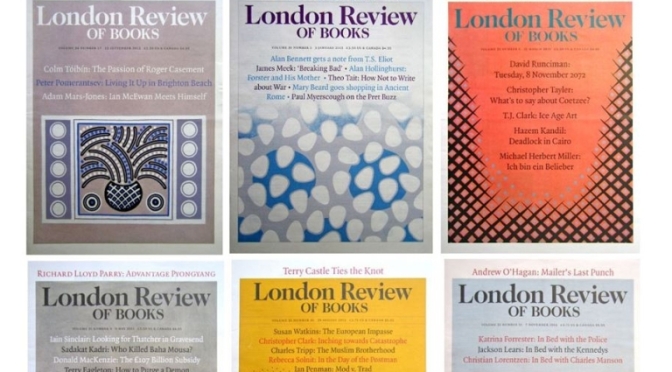
London Review of Books (LRB) – November 16, 2023: The latest issue feature The Inside Story of the NHS Infected Blood Scandal; Elizabeth Taylor’s Magic; The UK government has become increasingly hostile to Freedom of Information requests on arms, and more…
‘In the UK between 1970 and 1991, about 1250 people with bleeding disorders were infected with HIV (and many of them with Hepatitis C, too); by the time the Infected Blood Inquiry began, about three-quarters had died, the majority of them from HIV-related causes.
By Florence Sutcliffe-Braithwaite
The Poison Line: A True Story of Death, Deception and Infected Blood
by Cara McGoogan.
Death in the Blood: The Inside Story of the NHS Infected Blood Scandal
by Caroline Wheeler.
‘Nearly eighty years after she first starred in a film, Taylor is famous for two things: her intense screen beauty and her many marriages (eight of them, two to Richard Burton). But at least as central to her life were her close and enduring friendships with men.’
By Bee Wilson

Times Literary Supplement (November 10, 2023): The new issue features The day everything changed – The war in Israel and Gaza; Russia at war; Animal liberation revisited; Publisher to the world; Maison Gainsbourg in Paris; and more…

THE NEW YORK TIMES BOOK REVIEW (November 5, 2023): This week’s issue features music memoirs and biographies crammed into a single season including Madonna, Tupac Shakur, Sly Stone, Britney Spears, Thurston Moore, Jeff Tweedy and — soon — Barbra Streisand…

Mary Gabriel’s biography is as thorough as its subject is disciplined. But in relentlessly defending the superstar, where’s the party?
MADONNA: A Rebel Life, by Mary Gabriel
“I want to be alone,” Greta Garbo’s dancer character famously said in “Grand Hotel,” a quote permanently and only semi-accurately attached to the actress after she retreated from public life. Garbo was first on the list of Golden Agers in one of Madonna’s biggest hits, “Vogue,” but the pop star has long seemed to embody this maxim’s very opposite. She wants to be surrounded, as if with Dolby sound.

At the age of 80, Sly Stone has finally produced his memoir, and it gives a strong sense of this giant’s voice and sensibility.
‘By Alan Light
THANK YOU (FALETTINME BE MICE ELF AGIN): A Memoir, by Sly Stone with Ben Greenman
It is difficult to convey just how astoundingly unlikely it is that this book exists. Sly Stone is one of pop music’s truest geniuses and greatest mysteries, who essentially disappeared four decades ago in a cloud of drugs and legal problems after recording several albums’ worth of incomparable, visionary songs. Fleeting, baffling, blink-and-you-miss-him appearances at his 1993 Rock & Roll Hall of Fame induction and a 2006 Grammy tribute only served as reminders that he was still alive and still not well.
The New York Review of Books (November 23, 2023) – The latest features Inhumane Times – Israel’s current war, the punishment of the Palestinian people and an offensive against Hamas; Camus on Tour – Travels in the Americas: Notes and Impressions of a New World by Albert Camus; Zoning Out – Crack-Up Capitalism: Market Radicals and the Dream of a World Without Democracy by Quinn Slobodian, and more…

Israel’s current war seems to be as much a brutal insistence on the collective punishment of the Palestinian people as an offensive against Hamas.
The scenes of devastation in Israel’s south on October 7 were almost beyond description. Children killed in their beds, babies taken from their mothers’ arms, the elderly slaughtered in their kitchens. Kfar Aza, a kibbutz close to the separation barrier with Gaza, was burned nearly to the ground: a charnel house. Between a quarter and a third of nearby Kibbutz Nir Oz’s residents were killed or kidnapped. Roughly 10 percent of Kibbutz Be’eri’s population was murdered. At least a dozen of tiny Kibbutz Holit’s two hundred members are dead. The streets of the city of Sderot were littered with bodies. At an outdoor rave near Kibbutz Reim, more than 260 young men and women were gunned down as they tried to flee.

Most of Albert Camus’s evaluations from his promotional trips across the Atlantic are superficial or laughably snotty. What’s intriguing is how quickly he demands that things make sense.
Travels in the Americas: Notes and Impressions of a New World by Albert Camus, edited and with an introduction by Alice Kaplan, translated from the French by Ryan Bloom
Nothing in a professional writer’s life more resembles the life of a traveling salesman than the literary book tour. The superficial difference between writers on tour and salesmen on the road is that writers are encouraged to imagine themselves prized personae whose pitch is eagerly awaited by the anonymous crowd, whereas salesmen know themselves to be an intrusion, albeit one with an edge. While both are beggars at the gate, each one singing for a bit of supper, salesmen are independent entrepreneurs, pretty much calling their own shots; writers, on the other hand, are performers in someone else’s show—a talk at ten, a class at twelve, a panel at three, a reading at seven, and oh, did I forget the ten or twelve interviews tucked in at every break in the day?—all the while being dragged around by people otherwise known as “handlers” who every half-hour tell them how much they are loved, how much their work is prized, how many lives it has changed, and yes, they know how tired you must be by now, but would you mind giving just one more very small interview, this guy’s been waiting all day to talk to you.