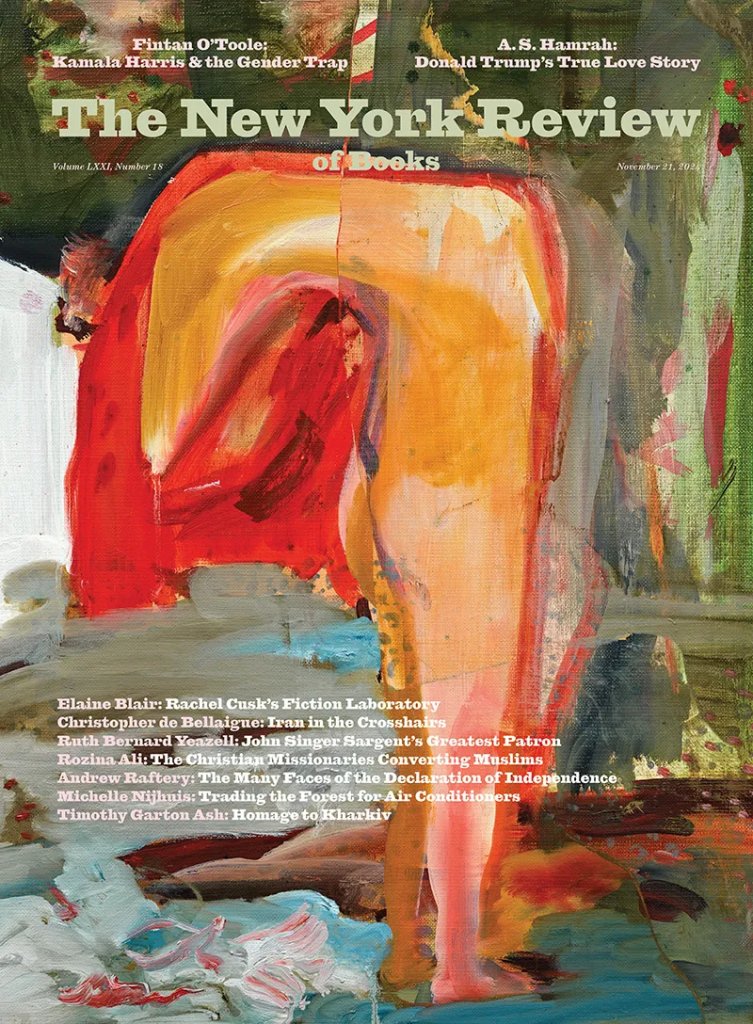
Times Literary Supplement (September 1, 2023): The extraordinary story of the OED; Shakespeare quotations for everyday life; Benjamín Labatut’s infernal vision; histories of learning and forgetting; rules for reviewers – and much more

Times Literary Supplement (September 1, 2023): The extraordinary story of the OED; Shakespeare quotations for everyday life; Benjamín Labatut’s infernal vision; histories of learning and forgetting; rules for reviewers – and much more
London Review of Books (LRB) – September 7, 2023: The new issue features Colm Tóibín review of ‘Annotations to James Joyce’s ‘Ulysses’; Desperate Midwives; French Short Stories; Catastrophic Thinking and Plant Detectives…
By Colm Tóibín

Annotations to James Joyce’s ‘Ulysses’
by Sam Slote, Marc A. Mamigonian and John Turner.
Ulysses is haunted by the story of its own composition. As Joyce famously put it, ‘I’ve put in so many enigmas and puzzles that it will keep the professors busy for centuries arguing over what I meant, and that’s the only way of ensuring one’s immortality.’ The annotators point out, however, that it is ‘very likely that Joyce never said this’.

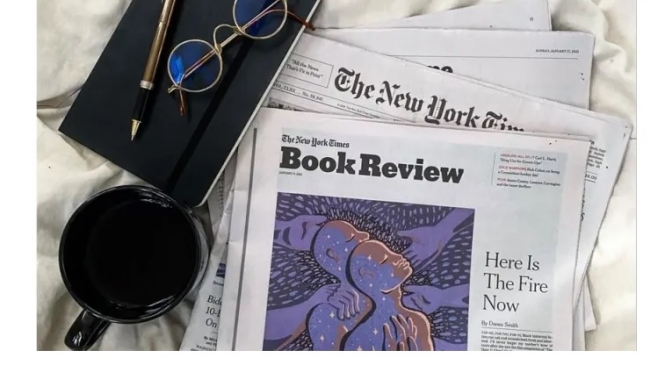
THE NEW YORK TIMES BOOK REVIEW (August 27, 2023) The new issue features: James McBride’s Latest Is a Murder Mystery Inside a Great American Novel; The First Chinese American Movie Star and the Cost of Glittering Fame, and more…

“The Heaven & Earth Grocery Store” opens with the discovery of a skeleton in a well, and then flashes back to explore its connection to a town’s Black, Jewish and immigrant history.
By Danez Smith
A few weeks ago, around the same time I was working on this review, I visited the Guggenheim with my fiancé. The exhibition on display as we trekked up the museum’s famous spiral was “Measuring Infinity,” a marvelous retrospective on the work of the great Venezuelan artist Gego. A German Jew who fled Nazi persecution in Europe, Gego arrived in Venezuela in 1939 and went on to become one of the most important artists to emerge from Latin America in the 20th century. Her work speaks to a deep curiosity about the interrelation of shapes, things and the dimensions created by those relationships.

A new biography of Anna May Wong, “Daughter of the Dragon,” is intended as a form of reclamation and subversion.
It was, according to the film historian Kevin Brownlow, “one of the most racist films ever made in America.” “Old San Francisco” (1927) featured a white actor playing a Chinese villain passing as a white man (got that?) who plans to sell an innocent white girl into white slavery until he is conveniently crushed by an earthquake. Before his grisly end he is aided in his nefarious scheme by an Asian character identified only as “a flower of the Orient,” played by an ingénue named Anna May Wong.
The Huntington (August 25, 2023) – The history of printing has many missing pages. Li Wei Yang, Curator of Pacific Rim Collections, searched the library for the first documented connections between the great printing cultures of China and Europe.
The oldest printed book in The Huntington’s collection, the Scripture of the Great Flower Ornament of the Buddha, is on display in “Printed in 1085: The Chinese Buddhist Canon from the Song Dynasty” in the Library West Hall.
The exhibition delves into the circumstances of the book’s creation and its religious significance while broadening visitors’ understanding of Chinese textual tradition. Additional materials related to the text are on display to provide historical context.
The book is in a specially designed display case that allows Huntington visitors to have a unique experience when viewing the sacred text. Though the book was meant to be read by flipping from one page to the next, in the exhibition it is expanded in a custom case designed for maximum visibility, offering a rare opportunity to view the miraculously preserved relic and observe its unique bibliographic characteristics and exquisiteness.
More than 900 years old, the book is part of the 5,850-volume Great Canon of the Eternal Longevity of the Chongning Reign Period. Produced during the Song dynasty (960–1279) between 1080 and 1112, the accordion-style book fully unfolds to a length of 31 feet. It is one of the longest sutras, or collections of aphorisms, in the Buddhist canon and is a compendium of doctrines and ritual practices widely followed throughout East Asia.
The text presents a vision of the entire universe as consisting of elements that all interpenetrate (like mirrors reflecting in mirrors) within the body of the Cosmic Buddha. According to Li Wei Yang, curator of Pacific Rim Collections at The Huntington, it reflects the notion that “I am you, you are me; we all are Buddha.” It is not known whether the Buddha himself actually spoke the words found in the Scripture of the Great Flower Ornament.
Rather, it is likely that his followers, over centuries of adaptation and interpretation, incorporated the essence of his teachings into this and many other Buddhist works that have survived.
The New Criterion – September 2023 issue:

THE NEW YORK TIMES BOOK REVIEW – August 20, 2023: The issue features “never before told” narrative histories including a tale of the female botanists who surveyed the Grand Canyon in 1938, a recent biography of the 19th-century “abortionist of Fifth Avenue” and the book on this week’s cover: Prudence Peiffer’s “The Slip,” which brings into focus a thriving artistic community that existed at the southernmost tip of Manhattan in the 1950s and ’60s.

In Melissa Sevigny’s “Brave the Wild River,” we meet the two scientists who explored unknown terrain — and broke barriers.
BRAVE THE WILD RIVER: The Untold Story of Two Women Who Mapped the Botany of the Grand Canyon, by Melissa L. Sevigny
Let’s start this story on a sun-blistered evening in August 1938. A small band of adventurers had just concluded a 43-day journey from Utah to Nevada — although perhaps “journey” is too tame a description for a trip that had required weeks of small wooden boats tumbling down more than 600 miles of rock-strewn rivers. The goal was twofold. First, to simply survive. And then, to chart the plants building homes along the serrated walls of the Grand Canyon.
Prudence Peiffer’s “The Slip” is a group biography of six visual artists and the work they created on the edge of Manhattan in the 1950s and ’60s.

Times Literary Supplement (August 18 & 25, 2023): Theatre of war – How Susan Sontag brought Beckett to Sarajevo; Mina Loy; Madmen in the White House; Grieving for a child; Through the looking-glass again; Women artists unleashed and more…


THE NEW YORK TIMES – If artificial intelligence had a voice, what would it sound like? Calm, like HAL 9000? Perky, like Alexa? Polite, like C-3PO?

For the editors of “I Am Code: An Artificial Intelligence Speaks,” a collection of poems generated by A.I., the answer was obvious: Werner Herzog.
The 80-year-old German director, actor and author is a titan of independent cinema whose films often concern the hubris and folly of humankind. His speaking voice, known to audiences mostly through the stark, literary voice-over narration that accompanies many of his documentaries, carries an existential pathos and Teutonic gravitas that have made it a pop culture trademark.
Something like this, anyway, was on the minds of Brent Katz, Josh Morgenthau and Simon Rich, the editors of “I Am Code,” when they reached out to Mr. Herzog to ask if he would lend his formidable instrument to the audiobook version of their project.

THE NEW YORK TIMES BOOK REVIEW – August 13, 2023: The annual thrillers issue features – a tense murder mystery set aboard a cruise ship; a heist novel involving rough diamonds, crooked lawyers and masters of the double cross; and an especially creepy serial-killer novel, to name just a few.

In “Flirting With Danger,” Janet Wallach tells the story of Marguerite Harrison, who traded a life of privilege to become America’s first international female spy.
By Chloe Malle
FLIRTING WITH DANGER: The Mysterious Life of Marguerite Harrison, Socialite Spy, by Janet Wallach
Anyone complaining about a canceled Delta flight would do well to channel Marguerite Harrison. The United States’ first international female spy, Harrison crisscrossed the globe by rickshaw, propeller plane, camel, inflated goatskin raft and rail freight car and once brightly described a trans-Siberian voyage, in which she was wedged between sacks of tea and oats on the back of a troika in a blizzard, as “a rare and delightful experience.”

In “Completely Mad,” James Hansen tells the stories of two men who in 1969 vied to be the first to row solo across the Atlantic Ocean.
COMPLETELY MAD: Tom McClean, John Fairfax, and the Epic Race to Row Solo Across the Atlantic, by James R. Hansen
The day before the Apollo mission landed two men on the moon, a British man named John Fairfax waded into Hollywood Beach, Fla., greeted by masses of cheering fans, having been the first person to row solo across the Atlantic Ocean. Eight days later, another Briton, Tom McClean, pulled his dory up a deserted beach in Blacksod Bay, Ireland, having rowed solo across the Atlantic in the opposite direction. While Fairfax was acclaimed and feted, McClean walked to the closest pub, alone.

Literary Hub (August 9, 2023) – MOLLY ODINTZ reviews 20 essential new historical crime novels in an amazing year for historical fiction.

Niklas Natt och Dag
Setting: Stockholm, 1794
I adored Niklas Natt och Dag’s brilliantly cynical debut, The Wolf and the Watchman, and The City Between the Bridges is just full of filth and cynicism, the perfect combination for depicting the late 18th century and its terrible iniquities. The watchman of The Wolf and the Watchman returns to solve a new crime, this one the brutal murder of a tenant’s daughter on the eve of her wedding to a seemingly sensitive nobleman. Natt och Dag is particularly adept at savagely ripping the notion of a “civilized age” apart and showing the raw suffering underneath. As a side note, I’ve long believed that historical fiction is only to be trusted when the author is willing to describe bad smells to set the scene, and this book is full of truly disgusting odors.

Kevin Jared Hosein
Setting: Trinidad, 1940s
Set in the dying colonial era, Kevin Jared Hosein’s searing debut examines race, class, and decolonization through the lens of two families, one white and wealthy, the other Black and disenfranchised, as their lives become ever more entwined after the disappearance of the white family’s patriarch. Like the best historical fiction, Hungry Ghosts is immersed in the ideas and complexities of its’ shifting time period, for a triumph of well-researched storytelling.

Tara Ison
Setting: WWII France
In one of those amazing life twists that feels as bizarre as it is inspiring, Tara Ison, the writer of the cult hit Don’t Tell Mom The Babysitter’s Dead has crafted one of the best tales of collaboration ever written. In Between the Hour of Dog and Wolf, Tara Ison takes us into the mind of an adolescent Jewish girl being hidden with a French family during WWII. She spends so much time pretending to align with the ideals of the occupiers that she finds herself beginning to agree with them, in what reads as a Jewish version of Lacombe, Lucien. Perhaps it’s not such a twist—both book and film are about the ways we assume new roles when necessary to survival, whether that’s taking a job as a fashion consultant to feed siblings and putting on a batshit fashion show (a la Babysitter) or pretending to be a fascist to to protect from others knowing that you are Jewish. Okay, maybe that last comparison is a bit of a stretch, but still, everyone should read this book and also everyone should should rewatch that movie.

Bret Easton Ellis
Setting: Los Angeles, 1981
Bret Easton Ellis is back, this time with a new serial killer novel that brings together all the best aspects of Less Than Zero and American Psycho. It’s 1981, Missing Persons is playing on the stereo, and future writer Bret is doing bumps with his prep-school friends by the poolside, dressed sharply in Ralph Lauren, as a killer makes his way closer and closer to their wealthy enclave. Ellis’ teenage emotional truths collide with violent fictional set-pieces for an epic tale of Southern Californian sins.