Tag Archives: Arts & Literature

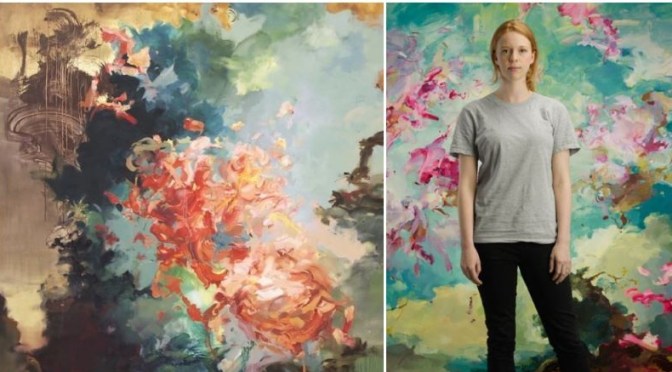
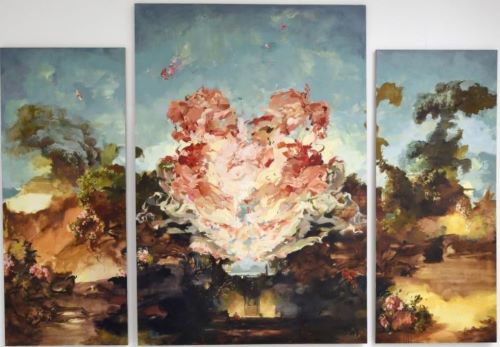
Art Profile: 55-Year Old British Painter Damien Hirst – “Veil Paintings”

“I wanted to make paintings that were a celebration, and that revealed something and obscured something at the same time.”Damien Hirst

Gagosian logoDamien Steven Hirst (born 1965) is an English artist, entrepreneur, and art collector. He is one of the Young British Artists, who dominated the art scene in the UK during the 1990s. He is reportedly the United Kingdom’s richest living artist, with his wealth valued at £215m in the 2010 Sunday Times Rich List.

Website

Arts & Literature: “Apollo Magazine – July 2020”

Apollo Magazine logo

INSIDE THE ISSUE
FEATURES | Eric Fischl interviewed by Thomas MarksLinda Wolk-Simon on the life and legacy of Raphael; Joanne Pillsbury on the art of the Olmecs; Samuel Reilly on private restitution of colonial-era artefacts; Christopher Turner on shopfronts and gallery facadesJosie Thaddeus-Johns on John Cage’s mushrooms
REVIEWS | Isabelle Kent on Murillo at the National Gallery of Ireland; Tom Stammers on the British fashion for French interiors; James Lingwood on Stephen Shore’s photographs; Robert O’Byrne on The Buildings of Ireland
MARKET | Melanie Gerlis on art businesses after lockdown; a preview of Parcours des Mondes; and the latest art market columns from Susan Moore and Emma Crichton-Miller
PLUS | Rowan Moore and Tamsin Dillon on the future of public spacesSusan Moore on the mysterious ‘Barbus Müller’ sculptures; William Aslet on Palladio’s monument to the plague in Venice; Robert O’Byrne on Apollo and the Second World War

Art History: How The Impressionists Elevated The “French Riviera”

From Christie’s (July 3, 2020):

Christie's Matisse to NiceIt was the Impressionists, Claude Monet and Pierre-Auguste Renoir, who first discovered the artistic potential of the south coast, finding an unspoilt landscape that perfectly matched their aims. ‘It is so beautiful,’ Monet wrote, ‘so bright, so luminous. One swims in blue air and it is frightening.’

Vincent van Gogh captured the landscape in and around Arles and Saint-Rémy in the final years of his life, while the Master of Aix, Paul Cézanne, used the rugged landscape of his native Provence to radically reconceive the very nature of art-making.

Long before the South of France became synonymous with glamour and sun-drenched seduction — think of Cary Grant and Grace Kelly in the 1955 film To Catch a Thief, or Brigitte Bardot and Alain Delon on the beaches of Saint-Tropez — this corner of Europe attracted a very different kind of tourist.

Christie's LogoSince the turn of the century, the sleepy fishing villages and remote towns of the Provençal hills had lured artists from Paris and beyond — the bright light, dazzling colours and palpable presence of the classical past all serving to inspire and revive jaded spirits.

Read more

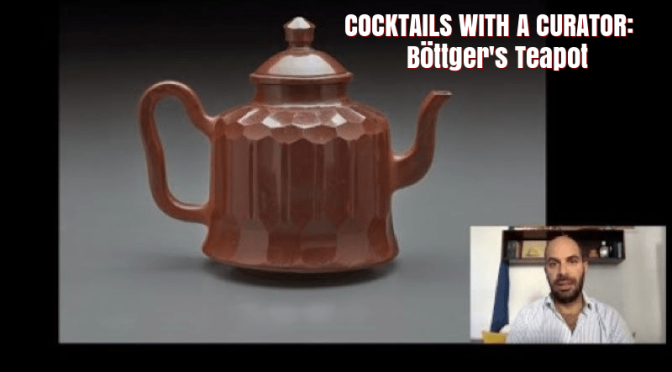
Cocktails with a Curator: Hans Holbein’s ‘Sir Thomas More’ Of 1527 (Video)

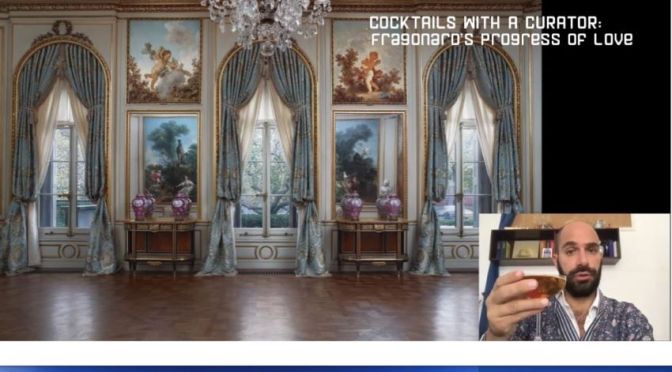
In this week’s episode of “Cocktails with a Curator,” Xavier F. Salomon, Deputy Director and Peter Jay Sharp Chief Curator, examines one of the Frick’s most beloved paintings, Hans Holbein’s “Sir Thomas More.” Xavier considers More’s relationship to humanist circles and the role of “friendship portraits” in making the absent present. In the words of More’s devoted friend, Desiderius Erasmus, “life without a friend is no life.” As a nod to the turbulent times of Tudor England, Xavier pairs this episode with a Bloody Mary cocktail.

Travels With A Curator: “Japanese Palace Dresden” (Frick Collection Video)

In this week’s episode of “Travels with a Curator,” Xavier F. Salomon, Deputy Director and Peter Jay Sharp Chief Curator, transports us to the Japanisches Palais (Japanese Palace) in Dresden, the original home of the Meissen “Great Bustard.” Augustus II rebuilt and enlarged the Japanese Palace to showcase his extraordinary collection of porcelain, but he died before the project was completed. This exquisite porcelain masterpiece became part of the Frick’s collection through the generosity of the late collector Henry H. Arnhold (1921–2018).


Art & Photography Books: “Massimo Listri -Cabinet of Curiosities” (Taschen)

From the Grand Duke Francesco I de’ Medici and Holy Roman Emperor Rudolf II to Archduke Ferdinand II of Habsburg, these aristocratic virtuosos acquired, selected, and displayed the objects in real-life catalogues that represented the entire world—spanning architecture, interior design, painting, sculpture, gemology, geology, botany, biology and taxonomy, astrology, alchemy, anthropology, ethnography, and history.

Listri

The Wunderkammer, or “cabinet of curiosities,” saw collectors gathering objects from many strands of artistic, scientific, and intellectual endeavor, in an ambitious attempt to encompass all of humankind’s knowledge in a single room.

Marvel at the unicorn horns (narwhal tusks), gems, rare coral growths, Murano glasswork, paintings and peculiar mechanical automata. Browse through illustrations of exotic and mythical creatures and discover the famed “Coburg ivories,” an astounding collection of crafted artifacts. These collections are nothing short of a journey through time, from the Renaissance and Age of Discovery, the Mannerist and Baroque periods, up to the present day. Although many of these cabinets of curiosities no longer exist, others have been meticulously reconstructed, and new ones born.

These marvelous cabinets of curiosities can now be explored by all in this XXL collection. To realize this mammoth undertaking, Massimo Listri traveled to seven European countries over several decades; the result is a set of gorgeous photographs, an authoritative yet accessible introduction, and detailed commentary on each of the 19 chambers highlighting the most remarkable items in each collection. Discover how these timeless treasures both describe and defined civilization, the modern concept of the museum, and our very knowledge of the universe.

The authors

Giulia ML Carciotto graduated in art history from the Sapienza University in Rome. She was a Research Fellow at the Warburg Institute in London, where she also worked for Christie’s. She was editor-in-chief of the art publisher Franco Maria Ricci Editore in Milan, and now teaches at the Academy of Fine Arts in Palermo and at the Abadir Academy in Catania.

Antonio Paolucci studied art history under Roberto Longhi in Florence and began his career in the management of cultural heritage. He was the Superintendent of Cultural Heritage in Venice, Verona, and Mantua. He later became Director of the Opificio delle Pietre Dure in Florence and, for almost twenty years, the Superintendent for the Polo Museale Fiorentino. Most recently, Paolucci was the Director of the Vatican Museums from 2007 to 2016. A specialist in Italian Renaissance art, he is the author of museum and exhibition catalogues, as well as publications on Donatello, Piero della Francesca, Michelangelo, Raphael, and Benvenuto Cellini, among others.

Read more or purchase

Art History Videos: Pablo Picasso’s “Les Femmes d’Alger – 1955” (Christie’s)

Christie's logoBetween 13 December 1954 and 14 February 1955, Picasso painted a series of fifteen canvases based on Eugène Delacroix’s masterwork Les femmes d’Alger, each of which he assigned an identifying letter from A to O. Together, these paintings constitute Picasso’s single greatest achievement in the decades following the end of the Second World War. They represent his first comprehensive appropriation and thoroughgoing exploration of an important painting by an earlier artist, as well as the most focused analysis he had done since the war years of the female figure set within a specific spatial environment.

Picasso painted the present Femmes d’Alger, Version F on 17 January 1955, around the halfway point in the cycle. It is the culminating, most fully resolved canvas from the first phase of the series, when Picasso favored medium-sized formats for his protean explorations.

Website

Art: Russian-French Painter Marc Chagall’s “Circus Of Color” (Video)

Sothebys LogoAs a child, Marc Chagall would marvel at the traveling acrobatic troupes that passed through his Village. The animals, dancers and musicians of the circus seemed to conjure a distinct joy that would consistently manifest itself throughout the artist’s career. In this episode of Expert Voices, discover how Chagall was able to uniquely translate this fascination to canvas as Edith Eustis delves into the deep greens and brilliant reds of Marc Chagall’s Le Cirque Vert. Painted in 1973, this work captures the magical allure of the spectacle and incorporates many of the artist’s most iconic motifs. Le Cirque Vert will be offered as a highlight of Sotheby’s Impressionist & Modern Art Evening Sale in New York.

Read more

Marc Chagall (1887 – 1985) was a Russian-French artist of Belarusian Jewish origin. An early modernist, he was associated with several major artistic styles and created works in a wide range of artistic formats, including painting, drawings, book illustrations, stained glass, stage sets, ceramic tapestries and fine art prints.

20th Century Art: Claude Monet’s “Weeping Willow” Paintings (1918 – 1919)

From the Wall Street Journal (June 19, 2020):

Claude_Monet,_Water-Lily_Pond_and_Weeping_Willow…what perhaps absorbed him most was a suite of 10 paintings of one of the weeping willows he had planted on the shores of his pond in 1893, when he had purchased the property to construct his aquatic paradise. The tree had grown in girth and grandeur over the intervening years, its leafy arms now extending out over the dappled waters like an impassioned conductor energizing an orchestra.

The trees in Monet’s water garden are much less known than the flowers, but they were central to his vision of what that ideal space should include and thus dear to his heart. In 1912, when severe winds and rains wreaked havoc on his horticultural handiwork, what Monet mourned most was the damage to his willows.

Weeping willows, of course, evoke mourning by their very appearance no less than by their appellation, their drooping tendrils the very symbol of sorrow. It’s therefore not surprising, given Monet’s sensitivity to his nation’s plight, that he turned to this tree to express the trauma of the moment.

Read full article