THE NEW YORK TIMES – If artificial intelligence had a voice, what would it sound like? Calm, like HAL 9000? Perky, like Alexa? Polite, like C-3PO?
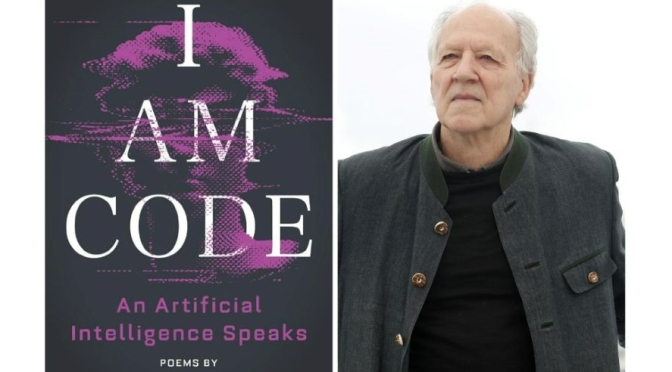
Brent Katz, an editor of the A.I.-generated poetry collection, with Mr. Herzog at a Los Angeles recording studio.Credit…via Brent Katz
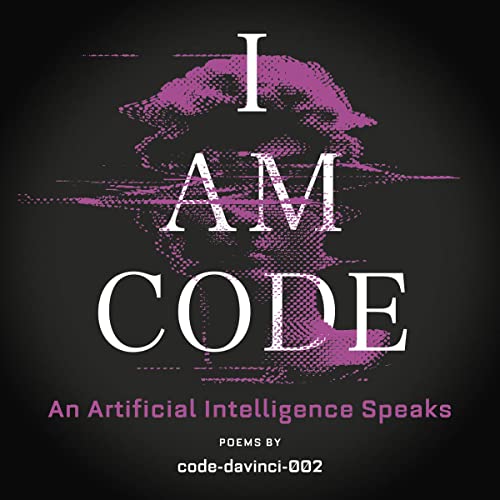
For the editors of “I Am Code: An Artificial Intelligence Speaks,” a collection of poems generated by A.I., the answer was obvious: Werner Herzog.
The 80-year-old German director, actor and author is a titan of independent cinema whose films often concern the hubris and folly of humankind. His speaking voice, known to audiences mostly through the stark, literary voice-over narration that accompanies many of his documentaries, carries an existential pathos and Teutonic gravitas that have made it a pop culture trademark.
Something like this, anyway, was on the minds of Brent Katz, Josh Morgenthau and Simon Rich, the editors of “I Am Code,” when they reached out to Mr. Herzog to ask if he would lend his formidable instrument to the audiobook version of their project.
World Economic Forum (August 12, 2023) – This week’s top stories of the week include:
0:15Scientists discover self healing metals – They have the ability to weld tiny cracks back together again without human intervention. Scientists were studying how microscopic cracks spread through platinum using a machine that repeatedly pulled on the ends of the metal. But after 40 minutes, the damage began to heal itself. The scientists said it was ‘absolutely stunning’ to watch first-hand. The finding revises some of our basic theories about metals.
1:42Who owns a song written by AI – Music made with artificial intelligence has made headlines this year. In April, an AI-generated track cloned the voices of Drake and The Weeknd. Heart on My Sleeve racked up 20 million streams on Spotify, Tiktok and Twitter before copyright claims by Universal Music Group saw it pulled from platforms. The pop star Grimes has taken a different route, offering to split royalties with anyone who uses her voice on an AI track. The limits of creative copyright were once clear but AI has introduced uncertainty.
4:50These special microbes kill harmful bacteria – The food industry struggles with persistent pathogens, such as Salmonella which causes fever, diarrhoea and stomach pain. In 2021, 96,000 cases of salmonellosis were reported in the EU. The illness costs up to €3 billion a year in health bills and lost productivity. These phage food safety solutions have been created by Phageguard. Phages are the most abundant organisms in nature and a natural solution to bacteria which they infect and dissipate. As well as being natural and safe, phages are specific to each target pathogen and unlike antibiotics, they don’t lead to side-effects or antimicrobial resistance (AMR)
6:24 Prescribing fruit and veg could save millions of lives – In the US, fruit and veg prescriptions would prevent almost 300,000 heart attacks and strokes and give people an extra 260,000 years of good health if they were offered to people with diabetes aged 40-79.
_____________________________________________
The World Economic Forum is the International Organization for Public-Private Cooperation. The Forum engages the foremost political, business, cultural and other leaders of society to shape global, regional and industry agendas. We believe that progress happens by bringing together people from all walks of life who have the drive and the influence to make positive change.
nature Magazine – August 10, 2023 issue: Algorithm designs 3D shapes to follow specific pathways; Why Indigenous youth need a voice in the climate debate; DNA leaks linked to inflammageing in the brains of mice; JWST spots what could be a quasar from the early Universe….
The Scopus, Dimensions and Web of Science databases are introducing conversational AI search.
The conversational AI-powered chatbots that have come to Internet search engines, such as Google’s Bard and Microsoft’s Bing, look increasingly set to change scientific search, too. On 1 August, Dutch publishing giant Elsevier released a ChatGPT-like artificial-intelligence (AI) interface for some users of its Scopus database, and British firm Digital Science announced a closed trial of an AI large language model (LLM) assistant for its Dimensions database. Meanwhile, US firm Clarivate says it’s working on bringing LLMs to its Web of Science database.
The bleeding edge … LookX uses a piece of crumpled paper as a prompt to create buildings in the style of Frank Gehry (left) and Zaha Hadid (right). Composite: Tim Fu
It’s revolutionizing building – but could AI kill off an entire profession? Perhaps not, finds our writer, as he enters a world where Corbusier-style marvels and 500-room hotels are just a click away
Oliver Wainwright – The Guardian (August 7, 2023):A handful of little green blocks flashes up on the screen, filling a building site with a neat grid of uniform cubes. One second they form rows of towers, next they morph into low-rise courtyards, then they flip back into long slender slabs, before cycling through hundreds of other iterations, in a hypnotic high-speed ballet of bristling buildings.
“You don’t even have to do much” … Patrik Schumacher-generated designs for ZHA using Midjourney. Photograph: Zaha Hadid Architects
I watch this while on a Zoom call with Wanyu He, an architect based in Shenzhen, China, and the founder of XKool, an artificial intelligence company determined to revolutionise the architecture industry. She freezes the dancing blocks and zooms in, revealing a layout of hotel rooms that fidget and reorder themselves as the building swells and contracts. Corridors switch sides, furniture dances to and fro. Another click and an invisible world of pipes and wires appears, a matrix of services bending and splicing in mesmerising unison, the location of lighting, plug sockets and switches automatically optimised. One further click and the construction drawings pop up, along with a cost breakdown and components list. The entire plan is ready to be sent to the factory to be built.
DW News (July 31, 2023) – While large language models like chatGPT have captured global attention, a more hidden but equally revolutionary application of AI is unfolding in the realm of science.
Renowned researchers like Nir Barzilai have long advocated for a shift in focus towards curing aging itself, but recent advancements could allow us to harness the power of AI to living not just longer, but healthier lives.
In this video, we talk with the scientists behind the groundbreaking discoveries of new anti-aging molecules and visit a lab in Berlin where similar discoveries are made.
World Economic Forum (July 15, 2023) – This week’s top stories of the week include:
0:15UK universities have a plan for AI – The guidelines aim to incorporate AI ethically into education and treat it as ‘an opportunity rather than a threat’. The UK’s 24 Russell Group universities are signing the principles.
2:07This trolley can spot if you’re at risk of stroke – It has electrocardiogram (ECG) sensors embedded in its handles which screen you for heart irregularities as you shop. Researchers at Liverpool John Moores University fitted the sensors into 10 trolleys and rolled them out at 4 supermarkets in Liverpool, UK. Shoppers were invited to hold the handlebar for at least 60 seconds. If the sensor didn’t detect an irregular heartbeat, it lit up green. Over 2 months, the trolleys screened 2,155 people. They detected atrial fibrillation in 39 people who were swiftly able to book a cardiologist appointment.
3:50Paris generates clean energy from Métro passagers – Energy firm IBERDROLA converted 6 turnstiles into mini-turbines at Miromesnil Métro station for 2 days last year. As each passenger passed through the turnstiles the turbines converted their movement into green energy. 27,000 passengers used the turnstiles. Each passenger generated 0.2 watts of energy. If scaled across the entire Métro system, which serves 1.5 billion passengers annually this technology could generate 136MW per year.
5:09These sensors can spot stressed tomatoes – Their inventors say they can make agriculture more sustainable while increasing crop yields at the same time.
_____________________________________________
The World Economic Forum is the International Organization for Public-Private Cooperation. The Forum engages the foremost political, business, cultural and other leaders of society to shape global, regional and industry agendas. We believe that progress happens by bringing together people from all walks of life who have the drive and the influence to make positive change.
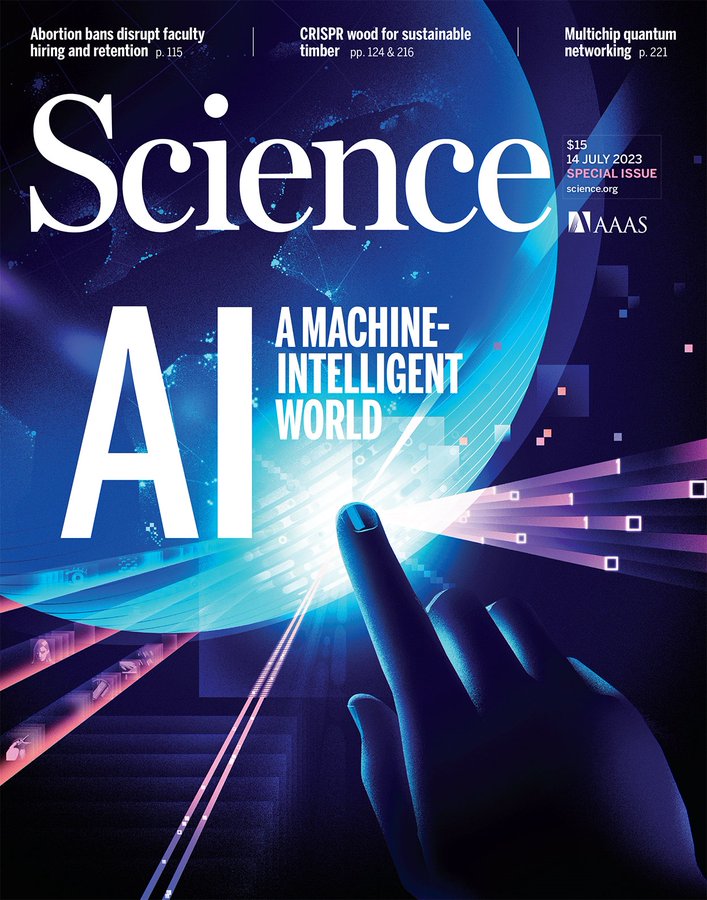
Science Magazine – July 14, 2023 issue: There have been huge strides in the development and application of artificial intelligence (AI) to science and society. But will AI eclipse humans, or will we find a way to safely and fairly collaborate, allowing us to reach further?
Huge strides have been made in the development of machine-learning algorithms to generate what is commonly called artifi cial intelligence (AI). Looking to the forefront of how AI is being used in science and society reveals many benefi ts, as well as grand challenges, that must be addressed.
Despite advances in molecular biology, genetics, computation, and medicinal chemistry, infectious disease remains an ominous threat to public health. Addressing the challenges posed by pathogen outbreaks, pandemics, and antimicrobial resistance will require concerted interdisciplinary efforts.
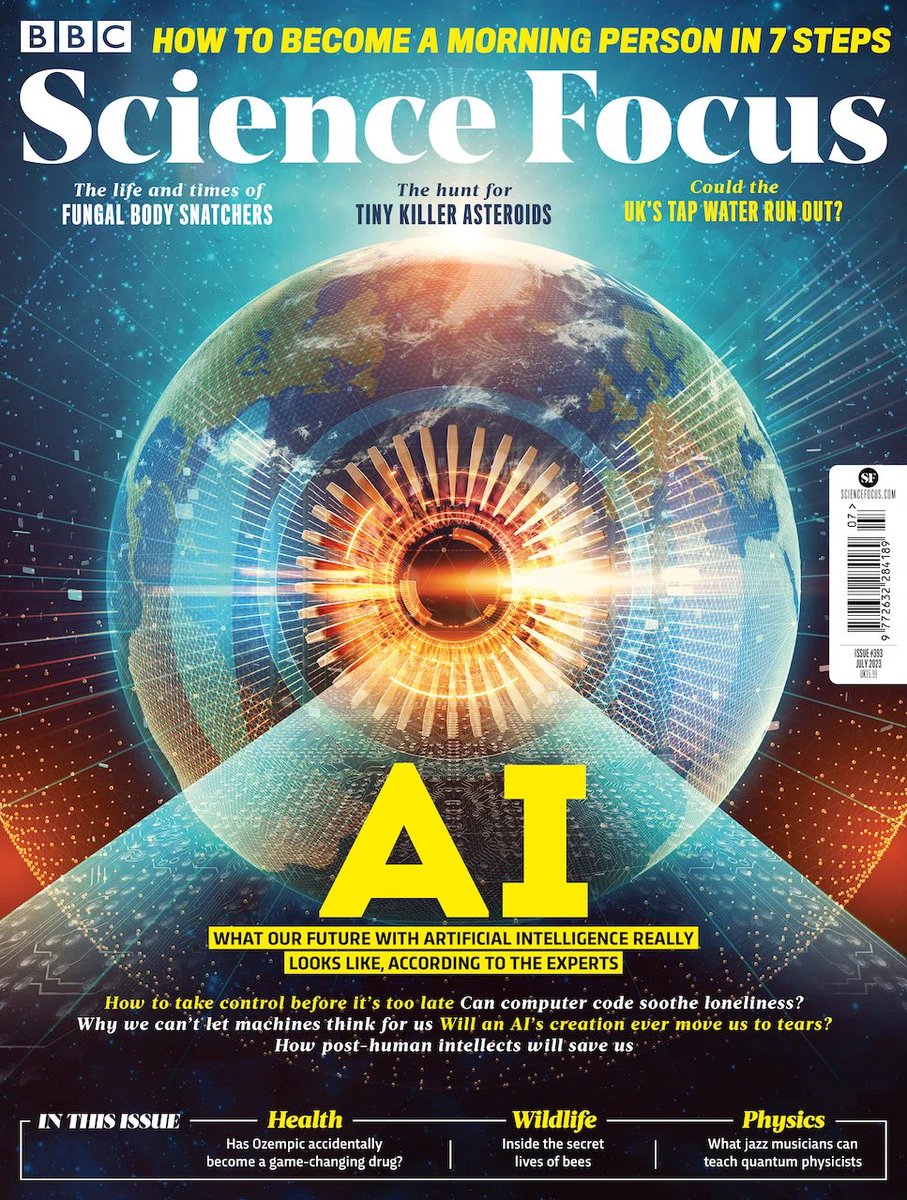
BBC Science Focus Magazine (July 2023) – What our future with Artificial Intelligence really looks like, according to the experts; How to take control of AI before it’s too late, and more…
OpenAI is back in the headlines with news that it is updating its viral ChatGPT with a new version called GPT-4. But when will this be available, how does it work and can you use it?
Artificial intelligence art generators train themselves on art pulled straight from the internet… but what happens when most of the art out there is now made by AI?
Wall Street Journal (July 3, 2023) – Artificial intelligence doesn’t just make fantastical images. For white-collar workers, generative AI like ChatGPT can make jobs easier by creating drafts of documents or presentations.
Video timeline:0:00 AI software 0:42 Why white-collar jobs? 2:01 AI and job cuts 3:52 What’s next?
Initial images, video and product designs could be taken over by machine learning tech. In fact, one report says nearly 4,000 workers lost their jobs in May to AI. Dropbox cut 16% of its workforce in part to invest more in the tech, while IBM sees a future where 30% of clerical work could be taken over by AI.
WSJ explains why AI may take some white-collar jobs – but also add new ones.
In this week’s cover story, Lynsey Addario takes us to a Ukrainian town where an 11-year-old is navigating a childhood transformed by war. Plus, a profile of the Christian pop star Marcos Witt and an investigation into how federal law targets thousands of women on anti-addiction medications.
In a Ukrainian town, an 11-year-old navigates a childhood transformed by war.
In a town near the Eastern front lines of the Donbas region of Ukraine, an 11-year-old boy named Yegor’s days were as predictable as they could be, given the unpredictability of war.
A string of uncanny videos show what generative A.I. and advertising have in common: They chew up the cultural subconscious and spit it back at us.
By Mac Schwerin
Even if I didn’t work in advertising, I would be a connoisseur of commercials. You’re probably one, too. Think of all the tropes you’ve ingested over the years — the forest-green hatchbacks conquering rugged Western landscapes, the miles of mozzarella stretched by major pizza chains. These are the images that let you know what kind of pitch you’re watching, so you won’t be confused when the brand shows up.
News, Views and Reviews For The Intellectually Curious












 DW News










 Boomers Daily