Tag Archives: Art

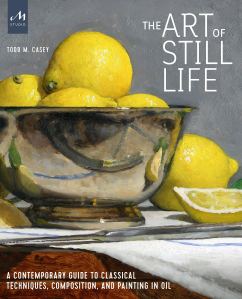
New Art Books: “The Art Of Still Life” By Todd M. Casey

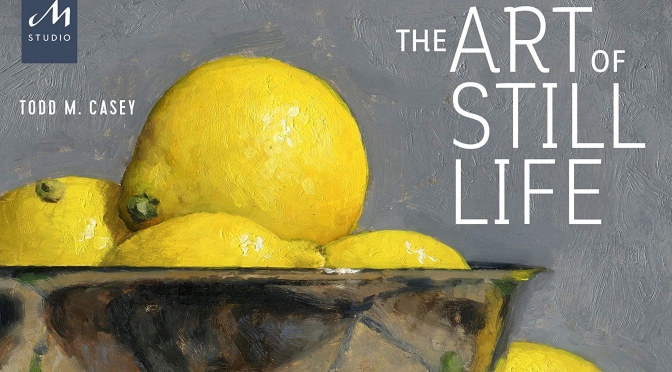
The Art of Still Life A Contemporary Guide to Classical Techniques Composition and Painting in Oil Todd M CaseyEvery artist needs to learn and master the still life. Written by a well-known artist and expert instructor, The Art of Still Life offers a comprehensive, contemporary approach to the subject that instructs artists on the foundation basics and advanced techniques they need for successful drawing and painting.

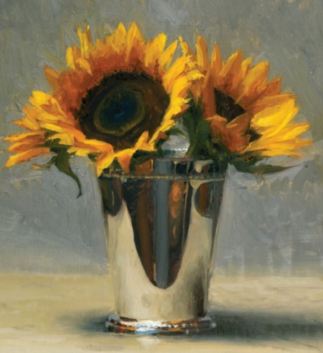
In addition to Casey’s stunning paintings, the work of over fifty past and present masters is included, so that the book will do double duty as a hardworking how-to The Art of Still Life Todd M Casey Feb 2020manual and a visual treasure trove of some of the finest still life art throughout history and being created today.

A Massachusetts native, TODD M. CASEY studied at art schools in Boston and San Francisco before embarking on the classical artistic education offered by Jacob Collins’s famed Water Street Atelier in New York City. A modern master of the still life genre, Casey teaches at several institutions, including the Art Students League of New York. He is represented by Rehs Contemporary Galleries, Inc., New York, and his paintings are held in numerous private collections worldwide. He lives with his wife and daughter in New York’s Hudson Valley. Visit his website at toddmcasey.com.

Read more or purchase

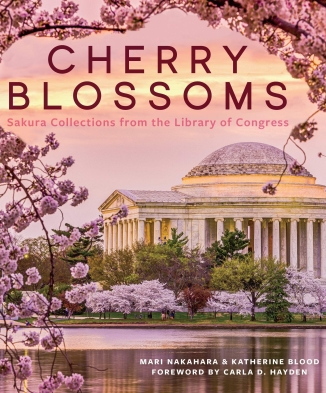
New Art Books: “Cherry Blossoms – Sakura Collections From The Library Of Congress”

Cherry Blossoms Sakura Collections from the Library of Congress book February 11 2020“Cherry Blossoms” reflects on the long tradition of flower viewing in Japanese culture with vivid color woodblock prints by ukiyo-e master artists, photographs, color lithographic posters and Kōkichi Tsunoi’s exquisite watercolor drawings from 1921. The book highlights the rich connections between Japan’s centuries-old traditions and contemporary counterparts. The American public’s affection for the blossoms is revealed in vintage and contemporary photographs of the Tidal Basin, collections related to the National Cherry Blossom Festival and the Cherry Blossom Princess Program, as well as decades’ worth of creatively designed festival posters.

Vibrant springtime traditions of cherry blossom viewing in Japan and Washington, D.C., are explored in the new book “Cherry Blossoms: Sakura Collections from the Library of Congress,” published today by Smithsonian Books, in association with the Library of Congress.

Visual art, including prints, drawings and photographs from the Library’s collections, provide a fresh look at the tradition of cherry blossom celebrations that originated more than 1,200 years ago. Japan shared the tradition with the United States when they presented the nation’s capital with 3,020 cherry trees in 1912. Ever since, D.C. residents and visitors have been mesmerized by the trees and have joined in the festivities of the National Cherry Blossom Festival, which draws more than 1.5 million visitors each year.

Fascinating Facts about Cherry Blossom Traditions:

  • It started over 1,200 years ago…with plum blossoms! The Japanese custom of flower viewing, or hanami, is thousands of years old. Beginning in the 9th century, saplings and trees were brought down from the mountains to grace the gardens of the aristocracy. The practice was first associated with plum (ume) blossoms before it became linked almost exclusively with cherry blossoms during the Heian period (794-1185).
  • A feudal warlord threw some of the most lavish parties. Before it became popular with people at all levels of society, cherry blossom viewing in Japan was reserved for the elite. Legendary feudal warlord and samurai Toyotomi Hideyoshi (1537-98) sponsored some of history’s most lavish cherry blossom-viewing events. His 1594 celebration at Mount Yoshino included a poetry party, a nō play, and a hanami party with 5,000 guests. In 1598, he built hillside teahouses to accommodate guests for his party at Kyoto’s Daigoji temple and transplanted 700 cherry trees to the site.
  • Blossoms Symbolize Fleeting Delights in Life. Cherry blossoms are heralds of spring, but their short blooming period also evokes the ephemeral beauty of life. Edo period (1603-1868) hanami celebrations featured the pleasure of food and drink, poetry and music – tinged with wistful appreciation of the fleeting beauty of both blossoms and earthly delights. This tradition continues. The transitory beauty of life becomes vivid when gusty spring winds end the blooming season with showers of drifting petals, an effect the Japanese call hanafubuki (cherry blossom blizzard).
  • A “Field of Cherries” in Potomac Park? It took the U.S. Army Corps of Engineers three decades to transform the low-lying area known as Potomac Flats into Potomac Park. A 1914 sightseer map of Washington features the new park and labels the road around the west end of the Tidal Basin as the “Speedway.” U.S. Department of Agriculture botanist David Fairchild and cherry tree advocate Eliza Scidmore promoted the site as an ideal place for a “field of cherries.”
  • Not all cherry blossoms are pink. Cherry blossoms varieties include multiple colors: white, pink, yellow – even green. Twelve different varieties of cherry blossom trees were sent from the city of Tokyo to Washington D.C. in 1912. While most were the white-pink Somei Yoshino, there were also 10 different varieties of double-flowered (or manifold) trees, one variety with green blossoms, called Gyoikō, and some varieties with fragrance. The trees around today’s Tidal Basin are limited primarily to Somei Yoshino and Kwan-Zan.

Authors Mari Nakahara and Katherine Blood, both curators in the Library’s Prints and Photographs Division, present a comprehensive view of the history of this annual celebration, illustrated by prints, posters, photographs and artifacts from the Library’s rich collections.

Website

New Exhibitions: 84-Year Old Artist Paul Kolker – “Dialogical Perception…Art As Experiment” (Video)

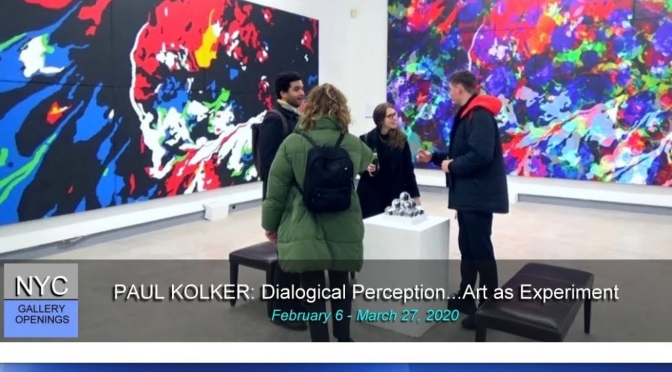
Paul Kolker is pleased to present his seventy-third solo exhibition, Dialogical Perception… Art as Experiment at his studio, the PAUL KOLKER collection, 511 West 25th Street from February 6 through March 27, 2020.

Paul Kolker (b. 1935) is a New York-based artist with doctorate degrees in medicine and law. He began his career of painting and sculpture in the 1960s, illustrating his peer review medical journal articles and life-casting anatomical models. In the 1970s he treated his art production as a post-minimalist experiment questioning experience and using the viewer as the measuring instrument as well as the interpreter of the experiment’s results. Many of his early works are sculptures, each painted in an elemental color, black or white.

In 1975 Kolker developed a keen and hands on understanding of light optics when he purchased a first generation three tube front end television projector with an alignment grid. That grid became the infrastructure for his works, which involved fractionation of a photographic image and the use of modular panels and canvases to create large scale works. In the 1980s Kolker began making light sculptures using one-way mirror and LED message screens, reflecting ad infinitum. In 2001, when he moved into his studio in Chelsea, he created an algorithm for a process of painting minimal shapes, such as a dot or square, in elemental colors (never mixed with each other, but sometimes mixed with black and/or white to form tints and shades). This process is called ‘fracolor’ in attribution to Benoit Mandelbrot’s fractal geometry, wherein minimal shapes and forms are serially replicated, like branches on a tree, rectangles on a grid, or pixels and dots on a television display screen.

As a result, Kolker’s works have become reminiscent of our pixelated world of digital information transfer, as we see it up close as grids of colored dots on our television, computer and cell phone screens; and how more highly defined that screen becomes when viewed from afar. His works are observational experiments which cry out to us, “Because of biases of color, shapes, parallax and perspective relative to where we stand as the observer, a dot may be a universe; and a universe may be a dot.”

Website

Artists: Inside Story Of Andy Warhol’s “Athletes” Paintings (Christie’s)

From a Christie’s Magazine online article (February 2020):

Christie's Magazine logo‘The sports stars of today are the movie stars of yesterday,’ proclaimed the artist. It was true; thanks to rapid advances in TV broadcasting, sporting champions in the 1970s were starting to achieve the same level of popularity as other entertainers.

Andy Warhol Athletes paintngs Muhammad Ali & Pele Christie's Magazine February 2020

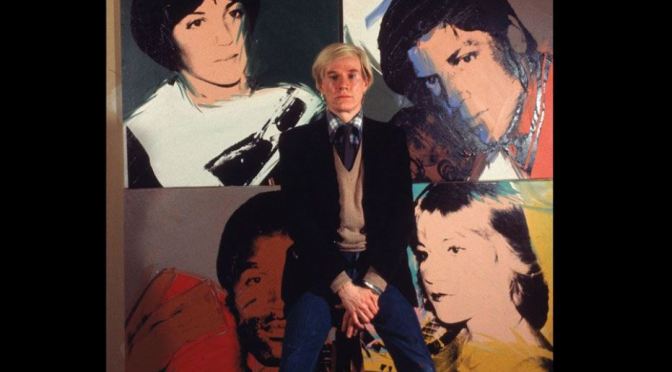
In 1977, Richard L. Weisman approached his friend Andy Warhol with the idea for a new series: a set of silkscreen portraits of the day’s leading sports stars. Called ‘Athletes’, these pictures have come to be regarded as some of the standout works of Warhol’s later years.

Andy Warhol Athletes paintngs Kareem Abdul-Jabbar & Tom Seaver Christie's Magazine February 2020

Weisman (1940-2018) was a dedicated collector, and the two men bonded mostly over art, although they also crossed paths regularly at social gatherings across New York. On some occasions, these gatherings were held at Warhol’s Factory studio; on others, at Weisman’s apartment on United Nations Plaza.

Read full article

Profiles: How The 1960’s Inspired Painter David Hockney, Now 82 (Video)

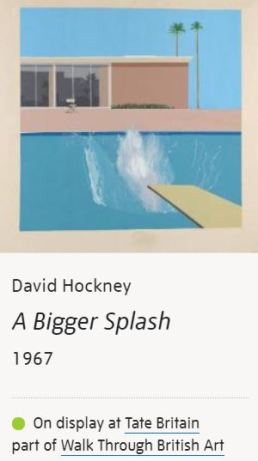
David Hockney A Bigger Splash Tate BritainDavid Hockney, (born 9 July 1937) is a British painter, draftsman, printmaker, stage designer, and photographer. As an important contributor to the pop art movement of the 1960s, he is considered one of the most influential British artists of the 20th century.

Hockney has owned a home and studio in Bridlington and London, and two residences in California, where he has lived on and off since 1964: one in the Hollywood Hills, one in Malibu, and an office and archives on Santa Monica Boulevard in West Hollywood, California. (From Tate Museum Biography)

Painted in Los Angeles in 1966, David Hockney’s ‘The Splash’ is as recognizableThe  as Monet’s ‘Waterlilies’, Van Gogh’s ‘Sunflowers’ and Munch’s ‘The Scream’. In this episode of Expert Voices, discover how the liberal lifestyle in Los Angeles inspired one of the most iconic images of the 20th century and hear Hockney himself explain how he immortalised his split-second swimming pool moment on canvas.

Auctions: “Sotheby’s Impressionist, Modern & Surrealist Art Sale” (Video)

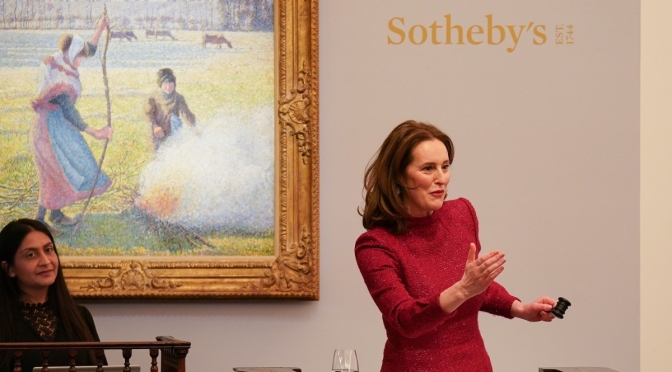
We are LIVE from our Impressionist, Modern & Surrealist Art Evening Sale in London. Watch as works by Van Gogh, Duchamp, Pissarro, Signac, Kirchner, Miro, Giacometti, Léger, Chagall and Picabia go under the hammer!

Website:  https://www.sothebys.com/en/auctions/…

Exhibitions: 88-Year Old Gerhard Richter “Painting After All” – Landscape As A Site Of Memory (The Met)

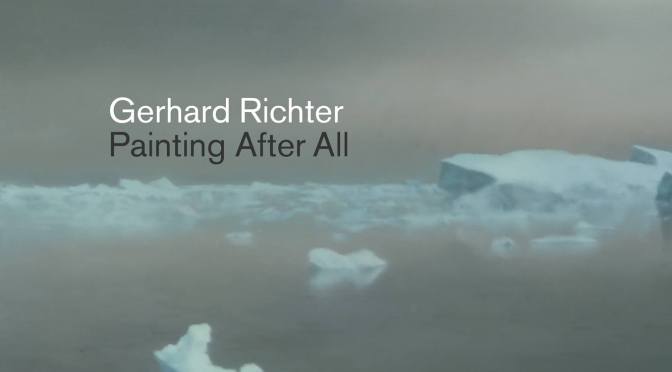
Gerhard Richter Painting After All March 2020Over the course of his acclaimed 60-year career, Gerhard Richter (b. 1932) has employed both representation and abstraction as a means of reckoning with the legacy, collective memory, and national sensibility of post–Second World War Germany, in both broad and very personal terms.

This handsomely designed book features approximately 100 of his key canvases, from photo paintings created in the early 1960s to portraits and later large-scale abstract series, as well as select works in glass.

Gerhard Richter Paintings Facebook

Metropolitan Museum Of ArtNew essays by eminent scholars address a variety of themes: Sheena Wagstaff evaluates the conceptual import of the artist’s technique; Benjamin H. D. Buchloh discusses the poignant Birkenau paintings (2014); Peter Geimer explores the artist’s enduring interest in photographic imagery; Briony Fer looks at Richter’s family pictures against traditional painting genres and conventions; Brinda Kumar investigates the artist’s engagement with landscape as a site of memory; André Rottmann considers the impact of randomization and chance on Richter’s abstract works; and Hal Foster examines the glass and mirror works. As this book demonstrates, Richter’s rich and varied oeuvre is a testament to the continued relevance of painting in contemporary art.

Metropolitan Museum of Art website

Gerhard Richter was born in Dresden on 9th February 1932, the first child of Horst and Hildegard Richter. A daughter, Gisela, followed four years later. They were in many respects an average middle-class family: Horst worked as a teacher at a secondary school in Dresden and Hildegard was a bookseller who liked to play the piano.1 In an interview with Robert Storr, Richter described his early family life as “simple, orderly, structured – mother playing the piano and father earning money.”2

In 1935, Horst accepted a teaching position at a school in Reichenau, a town which today is known as Bogatynia in Poland, at the time located in the German province Saxony. Settling in Reichenau was a drastic change for the family, which was accustomed to the vivid cultural life of the larger Dresden.3 Yet, it was also a move which would keep the family largely safe from the coming war. In the late 1930s Horst was conscripted into the German army, captured by Allied forces and detained as a prisoner of war until Germany’s defeat. In 1946, he was released and returned to his family, who had again relocated, this time to Waltersdorf, a village on the Czech border.

Interviews: 72-Year Old Artist James Wrayge

Excerpts from a NextAvenue.org online article interview:

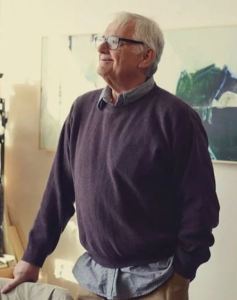
While Wrayge’s work has appeared in galleries and been bought across the globe, he prefers to focus on creating, not selling Photo by Elle Moulin in NextAvenue

“I don’t like the word ‘evolve,’” he says. “Art means the same thing today as it always has. Styles change, but art doesn’t.”

Hesitant to put too defining a label on his work, Wrayge claims his paintings have “a landscape feel.” He doesn’t consider them to be abstract. “That’s a word invented by the press, not by painters,” he says. “What I prefer to say [about my paintings] is that they are a visual manifestation of my values.”

James Wrayge Fine Artist website pageIn James Wrayge’s quiet studio on an early winter afternoon, there is a tangible sense of  purpose. Wrayge’s paintings line the walls along the portion of the space he shares with another artist at the Northrup King Building in Minneapolis. There are also some paintings on the floor propped up against the same walls. And there is one — in progress — set on an easel in the corner.

James Wrayge website

NextAvenue logo

To read more

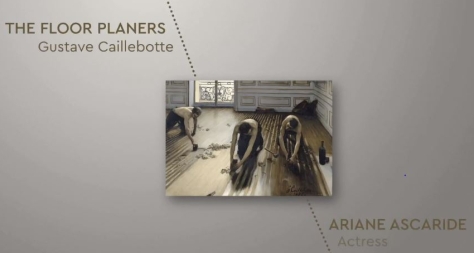
Art Review: “The Floor Planers” By Impressionist Gustave Caillebotte (1875) (Musée d’Orsay Video)

For her performances in over sixty films and forty theatrical productions, Ariane Ascaride has notably been awarded the César for best actress in Marius and Jeannette (1998) and the Coppa Volpi for lead actress at the Venice mostra for Gloria Mundi (2019), two films directed by Robert Guédiguian. She is also a director and a screenwriter.

The Floor Planers by Gustave Caillebotte 1875 video by Musée d'Orsay Januaary 2020

Les raboteurs de parquet (English title: The Floor Scrapers) is an oil painting by French Impressionist Gustave Caillebotte. The canvas measures 102 by 146.5 centimetres (40.2 in × 57.7 in). It was originally given by Caillebotte’s family in 1894 to the Musée du Luxembourg, then transferred to the Musée du Louvre in 1929. In 1947, it was moved to the Galerie nationale du Jeu de Paume, and in 1986, it was transferred again to the Musée d’Orsay in Paris, where it is currently displayed.

Musée d’Orsay website