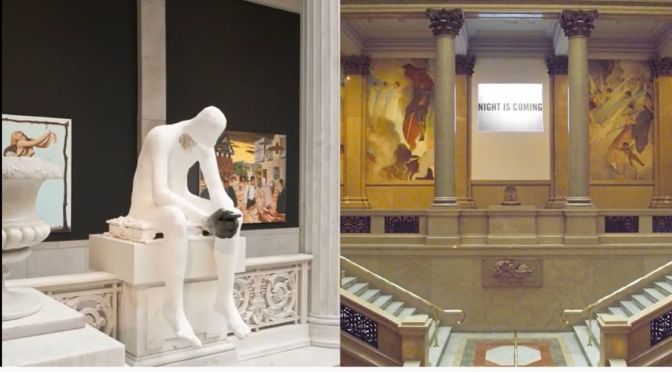
Established in 1896, the Carnegie International is the longest-running North American exhibition of international art. Organized every three to four years by Carnegie Museum of Art, the International presents an overview of how art and artists respond to the critical questions of our time.
Discover the history of this storied exhibition through archival footage and historical photographs, accompanied by the voices of curators and artists.
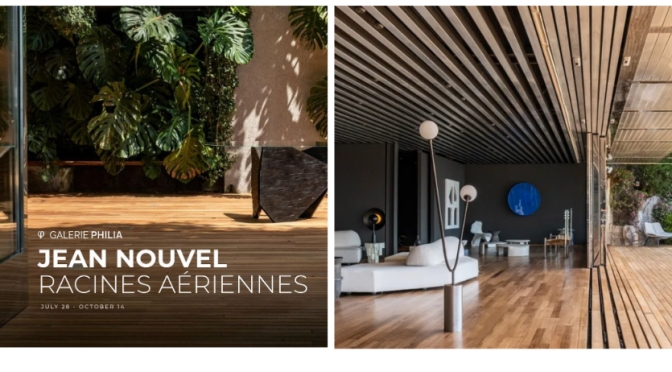
Galerie Philia is proud to announce its summer exhibition taking place in two villas designed by Jean Nouvel and commissioned by Rivere Group on the luxurious Cote d’Azur. Villa Maeterlinck in Nice and villa in St Jean Cap Ferrat, both are perfectly integrated into the landscape and boast terrace gardens in front of wide private sea views on the Mediterranean.
Tillandsias in Saint Jean Cap Ferrat and Monsteras in Nice were planted by Jean Nouvel as an ode to their aerian roots. This specific fauna is in complete harmony with the asesthetic of the influential architect whose innovative aerian principle transforms buildings into dematerialized natural environments. Set in a mesmerizing atmosphere, between the breath-taking coast and the unassuming minimalism of Nouvel, Galerie Philia enhances this dialogue between the aesthetic of the architecture and its natural surroundings.
The concept of aerian roots is in the heart of the scenography of Galerie Philia as transcultural art and design works were selected for the plural and complex aesthetic and national identities they convey. Completed in 2015 and placed right by the famous Maeterlinck Palace, Villa Maeterlink is carved into the rock. Situated just by the waterfront, all of the rooms in the villa have a full view of the sea, with a living room spanning 40m2 without posts (cantilevered).
Set in a grand plot of 8600 m2, the entire house is made to measure including the stainless steel ceilings, light fixtures, and inox surfaces along with a multitude of special details that make this a truly unique place. The space breaths at all times thanks to the sliding partitions that were built in a studied way to dissipate the boundary between interior and exterior in this house that opens to the sea, and the stainless steel ceiling of the house allows one to see the sea at all times.
Blending with the unique and entirely customized architecture of Jean Nouvel, Galerie Philia’s elegant collection of sculptural design and art dresses these villas in a new look and create stunning vistas, transforming them into a living and breathing homes. The gardens and the interior of both villas are united by a harmonious scenography and become a reflection of the lightness of Nouvel’s aesthetic. The exhibition features unique pieces by Frederic Saulou, Andrés Monnier, Arno Declercq, Jojo Corväiá, Rick Owens, Elsa Foulon, Jan Ernst and many more designers represented by Galerie Philia.
The hand-carved stone firepit of Andres Monnier creates a radiant atmosphere in the patio with the ravishing views of plants as Gerard Kuijpers’ Dancing Stones move with the breeze from the mediterranean. Arno Declercq’s unique daybed accommodates a relaxing environment in the cozy living space and Jörg Pietschmann’s solid oak unique bench invites one to enjoy the monstera haven. The Revue Eclipse collaborated with Galerie Philia on the fine art selection, and internationally known artists will be exhibited such as Sam Szafran, Flora Temnouche, Edgar Sarin, Manuel Merida, Francisco Salazar, Jörg Kratz and Mateo Revillo.
Unpronounceable volcanoes, Björk, Vikings, Game of Thrones – these are some of the things you might think of relating to Iceland. This remote and fascinating island, located in the middle of the Atlantic Ocean with a population of 360,000 people, is one of the most creative nations in the world. Is it due to isolation, the inspiration from nature or its centuries-old folklore legends? Eve Jackson goes to the land of ice and fire to find out why Iceland has such an exceptional and disproportionate amount of artists.
Picasso & Braque: Radicals highlights significant work by the two pioneers of the Cubist art movement—Pablo Picasso and Georges Braque. Cubism, one of the most influential artistic developments of the twentieth century, challenged traditional perspectives of how we see the world. The movement is characterized by fractured viewpoints and abstracted forms and defies established notions of three-dimensionality. Cubism can be intellectually challenging but beautifully reflects the dynamism, rhythm, and innovation of the early 1900s.
Although there is debate on who developed Cubism first, Picasso and Braque are credited with establishing this new visual language that presented infinite possibilities and catalyzed future developments in the visual arts. This exhibition features work by twentieth-century artists who took inspiration from these revolutionary ideas and practices, including American artists Fannie Hillsmith and John Marin, and Texas artist Bill Reily, among others. Paintings, drawings, sculptures, and prints demonstrate how Cubism transcended time and space.
Picasso & Braque: Radicals is organized for the McNay Art Museum by Lyle W. Williams, Curator of Prints and Drawings, Curator of Modern Art; and Rafael Fernando Gutierrez Jr., the inaugural Douglass Foundation Intern in Curatorial Studies.
With nearly 1,500 artworks on display, there is a lot to see at the Royal Academy of Arts (RA) Summer Exhibition 2022. If you want a taste of what’s on show then here is a quick tour. The theme chosen by the exhibition’s coordinator, Alison Wilding RA, is Climate. It begins outside, where a large-scale immersive installation by Spanish artist Cristina Iglesias brings nature and water to the courtyard. Inside, the artworks are spread over 11 rooms, including two galleries of prints selected by Grayson Perry RA.
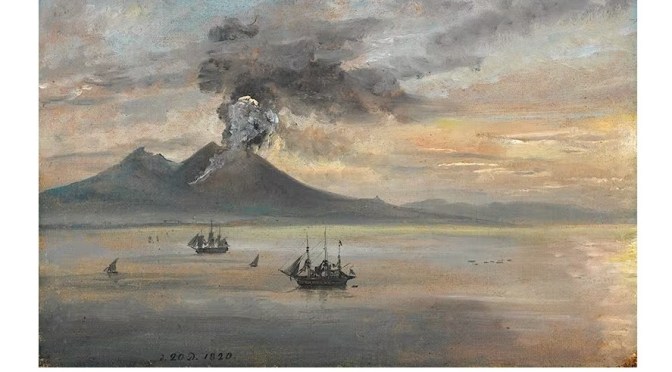
‘It is desirable for a Painter, at least once in his life, to witness the Eruption of a volcano.’ – Pierre-Henri de Valenciennes (1799). Join exhibition contributor Clive Oppenheimer, Professor of Volcanology at the Department of Geography at the University of Cambridge, and explore the ‘Volcanoes’ section of True to Nature. #TrueToNature is open at the Fitzwilliam Museum until 29 August 2022 https://fitz.ms/ttn
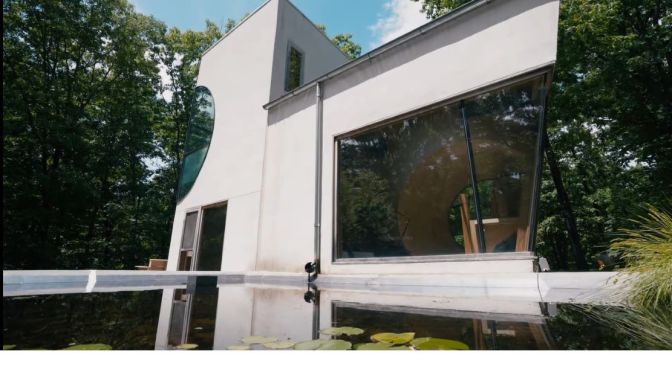
Today Architectural Digest brings you two hours north of New York City to Rhinebeck, NY for an in-depth look at a home that feels like an inhabitable work of art. Architects Steven Holl and Dimitra Tsachrelia explain the design philosophy and inspiration behind their secluded, off-grid “architectural wonder in the woods,” breaking down the intent behind each design choice and how they work together to create a uniquely meditative but stimulating space.
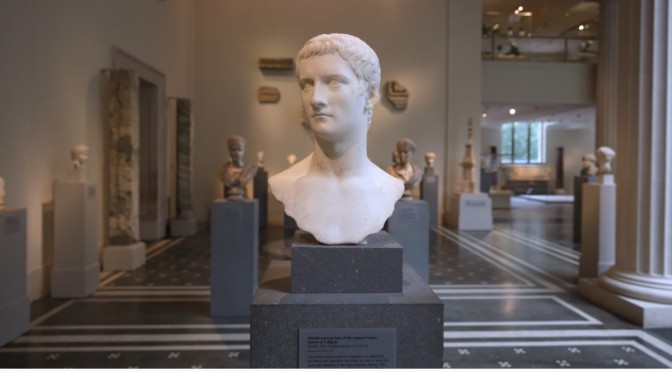
Archaeologists Vinzenz and Ulrike Koch Brinkmann have spent the last 40 years dedicated to the study of polychromy—or “many colors” in Greek—in ancient sculpture. Once a fringe area of study, their research combats the misconception of white purity in ancient Greece and Rome. They reflect on the marble bust of Caligula and how the reconstruction of its former color can help us better understand history.
Attirement of the Bride is an example of Max Ernst’s veristic or illusionistic Surrealism, in which a traditional technique is applied to an incongruous or unsettling subject. The theatrical, evocative scene has roots in late nineteenth-century Symbolist painting, especially that of Gustave Moreau. It also echoes the settings and motifs of sixteenth-century German art. The willowy, swollen-bellied figure types recall those of Lucas Cranach the Elder in particular. The architectural backdrop with its strong contrast of light and shadow and its inconsistent perspective shows the additional influence of Giorgio de Chirico, whose work had overwhelmed Ernst when he first saw it in 1919.
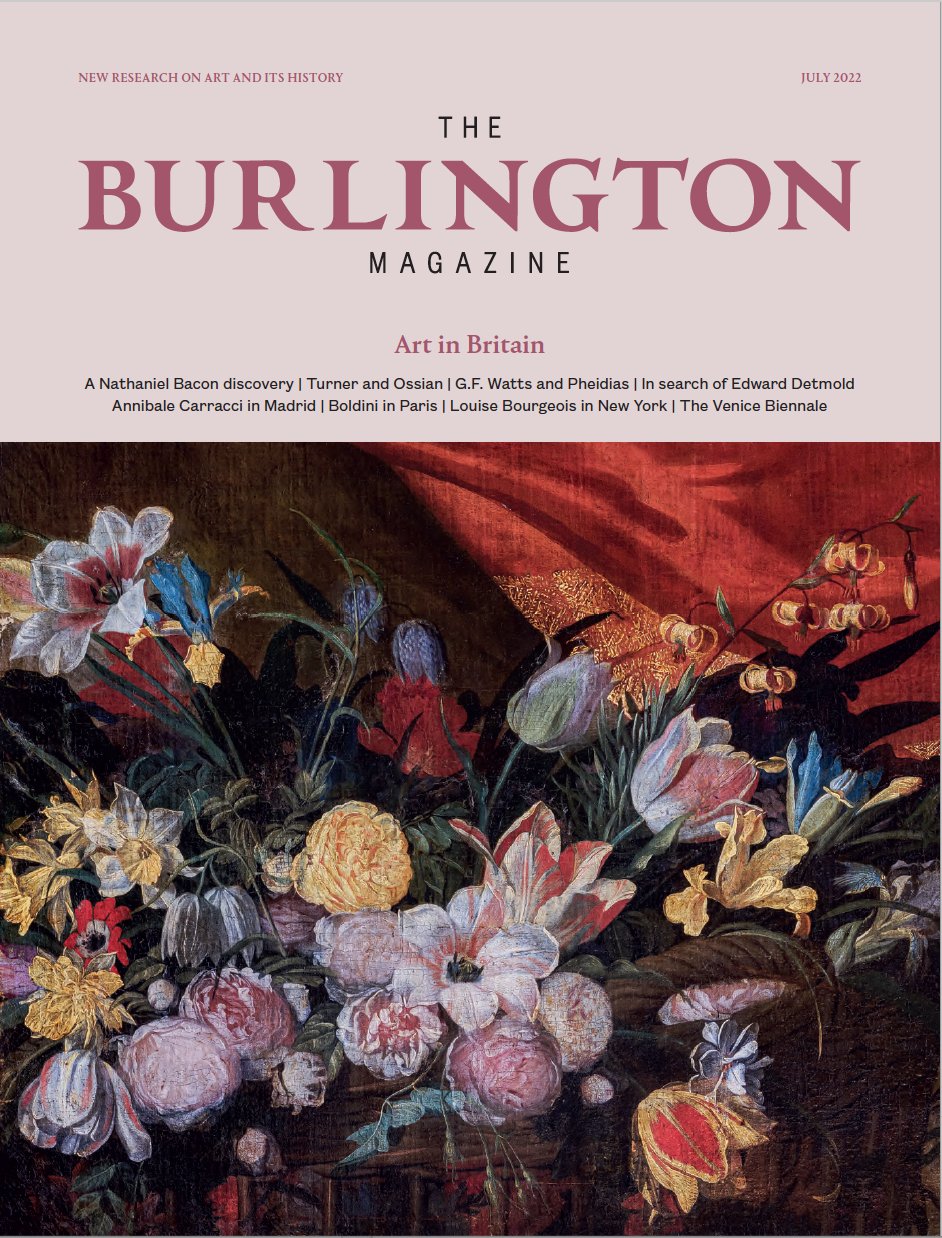
‘Je vois red’ raged Louise Bourgeois (1911–2010) on one of the loose sheets of paper that she made notes on, most often about herself and her work and, in this case, about the painting Natural history #2 (1944; Easton Foundation, New York), which struck her as all going wrong. Slipping between two languages, Bourgeois’s fury conforms to the themes of rage, the death drive and childhood aggression that the art historian Mignon Nixon has traced in the artist’s work in reference to the ideas of the psychoanalyst Melanie Klein.
News, Views and Reviews For The Intellectually Curious




 Boomers Daily