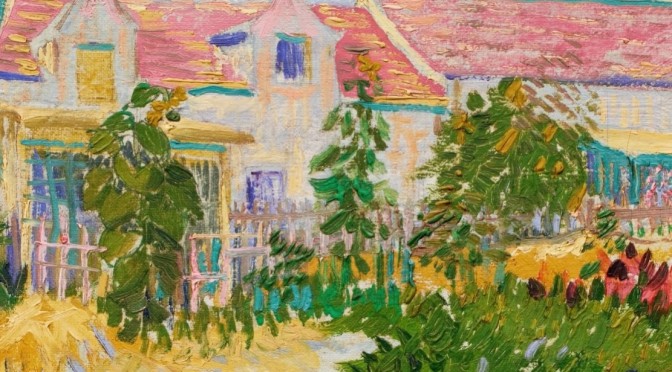
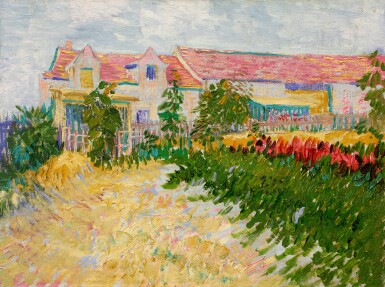
Sotheby’s (May 3, 2023) – ‘Jardin devant le Mas Debray’ captures this pivotal moment in summer of 1887 where color, subject and paint handling crystallized into Van Gogh’s mature style, one that would flourish in the three years remaining of his life in Paris, Arles, Saint-Rémy-de-Provence and Auvers-sur-Oise.
It was during this period of time, from 1887 to 1890, that Van Gogh’s greatest masterpieces were created, forever changing in the history of modern art. Surrounded by artists, dancers, musicians, actors and writers in Montmartre, Van Gogh abandoned the dark palette that dominated many of his early paintings in Holland and replaced it with a newfound love of color.
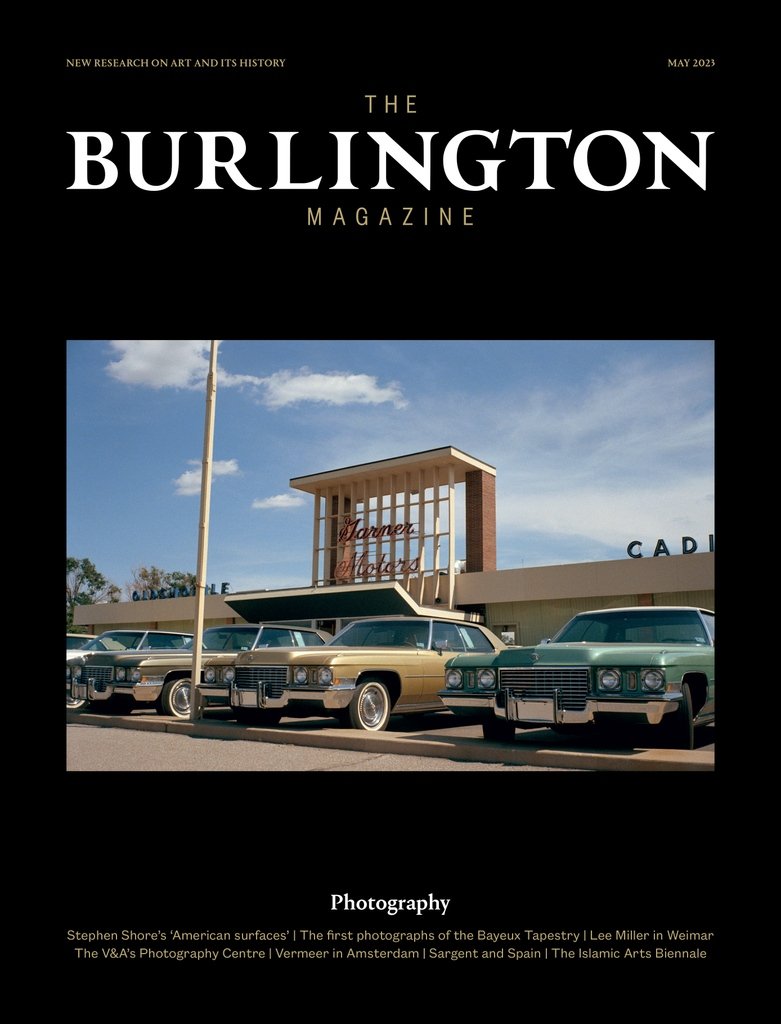
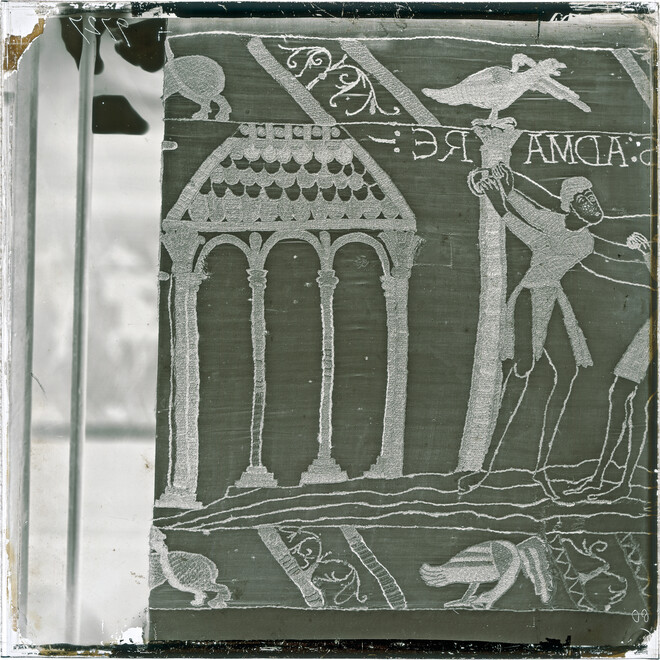
The Burlington Magazine – May 2023:Anxiety about the future of the two great photographic libraries housed in the Courtauld Institute of Art, London, can be traced back at least thirty years. In October 1992 we published an Editorial, ‘The Witt and Conway libraries under threat’, which was prompted by a demand from the University of London that the Courtauld – not yet a self-governing and self-financing entity – produce a business plan that would show how the libraries could develop commercial opportunities to offset a threatened reduction in university funding.
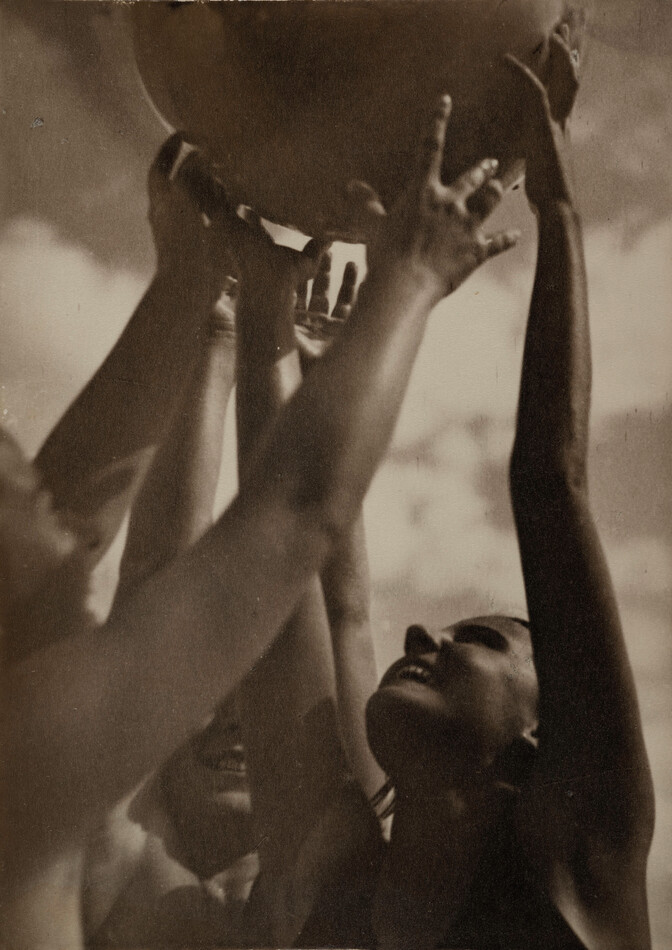
Although Mey Rahola (1897–1959) was one of the first women to become renowned for art photography in Spain, she remains a little-known figure today. Two linked exhibitions with a single catalogue dedicated to the Catalan photographer set out to rectify this and liberate an overlooked artist from the shadow of anonymity. Working with Rahola’s family, the curators, Lluís Bertran Xirau and Roser Martínez Garcia, have assembled 550 items from her collection, including 250 negatives and a number of photograph albums. That this material had been handed down and divided between the artist’s friends and family is testimony to her interest in her posterity. The fact that, nonetheless, Rahola has remained largely unknown, one is reminded in the exhibition catalogue, is a result partly of her status as a female photographer operating in the early twentieth century and partly of the events of the Spanish Civil War, which ruptured her burgeoning career.
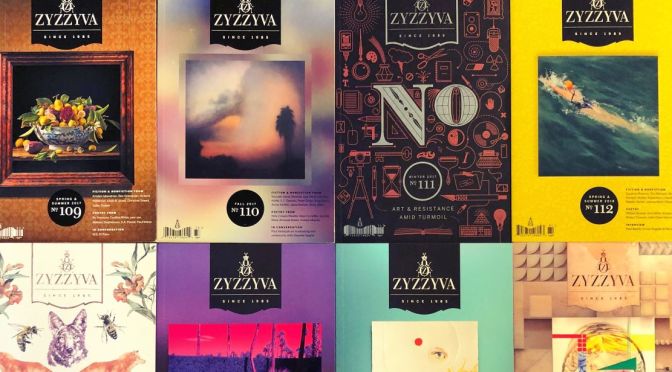
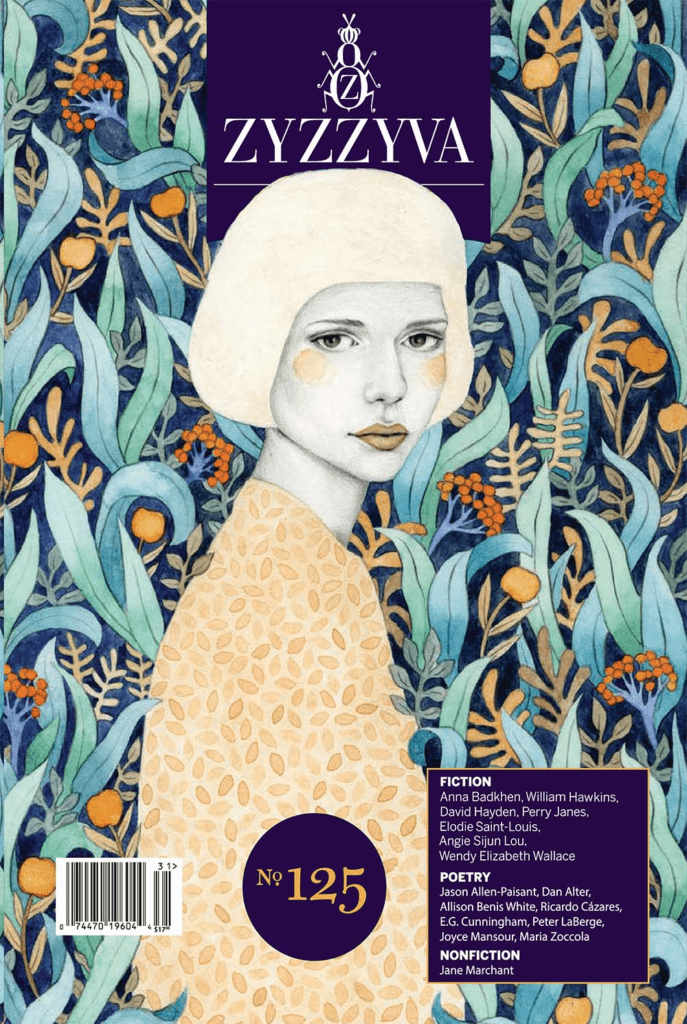
The Mysteries of the Universe by Anna Badkhen: “I see now what this is about. I’m a professor and author in America, she’s in a war zone: to her, I’m rich and happy. How is she supposed to know about the cancer, the medical debt, Ksyusha’s student loans? So, I try to deflect.”
Encyclopedia of Botany by Jane Marchant: A daughter’s closely observed catalog of the flora around her Bay Area home, and of her family’s complex history of identity.
Glint of Sport by Angie Sijun Lou: “I don’t know if this story is true. You can’t divide truth from kitsch in this place…”
Eulogy by William Hawkins: In the wake of a funeral, a dead father’s legacy hangs over his surviving adult sons as they trudge into the lukewarm waters of the lake by the family pier.
The Eye by Elodie Saint-Louis: “When Theo spoke, she thought, you could see all of these places on his body. Vyros, Hymettus, Loutro, Parnitha. The land was in him. It was the river running out of his mouth. The words that bumped into each other gently but never spilled over, petering out into a gentle sway.”
Plus more fiction by Perry Janes, David Hayden (there be strange happenings in a dilapidated insurance building in Chicago), and Wendy Elizabeth Wallace.
Nonfiction
Jane Marchant on the flora around her Bay Area home—and her family’s complex history of identity.
Poetry
Jason Allen-Paisant, Dan Alter, Allison Benis White, Ricardo Cázares, E.G. Cunningham, Peter LaBerge, Joyce Mansour, Maria Zoccola
Sotheby’s (May 1, 2023) – Returning each season to live and paint in Truro elevated Hopper’s art, allowing him to concentrate on the simplification of forms and the depth of both light and color woven into the surrounding landscape.
Both his technical approach to painting and his perception of the world from 1930 onwards are greatly informed by the Cape. Cobb’s Barns, South Truro derives its bright palette and topographical features from Hopper’s immediate environment, and is emblematic of the profound influence that life in South Truro had on his manner of painting.
Group of Houses, dated 1923-24, stems from a pivotal stage in the development of Edward Hopper’s career. Residential homes occupy much of Hopper’s subject matter in these early watercolors, and Group of Houses is no exception. These charming saltbox houses are typical for the Cape Ann region, whose architectural style reflects its coastal New England atmosphere.
The Battery, Charleston, S.C., dated 1929, is the result of Hopper’s three-week stay in the charming southern city, which is renowned for its Georgian-style architecture and cobblestone streets lined with lush palm trees. His Charlestown pictures possess an inherently tropical feeling, which sets them apart from his otherwise New England-focused oeuvre.
Red Barn in Autumn Landscape is among the limited number of watercolors that Hopper completed during the fall of 1927 in Vermont, and embodies the rustic quality of the New England scenery that drew Hopper to this region in the first place. Hopper routinely sketched his surroundings in coastal towns on the Cape or along the Maine shore, but Red Barn in Autumn Landscape is quite unique in that it captures a specific fall moment as the leaves gradually fade from green to burnt orange and red. The present work is emblematic of the simplicity and charm that characterize Hopper’s New England watercolors.
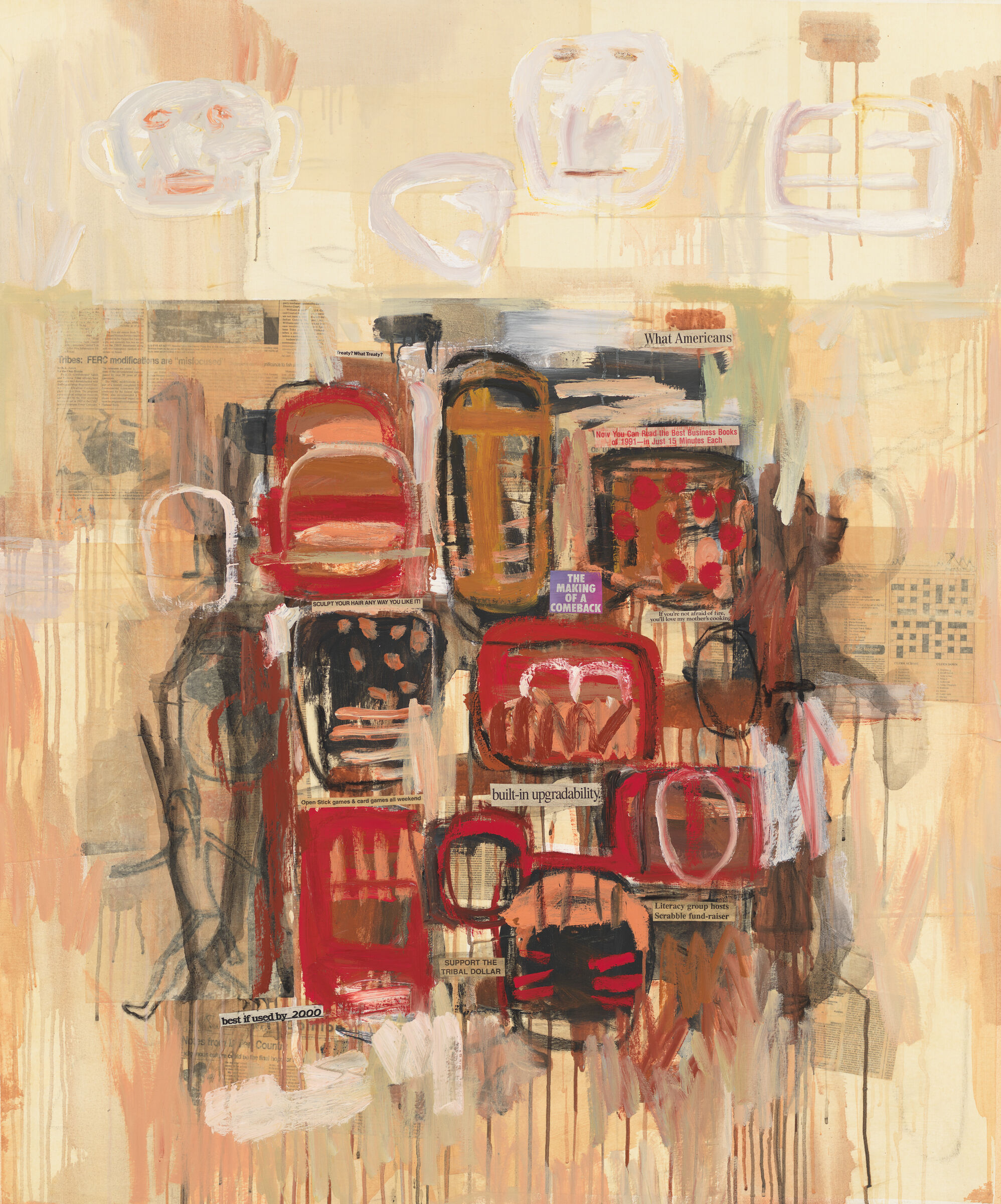
Art Trip (April 30, 2023) – A tour of the new exhibition – ‘Jaune Quick-to-See Smith: Memory Map’, at the Whitney Museum of American Art. The first New York retrospective brings together nearly five decades of Smith’s drawings, prints, paintings, and sculptures in the largest and most comprehensive showing of her career to date.
This exhibition is the first New York retrospective of Jaune Quick-to-See Smith (b. 1940, citizen of the Confederated Salish and Kootenai Nation), an overdue but timely look at the work of a groundbreaking artist. Jaune Quick-to-See Smith: Memory Map brings together nearly five decades of Smith’s drawings, prints, paintings, and sculptures in the largest and most comprehensive showing of her career to date.
Smith’s work engages with contemporary modes of making, from her idiosyncratic adoption of abstraction to her reflections on American Pop art and neo-expressionism. These artistic traditions are incorporated and reimagined with concepts rooted in Smith’s own cultural practice, reflecting her belief that her “life’s work involves examining contemporary life in America and interpreting it through Native ideology.” Employing satire and humor, Smith’s art tells stories that flip commonly held conceptions of historical narratives and illuminate absurdities in the formation of dominant culture. Smith’s approach importantly blurs categories and questions why certain visual languages attain recognition, historical privilege, and value.
CBS Sunday Morning (April 30, 2023) – Bill Blackbeard was something of a superhero. During his lifetime, he collected and preserved 2.5 million ephemeral artifacts of comic strip art, including newspapers and Sunday color sections dating as far back as 1893.
Treasures from his collection are now featured in a new exhibit, “Man Saves Comics,” at the Billy Ireland Cartoon Library & Museum at Ohio State University. Correspondent Luke Burbank reports.
BERRY CAMPBELL GALLERY (April 30, 2023): An exhibition of Abstract Expressionist Ethel Schwabacher (1903-1984). Schwabacher joins the gallery’s stable of women artists whose ambitious, independent, and insightful art is essential to a complete historical understanding of the ‘downtown’ art scene in the 1950s.
Many of the thirteen works have not been on view since they were shown at one of her five solo exhibitions at Betty Parsons Gallery, including the large-scale center piece to the show entitled, Prometheus (1959). Ethel Schwabacher: Woman in Nature(Paintings from the 1950s) focuses on Schwabacher’s unique brand of abstraction, which is characterized by both automatic drawing and sweeping brushstrokes that swirl across the surface of the canvas and which explores themes of motherhood, landscape, and creativity.
As part of the resurgence of women artists, Ethel Schwabacher was one of the twelve women artists included in the landmark traveling exhibition Women of Abstract Expressionism organized by the Denver Art Museum in 2016. Concurrently with the Berry Campbell exhibition, Action! Gesture! Paint! is on view at the Whitechapel Gallery in London featuring 91 international women artists, including a major Ethel Schwabacher painting from the 1950s.
Sotheby’s (April 28, 2023) –Looking for some inspiration for your next museum visit? This month, we’re taking a tour of six of the world’s most exciting and innovative museum exhibitions with Tim Marlow, Director of the Design Museum, London.
Doris Salcedo – Fondation Beyeler, Riehen, 21 May–17 September 2023 – Salcedo is a Colombian-born artist, whose central subject is human trauma and tragedy. Though much of her work emanates from the violent conflict over the last three decades in her native land, its resonance is universal. Doris Salcedo presents eight major series of works from across her career – from untitled pieces of wooden furniture filled with concrete to the remarkable Palimpsest in which the names of over 300 refugees and migrants who died at sea quite literally weep before our eyes.
Vincent van Gogh 2023 marks the 170th anniversary of Vincent van Gogh. Three exhibitions opening this month look set to enhance our understanding of the great Dutch painter:
Van Gogh and the Avant Garde The Art Institute of Chicago 14 May–4 September 2023 – Van Gogh and the Avant Garde takes the modern landscape as its central subject and looks at how the artist – along with Seurat, Signac and others – turned his attention from urban Parisian life to wrestling with the surrounding countryside with a formal inventiveness that set the tone for the development of Modernism.
Van Gogh’s Cypresses The Metropolitan Museum of Art, New York 22 May–27 August 2023 – From the religious connotation of trees in graveyards to their role as the backdrop of his incarceration at the asylum in Saint-Remy, the artist’s flame-like evergreens will be presented with all their evocative resonance in Van Gogh’s Cypresses,
Van Gogh in Auvers. His Final Months Van Gogh Museum, Amsterdam 12 May–3 September 2023 – The unsurpassable Van Gogh Museum will celebrate its own 50th anniversary with Van Gogh in Auvers. His Final Months – an exhibition delving into the tremendously productive final period of his life, in which he made several of his most renowned masterpieces.
The Art Newspaper April 27, 2023: This week: AI and art. We explore some of the key aspects relating to artificial intelligence and its use in the art world: the works being made using AI technologies and exploring their impact; anxieties about machines replacing humans; the idea of AIs being able to think and create independently; and whether we can truly grasp the significance and possible effects of the technologies and those who control it, and more.
Host Ben Luke talks to Noam Segal—an associate curator at the Solomon R. Guggenheim Museum, New York, whose focus is on technology-based art—about AI, its history in art, its social and environmental effects, and how artists are using it today. The Art Newspaper’s live editor, Aimee Dawson, talks to the artist and writer Gretchen Andrew about making art with AI and together they explore its wider application across the art world.
And this episode’s Work of the Week is Pseudomnesia: The Electrician, an image made using AI by the photographer Boris Eldagsen. The piece caused controversy earlier this month when it was awarded a prize at the Sony World Photography Awards, which Eldagsen refused to accept. The researcher and photographer Lewis Bush discusses the work, the controversy and wider questions around AI and photography.
François Ghebaly Gallery, New York City (April 27, 2023) – François Ghebaly is proud to present Station by Matt Bollinger. Ithaca-based artist Matt Bollinger works from a complex interdisciplinary base: as painter, draftsman, animator, and elegist, he creates work that straddles the projects of both visual art and narrative fiction.
His stories, by and large, are of America’s rural working class–each is told through a bricolage of memory, family history, direct observation, art-historical research, and literary invention. For his latest exhibition, Bollinger chronicles the semi-fictional inhabitants of a rural central Missourian community, offering in the process ruminative, disillusioned vignettes of the real ‘American Dream.’
Matt Bollinger, Brothers V, 2022.
Spanning the far wall, Uncle Dave (2023) is the most ambitious work in Bollinger’s show–with its impressive vertical dimension, some eight feet-tall, the painting acts as an anchor to the New York gallery space, drawing the eye in and upward. The work depicts three sanitation workers surrounding the bright yellow cab of a dump truck. Framed by wildflowers underfoot and the scintillating glare of another truck’s headlight, the men are shown in progressive life stages.
Matt Bollinger, Cape Hollow II, 2022.
At the far right, the youth holds a rake and stares listlessly out of view. The middle-aged man, partially obscured, gestures forward with a lighter and a yellow traffic flag, while the eldest is positioned above the other men and descends from the cab, directly confronting the viewer’s gaze. The work’s triadic symbol of labor, class, and the passage of time ––alongside compositional affinities, somewhere between Courbet and religious genre painting ––underscores many of the themes latent both in the exhibition title and in the artist’s work at large.
News, Views and Reviews For The Intellectually Curious











 Boomers Daily