Tag Archives: Art History

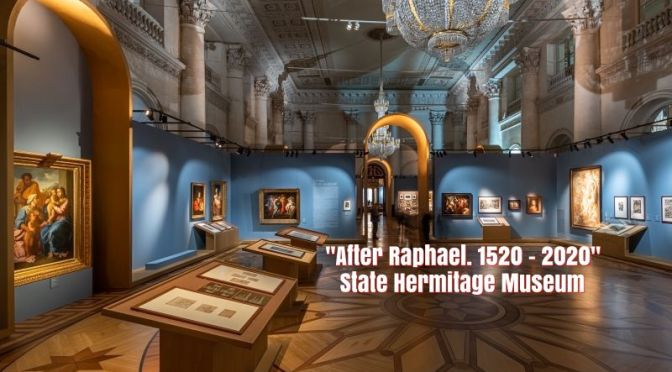
Art: ‘After Raphael. 1520 -2020’ – State Hermitage Museum, Russia (Video)

A film about the Exhibition “After Raphael. 1520 – 2020” at the State Hermitage Museum. Director of the film – Manas Sirakanyan. The film was made with the support of the U.S. Ambassadors Fund for Cultural Preservation, U.S. Embassy Moscow and the Hermitage Museum Foundation (USA)

Raphael is the most influential artist of the Modern Era. Over the course of five centuries, exponents of Mannerism and Academicism, Caravaggisti and masters of the Baroque, Romantics and Modernists have invariably compared their own work with Raphael’s legacy. What is the cause of such fame? What did his name represent in this or that historical period, and what does it represent today? What connects the artist’s followers in different centuries? The exhibition in the Hermitage is an attempt to answer those questions and to look at the art of the past 500 years through the lens of Raphael’s influence.

The large-scale display includes more than 300 exhibits – paintings, graphic art, sculpture and applied art from the Hermitage’s own stocks and twelve other collections in Russia and Western Europe. They include both famous masterpieces and previously unknown works. Dozens of paintings and pieces of graphic art are leaving the museum’s storerooms and being presented to the public for the first time, while a whole number of the exhibits are going on show after painstaking restoration in the Hermitage’s workshops.

The display opens with works by the master himself: a painting and drawings from European collections. Without claiming to be a full representation of the artist’s oeuvre, they serve to set the tone, as it were, and after viewers have “tuned themselves in” it will be easier for them to identify echoes of Raphaelesque harmony in the works from later centuries. The choice of graphic art for this purpose reveals another dimension to the main metaphor: it is specifically the beauty of the clear, precise line, so evident in the drawings made by the master’s own hand, that lies at the foundation of the aesthetics of Raphael himself and many of his followers.

Cocktails With A Curator: ‘David’s “Comtesse Daru”

In this week’s episode of “Cocktails with a Curator,” savor the exquisite details of “Comtesse Daru,” the only painting in the Frick’s collection by renowned French neoclassical painter Jacques-Louis David. Join Curator Aimee Ng as she delves into the history of how this lovely, intimate portrait came to be painted by an artist largely known for producing monumental works in the service of Napoleon. This week’s complementary cocktail, the Orange Blossom, is inspired by the orange-blossom tiara that adorns the sitter’s head.

To view this painting in detail, please visit our website: https://www.frick.org/comtessedaru

Artists: ‘The Vibrancy Of The Scottish Colourists’

The Scottish Colourists were some of the most important and avant-garde artists working during the early 20th century. Their art was bold and vibrant and unlike anything that had been produced in Britain before. Sotheby’s upcoming sale ‘The Way of Colour: Pictures from the Harrison Collection’ (10 – 17 March) offers Fauvist inspired paintings by George Leslie Hunter, stunning still-lifes by Francis Campbell Boileau Cadell and Cezanne-like work by Samuel John Peploe.

Cocktails With A Curator: Antico’s “Hercules” (Video)

In this week’s episode of “Cocktails with a Curator,” we welcome the Frick’s new Assistant Curator of Sculpture, Giulio Dalvit. In his premiere episode, he discusses one of the important bronze statuettes in the collection, a “Hercules” by Antico. A celebrated artist of great technical virtuosity, Antico worked primarily for the powerful Gonzaga family in Mantua in the late fifteenth and early sixteenth centuries. In celebration of Isabella d’Este, the marchioness of Mantua and one of Antico’s patrons, thisweek’s complementary drink is a glass of Malvasia, a sweet wine that Isabella would drink at breakfast. To view this object in detail, please visit our website: https://www.frick.org/anticohercules

Cocktails With A Curator: ‘Piero Della Francesca’

In this week’s episode of “Cocktails with a Curator,” Deputy Director and Peter Jay Sharp Chief Curator Xavier F. Salomon explores Piero della Francesca’s “St. John the Evangelist,” one of the few major works by the Renaissance artist in the United States. This striking panel was originally part of a polyptych commissioned for the high altar of Sant’Agostino in Piero’s hometown of Borgo San Sepolcro. The polyptych was probably dismembered in the mid-16th century, less than one hundred years after it was made, and many fragments are now lost. Enjoy this week’s program with a bourbon-powered Saint cocktail or a refreshing Grapefruit Citrus mocktail.SHOW LESS

Cocktails With A Curator: ‘El Greco’s “Vincenzo Anastagi”‘ (Frick Video)

In this week’s episode of “Cocktails with a Curator,” journey to sixteenth-century Rome with Deputy Director and Peter Jay Sharp Chief Curator Xavier F. Salomon as he discusses El Greco’s “Vincenzo Anastagi,” one of three important paintings by the Renaissance artist in the Frick’s collection. Born in Crete, El Greco spent a formative seven years in Rome, where he painted this rare, full-length portrait of a minor aristocrat from Perugia then serving as Sergeant Major of Castel Sant’Angelo. Look closely at this unusual painting while sipping an Ouzo Lemonade, which gets its kick from the anise-flavored spirit popular in the artist’s birthplace.

To view this painting in detail, please visit our website: https://www.frick.org/anastagielgreco

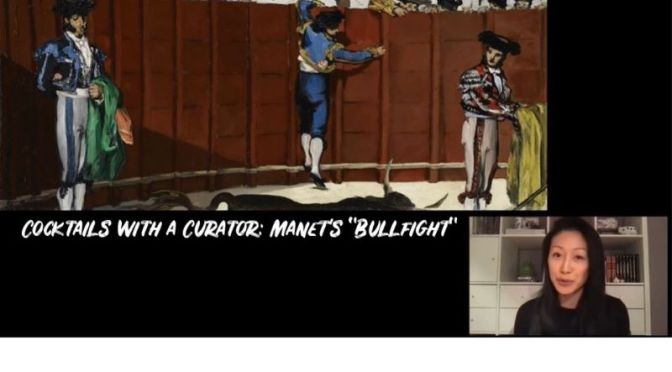
Cocktails With A Curator: Manet’s “Bullfight” (Video)

n this week’s episode of “Cocktails with a Curator,” Curator Aimee Ng explores the turbulent history behind Édouard Manet’s “Bullfight,” once part of a larger work that the artist exhibited at the Salon of 1864. The original canvas was derided and caricatured by critics, prompting Manet to cut it into pieces. The two surviving fragments were brought together for the first and only time during a 1999 exhibition at the Frick. This week’s complementary cocktail is, fittingly enough, the Toreador.

To view this painting in detail, please visit our website: https://www.frick.org/manetbullfight

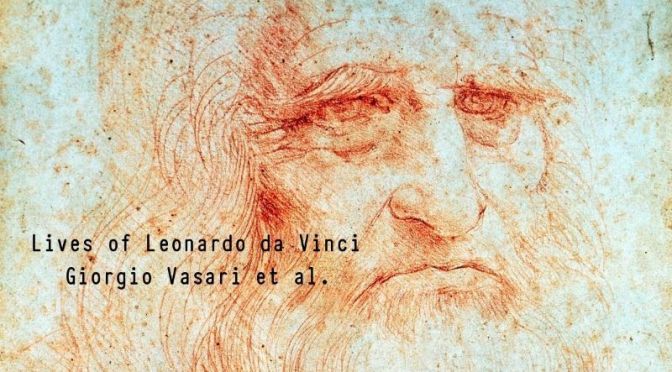
Arts Podcast: ‘Lives Of Leonardo da Vinci’ (Getty)

In this episode, Getty curator Davide Gasparotto discusses early accounts of Leonardo’s life and how they shaped our understanding of the artist. Passages from these biographies were recently collected in the Getty Publications book Lives of Leonardo da Vinci.

“He was a great artistic personality, crucial for the development, in some way, of what we think as the modern science. But he was not alone.”

Leonardo da Vinci died more than 500 years ago, but he is still revered as a genius polymath who painted beguiling compositions like the Mona Lisa, avidly studied the natural sciences, and created designs and inventions in thousands of journal pages. Even during Leonardo’s lifetime, contemporaries marveled at the artist’s great skill and wide-ranging pursuits, but many also noted his perfectionism and difficulty completing projects. Since his death, the legends surrounding his life and personality have continued to grow. Today Leonardo’s story inspires novels and his work brings record-breaking prices, demonstrating his enduring relevance and mystique.

Read more at Getty Museum Store

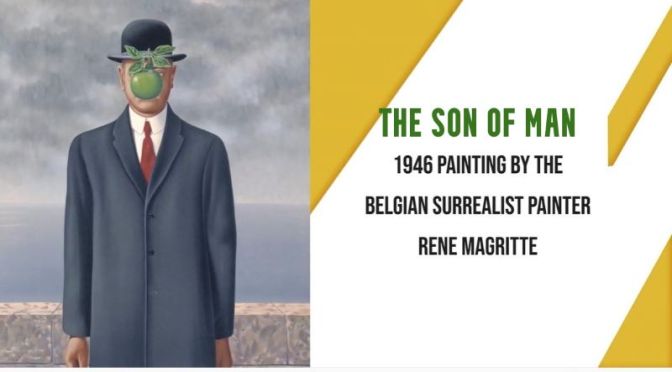
Paintings: ‘The Son Of Man’ By Belgian Surrealist Rene Magritte In 1946 (Video)

The “Son of Man” is an iconic painting by Belgian Surrealist artist Rene Magritte.

Rene Magritte was an internationally acclaimed surrealist artist of all time, yet it was not until his 50s, when he was finally able to reach some form of fame and recognition for his work. Rene Magritte described his paintings saying, “My painting is visible images which conceal nothing; they evoke mystery and, indeed, when one sees one of my pictures, one asks oneself this simple question, ‘What does that mean?’ It does not mean anything, because mystery means nothing, it is unknowable.”

Magritte was born in 1898, to a wealthy manufacturer father. In 1912, his mom was found drowned in the River Sambre. She had committed suicide, and the family was publicly humiliated because of it. From 1916 to 1918, Rene decided to study at the Academie des Beaux-Art, which was located in Brussels. He left the school, because he thought that it was a waste of time. All his paintings afterward reflect cubism, the movements which were introduced by Pablo Picass and was very popular at the time. In 1922 he married Georgette, and took a number of small jobs, including painting cabbage roses for a wallpaper company, in order to be able to pay the bills.

During the early period of his career, shortly following his marriage, Rene Magritte would spend the free time that he had, creating art forms and worked on a number of pieces; it was during this time period that he realized surrealism was the art form which he most enjoyed. The Menaced Assassin was one of his earliest pieces in 1926, which showcased the surrealist style which he had been working on; The Lost Jockey was another piece that he introduced in 1925, which also showcased this art form. Over the course of his career, he produced a number of variants on this piece, and changed the format to recreate what the viewer was experiencing.

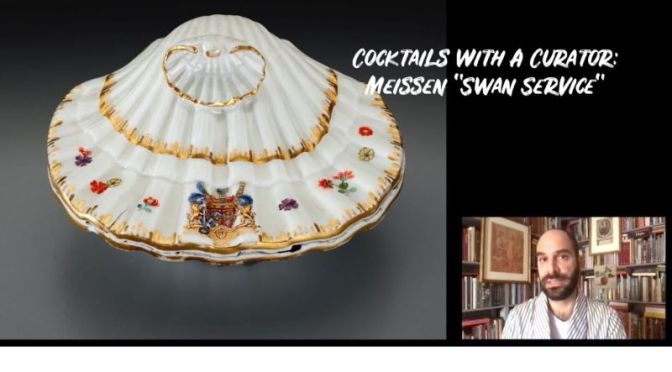
Cocktails With A Curator: Meissen “Swan Service”

This week’s episode of “Cocktails with a Curator” is a story of creation and destruction. Join Deputy Director and Peter Jay Sharp Chief Curator Xavier F. Salomon as he examines two pieces of the legendary Meissen “Swan Service,” which was all but destroyed during World War II when Russian soldiers ransacked a palace in the Polish village of Brody. This opulent set of dishes was given by Augustus III, King of Poland, to the statesman Heinrich von Brühl, who helped engineer Augustus’s ascent to the throne in 1734. Originally comprised of 2,200 intricately designed pieces, only about 100 pieces survive. This week’s complementary cocktail is a spiked hot chocolate.

Meissen porcelain or Meissen china was the first European hard-paste porcelain. Early experiments were done in 1708 by Ehrenfried Walther von Tschirnhaus.

To view these objects in detail, please visit our website: https://www.frick.org/swanmeissen