Tag Archives: Art History

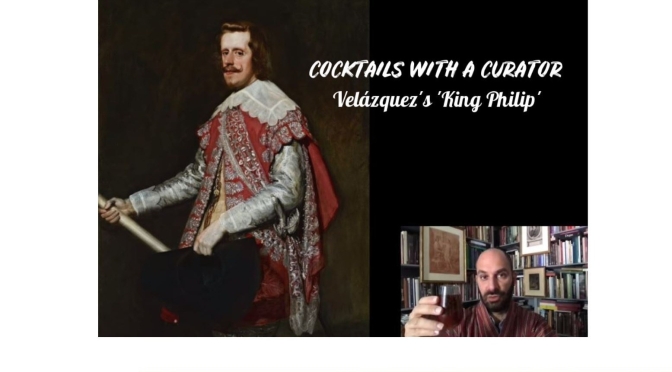
Art: “Cocktails With A Curator – Velázquez’s ‘King Philip'” (The Frick)

In this week’s episode of “Cocktails with a Curator,” join Xavier F. Salomon, Peter Jay Sharp Chief Curator, as he discusses the sole Velázquez painting at the Frick, “King Philip IV of Spain,” while enjoying a Fitifiti, the popular Spanish cocktail. Examine the extraordinary details and painterly skills that illustrate why the artist is regarded by many (including Xavier) as the greatest European painter who ever lived, and why this work was Henry Clay Frick’s favorite

Read more

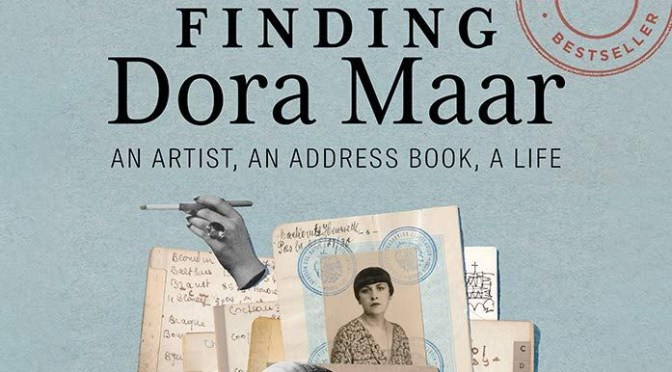
New Art History Books: “Finding Dora Maar – An Artist, An Address Book, A Life” – Brigitte Benkemoun

Finding Doram MaarIn search of a replacement for his lost Hermès agenda, Brigitte Benkemoun’s husband buys a vintage diary on eBay. When it arrives, she opens it and finds inside private notes dating back to 1951—twenty pages of phone numbers and addresses for Balthus, Brassaï, André Breton, Jean Cocteau, Paul Éluard, Leonor Fini, Jacqueline Lamba, and other artistic luminaries of the European avant-garde.

After realizing that the address book belonged to Dora Maar—Picasso’s famous “Weeping Woman” and a brilliant artist in her own right—Benkemoun embarks on a two-year voyage of discovery to learn more about this provocative, passionate, and enigmatic woman, and the role that each of these figures played in her life.

Longlisted for the prestigious literary award Prix Renaudot, Finding Dora Maar is a fascinating and breathtaking portrait of the artist.

Brigitte Benkemoun is a journalist and writer. She is the author of La petite fille sur la photo (2012) and Albert le Magnifique (2016). Jody Gladding is a poet and translator. She has translated some thirty books from French, including, most recently, Roland Barthes’s Album: Unpublished Correspondence and Texts (2018), Michel Pastoureau’s Yellow: The History of a Color (2019), and Jean Giono’s Occupation Journal (2020).

Read more or purchase

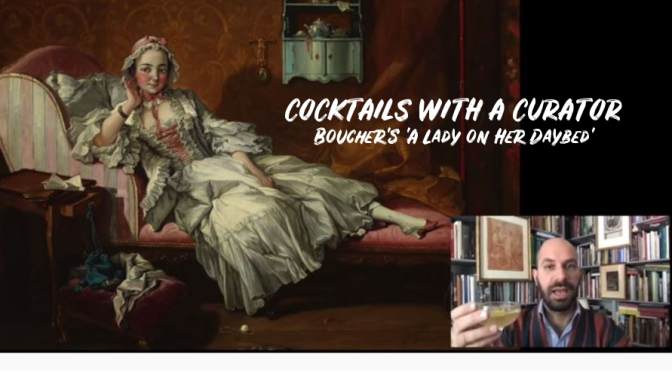
Cocktails With A Curator: Boucher’s ‘A Lady On Her Daybed’ (Frick Collection)

In this episode of “Cocktails with a Curator,” Xavier F. Salomon, Peter Jay Sharp Chief Curator, examines the life and work of French painter François Boucher, with a focus on “A Lady on Her Daybed.” Discover why Boucher was said to epitomize the taste of the eighteenth century.

This week’s complementary cocktail has a kick: the potent French 75, named after the powerful French 75mm field gun.

Read more

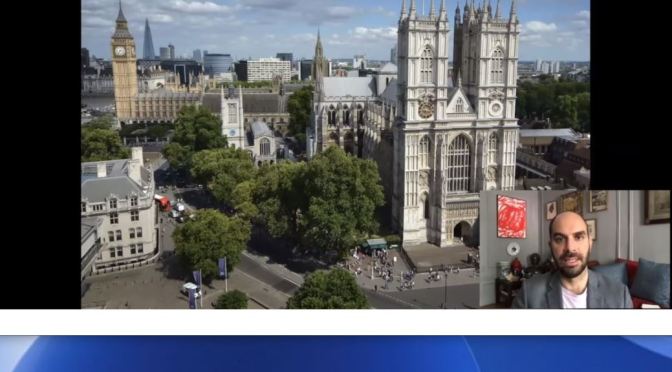
History: “Travels With A Curator: Westminster Abbey, London” (The Frick)

In this episode of “Travels with a Curator,” we visit the world-famous Westminster Abbey in London, with Xavier F. Salomon, Peter Jay Sharp Chief Curator. Xavier shares connections between Westminster Abbey and the Frick through an examination of the life of General John Burgoyne, a playwright, parliamentarian, and military officer buried in the Abbey’s north cloister. Sir Joshua Reynolds’s portrait of Burgoyne was acquired by The Frick Collection in 1943.

To see this painting in detail, please visit our website: https://collections.frick.org/objects.

Art History: “The Lives of Caravaggio” (The Getty)

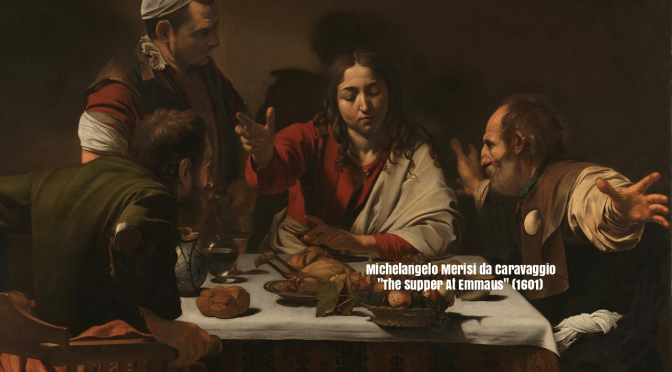
Art + Ideas - Getty PodcastsMichelangelo Merisi da Caravaggio is one of the most admired painters of the late 16th and early 17th centuries. Known for his powerful, dramatically lit compositions, Caravaggio depicted violence and the human form with a degree of realism unprecedented at the time. He was among the most famous painters in Rome—but not only because of his skill as an artist.

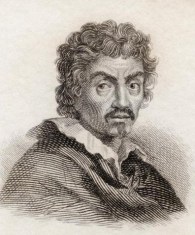
Michelangelo Merisi da CaravaggiCaravaggio was also notorious for his wild life and shocking temper. After being sentenced to death for murder, he fled Rome and died in exile at age 38 . Three biographies written in the decades after his death constitute nearly all that is known about the enigmatic artist.

In this episode, Getty curator and expert on Italian painting Davide Gasparatto discusses Caravaggio and the role these early biographies, by Giulio Mancini, Giovanni Baglione, and Giovanni Pietro Bellori, played in defining Caravaggio’s legacy.

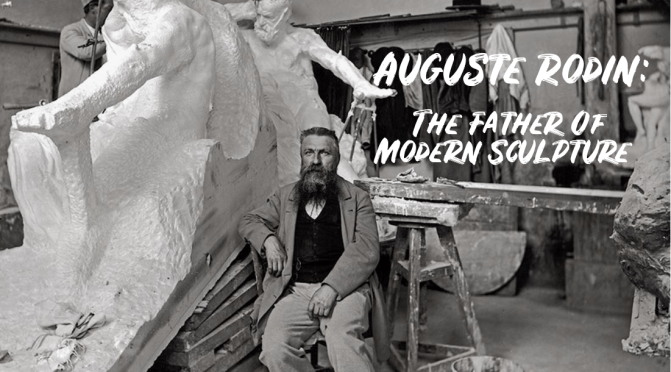
Art History: “Auguste Rodin – The Father Of Modern Sculpture”

From Christie’s online magazine (May 2020):

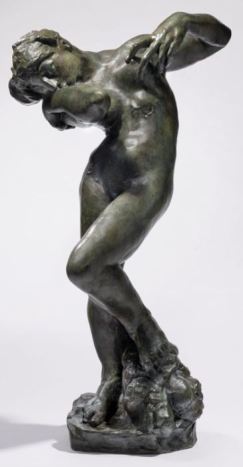
Auguste Rodin (1840-1917) Meditation, small model, type I version

Rodin travelled to Italy in 1875, a trip described by the late art historian Kirk Varnedoe as, ‘one of the seminal events in modern art’.

Here, in his mid-thirties, he fell under the spell of the Renaissance master, Michelangelo. His monumental, exaggerated nude figures would have a deep and lasting influence on the artist. ‘My liberation from academicism was via Michelangelo,’ Rodin later recalled. ‘He is the bridge by which I passed from one circle to another.’

Auguste Rodin (1840-1917) is renowned for breathing life into clay, creating naturalistic, often vigorously modelled sculptures which convey intense human emotions: love, ecstasy, agony or grief. Breaking the rules of academic convention and classical idealism, Rodin ushered in a new form of highly expressive sculpture that went on to influence generations of artists that followed.

Christie's logo

Read full article at Christie’s


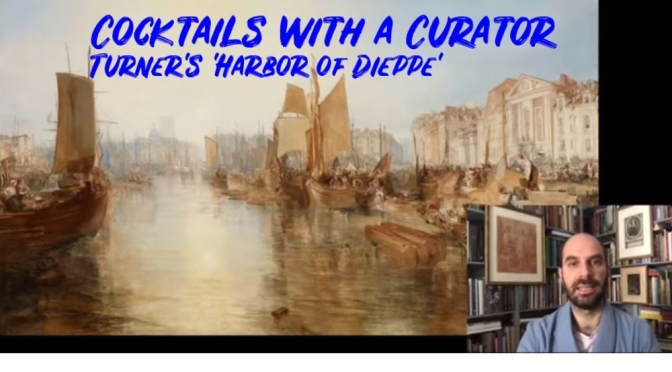
Art History: “Cocktails With A Curator – Turner’s ‘Harbor Of Dieppe'” (Frick)

In this episode of “Cocktails with a Curator,” Xavier F. Salomon, Peter Jay Sharp Chief Curator, discusses the French port city depicted in J. M. W. Turner’s painting “Harbor of Dieppe: Changement de Domicile,” and how the artist’s extensive travel throughout Europe helped to develop his affinity for harbors. The complementary cocktail is the Widow’s Kiss, a French drink traditionally given to women who had lost their husbands at sea.

To see this painting in detail, please visit our website: https://collections.frick.org/objects…


Art History Video: “Travels With a Curator – Lazienki Palace” In Warsaw (Frick)

In this episode of “Travels with a Curator,” we travel to Warsaw, Poland, with Xavier F. Salomon, Peter Jay Sharp Chief Curator. Xavier enchants us with the romantic Łazienki Park and Palace, also known as the Palace on the Isle. The idyllic gardens and ornately decorated interior spaces are similar in many ways to our own Frick mansion. One of the Frick’s Rembrandt paintings, “The Polish Rider,” once hung in the royal apartments on the second floor.

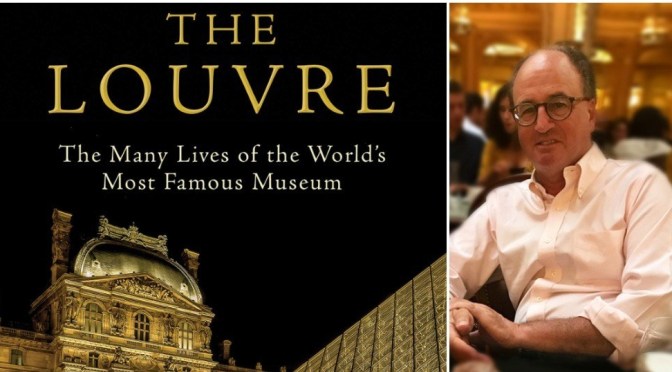
New Books: “The Louvre – The Many Lives Of The World’s Most Famous Museum” (James Gardner)

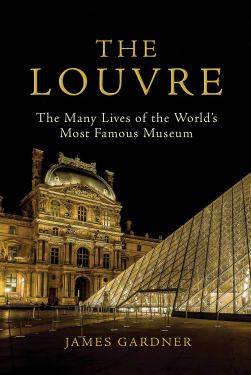
The Louvre James GardnerThe fascinating and little-known story of the Louvre, from its inception as a humble fortress to its transformation into the palatial residence of the kings of France and then into the world’s greatest art museum.

Some ten million people from all over the world flock to the Louvre each year to enjoy its incomparable art collection. Yet few of them are aware of the remarkable history of that place and of the buildings themselves―a fascinating story that historian James Gardner elegantly chronicles in the first full-length history of the Louvre in English.

More than 7,000 years ago, men and women camped on a spot called le Louvre for reasons unknown; a clay quarry and a vineyard supported a society there in the first centuries AD. A thousand years later, King Philippe Auguste of France constructed a fortress there in 1191, just outside the walls of a city far smaller than the Paris we know today. Intended to protect the capital against English soldiers stationed in Normandy, the fortress became a royal residence under Charles V two centuries later, and then the monarchy’s principal residence under the great Renaissance king François I in 1546.

It remained so until 1682, when Louis XIV moved his entire court to Versailles. Thereafter the fortunes of the Louvre languished until the tumultuous days of the French Revolution when, during the Reign of Terror in 1793, it first opened its doors to display the nation’s treasures. Ever since―through the Napoleonic era, the Commune, two World Wars, to the present―the Louvre has been a witness to French history, and expanded to become home to a legendary collection, including such masterpieces as the Mona Lisa and Venus de Milo, whose often-complicated and mysterious origins form a spectacular narrative that rivals the building’s grand stature.

James Gardner

James Gardner is an American art critic and literary critic based in New York and Buenos Aires. He is the author of six books, including Buenos Aires: The Biography of a City. His writings have appeared in the New York Times, the Wall Street Journal, the New Republic, and the British Spectator. He was the art critic at the New York Post and wrote architecture criticism for the New York Observer, before serving as the architecture critic at the New York Sun. He is now a contributing editor at The Magazine Antiques.

Read more or purchase

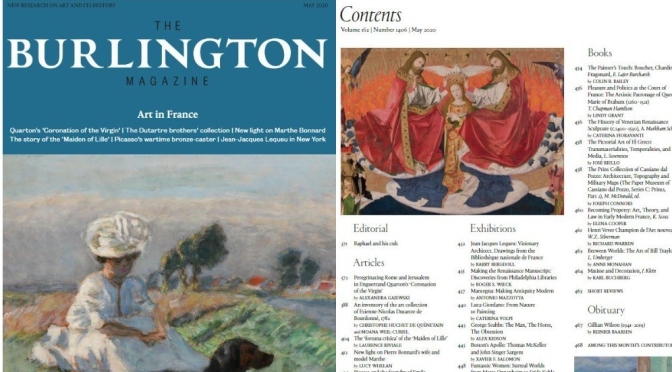
Fine Arts: “The Burlington Magazine May 2020” – The Best Of Art & Its History

Raphael and his cult

There is an unhappy irony in the fact that five hundred years after Raphael died of a fever at the age of only thirty-seven, the global covid-19 pandemic has brought to a premature end so many of the exhibitions that have been staged to mark the anniversary.

The Burlington Pierre Bonnard

READ DIGITAL ONLINE ISSUE – MAY 2020

The Burlington Inside