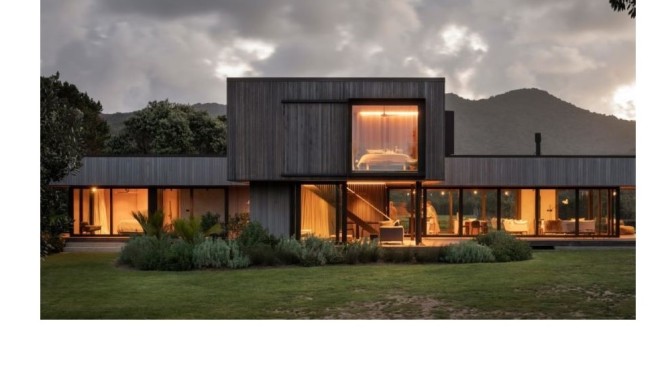
ArchiPro – This unique beach house was thoughtfully inspired by Medlands Beach where it is situated on Aotea (Great Barrier Island).
The long curving shoreline is punctuated by a large, weathered rock to its centre. This informed the architectural composition with a low, long, horizontal form complemented by a taller, denser, two-level element to the centre. It is a confident design with a direct relationship to site and context.
This metaphorical design response flowed through to the materials, with textured, “sandy” plaster and light-coloured timber for the interior walls, textured bronze fixtures (cast in sand) and vertical cedar cladding, mimicking the bullrush reeds in the adjacent wetland.
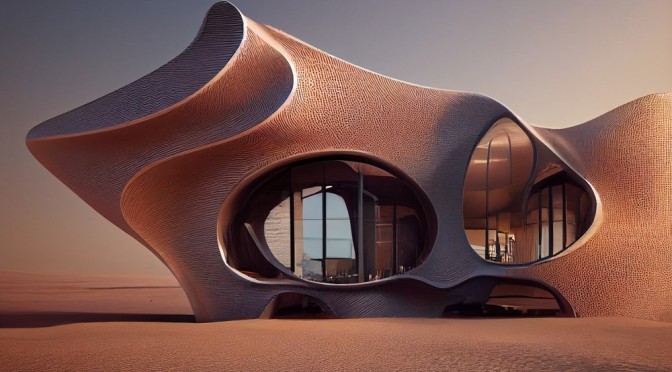
Biomorphic architecture is a style of architectural design that emphasizes natural shapes and patterns. As such, biomorphic architecture is inspired by organic forms like plants, animals, or the natural elements.
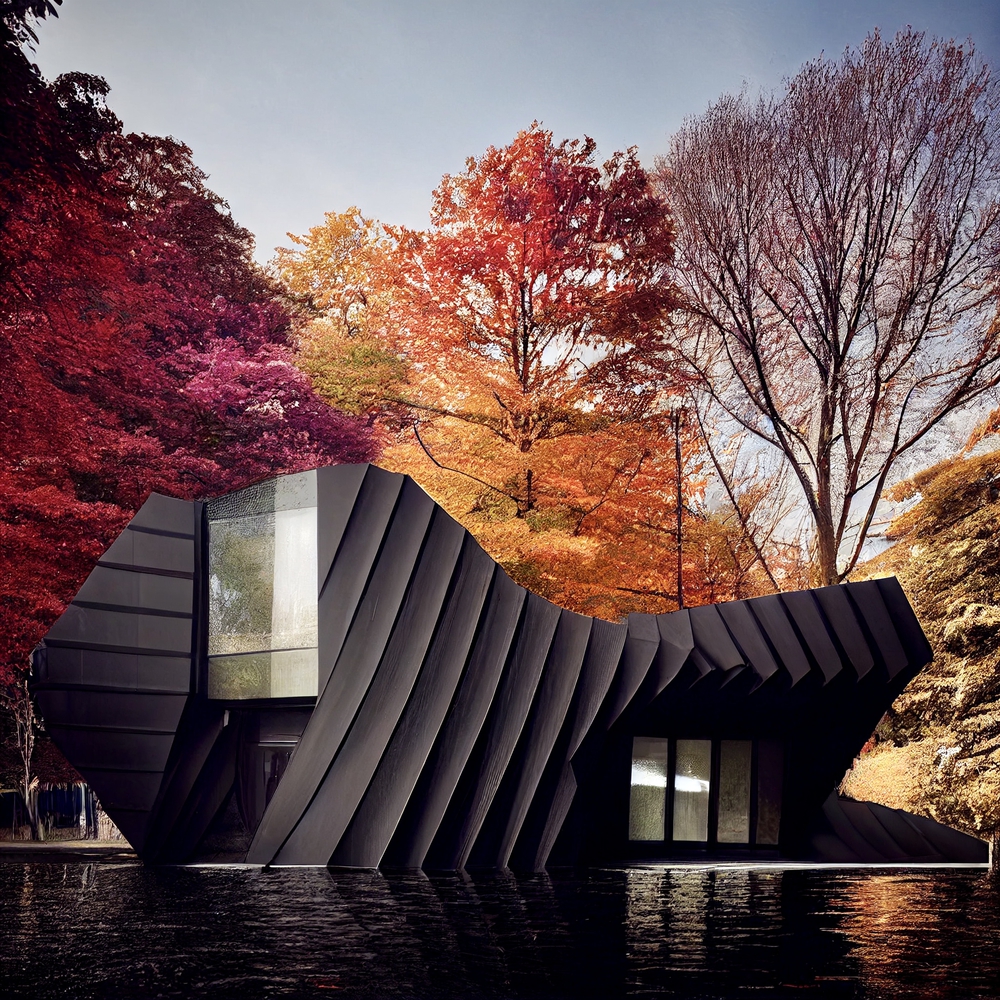
THE BLACK HOUSE [ I ]
Just like white, black is not in the strict sense of the term a color, however it is associated with it from a psychological point of view, black conveying just like a color a symbolism. Scientifically, black refers to black holes and nothingness. In optics, black absorbs all wavelengths and is therefore characterized by its apparent absence of color, unlike white which is obtained by returning all the wavelengths it absorbs in equal parts. In the West, black is associated with mourning, sadness and despair, fear and death.
THE LABRADORITE HOUSE [ I ]
Labradorite is a mineral synonymous with security and regeneration. Discover its unique reflections that will remind you of the beauty of the polar skies and equip yourself with this strong energy shield to protect yourself from external negative energies.
The Local Project (February 3, 2023) – One of New Zealand’s best kept secrets, this modern farmhouse sits on a mountainous landscape surrounded by lakes and rivers, allowing the owners to insert themselves into the countryside.
Video timeline:00:00 – Introduction to the Modern Farm House 00:36 – A Mountain Location 01:04 – An All Seasons Site 01:32 – The Layout of the Pavilions 01:58 – The Integration of Farm and Terrace 02:32 – A Unique Brief 03:07 – Designed for Multiple Styles of Occupation 03:47 – The Materials 04:43 – Balancing the Materials 05:13 – Combining Old and New 06:23 – The House from a Distance 06:47 – Getting Better with Age
Following the Australian and New Zealand idea of farmhouse layouts, Patterson Associates has designed Pouaka Waikura as a set of pavilions that faces the Shotover River. Built as small and simple pavilions, the house tour of the modern farmhouse begins from the stone driveway that leads up to the mechanical shed and into the porte cochère. Beyond this are the two main pavilions, the guest house and main house, which have been separated by a wide outdoor space that allows the owners to entertain and connect with the surrounds.
Employing natural materials for the modern farmhouse, Patterson Associates has used Corten steel panels on the exterior, which are left to rust naturally, while waxed black steel, naturally oiled timber and in situ concrete are used on the inside. The materials come together naturally with minimalist detailing. Moreover, the blending of the materials immerses the home into the site with colours of rust, browns, golds and greys, all while the in situ concrete anchors the home into the land.
Patterson Associates uses materials that will patina over time and offer a sense of growth and permanency. Further allowing the owners to connect with their surroundings, the modern farmhouse opens up through bi-folding doors and adds flexible living spaces throughout. Aside from architecture, Patterson Associates contributed interior design, and seamlessly blended personal items from the clients’ existing cottage home with newer colourful and eclectic pieces. In the kitchen the use of waxed black steel panels references the exterior Corten panelling, while Belgium bluestone is used for the benchtops and wall splashbacks, which reference the fingerprinting and natural patina of the black steel.
Additionally, the dark tones frame the large awning windows and offer a view straight down to Shotover River and invite a wealth of light inside the home. The architects have designed Pouaka Waikura with lighting design that helps to open the home up and allow for a greater appreciation of the southern alps and winding rivers. Furthermore, embracing indoor-outdoor living also ensures that the owners can feel a deeper connection to their settings from either inside the modern farmhouse, or by the courtyard and fire space that sits between the pavilions. Encompassing everything that its owners need and more, New Zealand’s best kept secret is a modern farmhouse that uses materials, colours, objects and landscape that will only get better as the years pass by.
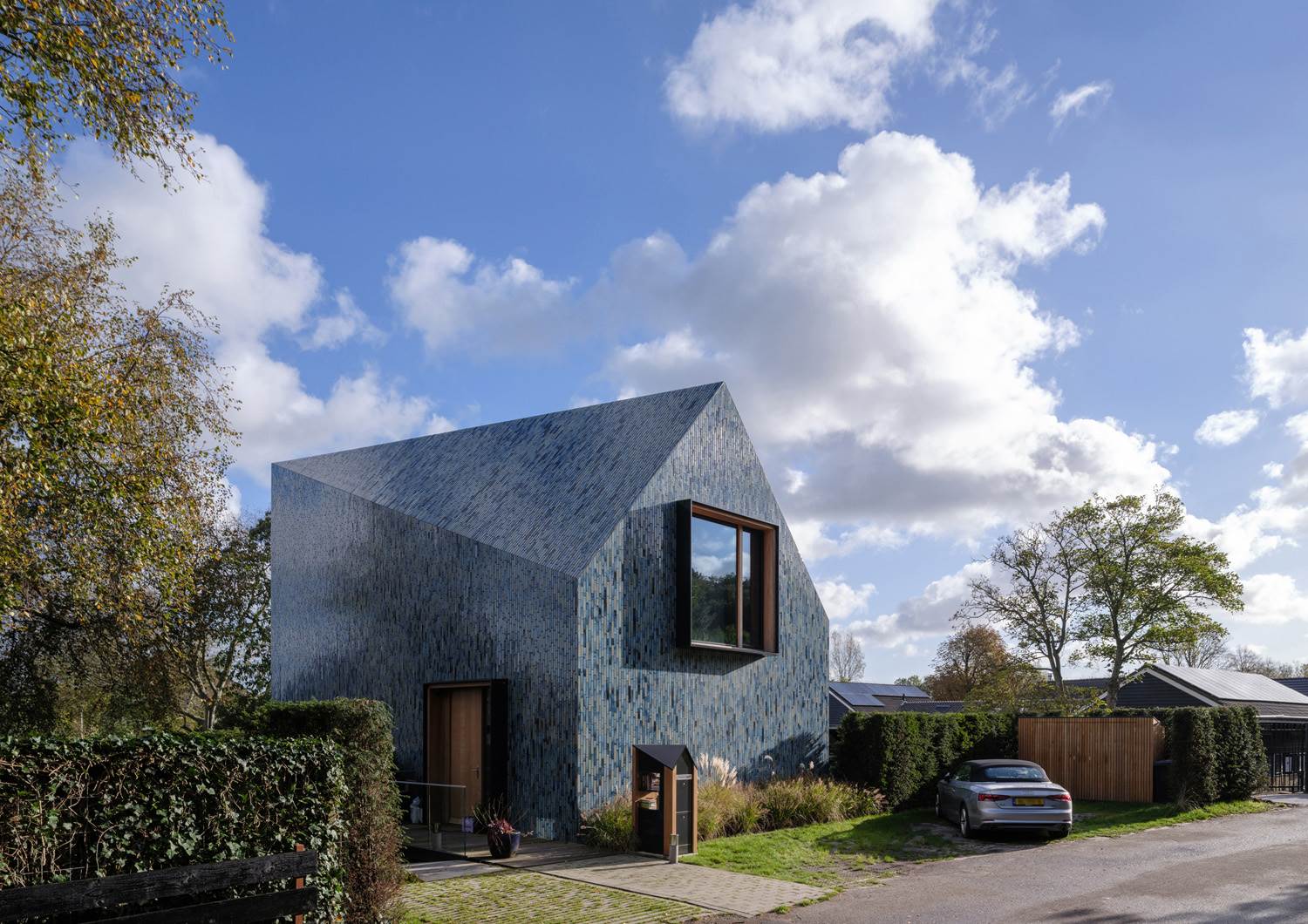
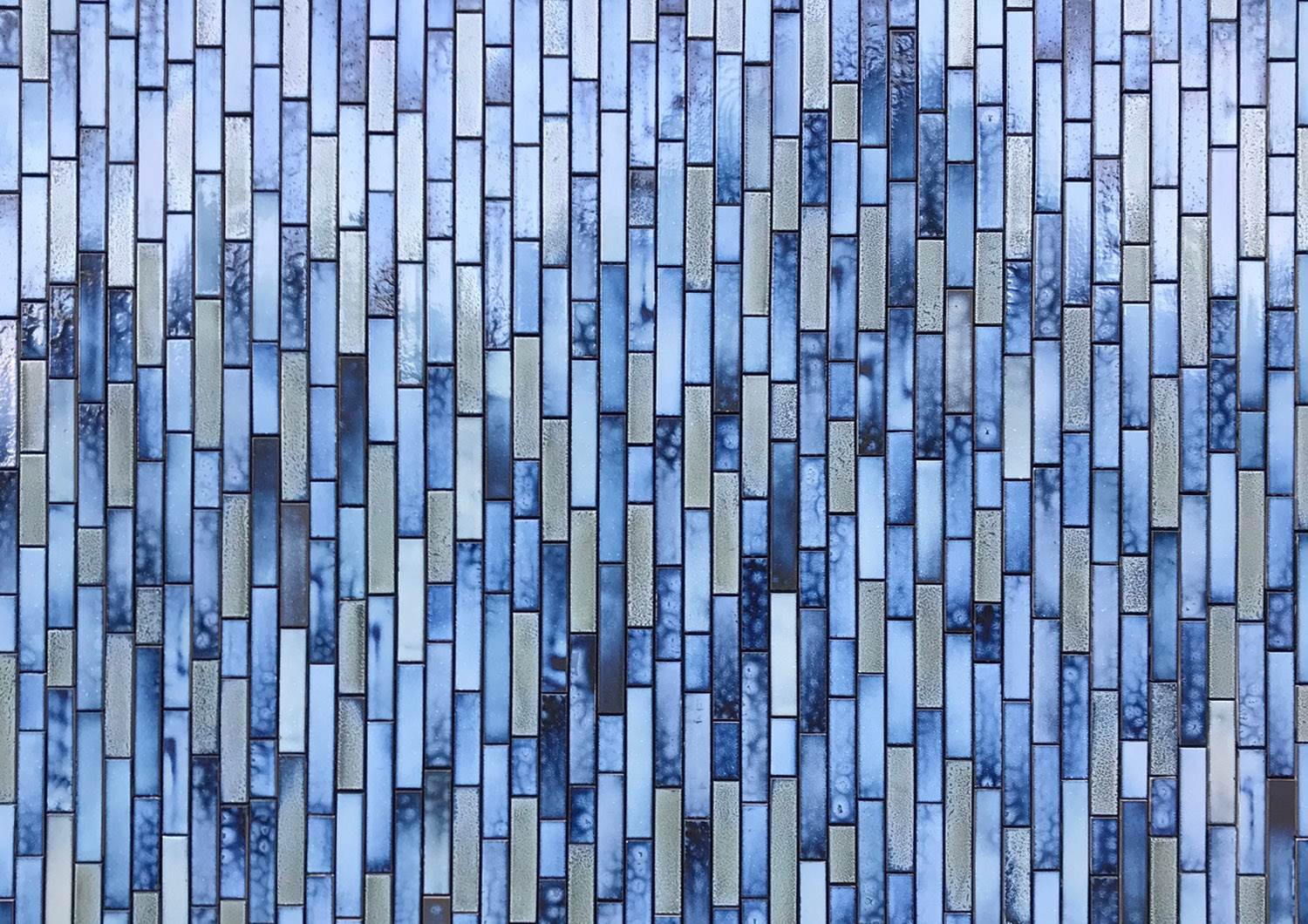
The monolithic presence of the building volume is accentuated through the sloping roof surfaces and exterior walls. These are covered with tiles of the same continuous material – multicoloured glazed ceramic tiles. The hue of these tiles forms a coherent whole, making a connection and blending the building into the transformative landscape.
The naturally sloping landscape embraces Villa BW, with a building volume characterised by a double-curved roof coupled with an unmistakable expression of the facade. The twisting roof is created as a result of two overlapping shapes. A gable roof is designed on the dune-side, also characteristic of the street scene on the Oorsprongweg. In contrast, a horizontal roofline is designed for the polder-side.
The villa is constructed over three floors, with an additional level within the hood of the roof. Due to the natural course of the terrain and the replenishment of an embankment as a continuation of the dune landscape, the ground floor and basement level at -1 have a direct relationship with the surroundings. Facing southeast the connection with the landscape alongside the sloped garden is enhanced by enclosing two voids with a curtain wall system.
The strong connection between the landscape and the house translates into the expression of the facade and roof cladding with the application of a single natural material, expressed through a custom ceramic tile covering that wraps the entire building. This customised multicoloured glazed tile cladding represents the transitions in the landscape, from dune landscape to polder, and the soil layers, from light to dark.
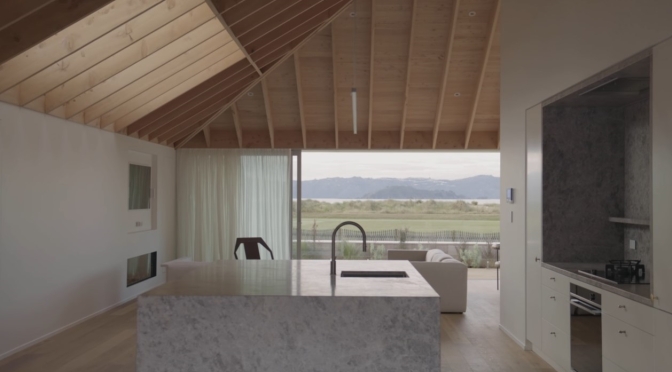
The Local Project (January 31, 2023) – Inside a calm and minimal modern architectural home located in the seaside town of Eastbourne, Wellington, RK Residence by Seear-Budd Ross incorporates distilled detailing and minimal finishes.
Video timeline:00:00 – Introduction to the Calm, Minimal and Modern Home 00:21 – The Idea Behind the Home 00:46 – The Location of the Home 01:08 – Natural Characteristics 01:39 – A Light-Filled Connection 01:57 – The Plan and Topography 02:11 – Utilising Timber 03:35 – Refinement and Detail 03:51 – Fisher & Paykel Integrated Appliances 04:16 – Favourite Aspects of the Home 04:40 – Simplicity, Craftsmanship and Atmosphere
Completing interior design and architecture, Seear-Budd Ross has created a family home that offers a calming atmosphere, as well as an interior space filled with distinct characteristics. Designed as two singular volumes, the front of the house is made to incorporate public entertainment and living quarters, whilst the second singular volume holds the private rooms.
Placed between the two volumes, the courtyard provides a moment of transition between each volume and an abundance of natural light. Still and meditative, the design of RK Residence was planned to include sweeping views from the back of the home to the harbour beyond. Whilst following the house tour inside a calm and minimal modern architectural home, the architects have used high-quality materials throughout – including bandsawn flooring and cladding, tumbled paving in the courtyard and honed stone in the kitchen.
With locally-sourced timber helping connect the home to its surrounding landscape, the architects have used New Zealand pine on the exterior cladding, whilst the interior employs macrocarpa timber, bringing a unique scent and texture to the home. Inside a calm and minimal modern architectural home, the architects have worked with Fisher & Paykel to fit the kitchen with appliances that have been refined down to their essence.
As such, integrated appliances have been employed inside a calm and minimal modern architectural home to impart a seamless look throughout – including the Fisher & Paykel ovens, integrated fridge and freezer and dishwasher drawers. Furthermore, the stove top and rangehood provides a unified look and supports the open plan entertaining space. Creating moments of simplicity through refined architectural and design choices, the architects have used the typology of Eastbourne to establish a natural characterisation throughout. Finished with neutral tones, both the exterior and interior reference the coastal surrounds.
The architects have imparted a meditative atmosphere for the owners to enjoy for years to come. Acting as a counterpoint holiday home to the clients’ rural home, RK Residence by Seear-Budd Ross is a journey of refinement that begins from the exterior and continues inside a calm and minimal modern architectural home.
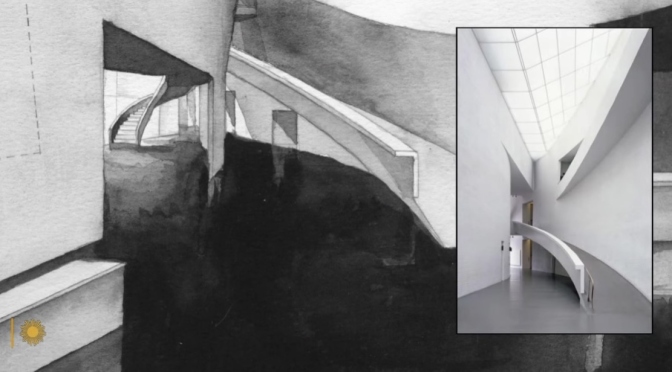
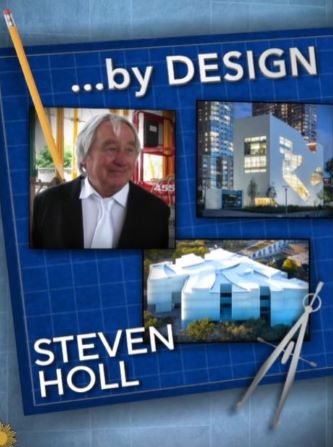
CBS Sunday Morning (January 29, 2023) – The works of architect Steven Holl have helped define the look of cities around the world, making remarkable use of light and space.
Correspondent Rita Braver talks with Holl, whose recent works include the REACH at the John F. Kennedy Center for the Performing Arts, in Washington, D.C., and the Kinder Building at The Museum of Fine Arts, Houston – buildings in which Holl hopes to express “the joy from the creative act.”
Steven Holl is a tenured Professor of Architecture who has taught at Columbia GSAPP since 1981. After completing architecture studies in Rome in 1970, the University of Washington in 1971, and graduate studies at London’s Architectural Association in 1976, Holl founded Steven Holl Architects in 1977. Based in New York City, the forty person firm also has an office in Beijing.
Steven Holl has realized cultural, civic, academic and residential projects both in the United States and internationally including the Kiasma Museum of Contemporary Art in Helsinki, Finland (1998); the Chapel of St. Ignatius, Seattle, Washington (1997); Simmons Hall at the Massachusetts Institute of Technology in Cambridge, Massachusetts (2002); the Nelson-Atkins Museum of Art in Kansas City, Missouri (2007); the Horizontal Skyscraper in Shenzhen, China (2009); the Linked Hybrid mixed-use complex in Beijing, China (2009); Cité de l’Océan et du Surf in Biarritz, France (2011); the Reid Building at the Glasgow School of Art, Glasgow, Scotland (2014); the Arts Building West and the Visual Arts Building at the University of Iowa in Iowa City, Iowa (2006, 2016); the Ex of IN House (2016); the Lewis Arts Complex at Princeton University in Princeton, New Jersey (2017); Maggie’s Centre Barts in London (2017); the Institute for Contemporary Art at Virginia Commonwealth University (2018); and the Glassell School of Art at the Museum of Fine Arts, Houston (2018). Upcoming work includes the REACH expansion of the John F. Kennedy Center for Performing Arts in Washington, D.C. (2019); the Winter Visual Arts Center at Franklin & Marshall College (2019); Rubenstein Commons at the Institute for Advanced Study in Princeton, New Jersey (2019); and the expansion of the Museum of Fine Arts, Houston (2020).
Architectural Digest – Today Michael Wyetzner of Michielli + Wyetzner Architects returns to Architectural Digest to explore the history of New York City’s storied subway system, breaking down the architectural and design details found in some of its oldest and newest stations.
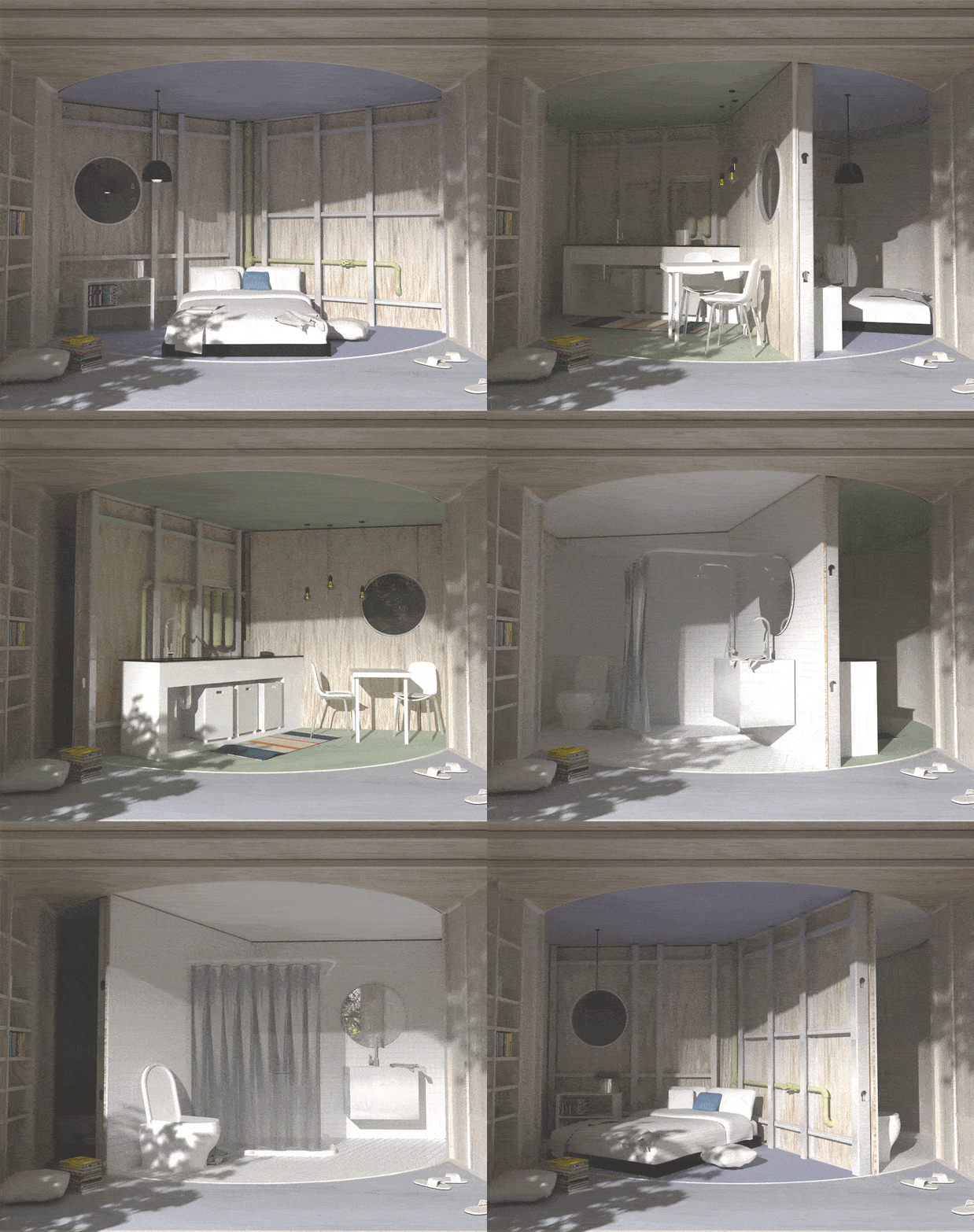
The three scenes of the home | all images by Studio Supra-Simplicities
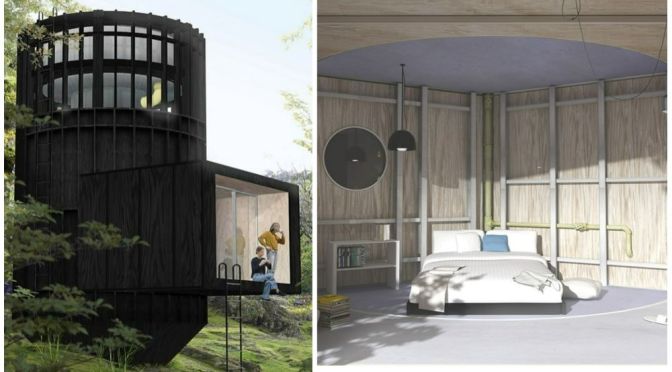
designboom (January 20, 2023) – In a swiftly rotating display, this micro-scale cabin shifts its program on its axis to integrate three different ‘scenes’ of living on one small platform. Studio Supra-Simplicities conceptualizes ‘3 Scenes of Home’ to compactly integrate spaces for sleeping, dining, and washing into one mechanism that marks a sophisticated integration between the typical house program and the theatrical function of a stage.
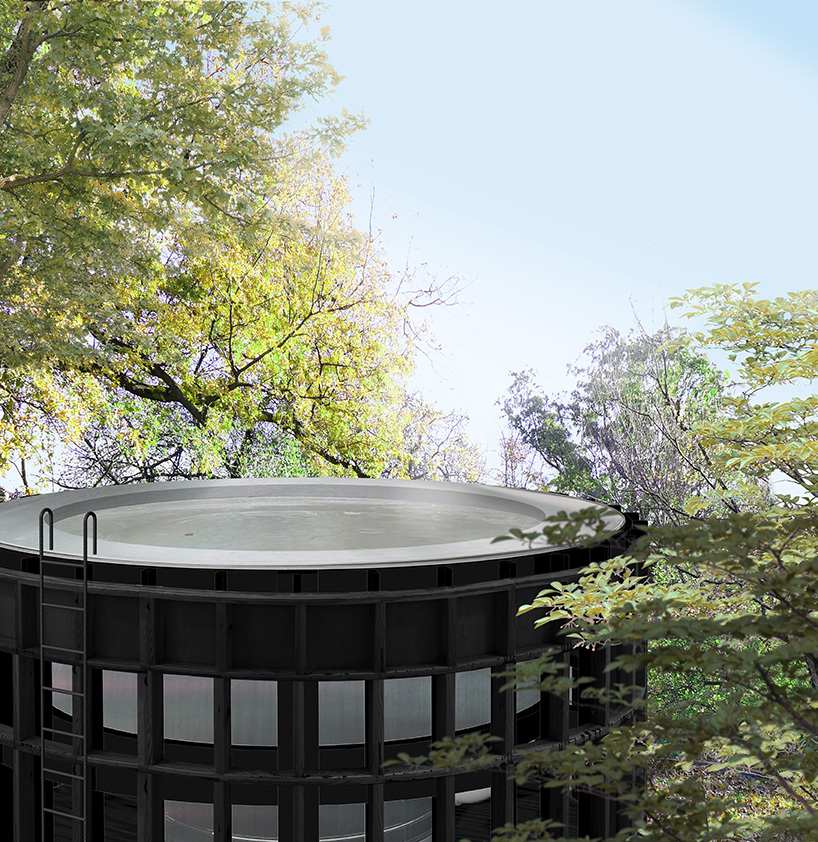
topped with a rainwater harvesting system
project info:
Removing the need for unnecessary circulation spaces and infusing a distinctive dynamic character, the structure maximizes its internal mobility and flexibility of living, while sitting with a micro footprint. It minimizes external impact by covering only a tiny parcel on the natural landscape, and recycling rainwater for daily use through its rooftop harvesting system.
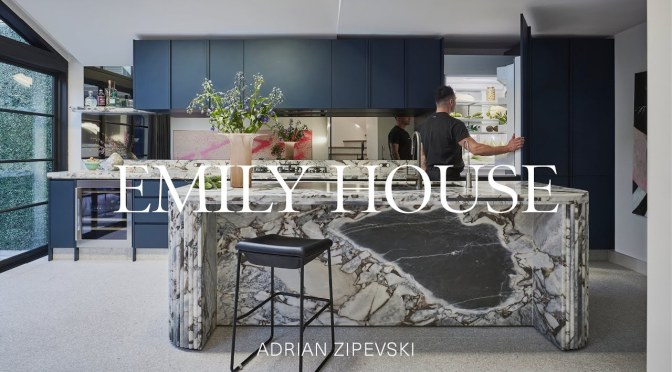
Working together, Aldini and Isaac Group have turned an abandoned warehouse into a modern dream home. Sitting on a small plot of land, the warehouse was in dire need of a contemporary lift – therefore the employment of organic shapes, elements and materials became the key focus for both interior designer and builder.
Video timeline: 00:00 – Introduction to the Modern Dream Home 00:25 – The Location of Emily House 00:38 – A Walkthrough of the Modern Dream Home 01:10 – Maximising the Previous Small Space 01:29 – The Builder 01:51 – Relationships and Working as a Team 02:14 – Utilising Natural Elements and Organic Shapes 03:10 – Elements of Softness and Curves 03:34 – Harnessing the Natural Light 04:02 – Favourite Parts of the Modern Dream Home 04:29 – Proud Moments
With a brief that only required the cathedral ceilings to be kept, the interior architecture was imbued with soft curves, natural shapes and materials, and a flood of natural light. In the end, the client’s home was turned into a modern dream home that would become a hub for connection, light and simple opulence.
Located in the inner west of Sydney, Emily House strikes an unassuming appearance with dark tones, leafy greens and a timber batten façade that hints at what is inside the modern dream home. Following the house tour inside, the front of the home contains the master bedroom and ensuite before offering a glimpse of the opulent kitchen – which is designed to be the hub for connection.
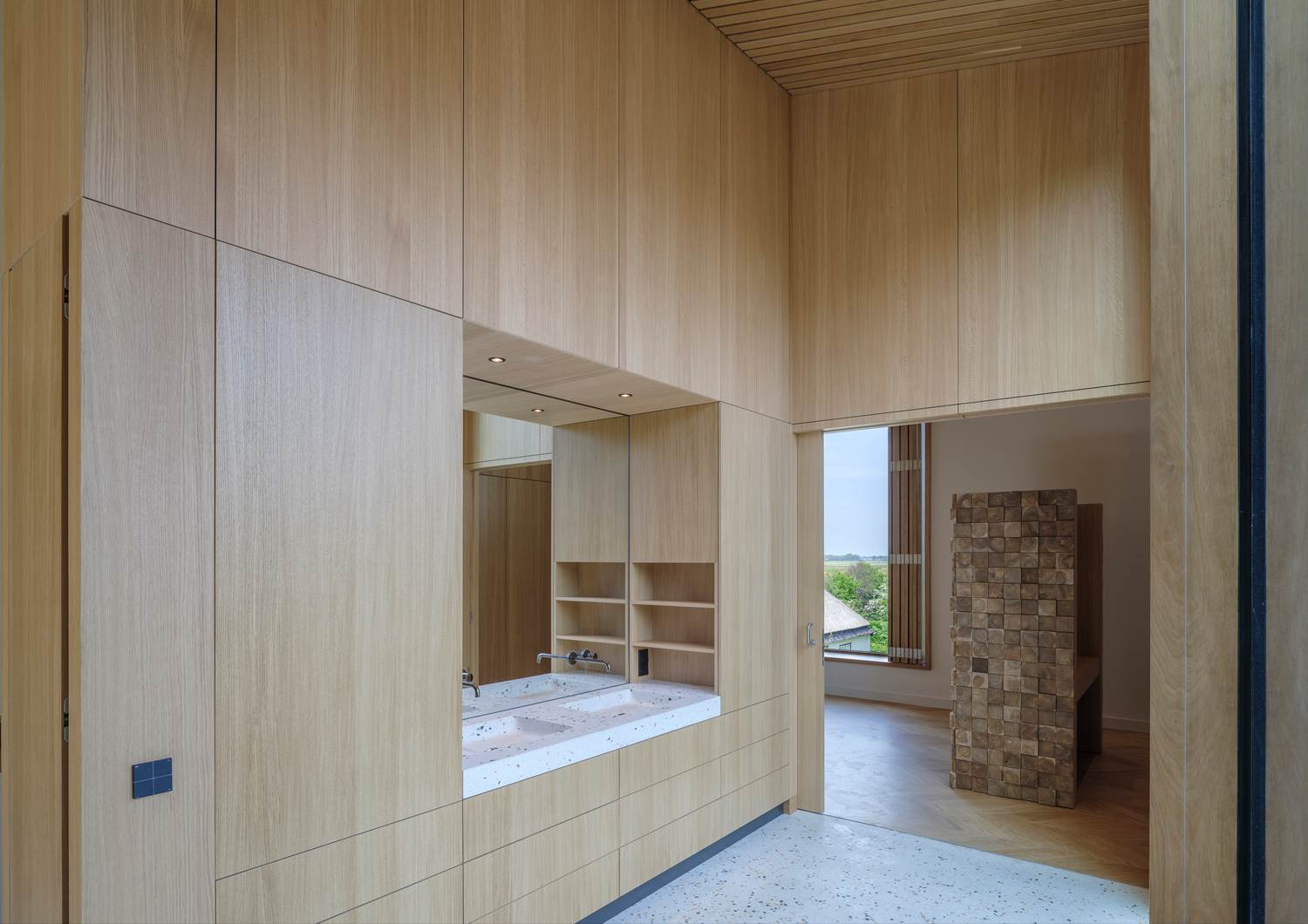
While using marble, granite and terrazzo throughout the modern dream home to add an opulence, the elements of curved bamboo, which is seen in the bathrooms and on the kitchen island bench, is used to soften the hardness of these materials. In the downstairs spaces, large steel windows, bi-fold doors and skylights have been installed to help bring more natural light inside while also adding to the sense of space inside.
Following the kitchen’s marble bench top and dark palette cabinetry, the dining and living room reference the same colours through the furnishings and marble that has been employed on the shelving and fireplace. To combat the hard lines of the steel and marble, the softening of elements has been encouraged throughout the interior design, which is seen in the soft curving of the Venetian plaster wall above the fireplace.
After the doors are opened, the courtyard helps to expand upon the liveable space and, with its terrazzo floor, curved seating arrangement and green wall the space, the downstairs living areas extend upon the client’s wish of creating a hub for connection. Upstairs, the inclusion of two more bedrooms and a bathroom further employs the use of stone, light and a natural colour palette.
Infused with natural light, the bedrooms offer guests an opulent stay that is reminiscent of five star hotels. Working together, the interior designer and builder established the modern dream home to become a space where the client could entertain. Additionally, the house is filled with a sense of softness – to which the client can find reprieve in the moments when it is needed.
The Local Project (January 13, 2023) – Renovating an old house in Hobart, Bence Mulcahy added a two-storey extension made of glass and steel. Named Greenhouse, the structure replaces a 1980s iteration in a manner that best engages the nearby veranda, courtyard and garden.
Video timeline: 00:00 – Cloudy Bay 00:12 – Introduction to the Greenhouse 00:53 – The Brief for the Renovation 01:19 – House Tour of the Home 02:16 – The Sandstone Base of the Building 02:30 – The Lower and Upper Floor of the Extension 03:15 – The Exterior of the Greenhouse 03:25 – The Interior Materials Chosen 03:48 – The Furniture and Furnishing of the House 04:50 – Cloudy Bay
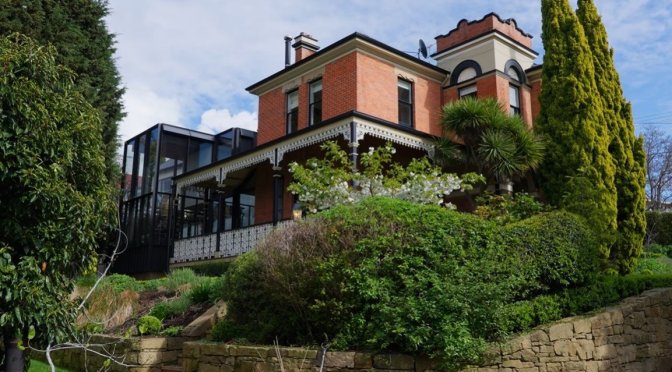
Located in the Hobart suburb of Mount Stuart, Greenhouse forms a contemporary addition to a red brick, Federation-style Italianate home. The new volume looks out onto the Derwent River and is supported by a veranda and a well-established garden complete with plants, trees and sandstone retaining walls. Bence Mulcahy identifies the key to renovating an old house is relating the extension to the main building – Greenhouse mirrors the scale of the existing dwelling, proposing a strong sense of verticality.
A house tour of the dream home begins at the formal entry space and transitions into the main hall. Beyond lies the beginning of the extension. The process of renovating an old house sees the final extension enclose the dining room, kitchen and an extra eating area. Upstairs, the addition houses an ensuite bathroom and walk-in wardrobe. Ample glazing then allows the home to borrow visual space from the external landscape.
Bence Mulcahy takes a seasoned approach to renovating an old house, inserting voids in order to manage the sense of privacy. A two-storey void is left over the dining room, whilst a separate alcove of the same size is located above the upstairs ensuite. Creating a glasshouse structure using a combination of glass and steel, Bence Mulcahy pays homage to a greenhouse inspiration. The durable nature of the material palette is particularly relevant to renovating an old house, promising an enduring outcome.
Internally, copper sinks and a copper island bench complement a wax-sealed timber floor and array of curated soft furnishings. Utilising the skills of local craftsmen, Bence Mulcahy does justice to the personal nature of the home. Greenhouse stands as a lesson in house renovation and embraces the tranquil quality of its natural surrounds.
News, Views and Reviews For The Intellectually Curious









 topped with a rainwater harvesting system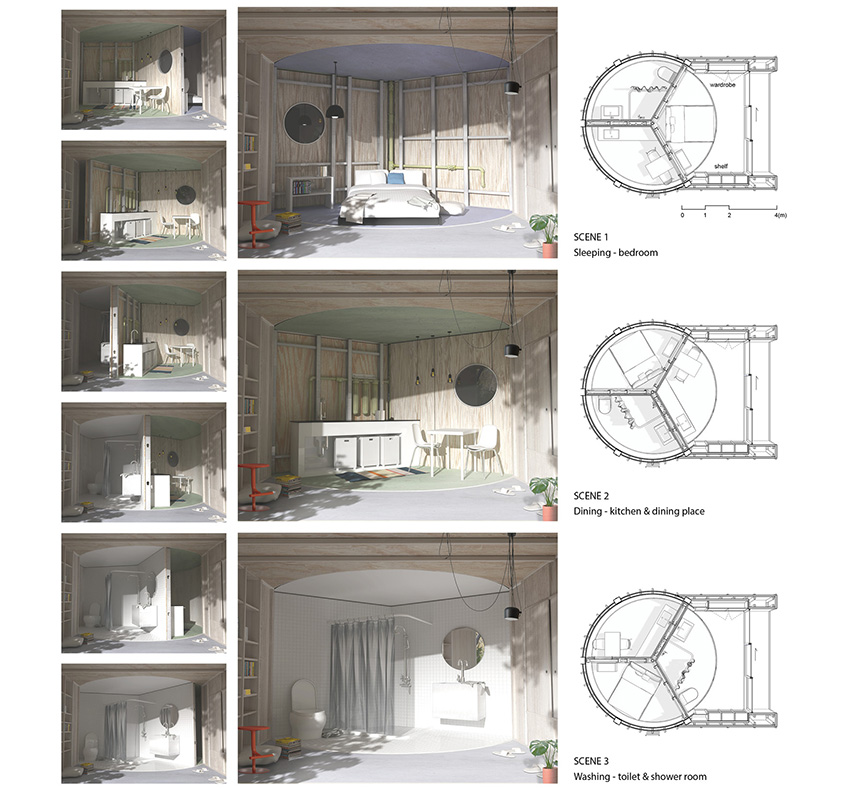
 Boomers Daily