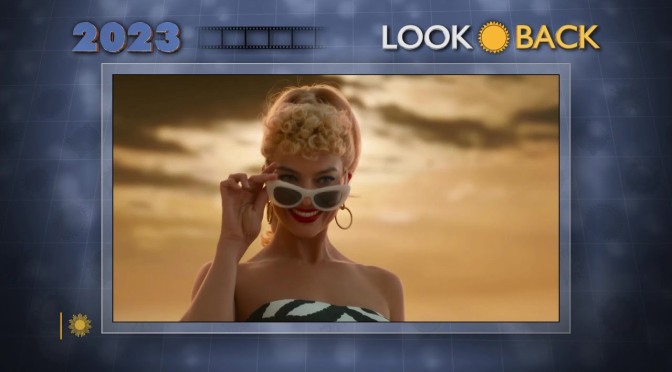


Video timeline: 00:05 The Investigation of Consciousness – Our minds are constantly taking in new external information while also creating their own internal imagery and narratives. How do we distinguish reality from fantasy? This year, researchers discovered that the brain has a “reality threshold” against which it constantly evaluates processed signals. Original paper: “Subjective signal strength distinguishes reality from imagination”
04:30 Microbiomes Evolve With Us – This year, scientists provided clear evidence that the organisms in our microbiome —the collection of bacteria and other cells that live in our guts and elsewhere on our body — spread between people, especially those with whom we spend the most time. This raises the intriguing possibility that some illnesses that aren’t usually considered communicable might be.
08:43 How Life Keeps Time – The rate at which an embryo develops and the timing of when its tissues mature vary dramatically between species. What controls the ticking of this developmental clock that determines an animal’s final form? This year, a series of careful experiments suggest that mitochondria may very well serve dual roles as both the timekeeper and power source for complex cells.

by Tara Zahra
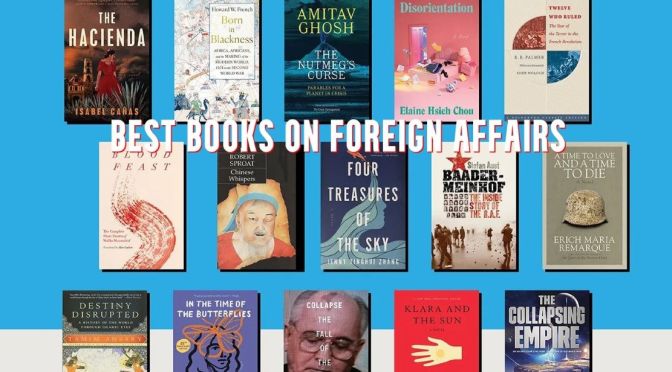
In a timely and thought-provoking book, Zahra delves into the tumultuous years between World War I and World War II to argue that it was resistance to globalism and globalization that ended up weakening Europe’s then-fragile democracies, eventually contributing to the continent’s slide into dictatorship. READ THE REVIEW

by Gary Bass
Bass’s magnificent book, an account of the post–World War II Tokyo war-crimes trial, encourages a deeper understanding of the Asian experience of war and occupation. His work also sheds light on an enduring debate about liberalism and international politics, showing how the trial played formative roles both in postwar Asian politics and in the making of the postwar global human rights regime. READ THE REVIEW

by Martin Wolf
In a sophisticated and expansive account, Wolf, a veteran economics commentator, suggests that the root cause of today’s political and economic malaise lies in the breakdown of the relationship between capitalism and liberal democracy—and the failure of institutions to counter poverty and marginalization. READ THE REVIEW
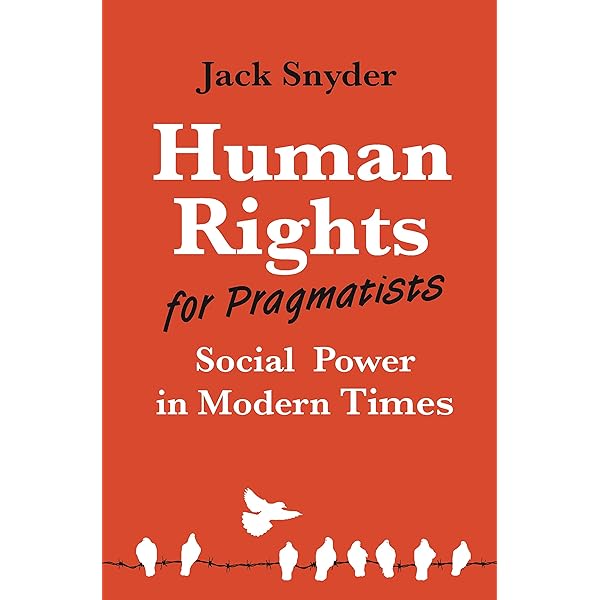
by Jack Snyder
In this masterful work, Snyder offers a bold explanation for why, how, and when societies make progress in expanding political rights and freedoms, arguing that breakthroughs occur when human rights serve the interests of a country’s dominant political coalition .READ THE REVIEW

by Peter Trubowitz and Brian Burgoon
Trubowitz and Burgoon argue in this groundbreaking study that the current backlash against the Western-led liberal international order can be traced to the 1990s, when the United States and European governments encouraged globalization at the expense of social and economic protections at home. READ THE REVIEW

by Charles S. Maier
Moving beyond the standard account of the twentieth century as an epic struggle between democracy and autocracy, Maier examines how a wide range of actors tried to harness industrial modernity in the pursuit of power and material interests, weaving an alternative narrative about the explosive interplay of economic privilege and political grievance. READ THE REVIEW


‘Botticelli Drawings’ By Furio Rinaldi (Fine Arts Museums of San Francisco/Yale).

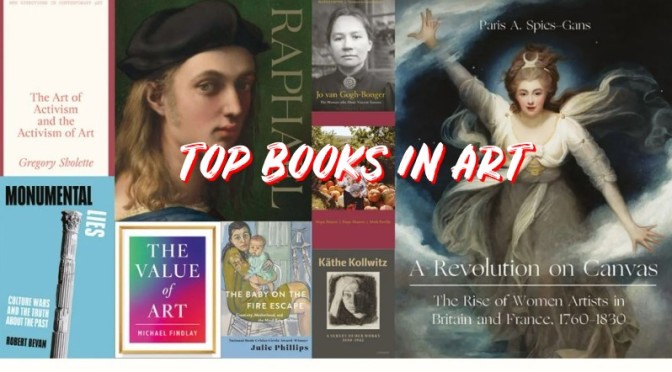
His strawberry-blond Venus on a wind-propelled scallop shell still pulls Florence’s tourists from the gelateria to the Uffizi — but a rarer Botticelli feast is currently on offer in San Francisco, where the Legion of Honor is presenting the first exhibition ever of this Renaissance master’s fragile drawings (through Feb. 11). In this authoritative catalog, Rinaldi makes several new attributions, including two exquisite head studies of a man gazing upward and a woman with modestly lowered eyes. For a Florentine in the later 15th century, the core of painting was disegno (“design,” but also “drawing”), and Botticelli put drawing first. Delicate highlights of white and yellow show the light on tensed muscles or bowed heads. Effortless squiggles cohere into Simonetta Vespucci’s curled hair or John the Baptist’s camel cloak. His line feels spring-loaded; his saints and angels seem ready for the dance floor; his paintings’ grace and vigor started with a pen.
‘Abraham Ángel: Between Wonder and Seduction’ Edited by Mark A. Castro (Dallas Museum of Art; distributed by Yale University Press).

Like Vermeer, the Mexican portraitist Abraham Ángel, who died at age 19 in 1924, left little behind. His 20 extant works (on view in Dallas through next January) reproduce beautifully in a slim but convincing catalog that doesn’t overstate the case. Ángel’s preferred substrate was cardboard, and the bumpy nap of it really shows in these pages. So do the Fauve-like colors he used to outline his sitters. (Instead of black he preferred blues and browns, as Alice Neel would.) Playfully primitive, these knowing likenesses (among them Ángel’s tutor and lover, Manuel Rodríguez Lozano) combined Mexico’s burgeoning populist aesthetic with a private romanticism that seems nonetheless to have sought clarity on the promise of his country’s Revolution.
‘Woven Histories: Textiles and Modern Abstraction’ Edited by Lynne Cooke (University of Chicago Press).

This major looker of an exhibition catalog loosens up the warp and weft of conventional views of modern art — all those tight-knotted hierarchical categories (high versus low, art versus craft) on which our institutions and markets still rest — and demonstrates the universe of formal and conceptual brilliance that has always traveled on a parallel track. The sheer variety of work produced by more than 50 artists chosen by the book’s editor, Lynne Cooke, will knock your socks off. (Just wait till you see what’s happening in the field of basketry alone.) So will the visual imaginations of individual geniuses we already know like Anni Albers, Ruth Asawa, Gego, Lenore Tawney and Sheila Hicks, and the others we’re introduced to here.



by Nicholas Shakespeare (Harvill Secker)
Shakespeare, renowned biographer of Bruce Chatwin, reveals a story worthy of a Bond novel in his life of Ian Fleming. The painstakingly researched yet fast-paced book explores Fleming’s childhood, dramatic war years and complex personal life and reveals how they shaped his hugely successful books.
by Adam Sisman (Profile/Harper)

A follow-up to his 2015 biography of le Carré, who died in 2020, Sisman’s latest book exposes the great spy writer’s duplicitous and deceitful relationships with the women in his life, providing new insights into the secret life of the man behind George Smiley. A fascinating, revelatory appendix to Sisman’s fuller life.
by Ralph Dutli, translated by Ben Fowkes (Verso)
This life of “legendary literary saint”, Osip Mandelstam, provides a timely reminder of both the long history of repression in Russia and the powerful role that literature can play when in the right hands. Dutli’s rounded portrait of the Russian poet unafraid to speak truth to power brings to life the man and his time.
by Anna Funder (Viking/Knopf)
Funder, author of Stasiland, her prizewinning account of the East German secret police, takes six letters written by Eileen O’Shaughnessy, George Orwell’s first wife, as the imaginative springboard for a deep dive into their relationship and her impact on his writing and legacy. A haunting, tragic and revealing book.
by Sarah Ogilvie (Chatto & Windus)
A former editor of the Oxford English Dictionary herself, Ogilvie has written a “people’s history” of the great literary endeavour. Begun in 1879, the OED is an epic, crowdsourced attempt to pin down slippery, evolving language and this book tells the fascinating story of the eclectic and unsung contributors to this living monument to language.
by Nathan Thrall (Allen Lane/Metropolitan Books)
This quietly heartbreaking work of non-fiction reads like a novel. At its centre is a tragic road accident outside Jerusalem in the West Bank from which Thrall, a Jewish American journalist, carefully traces the labyrinthine lives of those involved and the tangled web of politics, history and culture that ensnare them all.
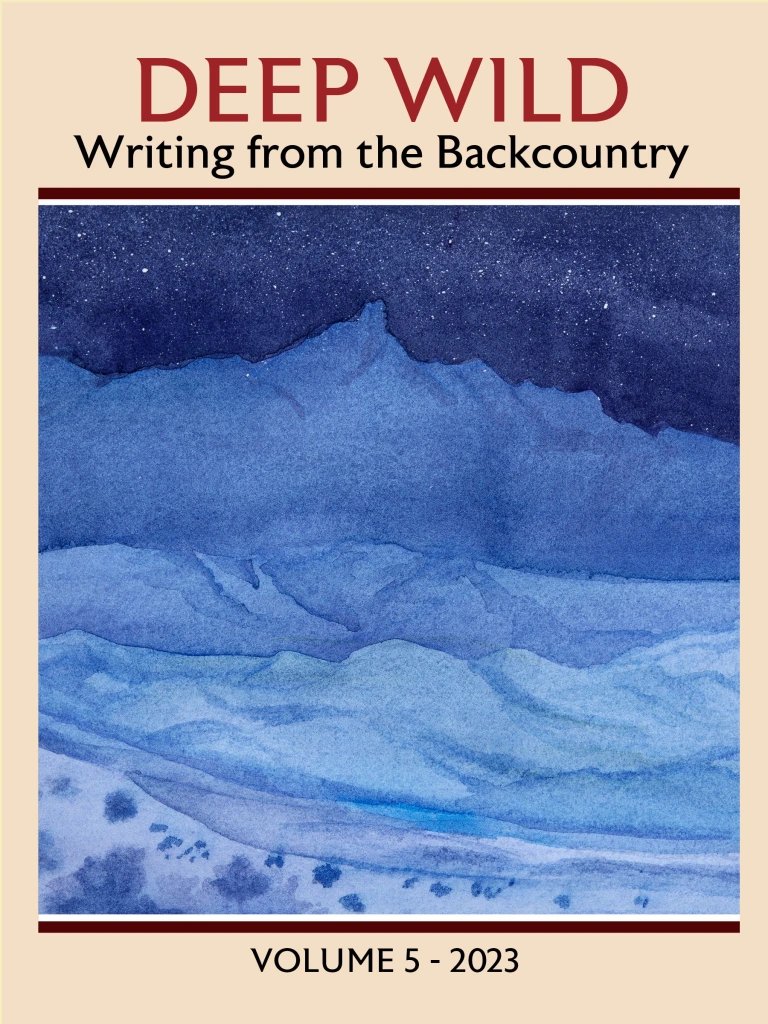

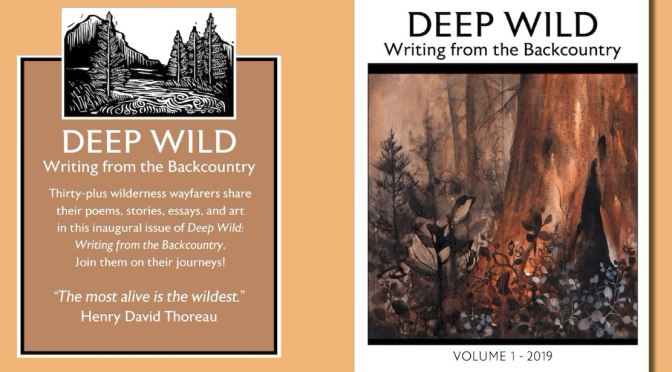
Deep Wild Journal 2023 – Writing from the Backcountry: On skis and snowshoes, by boot and boat, in open water or at the ends of ropes, by night or day, in all four seasons, in searing sun or drenching rain…the adventurer-writers whose work is featured in Deep Wild 2023 take us to all extremes.
Others come to us from a quiet place in the backcountry with their insights, observations, discoveries. Also featured in Deep Wild 2023 is full-color artwork by Tucson watercolorist Kat Manton-Jones and a portfolio of pen-and-ink drawings from the Colorado Plateau by Margaret Pettis.
Deep Wild 2023: Foreword and Contents


Guernica is a digital magazine with a global outlook, exploring connections between ideas, ideals, communities, and individual lives. It rejects binary thinking and conventional wisdom, investing instead in the power of counter-narratives, especially those driven by lived experience. Across fiction, poetry, essays, reportage, criticism, and art, Guernica is a home for established and emerging writers, in conversation with each other. Guernica is committed to global literature — highlighting work from independent presses across the Global South and translating work from every continent into English, and from English into global languages. Going into its twentieth year, Guernica remains a trusted home for incisive, urgent writing and singular perspectives on critical issues of the day.
Judges’ citation:
Perennially curious, eager to reckon with the world head-on, Guernica draws readers into uncharted conversations and traces the complex ligaments connecting culture, politics, art, and ecology. Over twenty years, Guernica has built an impressive record as a place of first publication for important writers and thinkers. Guernica’s ability to deepen our sense of wonder, of responsibility, and of connection is rooted in a core conviction that we must hear from diverse voices and diverse places.
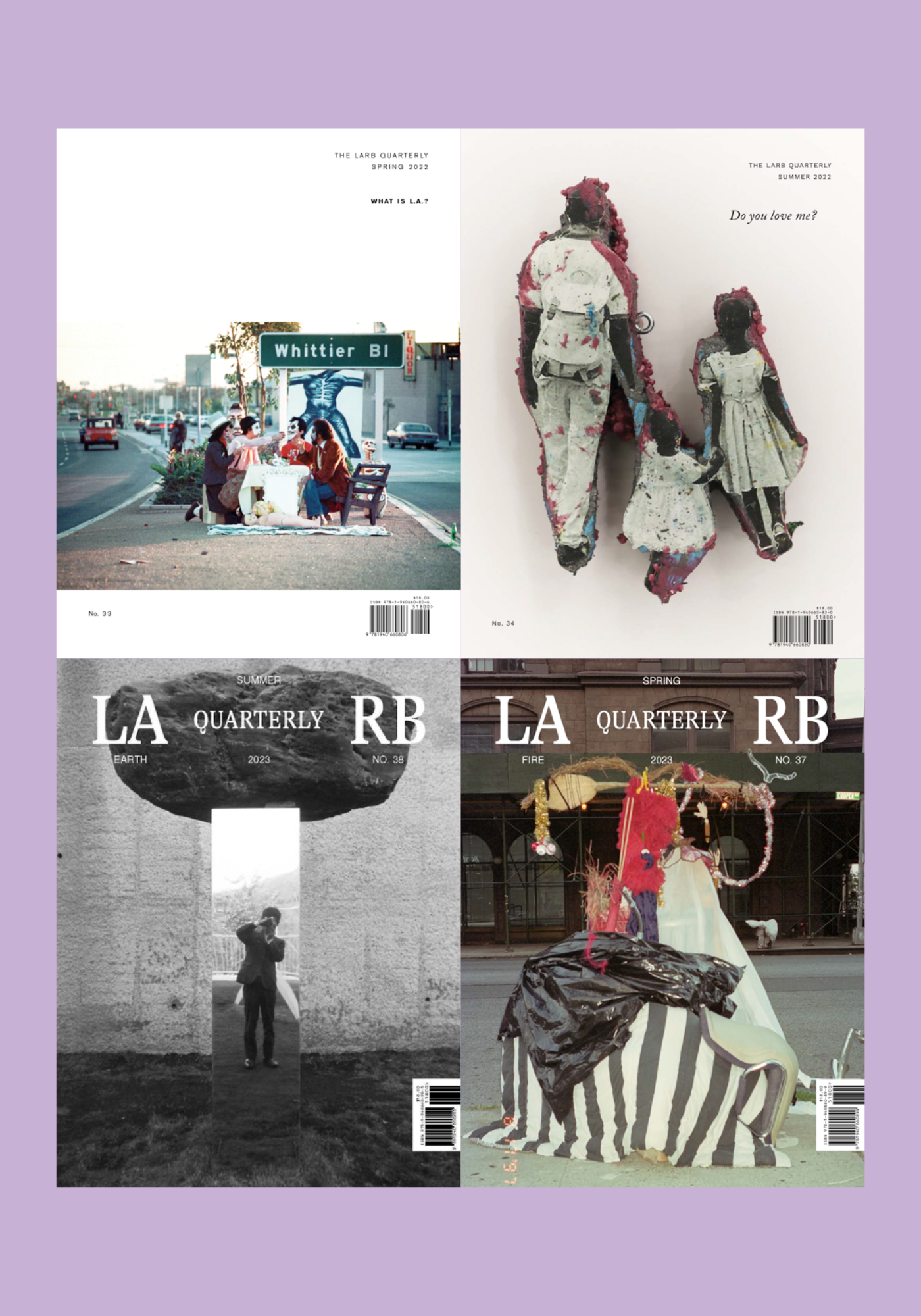
Drawing on literary tradition—and discarding it when necessary—Los Angeles Review of Books dwells in contradiction: the tension between depth and breadth, filth and glamor, destruction and creation, dream and nightmare, that L.A. lives and breathes. LARB launched in 2011 in part as a response to the disappearance of the newspaper book review supplement, and with it, the art of lively, intelligent, long-form writing on recent publications in every genre. LARB has since become a polyvocal cultural force reinventing book criticism for the internet age. It publishes new reviews, essays, and interviews online daily, as well as a print journal, LARB Quarterly, and offers events and programs that connect writers and artists to readers both in Los Angeles and across the globe.
Judges’ citation:
A pillar of West Coast literary culture with national impact, Los Angeles Review of Books astounds with its scope. Its essays, reviews, and interviews are imbued with the irresistible appeal of fresh ideas and the rigor of academic inquiry. As an organization it creates and renews vital space for connection, especially through its innovative publishing workshop. New and accomplished international authors and translators cascade out of LARB, and its coverage of contemporary literature is steeped in style and substance. The commitment to history, critical thought, imagination, and to its eponymous city runs deep.
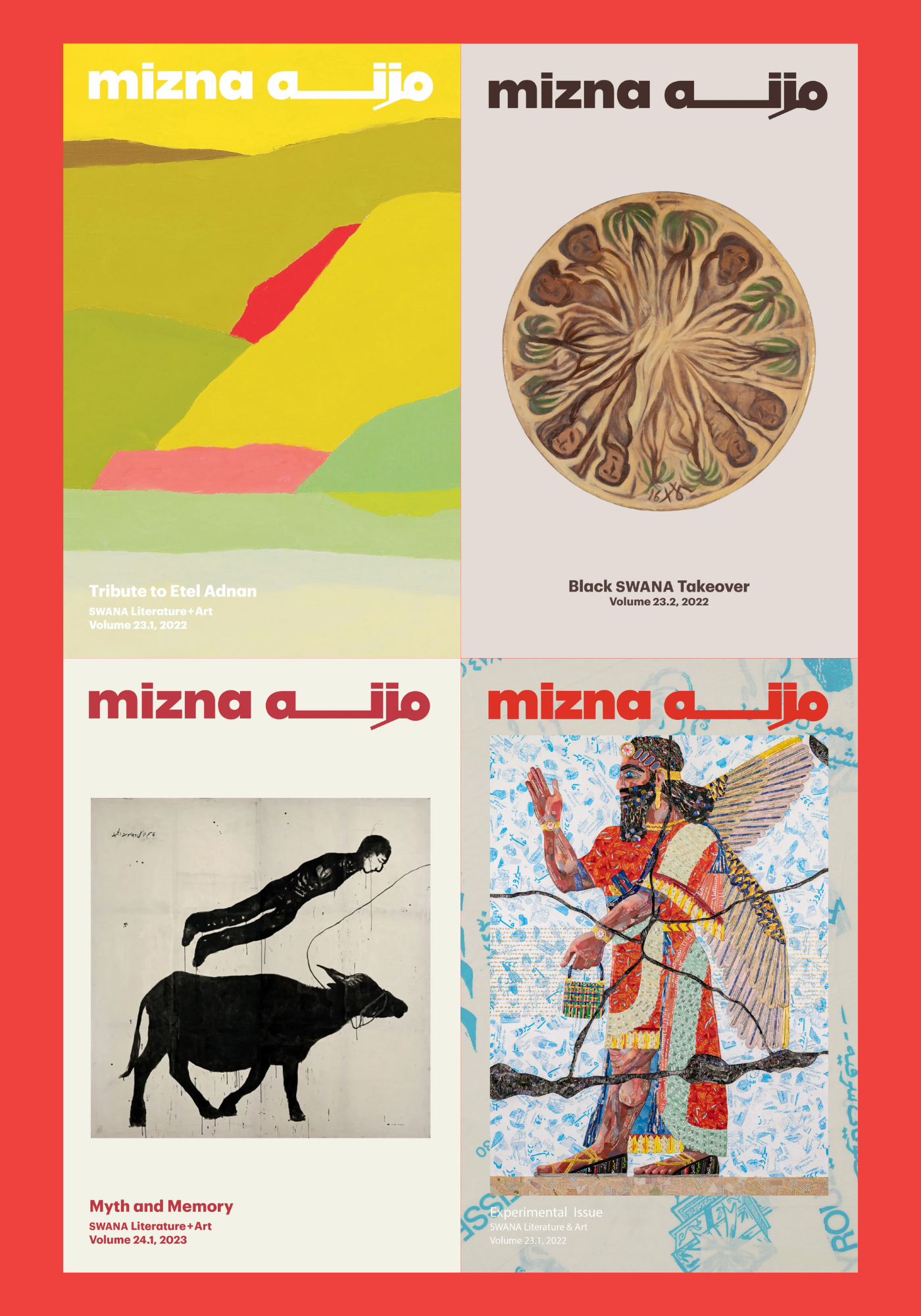
Mizna reflects the literatures of Southwest Asian and North African (SWANA) communities and fosters the exchange and examination of ideas, allowing readers and audiences to engage with SWANA writers and artists on their own terms. It has been a critical platform for contemporary literature, film, art, and cultural production since 1999, publishing a biannual print journal of poetry, fiction, essays, comix, and visual art in addition to producing the Twin Cities Arab Film Festival, the largest and longest running Arab film fest in the Midwest. Recognizing that open cultural spaces are not a luxury but a necessity, Mizna also hosts classes, readings, and community events that offer points of connection between emerging and established SWANA artists and their local Twin Cities community and beyond.
Judges’ citation:
Mizna is an absolute gem of a journal: tightly edited, gorgeously curated, and visually striking. Care and craft float off its pages of beautifully laid-out poetry and lovingly printed images. Mizna is both a grassroots community organization and an esteemed international artistic platform, furthering important intergenerational dialogue within the Southwest Asian and North African (SWANA) diaspora and showcasing thrilling new literature.
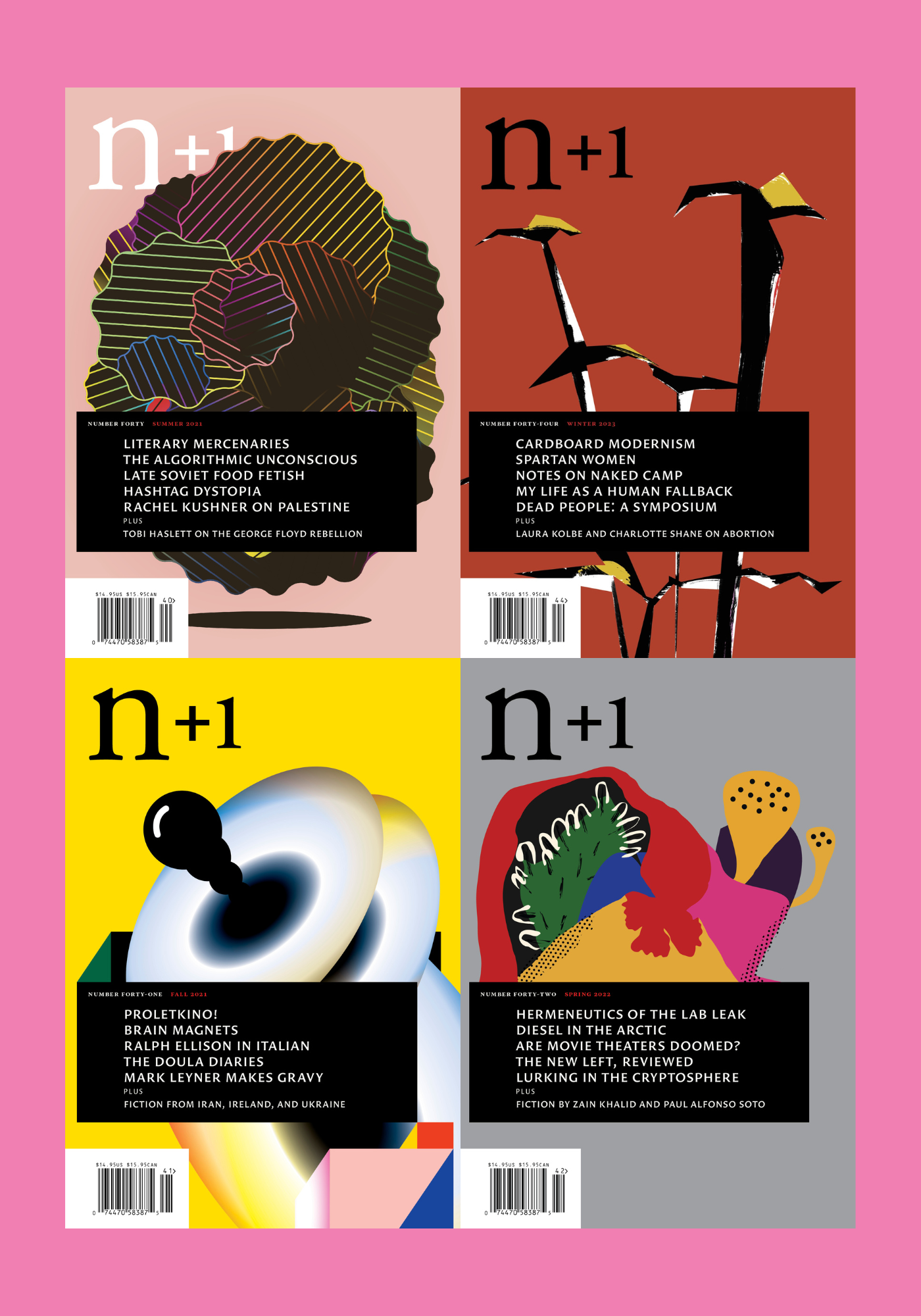
n+1 encourages writers, new and established, to take themselves as seriously as possible, to write with as much energy and daring as possible, and to connect their own deepest concerns with the broader social and political environment—that is, to write, while it happens, a history of the present day. n+1 was founded in New York City, in 2004, by six young writers and editors who wanted to make a magazine that didn’t shy away from difficult and ambitious writing and would take literature, culture, and politics as aspects of the same project. In addition to the triannual print and digital magazine, n+1 also publishes books that expand on the interests of the magazine and programs readings, panels, and events in New York City and across the US.
Judges’ citation:
A distinctive, erudite editorial project overflowing with rigor and generosity, n+1 is both magnet and catapult for intellectually fearless writers. Its uniquely attentive and structural approach to editing has helped cement a reputation as a major site of discovery for new talent, and it indisputably lives on the cutting edge of literary and political discourse. n+1’s ethos is deep investment in writers and their growth. A must-read for critical engagement with pressing issues of the day.
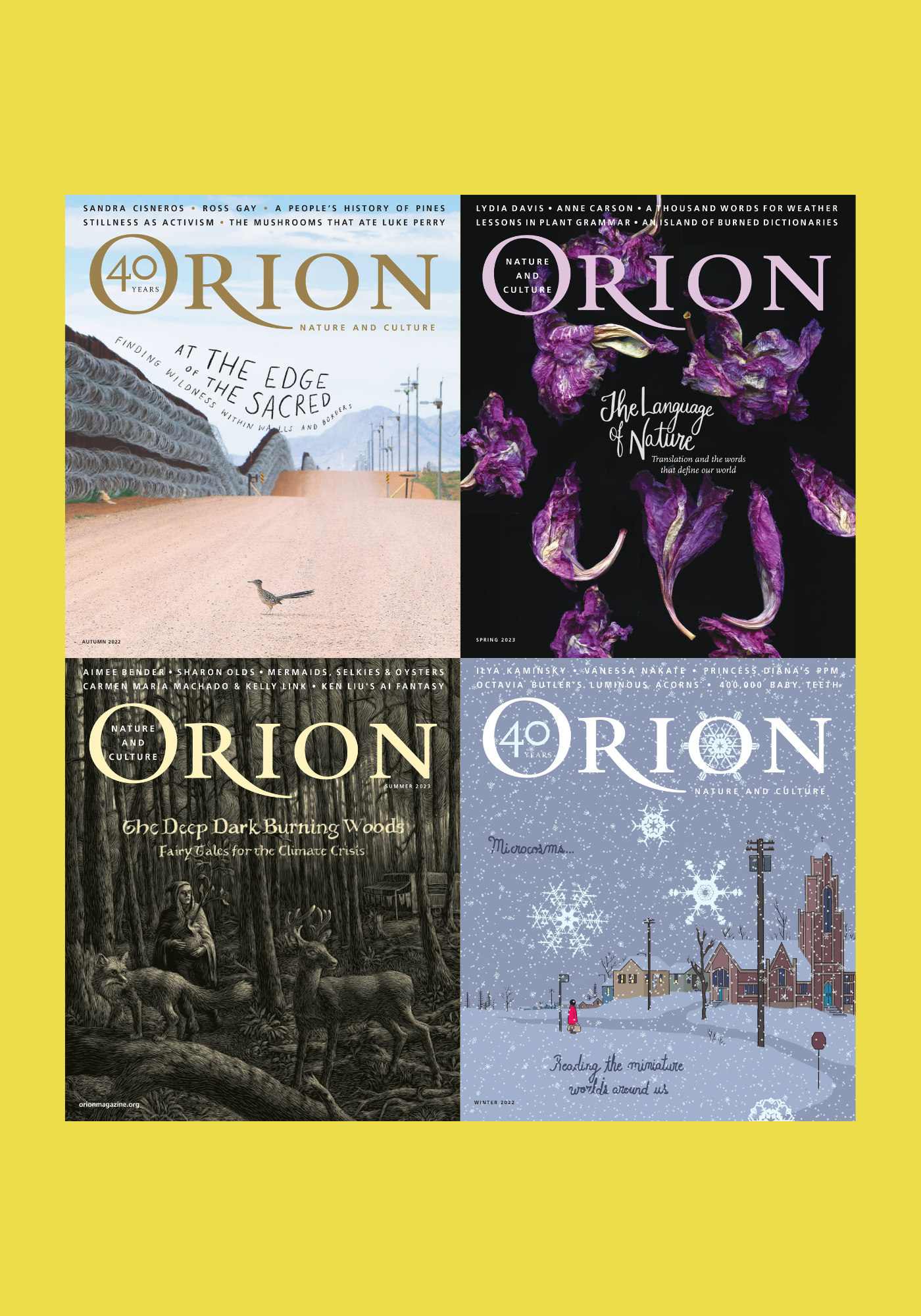
Orion invites readers into a community of caring for the planet. Through writing and art that explore the connection between nature and culture, it inspires new thinking about how humanity might live on Earth justly, sustainably, and joyously. Founded in 1982, Orion has grown into a quarterly print magazine with in-depth features, poetry, photo essays, science reporting, profiles, book reviews, and interviews. Orion also publishes full-length books as well as original work on its website that probe humanity’s ethical obligation towards and connection to our planet and hosts workshops designed to help writers deepen their relationship with nature and place.
Judges’ citation:
Orion sounds out the depth and breadth of the natural world and our human experiences in it, proving over and again how necessary a publication it is in this age of climate crisis. The magazine is the nucleus of something much larger: a network of readers and contributors bound by a desire to protect and marvel at natural beauty. Each themed issue, replete with illustrations that complement and elevate the text, is a printed object to cherish. To read Orion is to feel the planet as a living organism of which we are a part.
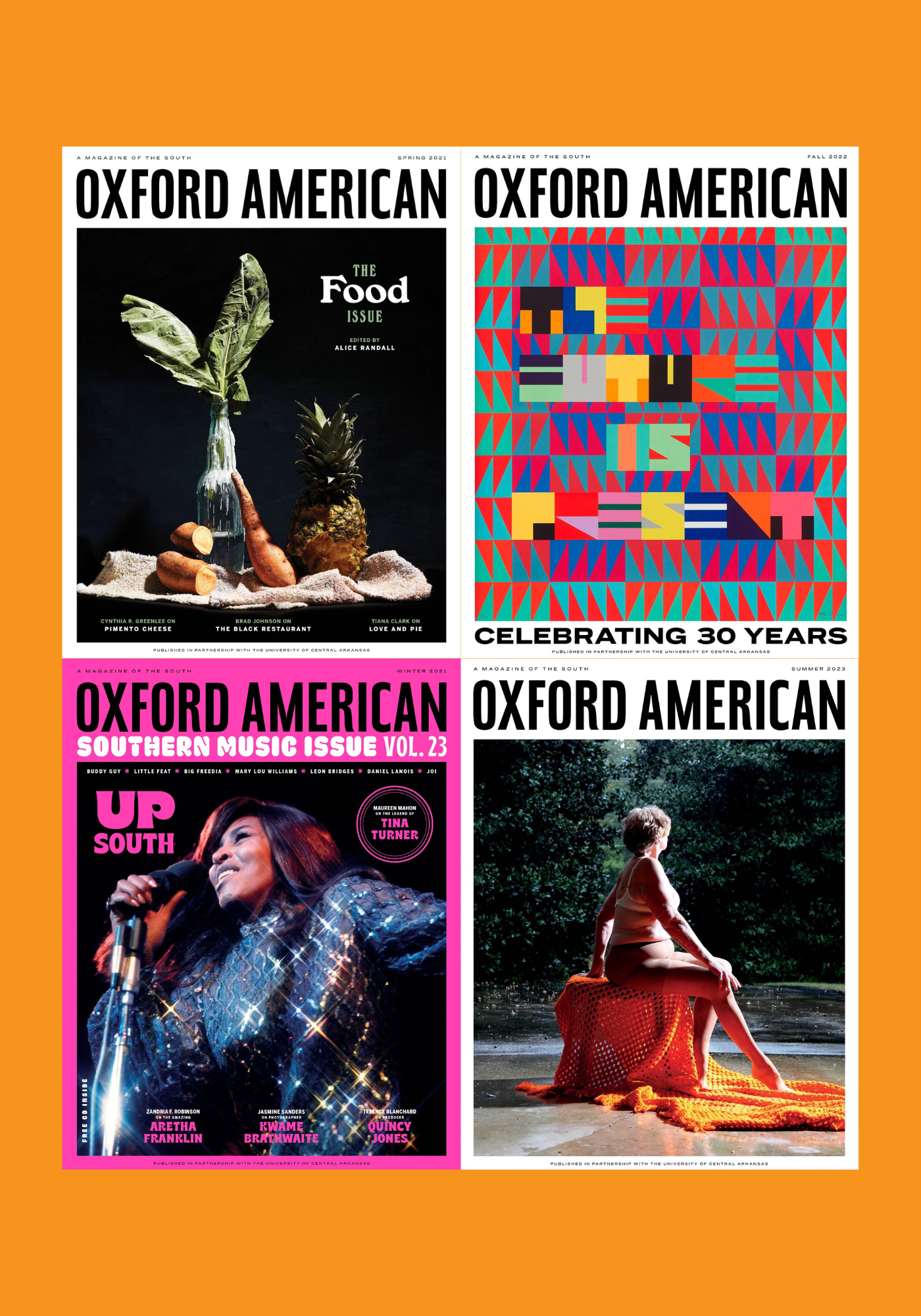
Dedicated to the complexity and vitality of the American South, Oxford American is a national magazine with a regional point of view. It began publishing in 1992 out of Oxford, Mississippi, and strives to reflect the multicultural tapestry of the region as it truly exists–to explore many Souths and trouble familiar, singular stereotypes. Oxford American publishes a wide array of literature written in diverse registers, including investigative reportage, memoir, cultural criticism, fiction, poetry, and book reviews, in addition to an iconic annual Southern music issue. Oxford American celebrates the South’s immense cultural impact on the nation–its foodways, literary innovation, fashion history, visual art, and music–and recognizes that as much as the South can be found in the world, one can find the world in the South.
Judges’ citation:
Oxford American is our most adventurous and authoritative window on the South, pushing beyond headlines to deliver a textured, ever-evolving portrait of its cultural wealth. Drawn in by eye-catching art direction and dazzling editorial letters, readers stay to savor the unique weave of the journalistic with habit-forming fiction and vivid travel writing. A generous intellectual hospitality serves the magazine’s Southern neighbors and a broad national readership all at once. Oxford American is a spring of innovation, honoring tradition while forging something new.
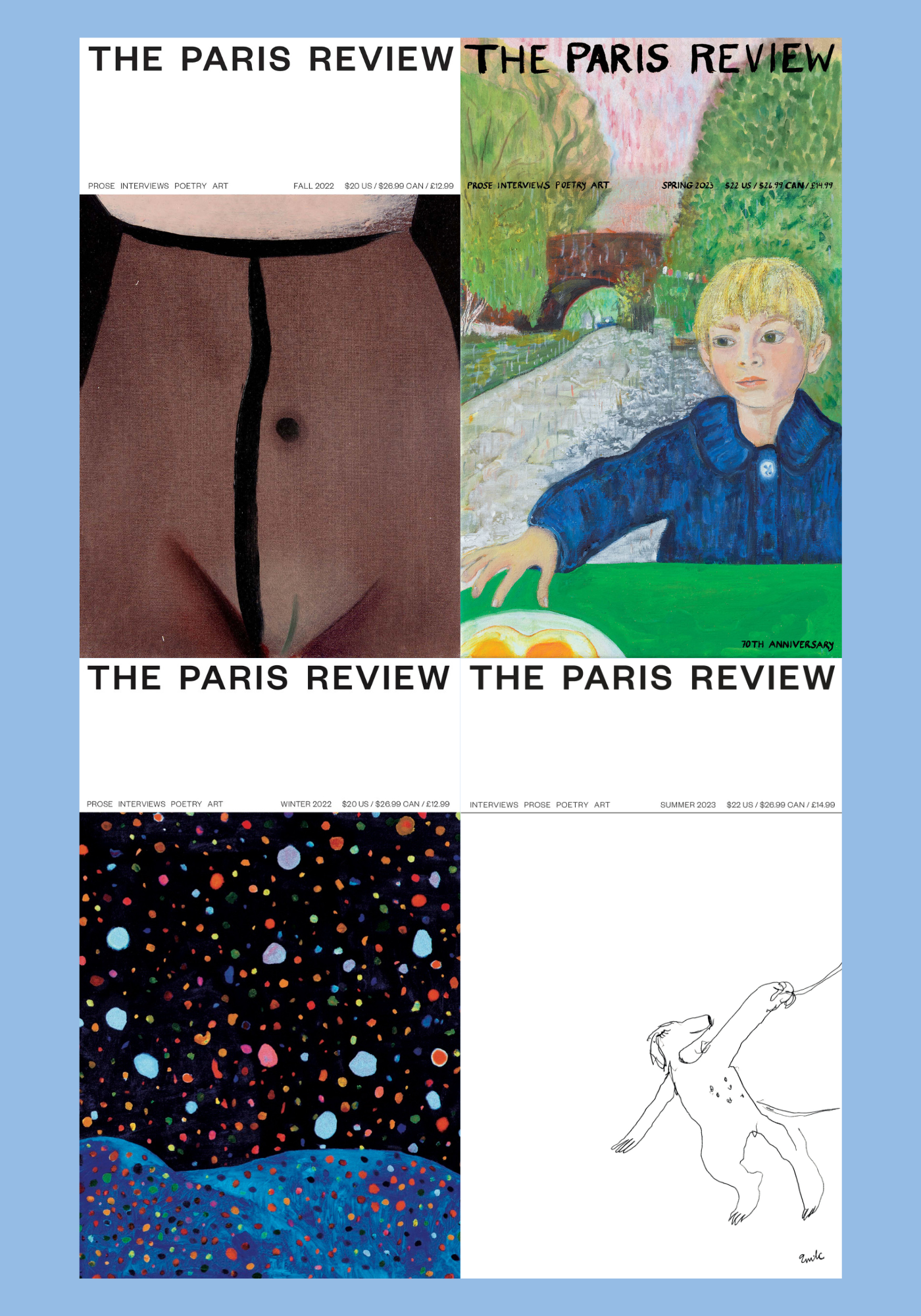
The Paris Review showcases a lively mix of exceptional poetry, fiction, and nonfiction and delights in celebrating writers at all career stages. Its “Writers at Work” series, hailed by the New York Times as “the most remarkable interviewing project we possess,” offers rich psychological portraits and a trove of practical advice for aspiring writers, and has been a hallmark of the magazine since its inception in 1953. With a quarterly print journal, a website that publishes daily, a digital archive, and a podcast featuring a blend of classic stories and poems, vintage interview recordings, and new work, The Paris Review favors daring, original writing and seeks to be the best kind of party: open, inclusive, and excitingly vibrant.
Judges’ citation:
For seventy years and counting, The Paris Review has remained wonderfully distinctive and sophisticated, never short on chic art direction, impeccable curation, or international flair. The interviews make you ache to have been in the room for the conversation. Readers will find exceptional work by feted writers in every issue, but The Paris Review does not rest on its legacy: it deftly employs its footing as the standard bearer for American literary magazines to uplift talent that hasn’t yet gotten its due.
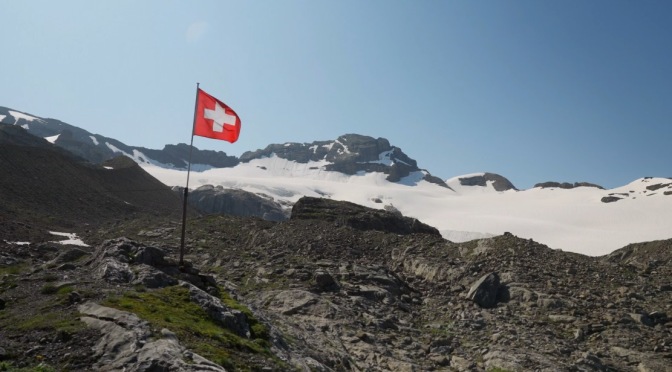
Alessandro Rovere Films (May 3, 2023) – The Last Ice showcases two cultures, laying on the same longitude on opposite sides of our planet, who have for generations relied on their deep connection with nature to sustain their way of life.
DIRECTOR / PRODUCER / EDITOR / DRONE: ALESSANDRO ROVERE
CLIENT: KLIMAHAUS BREMERHAVEN
However, the devastating effects of climate change have begun to threaten the future of a Swiss mountain village and the Yupik people, on a small island in the Bering Sea, Alaska.
The film was created in collaboration with, and exhibited at, the German Climate Museum, Klimahaus Bremerhaven, as a reminder of the common ground and concerns shared by communities worldwide in the face of climate change and humanity’s heavy dependence on nature.

The house is originally made from carbon fiber because of its ecological effect being better than metal, and it gives an increasingly feasible transport, it can be also combined with tesla truck for instance could make a revolutionary detour to embrace nature again and can significantly reduce the global warming.
The home dimensions in closed mode is (2.7×11.6 m) which is almost the same size if 40 feet container box, the approximate area of the home is closed mode is 32 sq.m, while it reach up to 42 sq.m in the open mode. The interior design is completely different from the ordinary motor home, it consists basically from cutouts, living room, kitchen, washing room, little dining space, and extendable bed room, with an over hanged bed all necessary equipment are concealed in the rear side of the house.
But what mostly distinguish LYX home, is the kinetic feature which allows the owner to optimize the space of their home, in addition to a remotely glass wall and they are switchable to give full privacy or full view whenever desired. For sure if you are going to live in a house it should have a power source, LYX has electrified the new home with different sources of electricity, First, it can be connected to the grid, or power supply point when it is camping.
Second, it has enough number of rechargeable batteries which can be recharged during camping or even when driving by using advanced dynamos. Third, PV solar panels on the roof. which is interactive and adjustable to fit with the best sun angle during camping mode. And it can also recharge the batteries.
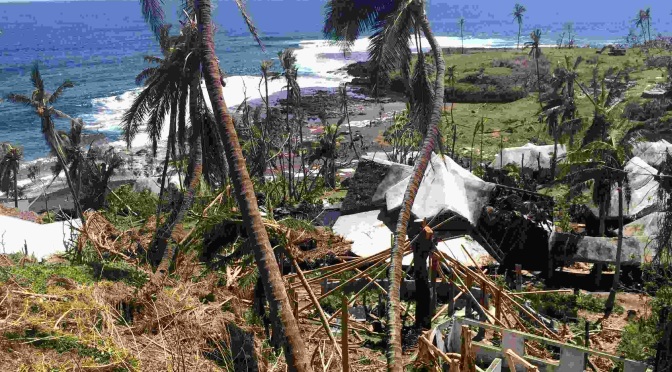
Scientists say global heating is already making major tropical cyclones like those that hit Vanuatu more frequent. Under moderate and worst-case climate scenarios, the country is expected to lose around 20-25 per cent of its GDP from natural disasters each year, according to a recent UN report. Later this month Vanuatu’s proposal for a top international court to clarify the obligations of states to tackle climate change and the consequences of not doing so under international law will be put to a vote at the United Nations.
Vanuatu is a South Pacific Ocean nation made up of roughly 80 islands that stretch 1,300 kilometers. The islands offer scuba diving at coral reefs, underwater caverns and wrecks such as the WWII-era troopship SS President Coolidge. Harborside Port Vila, the nation’s capital and economic center, is on the island of Efate. The city is home to the Vanuatu National Museum, which explores the nation’s Melanesian culture.



 Boomers Daily