

Front Page Views: The New York Times – September 6

We discuss worsening relations between the EU and the US and ponder whether their immediate future might lie apart. Plus: Russian influence in Belarus and a preview of Salone del Mobile.
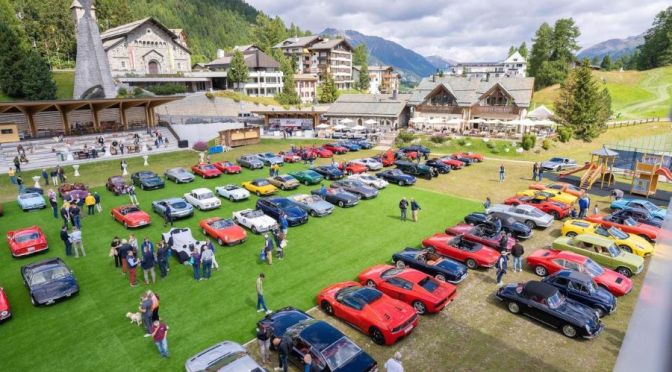
The tenth edition of Passione Engadina has come to an end, presenting an incredible parterre of vintage Italian cars all gathered in the splendid setting of St. Moritz and the Graubünden passes. For this edition, the guest of honour was Ferrari, thanks to the collaboration with Kessel. To celebrate the tenth edition together with Ronnie Kessel, sponsor since the first year, 30 sportscars were admitted to the race, with a separate classification. On the streets of St Moritz and the Engadin, in addition to rare and exceptionally beautiful classic cars, powerful Ferrari sportscars were on display, including two Monza SPs. One car that caught the attention of participants and passers-by was the Kimera EVO37, driven by Luca Betti (former Rally driver and Founder of Kimera Automobili). The public was also able to admire some unique pieces on display in front of the Kulm Hotel in St Moritz, the home of Passione Engadina: a Ferrari 512 M Prototype, a Ferrari 206 S, and a Ferrari 206 SP.
Read by John Davies
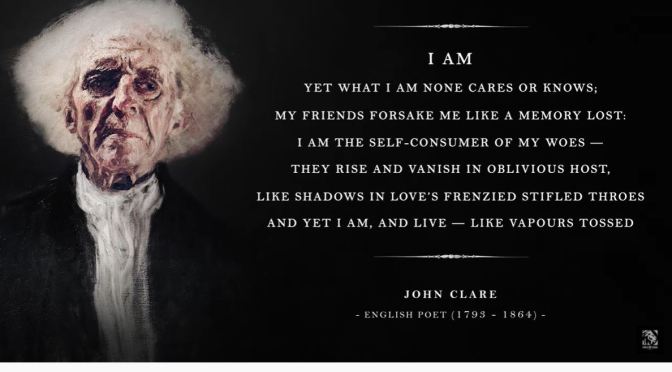
John Clare was an English poet who lived most of his life in abject poverty. His life was marred by bouts of mania and depression, and for the final 23 years of his life, Clare was locked in an insane asylum. It was here he began to write poetry; ‘I Am’ was Clare’s final elegy before his passing.
BY JOHN CLARE
I am—yet what I am none cares or knows;
My friends forsake me like a memory lost:
I am the self-consumer of my woes—
They rise and vanish in oblivious host,
Like shadows in love’s frenzied stifled throes
And yet I am, and live—like vapours tossed
Into the nothingness of scorn and noise,
Into the living sea of waking dreams,
Where there is neither sense of life or joys,
But the vast shipwreck of my life’s esteems;
Even the dearest that I loved the best
Are strange—nay, rather, stranger than the rest.
I long for scenes where man hath never trod
A place where woman never smiled or wept
There to abide with my Creator, God,
And sleep as I in childhood sweetly slept,
Untroubling and untroubled where I lie
The grass below—above the vaulted sky.
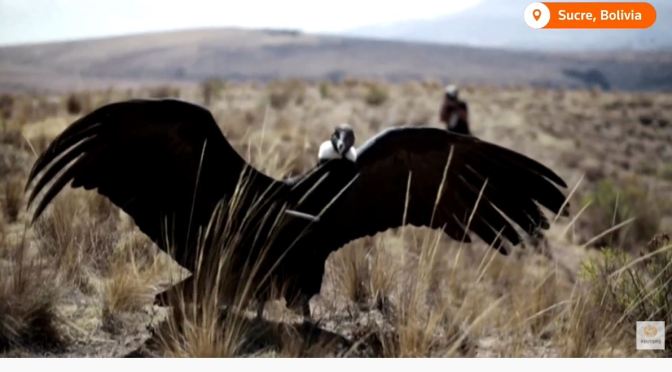
The Andean condor is a South American bird in the New World vulture family Cathartidae and is the only member of the genus Vultur. Found in the Andes mountains and adjacent Pacific coasts of western South America, the Andean condor is the largest flying bird in the world by combined measurement of weight and wingspan. Two Andean condors were released back to the wild in the mountains of Bolivia after they were nursed back to health.
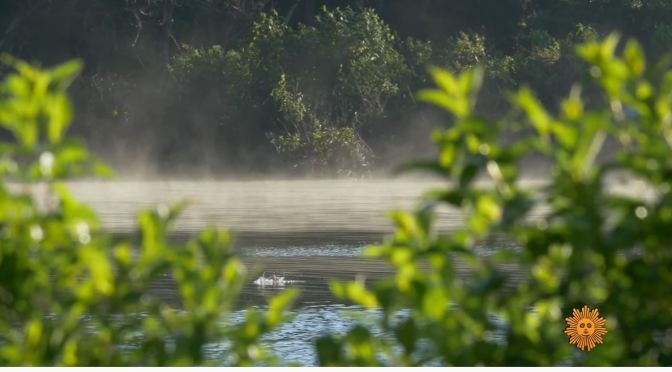
“Sunday Morning” takes us to Lake O’ The Pines in east Texas at sunrise. Videographer: Scot Miller.
Lake O’ the Pines is a reservoir on Big Cypress Bayou, also known as Big Cypress Creek, chiefly in Marion County, Texas, USA. The reservoir also occupies a small part of Upshur and Morris Counties. The dam is located approximately 8.5 miles west of Jefferson.
Ribeauvillé is a commune in the Haut-Rhin department in Grand Est in north-eastern France. Its inhabitants are called Ribeauvillois.


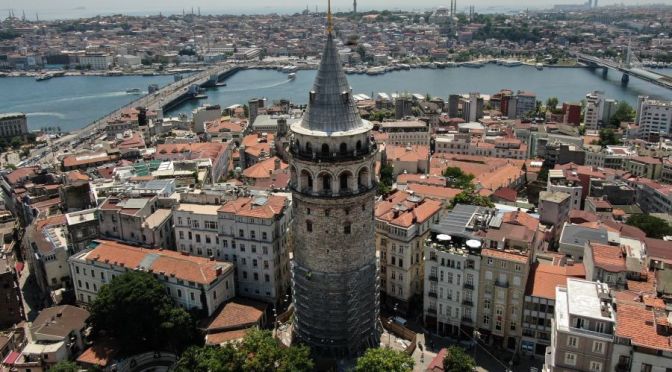
The Galata Tower is a medieval stone tower in the Galata/Karaköy quarter of Istanbul, Turkey, just to the north of the Golden Horn’s junction with the Bosphorus. It is a high, cone-capped cylinder that dominates the skyline and offers a panoramic vista of Istanbul’s historic peninsula and its environs.
Bauen is what can be considered a hidden gem among the Swiss villages. It lays by the shores of the Vierwaldstättersee and is often overlooked. Bauen has a unique climate, it’s usually quite warm during the year. With its Mediterranean vibes and the many palm trees, this village is very inviting to visitors.
Bauen is a former municipality on Lake Lucerne in the Swiss canton of Uri. On 1 January 2021 the former municipality of Bauen merged into the municipality of Seedorf.




 Boomers Daily