
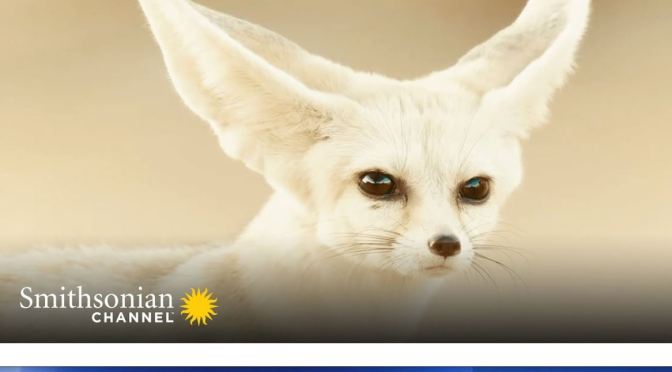
Fennec foxes, native to the deserts of North Africa, are the smallest canines on the planet, weighing in at just over two pounds. This is a sharp contrast to their most distinctive feature: a pair of oversized ears.
Category Archives: Wildlife
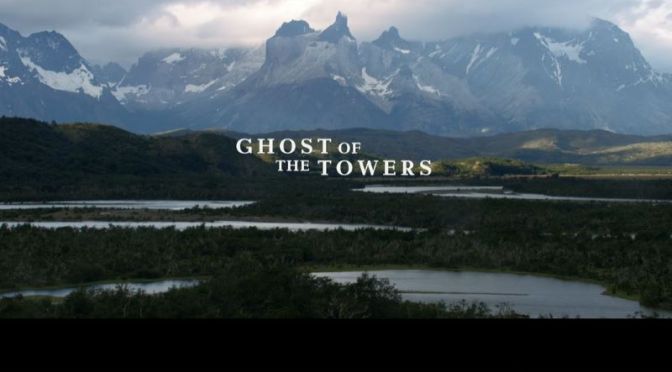
Travel & Adventure Film: ‘Ghost Of The Towers’ On Pumas In Southern Chile
Directed by: Michael Blake
Director of Photography, Editor & Film Color by: Peter Trow
Last year I had the opportunity to work as the Director of Photography and Film Editor on an inspiring adventure film shot in the Torres Del Paine region of Southern Chile. The film follows world renowned National Geographic Photographer Keith Ladzinski, along with a team of expert Biologists and Trackers as they seek to document and photograph the regions legendary and elusive Puma.
This was no easy task. However, with much thanks to Director Michael Blake and an incredibly talented group of dedicated Cinematographers, such as the talented and creative Max Frank, Wildlife Master DP Federico Pardo and Aerial DP Doug Holgate (who kept things fun during the intense and sleepless schedule) , Along with expert Audio Engineer Ryan Rees, Co-Producers Ian Glass and Eduardo Minte Hess… We got it done!
I have so much gratitude for my family Erin Trow and Reina Kai Williams for their continual support and remarkable patience during the many long days (months) and late nights spent editing and in postproduction. Very special thanks to HOKA Footwear for sponsoring this incredible adventure and creative project.
Wildlife DP: Federico Pardo
Camera Operator: Max Frank
Aerial DP: Doug Holgate
Audio Engineer: Ryan Rees
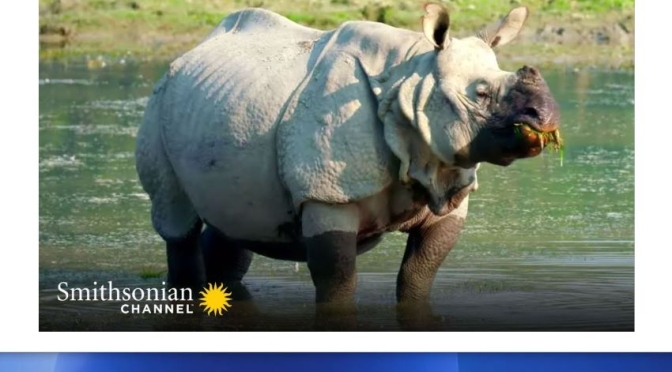
Travel & Wildlife Video: India’s Endangered ‘One-Horned Rhinoceros’
The greater one-horned rhino is one of the most vulnerable animals in India – today, only 3,500 remain in the wild, spread out in isolated pockets from Nepal to the Myanmar border.
The Indian rhinoceros, also called the Indian rhino, greater one-horned rhinoceros or great Indian rhinoceros, is a rhinoceros species native to the Indian subcontinent. It is listed as Vulnerable on the IUCN Red List, as populations are fragmented and restricted to less than 20,000 km².
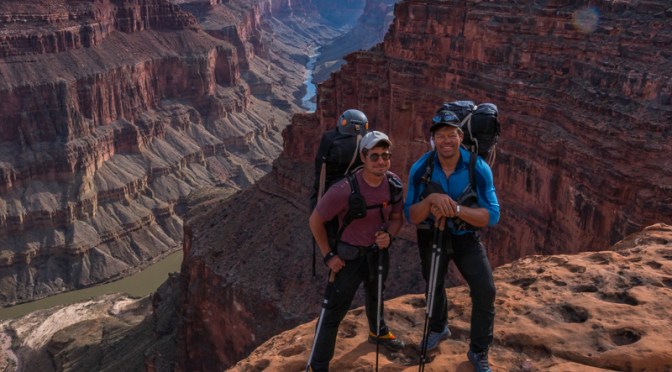
Travel Documentaries: “Passport Home” – Pete McBride Photographs The Grand Canyon (Video)
Photographer, filmmaker, and Sony Artisan Pete McBride shares this short film “Passport Home”, a glimpse of his documentary “Into the Canyon” that is nominated for Outstanding Nature Documentary at next week’s 2020 Emmy Awards.
“For years I’ve studied the world through a lens to tell the stories of others, my own, and the magic and complexity of our shared world. But after years of documenting stories I started noticing something consistent. Wherever I framed my lenses, change revealed itself before me. The places where I had ventured and worked were facing constant challenges of overuse and destruction, of being loved to a point of permanent change.”
“It was at this point that I realized my cameras were no longer just a passport for adventure, but tools to help protect the places where we adventure – those wild places we love. Now I shoot not for likes, instead I document because I want to cherish and protect the places I love…so the next person can stand in my tracks and see the magic just like I saw it. Cameras are passports to our curiosity, our creativity, our world, and they are even tools to help protect not just far away, but our own back yards.”
Learn more: https://alphauniverse.com/
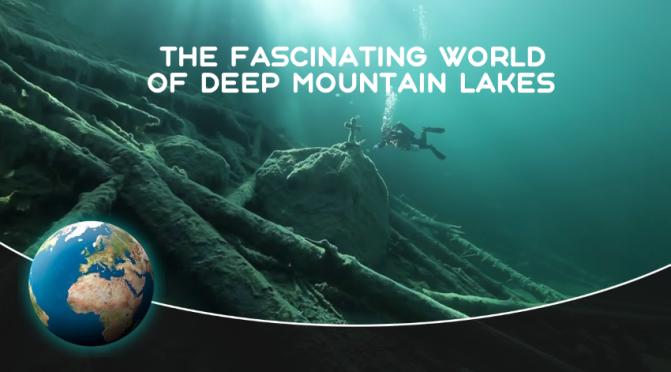
Top New Travel Videos: “The Fascinating World Of Deep Mountain Lakes”
Directed by: Sigurd Tesche
Written by: Lothar Frenz
This is a nature documentary, which leads us into the fascinating world of deep mountain lakes. We conquer ice palaces of unsuspected beauty. In the freezers, in which elves, fairies and mountain trolls once did their mischief, we move, using a special breathing technique and with special cameras in search of nocturnal hunters, whose eyes are equipped with residual light amplifying receptors.
A nature documentary, recorded in 2k-cinema format with precision cameras, such as super slow motion, time lapse, residual light and remote-controlled cams.
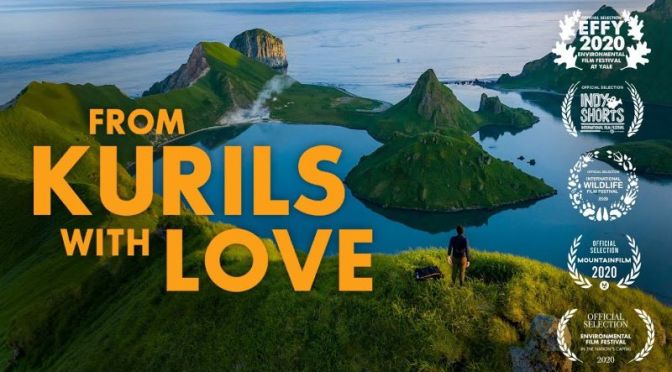
New Wildlife Films: “From Kurils With Love” – Kuril Islands In Eastern Russia
Vladimir, a scrappy Russian marine biologist, stows away aboard a boat filled with adventure junkies and a world-renowned cybersecurity expert to help fulfil his quest to understand and protect the Kuril Islands. Set in one of the most inaccessible volcanic island chains in the world, the film introduces us to a true warrior for the planet on an intimate journey of visual bliss, sea lion chaos, and ultimately a greater hope for the Earth.
Watch longer version below:
The Kuril Islands or Kurile Islands is a volcanic archipelago in Russia’s Sakhalin Oblast that stretches approximately 1,300 km northeast from Hokkaido, Japan to Kamchatka, Russia, separating the Sea of Okhotsk from the north Pacific Ocean. There are 56 islands and many minor rocks.
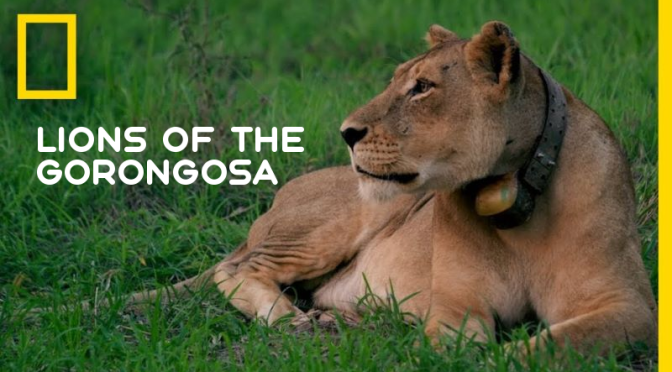
Wildlife Videos: “Lions Of The Gorongosa” (NatGeo)
Tune in to Nat Geo Wild’s Big Cat Week Sept 7-11 and learn more about how Nat Geo is working to save big cats.
Gorongosa National Park is a preserved area in the Great Rift Valley of central Mozambique. Its forests and savannahs are home to lions, hippos and elephants. Lake Urema and its surrounding wetlands and rivers attract scores of water birds. The multitiered Murombodzi Falls spills over jagged rocks on the slopes of Mount Gorongosa. Limestone gorges and bat-filled caves define Cheringoma Plateau.

New Interviews: Wendy Benchley On Legacy Of Peter Benchley’s “Jaws”
Wendy Benchley is a marine and environmental conservation advocate, and former councilwoman from New Jersey. Her husband Peter Benchley was the famed author of JAWS, the classic suspense novel of shark versus man, which was made into the blockbuster Steven Spielberg movie. The Jaws phenomenon changed popular culture and continues to inspire a growing interest in sharks and the oceans today. Today Wendy Benchley joins our producer Pat Stango to discuss the legacy of JAWS, how its story still resonates in the events of today, and why ocean conservation is something she still fights for.
Jaws is a 1974 novel by American writer Peter Benchley. It tells the story of a great white shark that preys upon a small resort town and the voyage of three men trying to kill it. The novel grew out of Benchley’s interest in shark attacks after he learned about the exploits of shark fisherman Frank Mundus in 1964.
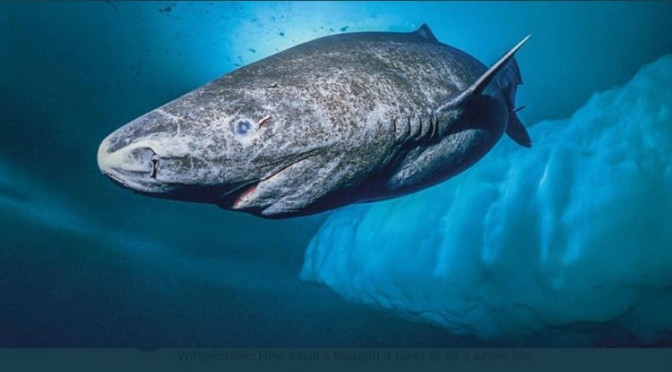
Writer Podcast: “Consider The Greenland Shark” – Which Can Live 500 Years
Katherine Rundell reads her study of the Greenland shark, which can live for 500 years.

‘I am glad not to be a Greenland shark; I don’t have enough thoughts to fill five hundred years. But I find the very idea of them hopeful. They will see us pass through our current spinning apocalypse.’

Travel & Wildlife: The “Iberian Lynx” Of The Sierra Morena In Spain (Video)
Southern Spain: home to distinctive landscapes, extreme climates, and a unique species of wildcat. The Iberian lynx is smaller than its European cousin and has evolved to survive almost exclusively by hunting wild rabbits.
Yet this unvaried diet is what drove the Iberian lynx to the brink of extinction during the 20th century. We introduce the breeding and conservation programs that have helped the wildcat make a remarkable recovery, and take a look at the threats the endangered species still faces today.
The Iberian lynx is a wild cat species endemic to the Iberian Peninsula in southwestern Europe. It is listed as Endangered on the IUCN Red List.
The Sierra Morena is one of the main systems of mountain ranges in Spain. It stretches for 450 kilometres from east to west across the south of the Iberian Peninsula, forming the southern border of the Meseta Central plateau and providing the watershed between the valleys of the Guadiana to the north and the west, and the Guadalquivir to the south.
 Boomers Daily