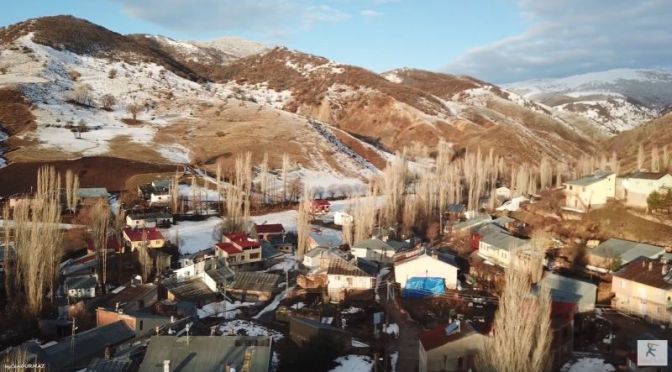
Aerial tour of village in Anatolia; Sivas, İmranlı, Maden Köyü
İmranlı, is a town and a district of Sivas Province of Turkey. Population is 6,600. The mayor is Murat Açıl. The town is located at 108 km to Sivas. It became a district on January 1, 1948, while it was a part of the Zara district. Because of the harsh weather, agriculture is less prevalent.
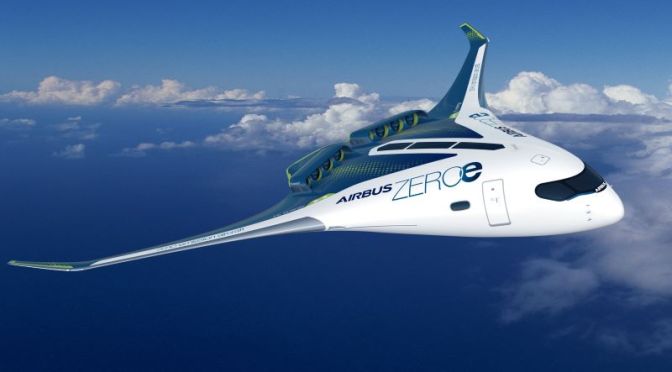
Airbus has revealed three concepts for the world’s first zero-emission commercial aircraft which could enter service by 2035. These concepts each represent a different approach to achieving zero-emission flight, exploring various technology pathways and aerodynamic configurations in order to support the company’s ambition of leading the way in the decarbonisation of the entire aviation industry.
All of these concepts rely on hydrogen as a primary power source – an option which Airbus believes holds exceptional promise as a clean aviation fuel and is likely to be a solution for aerospace and many other industries to meet their climate-neutral targets.
The three concepts – all codenamed “ZEROe” – for a first climate neutral zero-emission commercial aircraft include:
•A turbofan design (120-200 passengers) with a range of 2,000+ nautical miles, capable of operating transcontinentally and powered by a modified gas-turbine engine running on hydrogen, rather than jet fuel, through combustion. The liquid hydrogen will be stored and distributed via tanks located behind the rear pressure bulkhead.
• A turboprop design (up to 100 passengers) using a turboprop engine instead of a turbofan and also powered by hydrogen combustion in modified gas-turbine engines, which would be capable of traveling more than 1,000 nautical miles, making it a perfect option for short-haul trips.
• A “blended-wing body” design (up to 200 passengers) concept in which the wings merge with the main body of the aircraft with a range similar to that of the turbofan concept. The exceptionally wide fuselage opens up multiple options for hydrogen storage and distribution, and for cabin layout.
South Koreas Lantern Festival has won the Unesco Intangible Cultural Heritage status. It’s an annual festival that dates back centuries and it marks the birthday of Buddha. All across the country you’ll find colourful lanterns decorating temples, houses and streets and there also are large parades with elaborate floats. Unesco said the spring festival was “a time of joy” which “in times of difficulties, plays an important role in…helping people overcome the troubles of the day.” Unesco’s Intangible Cultural Heritage status aims to protect traditions, knowledge and skills which are often inherited through generations, so they are not lost or forgotten as time moves on.
Patagonia Films presents: Treeline. Follow a group of skiers, snowboarders, scientists and healers to the birch forests of Japan, the red cedars of British Columbia and the bristlecones of Nevada, as they explore an ancient story written in rings.
Producers: Laura Yale, Monika McClure
Executive Producers: Alex Lowther, Jimmy Hopper, Josh Nielsen
Cinematography, editing, principal sound design: Jordan Manley
Additional Cinematography: Scott Secco
Associate Producers: Garrett Grove, Lisa Ida, Soichiro Uchino, Mie Sawatari
Editorial Advisors: Daniel Irvine, Chad Manley
Motion Graphics: Daniel Irvine
Additional Sound Design and Mix: Jeff Yellen / Ridgeline Sound
Cast & Athletes
Taro Tamai Hidehiko Wajima Kazushi “Orange Man” Yamauchi Yuki Miyazaki Alex Yoder Leah Evans Carston Oliver Laura Yale Connie Millar Diane Delaney Michael Cohen Deb MacKillop Suzanne Simard Akihiko Tamaki Konami Tsukamoto
Still Photographer: Garrett Grove
Additional Audio Recordings: Travis Rummel / Felt Soul Media
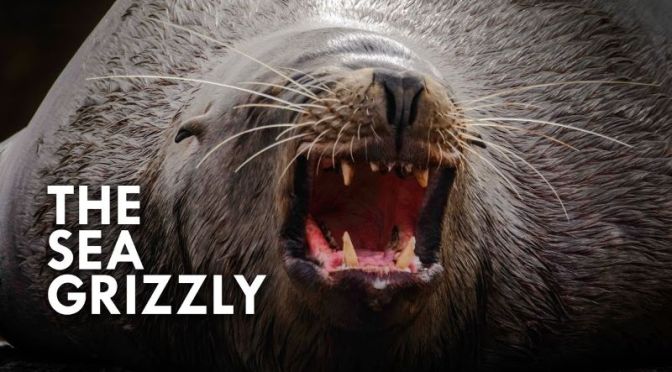
Sea lions are pinnipeds characterized by external ear flaps, long foreflippers, the ability to walk on all fours, short, thick hair, and a big chest and belly. Together with the fur seals, they comprise the family Otariidae, eared seals, which contains six extant and one extinct species in five genera.
Syndicated columnist Mark Shields and New York Times columnist David Brooks join Judy Woodruff to discuss politics as a noble profession, optimism as a defining American characteristic, and collective sacrifice for the common good. In his final regular appearance on the NewsHour, we celebrate Mark Shields and his storied career in journalism and politics.
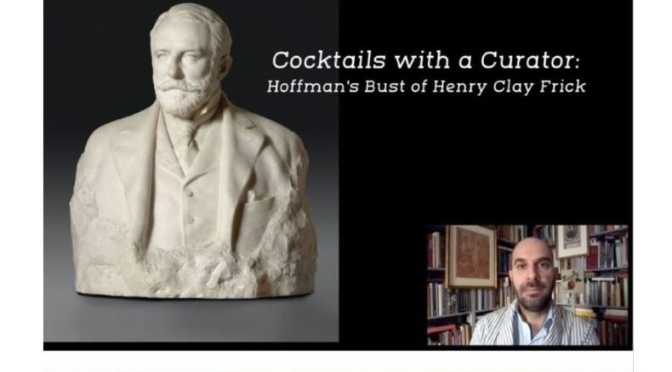
In this week’s episode of “Cocktails with a Curator,” Deputy Director and Peter Jay Sharp Chief Curator Xavier F. Salomon takes a closer look at Malvina Cornell Hoffman’s marble bust of Henry Clay Frick, the museum’s founder, and considers the complicated legacy of the Pennsylvania-born industrialist. This month marks several important milestones for the Frick, including the eighty-fifth anniversary of the opening of a museum for, in Frick’s words, “all persons whomsoever.” This oft-overlooked bust was commissioned by his daughter, Helen Clay Frick, and for many years welcomed guests in the Entrance Hall at 1 East 70th Street. This week’s complementary cocktail is the Old Fashioned, a nod to Frick’s first job as an accountant for the family whiskey distillery.
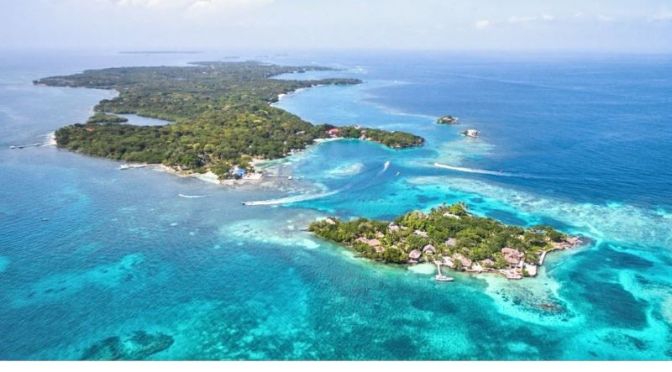
The Northern Mariana Islands are a U.S. commonwealth in the Pacific Ocean. Saipan, the largest island, is known for its sandy shores and mountainous landscapes. In clear waters off its west coast is the tiny, coral-fringed Mañagaha islet. On Saipan’s northeast coast, turtles inhabit the Grotto, a cavern dive site. Nearby, memorials mark Banzai Cliff and Suicide Cliff, sites from WWII’s Battle of Saipan.
Missile sales are the number two defense export in the U.S. and production is dominated by a handful of companies such as Raytheon, Boeing and Lockheed Martin. As technology advances, will expensive missiles and hypersonic glide weapons dominate the market, or could start-ups and cheaper technology change the missile economy?
This week, we’re putting the focus on Nobel Prize-winning French author Albert Camus. As 2020 saw France mark 60 years since his death in a car crash, Camus’s seminal work “The Plague” was unexpectedly thrust back into the spotlight by the Covid-19 pandemic.
From the UK to Japan, the 1947 novel established itself as a global sensation, topping sales charts and pushing publishers into a rushed reprint. But Camus’s prolific and multi-faceted career extends far beyond this viral hit. We tell you more about the author’s life, starting with his humble beginnings in French-ruled Algeria.
News, Views and Reviews For The Intellectually Curious






 Boomers Daily