

Can a device replace the need to learn a new language? WSJ asked Alex Rawlings, author of “How To Speak Any Language Fluently,” and an expert in over 15 languages, to test out the new Pocketalk S Voice Translator on the streets of Barcelona.
Category Archives: Technology

Exercise : A Review Of Top High-Tech Fitness Apps And Equipment (Video)
Now that the season is behind us, former NFL legend Clay Matthews and CNET’s Kara Tsuboi demonstrate how to use tech to train like the pros.

Space Programs: ‘The Search For Life On Mars’
China, the UAE and the U.S. all have spacecraft visiting Mars in February to study the Red Planet. WSJ explains how out-of-this-world technology is being used by NASA’s Perseverance and China’s Tianwen-1 in the search for evidence of life beyond our planet. Photo: NASA
Electric Vehicles: ‘The EV Charging Problem’ (Video)
A Tesla Supercharger is a 480-volt direct currentfast-charging technology built by American vehicle manufacturer Tesla, Inc. for their all-electric cars. The Supercharger network was introduced on September 24, 2012 with six Supercharger stations.[1] As of December 31, 2020, Tesla operates over 23,277 Superchargers in over 2,564 stations worldwide[2] (an average of 9 chargers per station). There are 1,101 stations in North America, 592 in Europe, and 498 in the Asia/Pacific region.[3] Supercharger stalls have a connector to supply electrical power at maximums of 72 kW, 150 kW or 250 kW.[4]
The original V1 and V2 Tesla supercharging stations charge with up to 150 kW of power distributed between two cars with a maximum of 150[21][22] kW per car, depending on the version.[23][14][24] They take about 20 minutes to charge to 50%, 40 minutes to charge to 80%, and 75 minutes to 100% on the original 85 kWh Model S. The charging stations provide high-power direct-current (DC) charging power directly to the battery, bypassing the internal charging power supply.[25]
In September 2017, Tesla announced the availability of urban Superchargers. The urban Superchargers are more compact than the standard Supercharger stalls, and will be primarily deployed in urban areas such as mall parking lots and garages. Compared to the standard Superchargers, urban Superchargers have a maximum power delivery of 72 kW. Instead of 150 kW distributed between two vehicles at a Supercharger A/B stall pair, each Urban Supercharger stall provides dedicated 72 kW capacity.[26]
A few of the Tesla supercharging stations use solar panels to offset energy use and provide shade.[27] Tesla plans to install additional solar power generation at Superchargers.

Protein Vaccine: Novavax Primes Immune System To Make Antibodies (Video)

Science Podcast: Human Genome Sequencing – 20 Years Of Research & Data

This week we’re dedicating the whole show to the 20th anniversary of the publication of the human genome. Today, about 30 million people have had their genomes sequenced. This remarkable progress has brought with it issues of data sharing, privacy, and inequality.
Host Sarah Crespi spoke with a number of researchers about the state of genome science, starting with Yaniv Erlich, from the Efi Arazi School of Computer Science and CEO of Eleven Biotherapeutics, who talks about privacy in the age of easily obtainable genomes. Next up Charles Rotimi, director of the Center for Research on Genomics and Global Health at the National Human Genome Research Institute, discusses diversity—or lack thereof—in the field and what it means for the kinds of research that happens. Finally, Dorothy Roberts, professor in the departments of Africana studies and sociology and the law school at the University of Pennsylvania, talks about the seemingly never-ending project of disentangling race and genomes.

Remote Work: ‘How Big Tech Is Revamping It’ (WSJ)
Prominent tech companies are embracing remote work amid an exodus of skilled labor from Silicon Valley. WSJ looks at what that could mean for innovation and productivity and what companies are doing to manage the impact.

Analysis: ‘2021 iPhone 13’ – New Technology (Video)
Clues to the Next iPhone Are in Samsung’s New Galaxy S21 Years of smartphone launches all plotted on one evidence board. A fingerprint sensor embedded in the screen? An ultra-zoom camera? A faster 120Hz display? Samsung’s latest tells us a lot about what might come from Apple this year in the iPhone 13. WSJ’s Joanna Stern sifts through years of Galaxy and iPhone evidence. Photo illustration: Preston Jessee for The Wall Street Journal Personal Technology With Joanna Stern

Future Transport: ‘Flying Cars Airport’ Scheduled for UK In 2021 (Video)
An airport for flying cars will thrust the English city of Coventry into the future later this year, with a project aimed at demonstrating how air taxis will work in urban centers.
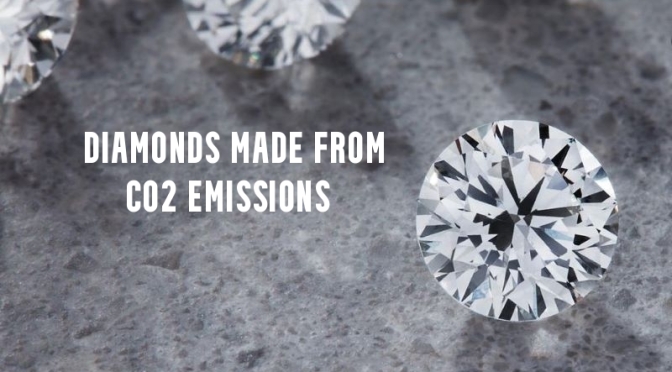
Innovation: Diamonds Made From CO2 Emissions
A UK company named Skydiamond hopes to revolutionize the traditional diamond mining industry by using carbon capture technology to do just that. The company calls it a ‘zero-impact diamond’ because the process pulls carbon dioxide right out of the air.
Although, a diamond traps only a modest amount of carbon — one carat contains just 200 milligrams. Pure carbon can take many forms — it all depends on how the atoms are arranged. Graphite is arranged into multiple layers, graphene in a single layer, and if it’s rolled-up, it forms carbon nanotubes. But when each carbon forms 4 strong bonds in a tetrahedral structure, it becomes a diamond.
Most natural diamonds were formed over a billion years ago, more than 120 kilometers beneath the Earth’s surface. This is where intense temperature and pressure cause carbon atoms to strongly bond together and arrange into crystal structures. Volcanic eruptions bring these crystals embedded in magma to the surface. When the magma cools, it hardens in long vertical shafts called kimberlite pipes. And these pipes are what’s sought after in the mining industry.
 Boomers Daily