Category Archives: Technology

Futuristic Design: Banff Extraterrestrial Park By Yongwook Seong (2022)

Yongwook Seong created a Sci-Fi themed architecture series (Title: Banff Extraterrestrial Park) by experimenting AI-generated images via Midjourney. The project unfolds from Extraterrestrial 006 visiting Banff and terraforming it to construct a tourist park as part of the Earth revitalization project.
During research, 006 saw Mycelium fungi as an ideal local building material, experimenting it with their stardusts. Sky lounges grow themselves at the extraterrestrial-level strength and stability.

During research, 006 saw Mycelium fungi as an ideal local building material, experimenting it with their stardusts. Sky lounges grow themselves at the extraterrestrial-level strength and stability.

High-Rise Hoodoos became one of the main attractions at Banff Extraterrestrial Park.

High-Rise Hoodoos became one of the main attractions at Banff Extraterrestrial Park.

Stardust drones are constructing (Ex) terrestrial town. These drones are autonomous builders under the direction of Extraterrestrial Architect.

Stardust drones are constructing (Ex) terrestrial town. These drones are autonomous builders under the direction of Extraterrestrial Architect.

Yongwook Seong [ joŋuk sʌŋ ] is a designer, holding a Master of Architecture degree from University of British Columbia, Vancouver. His interest lies in various fields including architecture, furniture design, lighting design, visual arts and etc. He lives in Banff, AB, Canada.


Website

Aging: How Regenerative Medicine Slows The Clock

“Diverse aging populations, vulnerable to chronic disease, are at the cusp of a promising future. Indeed, growing regenerative options offer opportunities to boost innate healing, and address aging-associated decline. The outlook for an extended well-being strives to achieve health for all,”

Andre Terzic, M.D., Ph.D., a Mayo Clinic cardiologist

Regenerative medicine could slow the clock on degenerative diseases that often ravage the golden years, a Mayo Clinic study finds. Life span has nearly doubled since the 1950s, but health span — the number of disease-free years — has not kept pace. According to a paper published in NPJ Regenerative Medicine., people are generally living longer, but the last decade of life is often racked with chronic, age-related diseases that diminish quality of life. These final years come with a great cost burden to society.

Researchers contend that new solutions for increasing health span lie at the intersection of regenerative medicine research, anti-senescent investigation, clinical care and societal supports. A regenerative approach offers hope of extending the longevity of good health, so a person’s final years can be lived to the fullest.

Read more

World Economic Forum: Top Stories Of The Week

World Economic Forum ‘Stories of the Week’ for October 14, 2022:

00:15 How a Chinese village eradicated poverty – In 2017, nearly a third of villagers lived below the poverty line. Here’s how one the project saw poverty drop from 28% to zero in just 3 years.

02:28 New mosquito repellent – From 2015 to 2019, dengue fever cases in Southeast Asia rose by 46%. This new repellent may be the answer.

03:35 Australia to end species extinction – More than one in ten species have gone extinct in the past 200 years. The Australian government is now taking steps to prevent further extinctions.

05:12 Firefighters’ AI helmet – The Scottish Fire and Rescue Service trialled the helmet which could help them better locate victims and teammates in firefighting situations.

The World Economic Forum is the International Organization for Public-Private Cooperation. The Forum engages the foremost political, business, cultural and other leaders of society to shape global, regional and industry agendas. We believe that progress happens by bringing together people from all walks of life who have the drive and the influence to make positive change.

Drought: How Las Vegas Conserves So Much Water

As severe drought in the West forces states to make drastic water cuts, Las Vegas offers a road map to making the most out of every drop of water. Since 2002, Southern Nevada has cut its Colorado River water use by 26% while its population has grown by 750,000.

Analysis: Saudi Arabia’s Hyper-Planned “Line City”

The Line is a proposed smart linear city in Saudi Arabia in Neom, Tabuk, currently under construction, which is designed to have no cars, streets or carbon emissions.

 The Line is being described as a one-building vertical city outfitted with exterior mirrors, big enough to house 9 million people — along with everything they need, from parks and waterfalls to flying taxis and robot maids. There are even plans to include an artificial moon for residents to gaze upon.

With its proposed width of only 656 feet, The Line will rely primarily on its height to encompass its residents and a host of modern trappings, such as a high-speed rail to connect sections of the 106-mile city. Saudi Arabian officials claim The Line will be otherwise devoid of roads, cars or emissions and will be powered strictly by clean energy (although details have not been released). Here are a few of most notable proposed features of The Line:

  • vertically layered homes, offices, public parks and public schools.
  • year-round climate control of all indoor and outdoor spaces.
  • high-speed rail that will transport residents from end-to-end in 20 minutes.
  • a five-minute walk to all amenities.
  • accessibility to parks and natural elements within a two-minute walk.

Technology: Designing & Building Smarter Cities

How are you connected on the street where you live, the street where you do business, the street you share with neighbors? But how could a smarter street improve your life?

Video timeline: 00:00 Building Smarter Cities 00:14 Next Evolution 00:36 ERC Partners

Could technology help guide disabled pedestrians, eliminate traffic bottlenecks, enhance trash collection and pest control, improve emergency services, protect people from environmental and health threats. “Smart Streetscapes,” a new National Science Foundation Engineering Research Center, aims to create livable, safe, and inclusive communities. Learn more on NSF’s “The Discovery Files.”

World Economic Forum: Top Stories (Oct 7, 2022)

World Economic Forum top stories of the week: 0:15 – The World’s First flying 3D printer 01:32 – Your outer circle of friends is more important for your career than you think 02:47 – How high interest rates lower inflation 04:47 – This Swedish start up has developed an electric passenger plane

Phoenix: How America’s Hottest City Cools Itself

Phoenix, Arizona is coming up with innovative ways to beat the heat.

Phoenix, the capital of Arizona, is accustomed to a hot desert climate, but day and night temperatures have been rising due to global heating and the city’s unchecked development, which has created a sprawling urban heat island.

Scorching temperatures have made summers increasingly perilous for the city’s 1.4 million people, with mortality and morbidity rates creeping up over the past two decades, but 2020 was a gamechanger when heat related deaths jumped by about 60%.

Future Of Automobiles: ‘Lightyear 0 Solar Car’

“I think most electric vehicles will have a solar roof in the future,” he told Dezeen. “It’s a topic that all big car manufacturers are working on.”

Integrated solar panels could help electric cars rival their fossil-fuel counterparts by making them less reliant on charging points and potentially free to run, says Lightyear‘s Emanuele Cornagliotti in this interview as part of our Solar Revolution series.

Lightyear 0’s in-wheel motor technology sets new industry standards and offers greater control on tricky terrains. Not only is our drivetrain in pole position for the highest efficiency, but it also reduces the number of rotating components, meaning much lower maintenance!

Image

Website

Energy: Nuclear Start-Ups Address Safety Issues (WSJ)

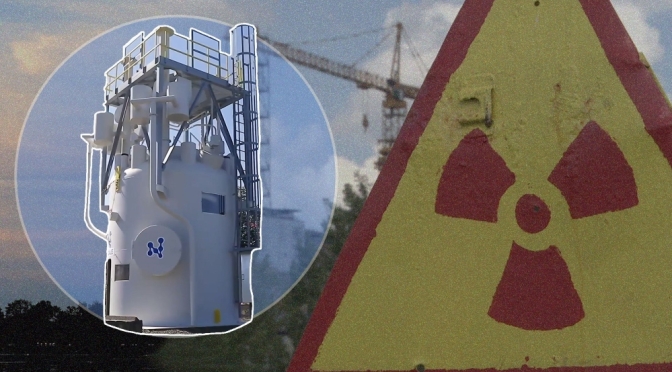
Nuclear projects are getting a boost of investment as countries try to tackle an energy crisis sparked by the Ukraine war, while also pursuing emissions targets. WSJ looks at how start-ups say their alternative designs can help solve past issues.