The Taliban’s Dangerous Collision Course With the West
After barring girls from high school — and harboring an Al-Qaeda leader — the regime now risks jeopardizing the billions of dollars of global aid that still keeps Afghans alive.
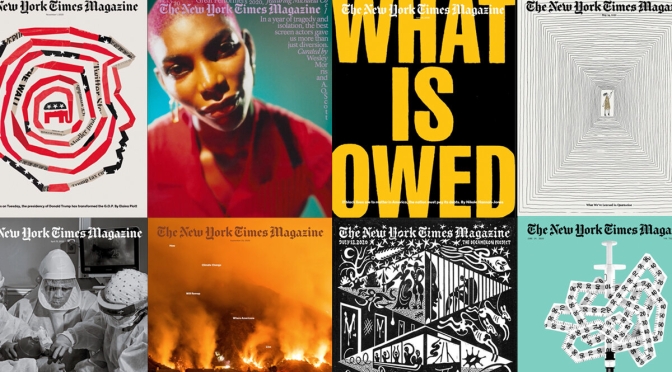
“Tier Drops,” by Lisa Owens Viani. Regulations and apportioning that were set up 100 years ago are under pressure as the Colorado River shrinks. As climate change accelerates and record-breaking drought worsens, cities, tribes, and industries must prepare for a future with less water. (Online August 10)
It’s past time to get real about the Southwest’s hardest-working river.
About 40 million people rely on the Colorado River as it flows from Wyoming to Mexico. But overuse and climate change have contributed to its reservoirs drying up at such a rapid rate that the probability of disastrous disruptions to the deliveries of water and hydroelectric power across the Southwest have become increasingly likely. Now the seven states that depend on the river must negotiate major cuts in water use by mid-August or have them imposed by the federal government.
Those cuts are merely the beginning as the region struggles to adapt to an increasingly arid West. The rules for operating the river’s shrinking reservoirs expire in 2026, and those seven states must forge a new agreement on water use for farmers, businesses and cities.
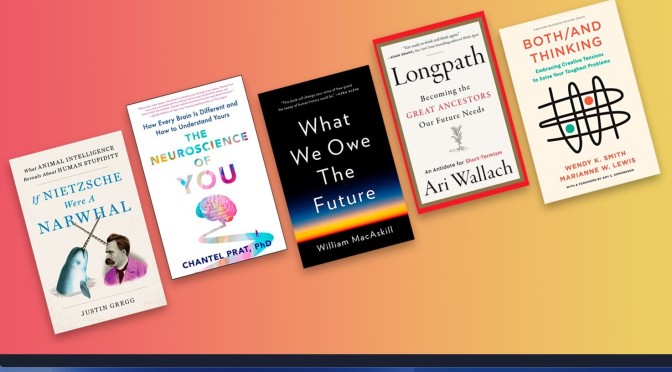
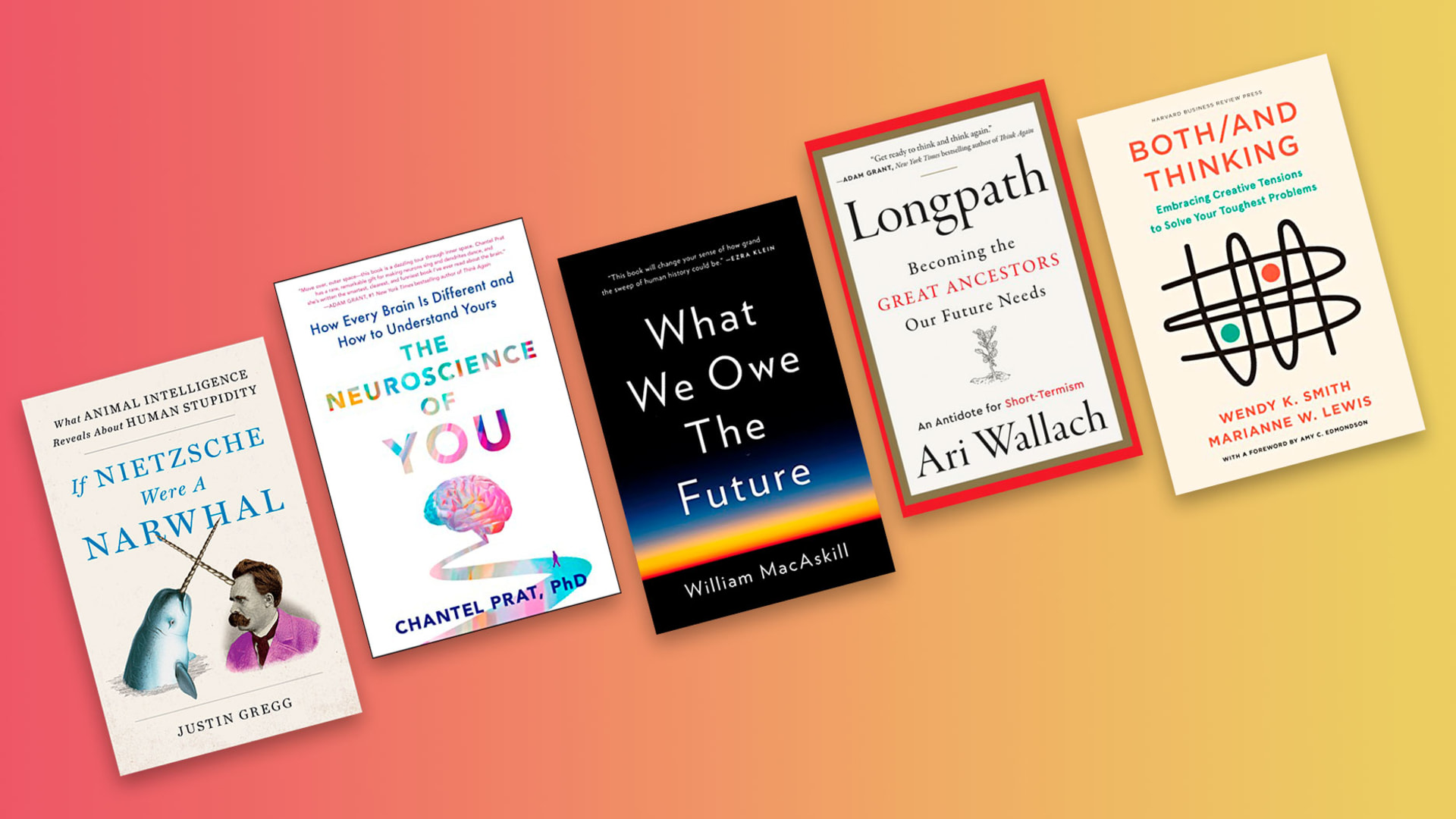
Rarely have I heard of a book with a weirder title, but Grant explains this book about how animals think is actually as useful as it is interesting. “A dazzling, delightful read on what animal cognition can teach us about our own mental shortcomings,” he writes. “I tore through his book in one sitting. I dare you to read it without rethinking some of your basic ideas about intelligence.” (It’s out August 9th.)
2. The Neuroscience of You by Chantel Prat
“Move over, outer space–this book is a stunning tour through inner space. This neuroscientist has a rare, remarkable gift for making neurons sing and dendrites dance. She’s written the smartest, clearest, and funniest book I’ve ever read about the brain,” Grant enthuses about The Neuroscience of You. (Out August 2nd.)
3. What We Owe the Future by Will MacAskill
Grant isn’t the only public thinker raving about this book by an Oxford philosopher about our “moral responsibility to do right by our grandchildren’s grandchildren.” “This book will change your sense of how grand the sweep of human history could be, where you fit into it, and how much you could do to change it for the better. It’s as simple, and as ambitious, as that,” says Ezra Klein. (Out August 16th.)
4. Longpath by Ari Wallach
Next on the list is another book about long-term thinking (apparently a preoccupation of Grant’s at the moment). He explains his second pick on the topic this way: “This book is an antidote to nearsightedness. A futurist offers an actionable guide for planning multiple generations in the future.” (Also out August 16th.)
5. Both/And Thinking by Wendy Smith and Marianne Lewis
This book by a pair of business school professors is specifically aimed at leaders trying to navigate uncertain times. “Life is full of paradoxes, and too often we ignore them or try to erase them when we should be learning how to manage them. Two top scholars of paradox examine how to embrace tensions and overcome tradeoffs,” says Grant. Fellow business writer Tom Peters is more succinct: “This book is, pure and simple, a masterpiece.” (Out August 9th)
The pandemic and hybrid working have changed the very idea of the office. This is not only changing the design and purpose of offices, but the look of cities too.
Chapters 00:00 – The office: a shifting concept 00:57 – What do future offices look like? 02:30 – The office as a social destination 03:20 – The rising demand for flexible work 04:06 – How should hybrid employees be managed? 06:01 – Will hybrid work worsen gender inequality? 06:36 – How will flexible working reshape cities?
In this issue, Kim Tingley on the quest to make the most of our body clocks with “circadian medicine”; Virginia Eubanks on her partner’s PTSD and her struggle as a caregiver; Mark Binelli on Yuval Sharon, the most visionary opera director of his generation; Jake Bittle on the restaurateur who changed America’s energy industry; and more.
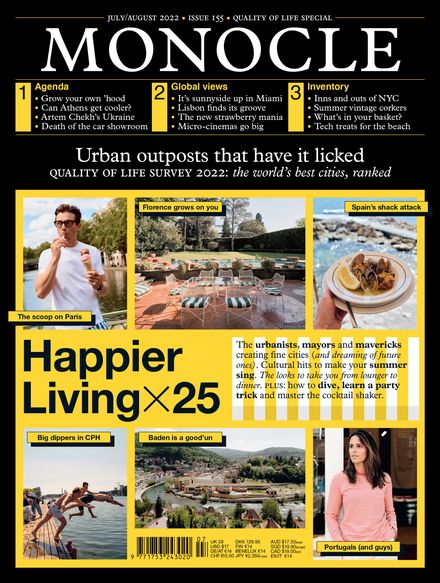
Where is the best place to live? What makes a city tick? How can we improve our lot? Monocle’s Quality of Life Survey has posed this question for the past 15 years and 2022’s July/August issue contains the latest. How does your city fare? Plus: hot looks, sunny stays and the perfect summer playlist.
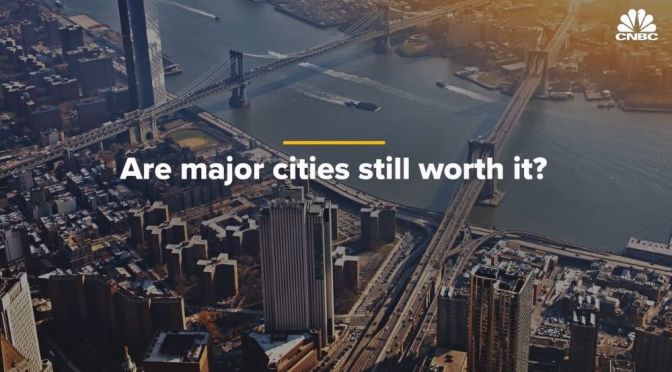
A cost-of-living crisis is unfolding in U.S. major cities. Inflation data shows that costs for items such as rent and groceries are increasing quickly across the Sun Belt and coastal superstar cities. Now years removed from the darkest days of the pandemic, people are asking: Is a return to the city worth it?
Metropolitan regions have sprawled in recent years, raising budget concerns and quality-of-life issues for the people who remain downtown. Meanwhile the absence of commuters is slowing the recovery in leisure and hospitality. Many renters believe that a cost-of-living crisis is brewing in America’s major cities.
New York City is showing up as a hotspot of rent inflation. The average rent for 1-bedroom apartments in Manhattan rose to $3,995 a month in May 2022 — a 41% increase from one year ago, according to Zumper. Sudden, double-digit rent spikes are hitting other hubs, including Chicago, Los Angeles, and Austin, Texas. Zumper data shows that growth is particularly strong in Sun Belt cities such as Miami, where rents have risen to $2,700 a month in May 2022, a 64% increase from a year prior. During the pandemic, workers left the largest U.S. cities.
Two years in, renters have returned but many commuters haven’t as companies negotiate the particulars of a return to the office. Public officials are concerned about lagging transit ridership in cities such as New York. Ed Glaeser, an economist at Harvard University, says cities are becoming more important — not less — in the age of remote work. “When you Zoom to work, you miss the opportunity to watch the people who are older, to watch what they’ve done and to learn from them,” he told CNBC in an interview.
But for renters, a return to increasingly expensive cities might seem like a raw deal, especially if they can do their jobs from home. Researchers say remote work limits firms’ ability to train new workers. Data produced by Microsoft’s workforce suggests that it is more difficult to share in-depth information remotely, which can produce silos within companies’ rank and file.
“A lot of these tech companies, they’re saying you can work remotely,” said Andra Ghent, a professor of finance at the University of Utah. “But, you know, in many cases, they’re also saying, like, we’re not going to pay you quite the same amount.” Many renters believe that a cost-of-living crisis is brewing in America’s major cities. New York City is showing up as a hotspot of rent inflation. The average rent for 1-bedroom apartments in Manhattan rose to $3,995 a month in May 2022 — a 41% increase from one year ago, according to Zumper.
Sudden, double-digit rent spikes are hitting other hubs, including Chicago, Los Angeles, and Austin, Texas. Zumper data shows that growth is particularly strong in Sun Belt cities such as Miami, where rents have risen to $2,700 a month in May 2022, a 64% increase from a year prior. During the pandemic, workers left the largest U.S. cities. Two years in, renters have returned but many commuters haven’t as companies negotiate the particulars of a return to the office.
Public officials are concerned about lagging transit ridership in cities such as New York. Ed Glaeser, an economist at Harvard University, says cities are becoming more important — not less — in the age of remote work. “When you Zoom to work, you miss the opportunity to watch the people who are older, to watch what they’ve done and to learn from them,” he told CNBC in an interview. But for renters, a return to increasingly expensive cities might seem like a raw deal, especially if they can do their jobs from home.
Researchers say remote work limits firms’ ability to train new workers. Data produced by Microsoft’s workforce suggests that it is more difficult to share in-depth information remotely, which can produce silos within companies’ rank and file. “A lot of these tech companies, they’re saying you can work remotely,” said Andra Ghent, a professor of finance at the University of Utah. “But, you know, in many cases, they’re also saying, like, we’re not going to pay you quite the same amount.”
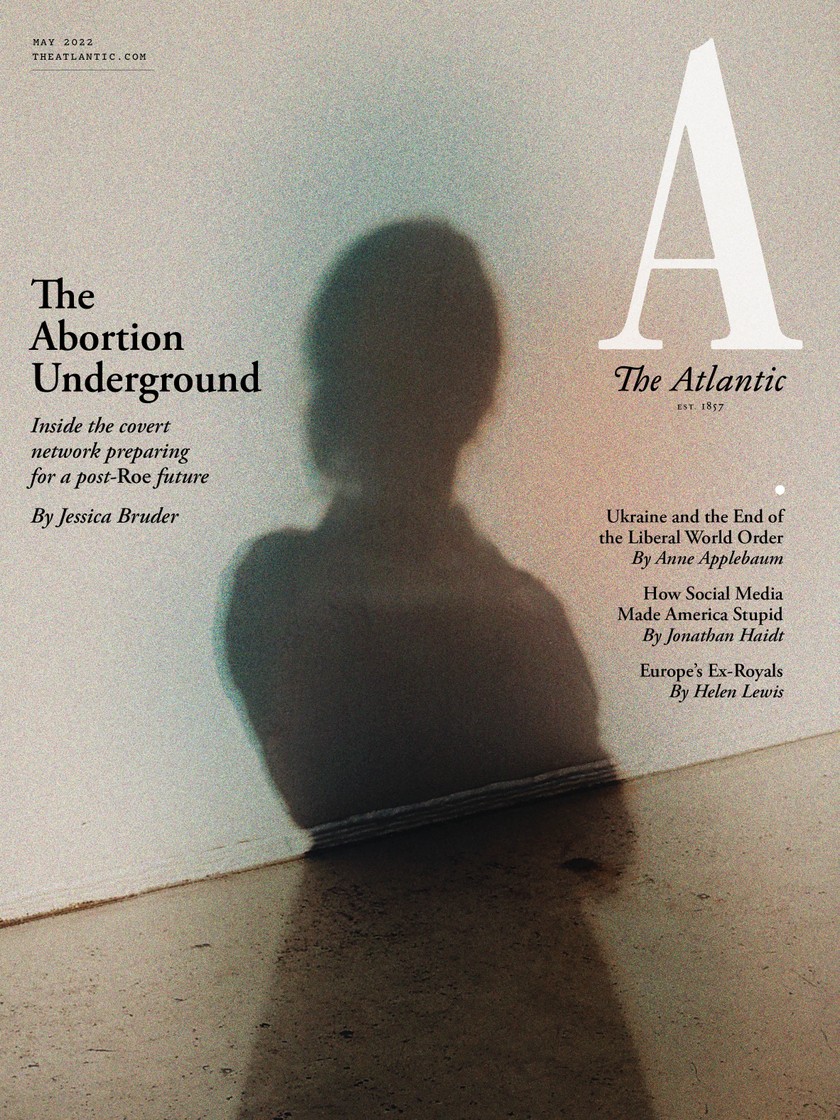
Preparing for the end of Roe, Europe’s ex-royals, tour guides to a tragedy, and how social media shattered society. Plus Winslow Homer, the myth of the liberal world order, a new history of WWII, ending mom guilt, the price of privacy, and more.







 Boomers Daily