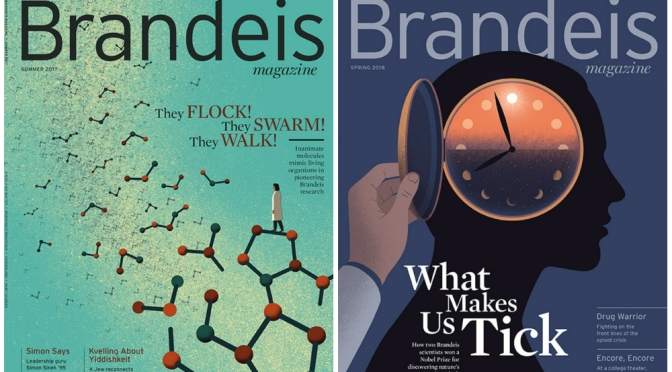
How are memories created and preserved? Brandeis scientists are studying the brain to find out — and, ultimately, untangle disorders like Alzheimer’s and dementia.
National Geographic – James Cameron is diving into the deep: this time, into the oceans of an alien world. The director shares how Earth’s oceans inspired The Way of Water—and his hope it will motivate viewers to protect our own planet.
National Geographic recently spoke with Cameron from New Zealand about the science and technology of The Way of Water. What inspired these creatures, and how did Cameron and his team bring them to life?
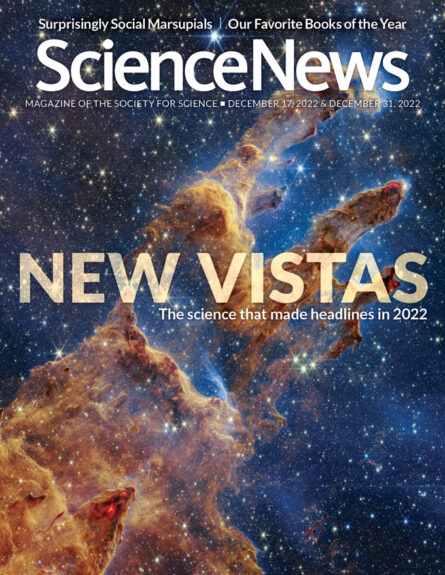
A new space telescope makes a spectacular debut after a troubled gestation
Seen with JWST’s midinfrared instrument, the newborn stars of the Tarantula nebula fade into the background while clouds of dust and gas take center stage, including hydrocarbons that will later form planets.NASA; ESA; CSA; STSCI; WEBB ERO PRODUCTION TEAM
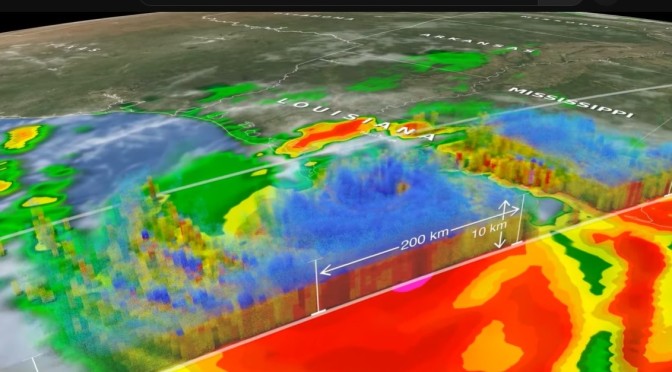
NASA Goddard (December 2022) – NASA is developing the Earth System Observatory, the core of which is five satellite missions providing critical data on climate change, severe weather and other natural hazards, wildfires, and global food production.
These observations will address the most pressing questions about our changing planet. Taken together as a single Observatory, NASA will have a holistic, 3D view of Earth to better understand how our planet’s complex systems work together and improve our capability to predict how our climate may change.
NASA’s Open Source Science strategy is the key to bringing the data from these missions together into a single observatory to help understand the earth as a system and accelerate our ability to use this understanding. These observations will better inform decision-makers on how our planet is changing, with greater precision on previously unimaginable scales – from entire continents down to individual trees, from atmosphere to bedrock.
It turns out reindeers’ amazing night vision is thanks to a strange ‘mirror’ in their eyes called the tapetum lucidum that is extra sensitive to UV light
The USS Monitor, an iconic piece of military history, sank 160 years ago. Now a marine sanctuary, the wreck has become an unlikely testbed for ocean conservation
In “A New Picture of Dinosaur Nesting Ecology” (Perspective), paleontologist Daniel T. Ksepka offers an overview of these sweeping advances in his field, showcasing the spectrum of reproductive traits among the dinosaurs, often with surprising mixes of reptilian and avian traits.
Princeton University (December 13, 2022) – Earth’s atmosphere, oceans, and land surfaces interact and combine in powerful, yet often unseen, ways as part of a complex planetary system that determines the climate.
Over many decades, researchers at Princeton University have played a leading role in the development of advanced computational models that simulate interactions among these elements to inform an understanding of future climate scenarios under varying conditions.
In this video, climate scientists Gabe Vecchi and Laure Resplandy discuss how computational models are used to project future climate scenarios and inform mitigation strategies.