From an Aeon.co online article by Bioethicist Joona Räsänen:
 Age change should be allowed when the following three conditions are met. First, the person is at risk of being discriminated against because of age. Second, the person’s body and mind are in better shape than would be expected based on the person’s chronological age (that is, the person is biologically younger than he is chronologically). Third, the person does not feel that his legal age is befitting.
Let’s say that on average you are in better shape than other people of your age. You are more able than them: quicker, sprightlier, livelier. You feel and identify as younger than your official age. However, despite all your youthful energy, you are also discriminated against because of your greater age. You cannot get a job – or, if you do, you might earn less than some of your younger coworkers simply due to your advanced years. The question is, should you be allowed to change your ‘official’ age in order to avoid this discrimination and to better match how you identify and feel?
To read more: https://aeon.co/ideas/older-people-should-be-allowed-to-change-their-legal-age?utm_source=Aeon+Newsletter&utm_campaign=ae6b281c0d-EMAIL_CAMPAIGN_2019_10_07_04_28&utm_medium=email&utm_term=0_411a82e59d-ae6b281c0d-70852327



 In 2015, the Laser Interferometer Gravitational Wave Observatory (LIGO) facilities in the US directly detected ripples in space-time known as gravitational waves. These waves were produced by the final spiral of two oribiting black holes that smashed into each other, sending ripples across the universe.
 This week in Science,
  In our second segment, we talk about how we think about children. For thousands of years, adults have complained about their lack of respect, intelligence, and tendency to distraction, compared with previous generations. A new study out this week in Science Advances suggests
 This week, a method for predicting follow-up earthquakes, and the issues with deep learning systems in AI.
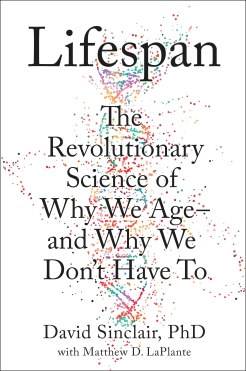 Lifespan, by geneticist David Sinclair and journalist Matthew LaPlante, provides a vision of a not-too-distant future in which living beyond 120 will be commonplace. For Sinclair and LaPlante, the answer lies in understanding and leveraging why we age…
 Listen to the latest from the world of science, with Benjamin Thompson and Shamini Bundell. This week, modelling embryonic development, and an analysis of male dominated conferences.
 Boomers Daily