

Big Tech Fight Night: Cook vs. Zuck A new privacy feature in Apple’s iOS 14.5 requires apps to request permission to track you. And Facebook isn’t happy about it. WSJ’s Joanna Stern put Facebook CEO Mark Zuckerberg and Apple CEO Tim Cook into the ring to explain why this software update has kicked off a tech slugfest. Photo illustration: Preston Jessee for The Wall Street Journal Personal Technology With Joanna Stern Technology is overwhelming and making decisions about what gadget to buy is harder than ever. WSJ personal tech columnist Joanna Stern makes it all a bit easier in her lively and informative videos.
Category Archives: Reviews

Climate: How Biden’s Infrastructure Plan Impacts Electric Vehicles
The Biden Administration wants to bet big on electric vehicles. Can it implement policy that reduces transportation emissions while positioning America as the leader in global EV production?
Neurotechnology: It Will Shape Future Behavior
Scientists have discovered how to put an artificial image inside a mouse’s brain so that it behaves as if it actually sees it. This will be possible to do with humans in the future — potentially shaping our thoughts and behaviors.

Mayo Clinic Heart Health: ‘What Is Hypertrophic Cardiomyopathy? ‘ (Video)
Hypertrophic cardiomyopathy is a thickening of the heart muscle, making it more difficult to pump blood. Dr. Steve Ommen is a Mayo Clinic cardiologist who specializes in the disease. He says shortness of breath or chest pain, especially during exercise, are common symptoms. Many people with the disease won’t have any significant health problems. But there are cases that require treatment. If a patient has symptoms that affect quality of life, the disease is treated with medications. Surgery or other procedures also may be necessary in some cases.
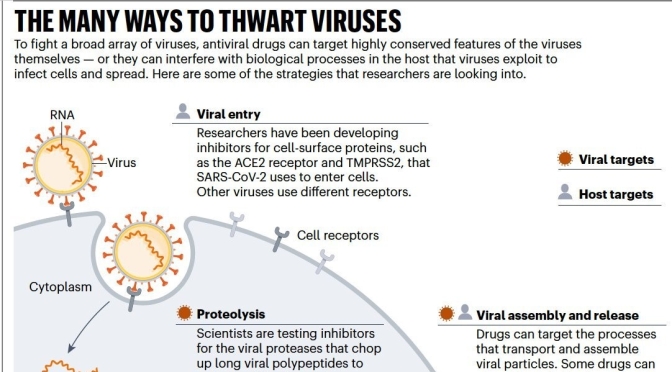
Infographic: ‘The Many Ways To Thwart Viruses’


Media: Swiss Magazine ‘Transhelvetica’ And London’s ‘Spiritland’
We visit two bold companies finding canny ways to pivot their product for changing audiences. Transhelvetica, a Swiss magazine, and Spiritland, a London-based hospitality and audio venture, are each shaping the media landscape for the better. To discover more about Monocle magazine head to http://www.monocle.com
Science Podcast: Rural U.S. Sanitation Crisis, Manta Rays & Magnetic Muons
The lack of adequate sanitation in parts of the rural US, and physicists reassess muons’ magnetism.
In this episode:
00:45 How failing sanitation infrastructure is causing a US public health crisis
In the US, huge numbers of people live without access to adequate sanitation. Environmental-health advocate Catherine Coleman Flowers tells us about her new book looking at the roots and consequences of this crisis, focusing on Lowndes County, Alabama, an area inhabited largely by poor Black people, where an estimated 90% of households have failing or inadequate waste-water systems.
Book review: Toilets – what will it take to fix them?
07:56 Research Highlights
Why adding new members to the team can spark ideas, and how manta rays remember the best spots for pampering.
Research Highlight: Want fresh results? Analysis of thousands of papers suggests trying new teammates
Research Highlight: What manta rays remember: the best spots to get spruced up
10:13 Reassessing muons’ magnetic moment
A decade ago, physicists measured the ‘magnetic moment’ of the subatomic muon, and found their value did not match what theory suggested. This puzzled researchers, and hinted at the existence of new physics. Now, a team has used a different method to recalculate the theoretical result and see if this discrepancy remains.
Research Article: Fodor et al.
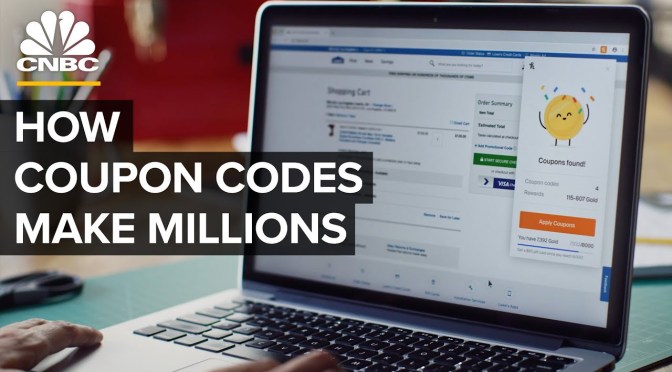
Online Shopping: ‘Digital Coupon Codes’ – Making Curators Millions (Video)
Promo code sites have become big business, with digital coupons surpassing paper for the first time in 2020. Major deal sites make millions based almost entirely on commissions from each sale. They don’t sell shopper data and it’s not a scam. In fact, big companies like PayPal and Rakuten are buying up deal sites for billions.
From Honey to Slickdeals, Rakuten Rewards to Brad’s Deals, CNBC asked the major sites what it takes to find deals that are real and why the business model works. With the huge boost in online shopping during the pandemic, deal-finding sites have become a major business. In 2020, Inmar Intelligence found that digital coupons surpassed printed coupons for the first time ever. Also in recent years, behemoths like Goldman Sachs and PayPal have paid hundreds of millions – or even billions – for sites like Slickdeals and Honey that automatically curate coupon codes or offer shoppers cash back for making purchases through their sites.
Even banks like Capital One are getting into the game. The business model is not a scam. All major deal sites say they don’t sell shopper data. Instead, each sale generates a commission for the deal site and for the middleman known as the affiliate marketer – a company that connects the vast world of retailers with deal sites. With nearly 2,000 businesses in the daily deal site space, it’s a crowded industry filled with legitimate businesses as well as plenty of sites that are riddled with ads and expired coupon codes. That’s because regardless of whether a coupon code works, the site that provided the code will get commission for that sale. When the deals are legitimate, however, it can mean big money for shoppers, retailers, and the deal sites.
From Honey to Slickdeals, Rakuten Rewards to Brad’s Deals, CNBC asked the major deal sites, and shoppers, what it takes to find deals that are real and why the business model works. Watch the video to learn how saving consumers’ money makes big bucks for companies in the vast world of online deal hunting.

Cryptocurrencies: ‘What Coinbase’s Listing Means’
The listing of Coinbase, the largest bitcoin exchange in the U.S., introduces a new way to invest in cryptocurrencies. WSJ explains how Coinbase is trying to distance itself from the risks of bitcoin to succeed on Wall Street. Photo illustration: George Downs

Views: ‘Plate Tectonics – Keys To Geologic History’
Plate tectonics is the narrative arc that ties every episode in Earth’s geologic history together. Thanks to the magnetic compasses hidden in volcanic rocks, scientists know where each tectonic jigsaw piece has been over eons of time. They can replicate the plates’ odysseys in beautiful and precise simulations that reveal the destruction and creation of Earth’s many faces. Lucía Pérez-Díaz, a geologist at Oxford, studies our planet’s stunning ability to constantly change its face.
 Boomers Daily