Category Archives: Reviews

Science Podcast: How Brain Cells Use Energy, Lobster Bellies & Red Meat

Ultra-precise measurements connect brain activity and energy use in individual fruit-fly neurons.

In this episode:

00:45 How brain cells use energy

A team of researchers have looked in individual fruit-fly neurons to better understand how energy use and information processing are linked – which may have important implications for future fMRI studies in humans.

Research Article: Mann et al.

07:04 Research Highlights

A tough but flexible material inspired by lobster underbellies, and research reveals that red meat consumption hasn’t dropped since the 1960s.

Research Highlight: Material mimicking lobster belly cracks the code for toughness

Research Highlight: Meat lovers worldwide pay climate little heed

10:15 Briefing Chat

We discuss some highlights from the Nature Briefing. This time, early results for a new malaria vaccine look positive, and researchers unearth the latest chapter in a long-running plant experiment.

Nature News: Malaria vaccine shows promise — now come tougher trials

BBC News: Malaria vaccine hailed as potential breakthrough

New York Times: One of the World’s Oldest Science Experiments Comes Up From the Dirt

Science: Salt Water Evaporation Creates “Crystal Critters’ (MIT)

A team of MIT researchers have observed that when salty water evaporates from a heated, superhydrophobic surface the crystal structures that form can easily be removed or roll away on their own.

This phenomenon could make it possible to use brackish or salty water, without any pretreatment, rather than relying on freshwater sources, for cooling systems in power plants.

Analysis: Russia’s Military On Ukraine’s Border (WSJ)

Clashes between Ukrainian forces and Russia-backed separatists continued after Moscow’s large-scale military maneuvers at the border. WSJ’s Georgi Kantchev reports from the front line of a conflict that is seen as a test for the Biden administration. Photo: Anastasia Vlasova for The Wall Street Journal

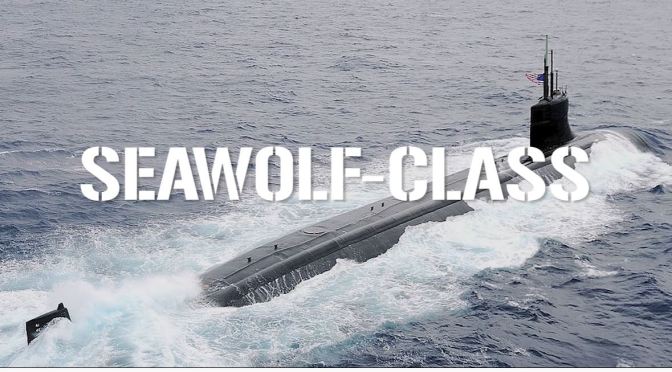
Naval Warfare: ‘Seawolf Class Submarines’ (Video)

The Seawolf class is a class of nuclear-powered fast attack  submarines  (SSN) in service with the United States Navy. The class was the intended successor to the Los Angeles class, and design work began in 1983. A fleet of 29 submarines was to be built over a ten-year period, but that was reduced to 12 submarines.

Inside Views: ‘USS Gerald R. Ford’ Aircraft Carrier

As the world’s largest aircraft carrier in the world’s dominant navy, the USS Gerald R. Ford is gargantuan. The aircraft carrier took eight years to build, several more years to test, and is large enough to tower over the biggest building in plenty of large towns. Named for the 38th President of the United States, the Gerald Ford is the lead ship of the US navy. It clocks in at over 1,000ft or nearly three American football fields in length, and nearly 250 feet high. Contained in that massive space, the aircraft carrier also has a whopping 25 decks. The massive ship, which can house over 4,500 people and carry over 75 aircraft, is powered by two nuclear reactors, and fully-loaded, weighs in at over 100,000 tonnes. That makes her the largest warship ever constructed. The total building cost is estimated at over 17 billion dollars, including 5 billion spent on research alone. After several delays it came in at 22% over the intended budget.

Air Travel: The Rise Of Emirates (CNBC Video)

Emirates, the long-haul carrier known for its luxury services, has set new standards for the way we travel. Like airlines everywhere, the carrier has been battered by the coronavirus pandemic. To keep customers safe and on board, Emirates adopted a variety of new protocols. The company also pivoted to cargo shipments to keep itself afloat. So will Emirates bounce back from the economic fallout pummeling the airline industry?

Analysis: Can Colleges Require Covid Vaccines?

A growing number of colleges around the country will require students to get Covid-19 vaccinations before returning to campus. But the policies are igniting a debate over whether businesses and institutions like schools can make vaccines a condition of attendance. Photo: Northeastern University