
AR June 2022: France
Amelia Tavella Architectes | Kristell Filotico | Atelier Roberta | Patrick Bouchain | Iwona Buczkowska | Barrault Pressacco | NP2F | OFFICE Kersten Geers David …

Amelia Tavella Architectes | Kristell Filotico | Atelier Roberta | Patrick Bouchain | Iwona Buczkowska | Barrault Pressacco | NP2F | OFFICE Kersten Geers David …
A selection of three essential articles read aloud from the latest issue of The Economist. This week, why foundation models are artificial intelligence’s new frontier, the stagnation nation: a chronic British disease (10:30), and why visiting the scenes of stories is an act of imagination (18:20).

Control
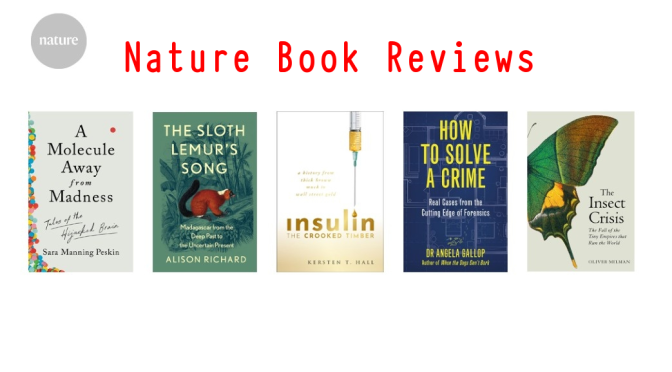
Adam Rutherford Weidenfeld & Nicolson (2022)
When Charles Darwin’s cousin, Francis Galton, coined the word eugenics in 1883, he called it the study of the conditions under which “men of a high type are produced”. This gross idea led to the gates of Auschwitz, reminds broadcaster Adam Rutherford (an alumnus of the Galton Laboratory, former name of University College London’s human‑genetics centre). It hasn’t gone away, he explains in his timely salvo on the politics and history of notions that dog genetics, events up to and after the ‘CRISPR twins’ and the resurgence of white supremacy.
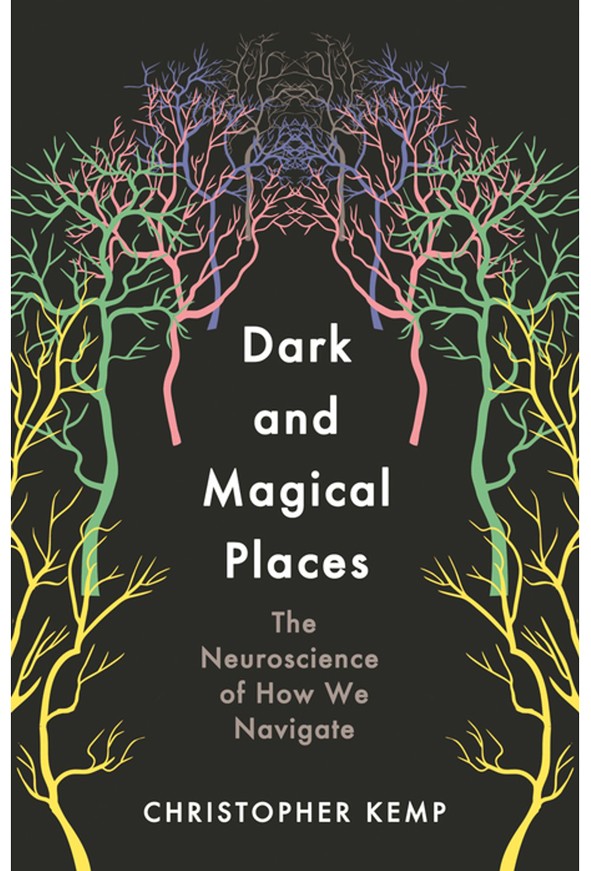
Dark and Magical Places
Christopher Kemp Profile/Wellcome Collection (2022)
“I have no sense of direction,” confesses molecular biologist Christopher Kemp — unlike his wife, “an effortless and intuitive navigator”. Once, in a mirror maze, he was transfixed with alarm, and had to be pulled out by his seven-year-old son. Many others experience similar disorientation, sometimes with disastrous results, as when hikers get lost. Their stories vitalize this compelling study of the brain, memory and navigation, in which one psychologist compares our understanding of parts of the brain with knowledge of black holes.
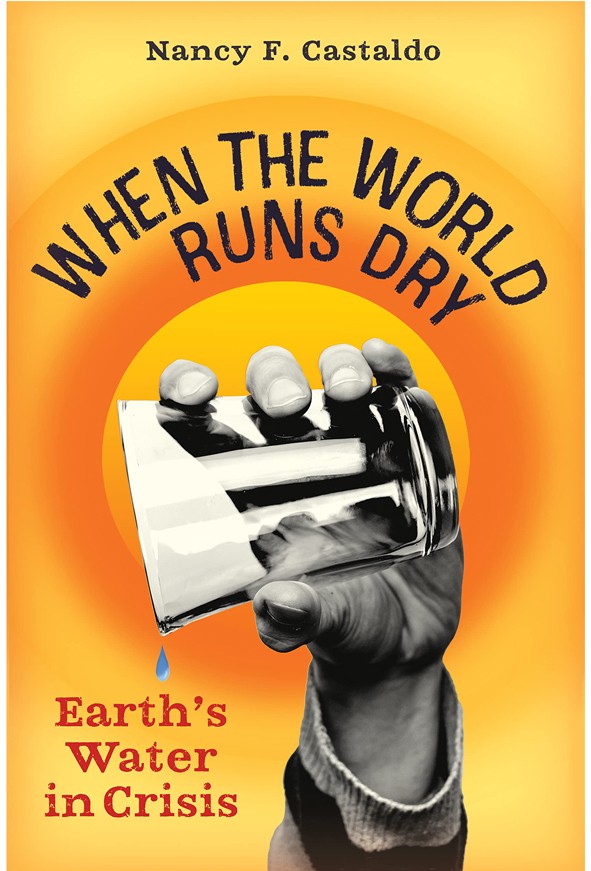
When the World Runs Dry
Nancy F. Castaldo Algonquin (2022)
Globally, millions of people must walk up to 6 kilometres daily to get clean water, says environmental writer Nancy Castaldo. Moreover, each year, more children die as a result of water contamination than from violence, including war, said the United Nations in 2019. Castaldo’s alarming book discusses many examples of shortages and tainting, ranging from drought in Cape Town, South Africa, to lead pollution in Flint, Michigan. She concludes with realistic steps to reduce domestic consumption and contamination.
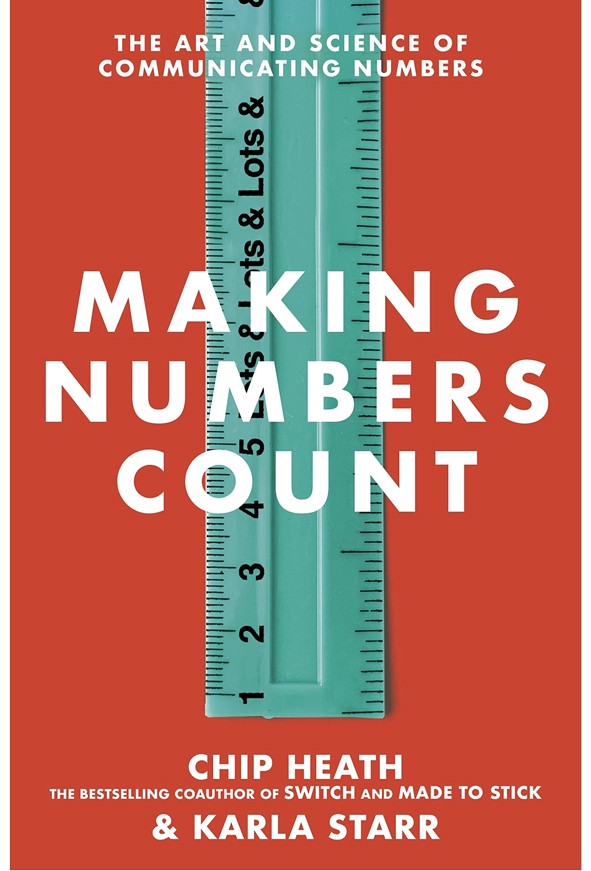
Making Numbers Count
Chip Heath and Karla Starr Avid Reader (2022)
Business scholar Chip Heath and science journalist Karla Starr are familiar with the need to “translate numbers into instinctive human experience”, informatively and memorably. Unable to find a book on the subject, they decided to write their own. Their diverse guide bubbles with translated statistics. For example, there are about 400 million civilian-owned firearms in the United States — that translates into one for every adult and child, with around 70 million left over.
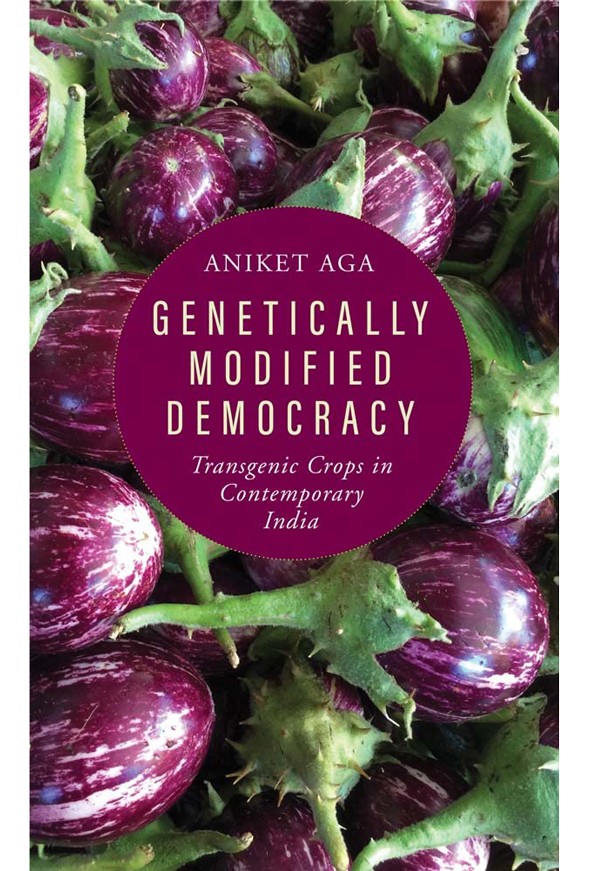
Genetically Modified Democracy
Aniket Aga Yale Univ. Press (2021)
India’s 1960s Green Revolution began without much deliberation. The government promoted high-yielding varieties of wheat and rice, and guaranteed purchase prices. This helped “already well-off, landed farmers”, notes environmentalist Aniket Aga, but led to huge debts for the struggling majority. When genetically modified crops reached India in 2002, they cultivated much more scrutiny, involving scientists, seed companies, farmers, consumers and the state. Aga describes the debate, without claiming to provid
We talk to the writer and critic Amy Castor about what effect the tumbling crypto markets might have on the until-now booming world of non-fungible tokens or NFTs.
As Norway’s vast new National Museum opens, we speak to its director Karin Hindsbo. And this episode’s Work of the Week is Folding Screen with Indian Wedding, Mitote, and Flying Pole, made in Mexico in the late 17th century. It is one of the major pieces in a new show at the Los Angeles County Museum of Art, called Archive of the World: Art and Imagination in Spanish America, 1500–1800. Ilona Katzew, the curator of the exhibition, talks in depth about the meanings and purpose of the work.
You can read Amy Castor’s thoughts on crypto and NFTs at amycastor.com.
The National Museum in Oslo opens on 11 June.
Archive of the World: Art and Imagination in Spanish America, 1500–1800, Los Angeles County Museum of Art, 12 June-30 October.

REPORTS BY
REPORTS BY
RESEARCH ARTICLES BY
RESEARCH ARTICLES BY
From Poet Warrior, by Joy Harjo, a Top 10 Memoirs title. Artwork: She Comes with Fire and Weaves the World, beadwork © Rainy Dawn Ortiz. Photograph: © Melissa Lukenbaugh. Used by Permission of W. W. Norton & Company, Inc.
Spotlight on Biography & Memoir
A headbashing relative gives insights into giraffe evolution – How the giraffe got its long neck is a longstanding question in science. One possibility is that giraffes evolved longer necks for sexual competition, with males engaging in violent neck-swinging fights.
Now, a team have described fossils of an ancient giraffoid species with a thick headpiece adapted for fighting, which could add weight to this hypothesis.
Nature News: How the giraffe got its neck: ‘unicorn’ fossil could shed light on puzzle
Around the world, the ‘great resignation’ has seen huge numbers of workers re-evaluating their careers and lifestyles and choosing to leave their jobs following the pandemic. Academia is no exception, with many scientists deciding to leave the sector in the face of increased workloads, systemic biases and pressure to publish.
Nature Careers: Has the ‘great resignation’ hit academia?
Earlier this year, NASA’s MAVEN spacecraft, which has been orbiting Mars since 2014, developed some serious equipment issues that prevented it from keeping its correct orientation in space. In a race against time, a team on Earth fixed the problem by developing a system that allowed the spacecraft to navigate by the stars.
Space.com: NASA’s Mars MAVEN spacecraft spent 3 months on the brink of disaster
NASA’s Perseverance rover has arrived at an ancient Martian river delta where it will spend the next few months exploring, while scientists assess where to drill and extract rock samples. It’s thought that rocks from this region have the best chance of containing evidence of Martian life, and plans are being developed to return them to Earth in the future.
Nature News: NASA’s Perseverance rover begins key search for life on Mars
The Casarabe people lived in southwest Amazonia around AD 500–1400, but understanding of this culture has been limited because the archaeological remains are covered in dense forest. In this week’s issue, Heiko Prümers and his colleagues reveal the discovery of new Casarabe settlements in the Bolivian Amazon. The researchers used lidar to scan the forest, revealing 2 large settlements (each covering more than 100 hectares) and 24 smaller sites, 15 of which had previously been known to exist.

The cover image shows Cotoca, one of the two large settlements, in which earthen mounds (one more than 20 metres high) and long causeways can clearly be seen. The team suggests that these results are the first evidence of agrarian-based, low-density urbanism in western Amazonia. They conclude that the region was not as sparsely populated in pre-Hispanic times as was previously thought.
Cover image: Heiko Prümers/DAI.
This remarkable painting by Michel Corneille the Elder has been hidden away from view for at least the past 110 years and is a truly exceptional rediscovery for French painting of the 17th century. After a recent restoration, the artist’s signature has been re-exposed so that now this impressive work can be confidently attributed to the early French Classicist.
This episode of Anatomy of a work of art, discover The Death of Virginia, taken from Roman historian Livy and recounts the death of Virginia, daughter of a centurion in the Roman army. This rediscovery will be one of the highlights of our sale Tableaux Dessins Sculptures 1300-1900, Session I, Including Treasures from the Antony Embden Collection.


 Boomers Daily