
Category Archives: Previews

Arts/Books: Times Literary Supplement – Sept 29, 2023

Image

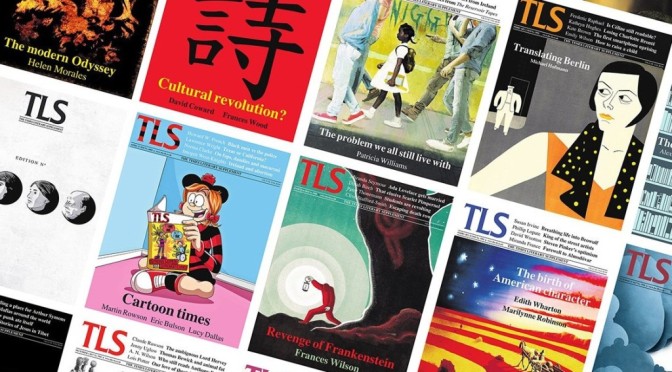
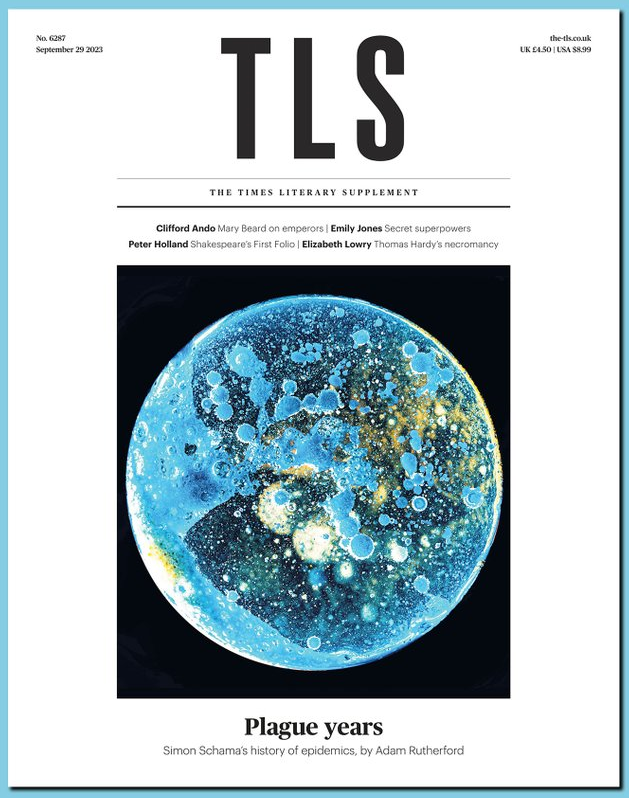
Times Literary Supplement (September 29, 2023): The new issue features The First Folio at 400; how disease shaped global history; novels of queer experience; what Britain laughs at; literary thefts and coincidences – and much more…

Germ of an idea

How disease has shaped global history

By Adam Rutherford

Scientists often make poor historians. Their shortcomings in describing and analysing the past include a failure to shed the whiggish stories that academic history moved away from decades ago. Straight lines are still drawn between Great Men and the impact of their brilliant insights on our view of reality. They also sometimes fail to treat the material of history with the seriousness they bring to their own discipline. Simple questions that are drummed into schoolchildren are frequently ignored in analysing documentary evidence: who wrote this, why, and for whom? The result is context-lite narrative that doesn’t stand up to scrutiny.

Our Shakespeare, rise

A copy of the First Folio at Christie's, London, 2016

Works to commemorate the 400th anniversary of the First Folio

Next year, the Folger Shakespeare Library in Washington DC will reopen after a three-year closure for a large-scale renovation of its building, which dates from 1932. The centrepiece of the new Shakespeare Exhibition Hall, will be, as the press release puts it, something “that only the Folger could produce: all 82 copies of the 1623 First Folio of Shakespeare that were collected by Henry and Emily Folger”. The Folger holds slightly more than a third of all extant copies of the book and now eighty of them will be on permanent show in a “20-foot long visible vault”, while two more will be open in cases as part of an “interactive” visitor experience. Peering into the vault says much about the Folgers’ appetite for cornering the market in Folios but, since nearly all copies differ in some respects, it did make some kind of sense to buy many of them.
Research Preview: Science Magazine – Sept 29, 2023

Image

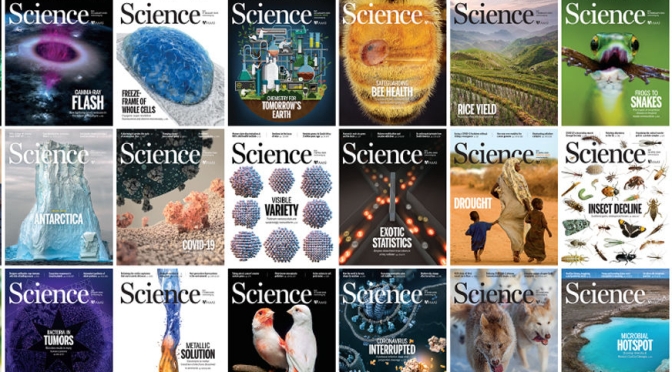
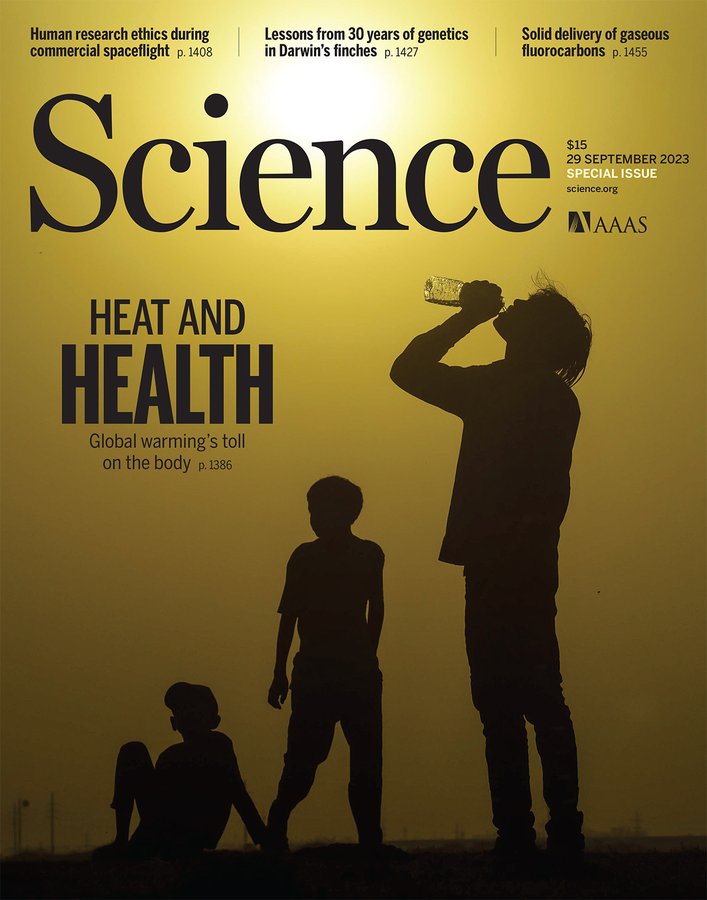
Science Magazine – September 29, 2023: This special issue examines the threats to human health and how they can be mitigated.

AN UNHEALTHY CLIMATE

Introducing a special issue of Science

Earth scientists often call climate change a “great global experiment,” which humanity is heedlessly performing as we pump greenhouse gases into the atmosphere. The dire consequences are already becoming clear—not just for the workings of the planet, but for our own health. Over the next few days, the stories in this special package will explore the threats, and how we can minimize them.

Will flu outbreaks ease in a warming world?

From cold viruses to influenza to respiratory syncytial virus, viruses that spread through the air cause billions of infections each year. That makes it important to understand how they will respond to climate change. But little is known so far, except that different viruses will react differently. Measles, for instance, spreads efficiently in all climates, suggesting global warming will make little difference to its transmission.

The New York Review Of Books – October 19, 2023

Image

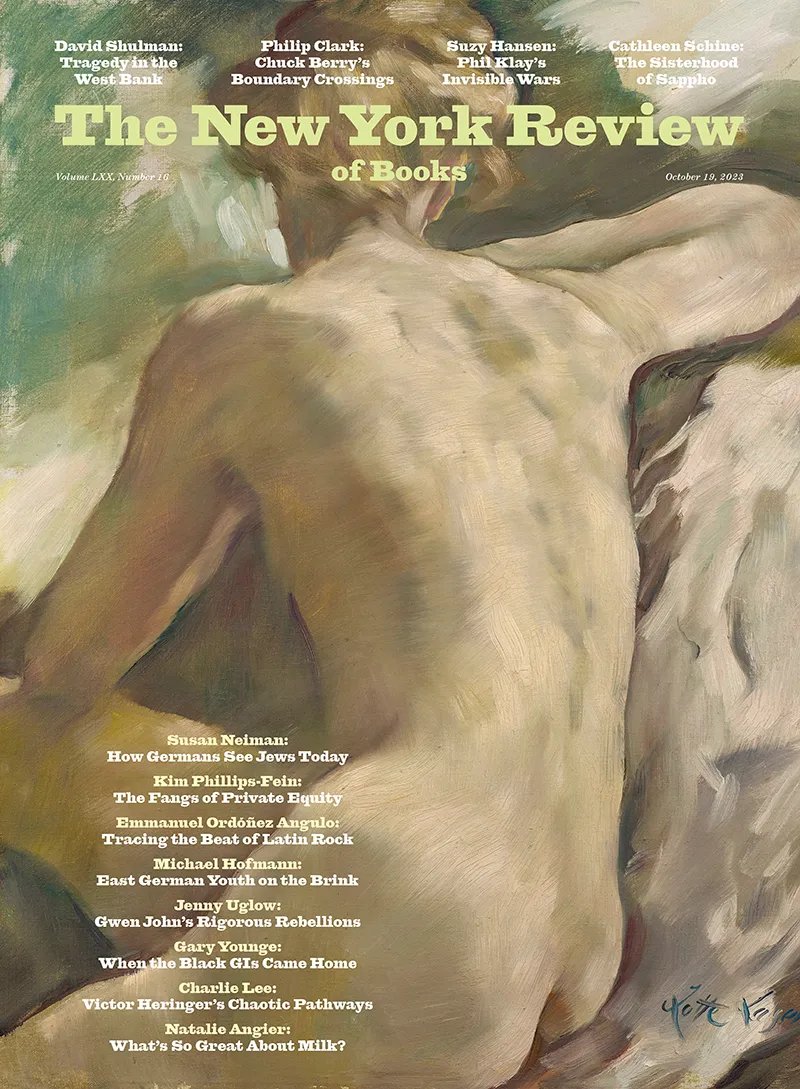
The New York Review of Books (October19, 2023) – The latest issue features with Gary Younge on the Black soldiers who fought for freedom at home and abroad, David Shulman on the road to a second Nakba, Jenny Uglow on the exuberant Gwen John, Suzy Hansen on America’s endless and remote wars, Kim Phillips-Fein on plundering private equity, Natalie Angier on milk, Megan O’Grady on Lucy Lippard, Adam Kirsch on the prophetic Kieślowski, Philip Clark on the lines Chuck Berry crossed, Susan Neiman on Germany’s historical memory, poems by Arthur Sze, Jessica Laser, and Jules Laforgue, and much more.

‘We Return Fighting’

By Gary Younge

Half American: The Epic Story of African Americans Fighting World War II at Home and Abroad by Matthew F. Delmont

The ambivalence many Black soldiers felt toward the United States during World War II was matched only by the ambivalence the United States demonstrated toward the principles on which the war was fought.

The Voyage Out

Cathleen Schine

Selby Wynn Schwartz’s novel After Sappho is populated by the notable lesbians who helped modernism blossom.

After Sappho by Selby Wynn Schwartz

One of my favorite novels is by Compton Mackenzie, a Scottish writer known today, if he is known at all, for his whimsically comic Whisky Galore (1947) and his ambitious early novel Sinister Street (1913). The one I love, however, is Extraordinary Women: Theme and Variations (1928), a satirical roman à clef about the sapphic adventures of the unorthodox and eccentric inhabitants of an island modeled after Capri during World War I. After Sappho, a novel by Selby Wynn Schwartz that was longlisted for the Booker Prize in 2022, is many things, none of them satirical, but I kept thinking of the title of Mackenzie’s book as I read it.

Previews: The Economist Magazine – Sept 30, 2023

Image

The Economist Magazine (September 30, 2023): The latest issue features The war in Ukraine is a powerful reason to enlarge—and improve—the EU; Why fear is spreading in financial markets; A humanitarian disaster is under way in Nagorno-Karabakh…

The war in Ukraine is a powerful reason to enlarge—and improve—the EU

Nine new countries, including Ukraine, are vying to join

Why fear is spreading in financial markets

Investors have begun to confront the long-haul reality of high interest rates


A humanitarian disaster is under way in Nagorno-Karabakh

And Russia may also be destabilising its old ally, Armenia

Culture: Iceland Review Magazine – Oct/Nov 2023

ir523

ICELAND REVIEW MAGAZINE (OCT/NOV 2023): The latest issue features ‘Island In The Making’ – A Scientific Expedition of Surtsey Island; Mycological Magic – Foraging with Iceland’s Mushroom Queen, and more…

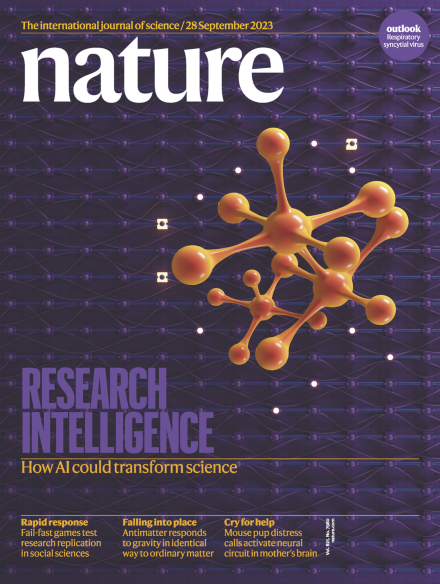
Research Preview: Nature Magazine – Sept 28, 2023

Volume 621 Issue 7980

nature Magazine – September 28, 2023: The latest issue features  takes a deep dive into how AI is helping to reshape the scientific enterprise. In this week’s issue, we look at why researchers are so excited about the burgeoning technology — and we also probe the risks posed by AI-generated disinformation

Super-precise CRISPR tool enters US clinical trials for the first time

Base editing, which makes specific changes to a cell’s genome, is put to the test in CAR-T-cell treatments for leukaemia.

How to stop AI deepfakes from sinking society — and science

Deceptive videos and images created using generative AI could sway elections, crash stock markets and ruin reputations. Researchers are developing methods to limit their harm.

Previews: Country Life Magazine – Sept 27, 2023

Image

Country Life Magazine – September 27, 2023: The new issue features The Need For Tweed; A perfect pre-trained gundog; A new Jacobean drawing room is the crowning glory at Shilstone, Devon, and more…

The need for tweed

A true Hebridean hero weaves his magic to create an ‘estate’ Harris tweed for David Profumo

Here’s one I trained earlier

Has your over-excited pup left you red-faced on a shoot day? Katy Birchall has the answer: a perfect, pre-trained gundog

Loved to life

A new Jacobean drawing room is the crowning glory at Shilstone, Devon, discovers John Goodall

Los Angeles Review Of Books – Autumn 2023

Image

LA Review of Books (Autumn 2023) – The latest issue features The Funny Thing About Misogyny; The New Scarcity Studies: On Two New Socioeconomic Histories and Endgame Emotions: The Melting of Time, the Mourning of the World…

The Funny Thing About Misogyny

By Katie Kadue

THE FUNNY THING about misogyny is it’s structured like a joke. Not a very good joke—a groaner, a dad joke. Why are they called “women”? Because they’re a woe to men. Get it? Woman is a container for man; language engenders gender subordination. As Mike Myers recites on stage in his role as a moody slam poet in the thrillingly zany 1993 Hitchcockian send-up So I Married an Axe Murderer, “Woman! Whoa, man. Whoaaaaaa. Man!”

The New Scarcity Studies: On Two New Socioeconomic Histories

By Scott R. MacKenzie

Scarcity: A History from the Origins of Capitalism to the Climate Crisis by CARL WENNERLIND

WATER FALLS FROM the sky, literally. It is the most abundant chemical compound on Earth, and yet many people buy it in plastic bottles. Nestlé and other corporations source water cheaply and add labels that depict something other than heavy-industry and fossil-fuel derivatives, as though you’re drinking straight from a pristine spring. By bottling this natural resource and selling it as a commodity, Nestlé creates a form of scarcity. 

Preview: London Review Of Books – October 5, 2023

Image

London Review of Books (LRB) – October 5, 2023: The new issue features Animal Ethics; Orca Life – We may understand less about orcas than they do about us, and Why Weber? – Weber insists that everything remain in its rightful place. Politicians should stick to politics, and scientists to science. 

Let them eat oysters

By Lorna Finlayson

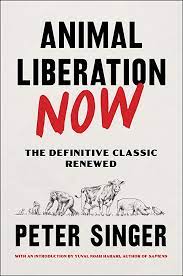
We may be tempted to throw up our hands and say: fuck it, I’m having a burger. Peter Singer would think this illogical: we should endeavour to do the least harm we can. But we might wonder whether something is wrong with the ethical approach that has led us to this point.

Animal Liberation Now 
by Peter Singer.

Justice for Animals 
by Martha Nussbaum.

Views: The New York Times Magazine – Sept 24, 2023

Image

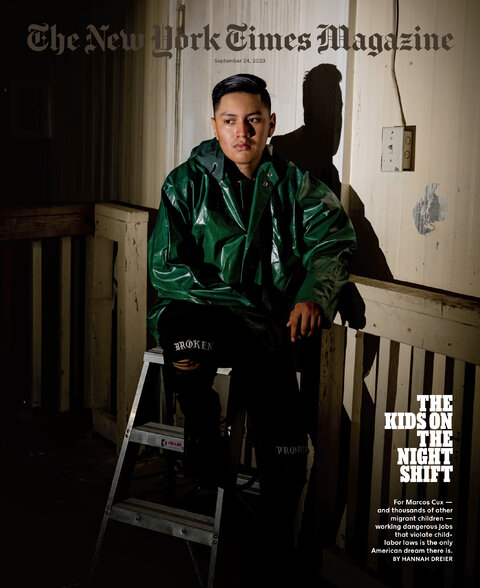
THE NEW YORK TIMES MAGAZINE (September 22, 2023): The 9.24.23 Issue features Hannah Dreier on migrant children working in dangerous conditions; McKenzie Funk on Hank Asher, a drug smuggler who became a pioneer in data mining; Sonia Shah on new research that suggests animals are saying more than we think; and more.

The Animals Are Talking. What Does It Mean?

A collection of black and white illustrations of animals are arranged into the shape of a speech bubble.

Language was long understood as a human-only affair. New research suggests that isn’t so.

Can a mouse learn a new song?

Such a question might seem whimsical. Though humans have lived alongside mice for at least 15,000 years, few of us have ever heard mice sing, because they do so in frequencies beyond the range detectable by human hearing. As pups, their high-pitched songs alert their mothers to their whereabouts; as adults, they sing in ultrasound to woo one another. For decades, researchers considered mouse songs instinctual, the fixed tunes of a windup music box, rather than the mutable expressions of individual minds.

A Chile Paste So Good, It’s Protected by the U.N.

Real-deal Tunisian harissa is an anchor to the motherland and a bright, specific accent to countless dishes.

By Eric Kim

Last year, UNESCO officially deemed harissa, the brick red, aromatic chile paste, “an integral part of domestic provisions and the daily culinary and food traditions of Tunisian society.” Keyword: Tunisian.